

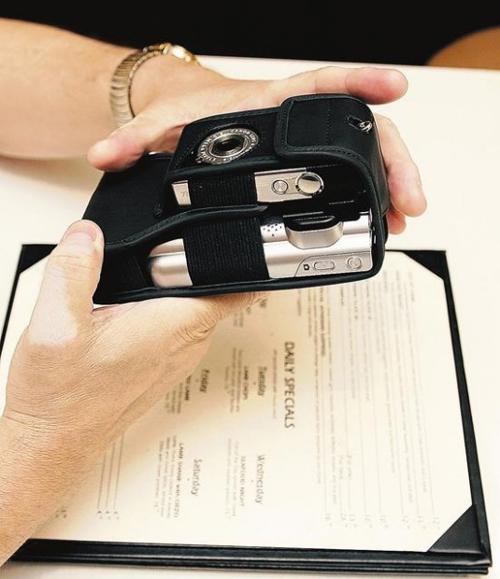
DALLAS — A whole new world opened up for Tommy Craig as he tested a new hand-held device for the blind that converts print to audio.
Craig was able to "read" everything from menus to cooking directions by positioning the reader over print and taking a picture. In seconds, the device's synthetic voice read the printed message to him.
"The reader provides access to materials that a lot of times you just didn't read," said Craig, 51, of Austin, Texas, who was one of about 500 blind people who tested the device over the past few months. "It certainly makes you more independent."
The National Federation of the Blind plans to put the device on sale Saturday, when its annual meeting begins in Dallas.
"It's not quite like having a pair of eyes that work, but it's headed in that direction," said James Gashel, executive director for strategic initiatives at the Maryland-based National Federation of the Blind.
People are also reading…
The device, combining a personal digital assistant and a digital camera, was developed by inventor Ray Kurzweil and the membership organization of more than 50,000 blind people, dubbed the Kurzweil-National Federation of the Blind Reader.
"This is really the hottest new technology to be developed for blind people in the last 30 years," said Gashel, who calls it "the camera that talks."
About three decades ago, Kurzweil invented the first device that could convert text into audio. It was about the size of a washing machine. That gave way to software that could be used by a computer and scanner to perform the same function. The latest device, about the size of a paperback book, introduces portability.
"It's always been considered desirable to have a reading machine that a blind person could carry along with them," Kurzweil said. "We're getting phenomenal feedback."
The device, which costs about $3,500, can be useful for those with limited vision, said Marc Maurer, president of the National Federation of the Blind.


