

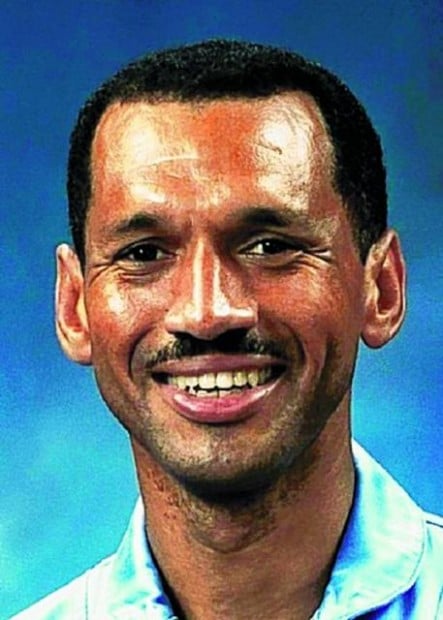
HOUSTON — The nation's turbulent space program will be run by one of its own — a calming, well-liked former space shuttle commander and retired astronaut.
On Saturday, President Obama chose retired Marine Maj. Gen. Charles Bolden to lead NASA. He also named former NASA associate administrator Lori Garver as the agency's No. 2 official. If confirmed, Bolden, who has flown in space four times and was an assistant deputy administrator at one point, would be the agency's first black administrator.
Bolden would also be only the second astronaut to run NASA in its 50-year history. Vice Adm. Richard Truly was the first. In 2002, then-President George W. Bush unsuccessfully tried to appoint Bolden as the space agency's deputy administrator. The Pentagon said it needed to keep Bolden, who flew more than 100 sorties in Vietnam He retired in August 2004.
"Charlie knows NASA, and the people know Charlie; there's a level of comfort," especially given the uncertainty the space agency faces, said retired astronaut Steve Hawley, who flew twice in space with Bolden.
People are also reading…
Bolden likely will bring "more balance" to NASA, increasing spending on aeronautics and environmental missions, working more with other nations in space, and emphasizing education, which the president often talks about when it comes to space, said former Johnson Space Center Director George Abbey, a longtime friend.
"He's a real leader," Abbey said Saturday. "NASA has been looking for a leader like this that they could have confidence in."
Bolden's appointment came during the tail end of the space shuttle Atlantis' mission to repair the Hubble Space Telescope one final time. He was the pilot on the flight that sent Hubble into orbit in 1990.
Bolden, 62, would inherit a NASA that doesn't look much like the still-somewhat-fresh-from-the-moon agency he joined as an astronaut in 1980.
Bush set in motion a plan to retire the shuttle fleet at the end of next year and return astronauts to the moon and then head out to Mars in a series of rockets and capsules. The shuttle's replacement won't be ready until at least 2015, so for five years the only way Americans will be able to get in space is by hitching a ride on a Russian space capsule.


