

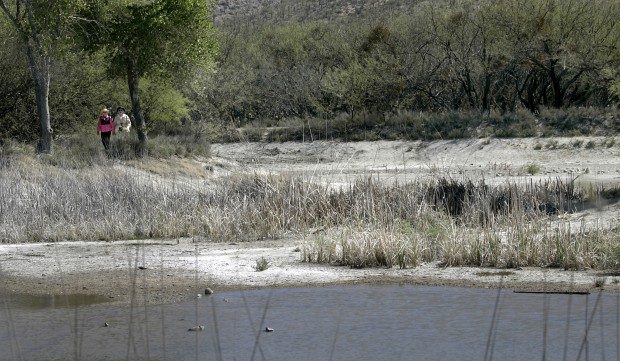
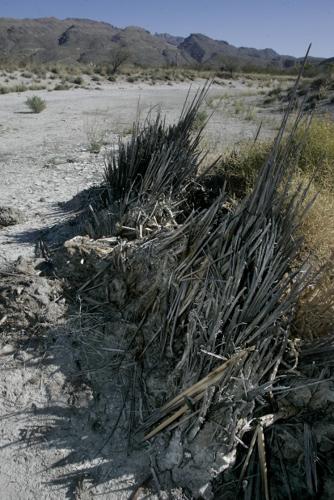
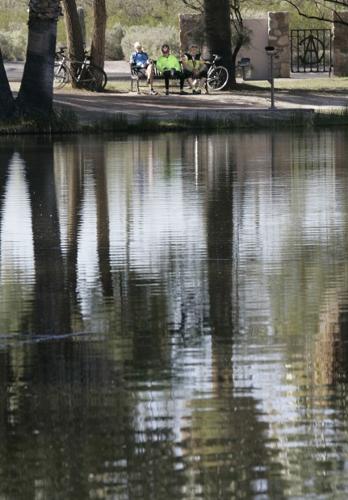
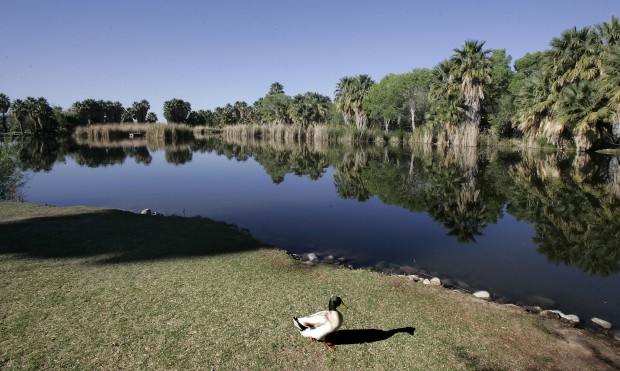
A once-lush, spring-fed pond at Agua Caliente Park east of Tucson has all but dried up over the past few years.
The apparent causes: prolonged drought and a dwindling flow of spring water.
A similar fate could befall the park's main pond if the spring flow there weren't being augmented with "a significant amount" of well water, said an official with Pima County, which manages the park.
The quantity of water issuing from the Agua Caliente - or hot water - spring is in "a very clear downward trend," said Kerry Baldwin, of the county Natural Resources, Parks and Recreation Department.
"In 1984, when Pima County acquired the property, the spring flow was sufficient to maintain three ponds," Baldwin said. "The flow then was in the 150 gallons per minute range. ... In June of 2011, it was 1.5 gallons per minute.
People are also reading…
"At one point last year, for the first time anybody could remember, the spring completely quit flowing," he said.
Flows now vary - remaining mostly low with occasional small increases after periods of rain.
THE PRICE OF DROUGHT
With the spring source in serious decline for more than a decade, the ponds were bound to suffer.
Pond 3 hasn't had any water since about 2002, Baldwin said.
Pond 2 - the one that's now on the verge of drying up - relies on overflow from the main lagoon, or Pond 1, for its water.
Problem is, the anemic spring flow isn't enough to keep Pond 1 filled - much less provide overflow for Pond 2.
As drought conditions began to worsen in 2003, "it was touch and go," Baldwin said. "That's when we put in a supplemental well to keep Pond 1 full."
Augmenting the spring flow with "a significant amount of water out of that well is the only way to keep the main pond filled," he said. "It's been the only way we're able to sustain that system."
The well draws its water from a different, much deeper aquifer than the one that supplies the spring.
Baldwin said using well water to fill Pond 2 as well as Pond 1 isn't a good option for conservation and environmental reasons.
"The point is, this incredible resource can't stay the way it has been in the past under the current climatic conditions," Baldwin said.
NEW SIGN OF THE TIMES
An interpretive sign posted at the Pond 2 site describes the wonders of a wetland habitat - a habitat that has largely disappeared there in recent years.
"We are just finishing up a new interpretive sign called 'A Story of Change' to go up" at Pond 2, Baldwin said. The new sign will explain why visitors might sometimes see a small amount of water in the pond and at other times find it completely dry.
Visitors can expect at least a small seasonal flow of water into the pond after periods of wet weather.
Baldwin said officials are considering a plan to run a small pipeline to Pond 2 - "just to maintain a drinking water source for wildlife, but not to maintain the pond."
Meanwhile, Baldwin said, water experts are looking into strategies for creating a "more sustainable, natural system" in park ponds.
"Agua Caliente has a very strong draw for Tucson residents. They're very possessive of that pond system, and we appreciate that," Baldwin said. "Our challenge is: How do we maintain that system when nature is not on our side?"
Did you know?
The site of Roy P. Drachman-Agua Caliente Regional Park was part of a cattle ranch in the 1800s and also housed a hot-springs resort in bygone years.
Contact reporter Doug Kreutz at dkreutz@azstarnet.com or at 573-4192.


