


PHOENIX — Arizona now has an official plan for fighting plant and animal invaders harming the environment.
Members of the Arizona Invasive Species Council said the plan, approved by Gov. Janet Napolitano after public hearings held around the state, coordinates the efforts of different public and private groups dealing with the threat.
"We do recognize this is a serious problem with wildlife and fishery," said Tom McMahon, a council member and the Arizona Game and Fish Department's invasive-species coordinator. "Things like this we've got to address."
The plan calls for Game and Fish and the Arizona Department of Agriculture to work together to research, identify, map and eradicate invaders. Those departments will work with other states to track species' movements across the country.
"This isn't just a city issue; this isn't just an Arizona issue," McMahon said. "It's a national issue."
People are also reading…
Invasive species ranging from plants and animals to insects and viruses are established around Arizona. The plan notes that invasive species are particularly devastating here because Arizona has among the most diverse bird, reptile and mammal populations in the nation.
Quagga mussels, which have caused extensive environmental and property damage in the Great Lakes region, have established themselves along the Colorado River and have made it into Central Arizona.
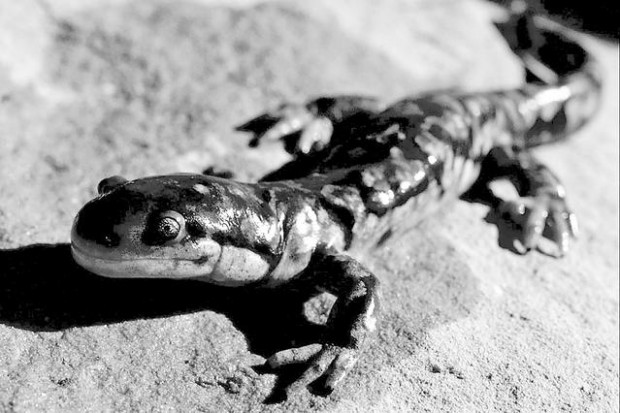
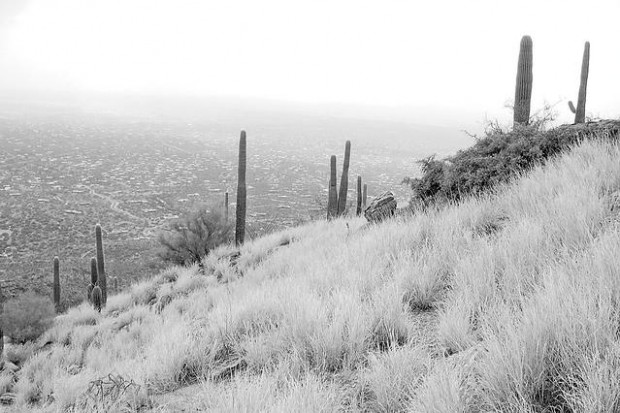
Tiger salamanders, introduced into waterways as bait, are suspected of spreading a fungal disease that has decimated native frog populations. Buffelgrass, imported from Africa as cattle forage, is spreading around Southern and Central Arizona and threatens native vegetation by spawning intensely hot fires that devastate the landscape.
Sandy Bahr, conservation outreach director of the Sierra Club's Grand Canyon Chapter, said her group supports the plan.
"We were obviously very pleased that the governor has made dealing with invasive species a priority," Bahr said.
Joanne Roberts, resource ecologist for Arizona State Parks and an author of the plan, said the state will need to put money behind efforts to prevent and eradicate invasive species. Given the current tight budget, leaders of the efforts are applying for grants and seeking federal funding for now.
"You cannot have a job completed and be long-term if you always depend on soft monies like grant monies," Roberts said. "Some monies do, at some point, have to be provided to the state agencies on a consistent annual budget in order for it to be successful."
For now, organizations involved in the effort will log and analyze staff time and money committed to invasive species to offer a firm idea of what is required to combat them, she said.
"A lot of folks think that dealing with the environmental issues is a luxury item, but it really isn't," Roberts said. "Maintaining a healthy environment around us also maintains our health. It would be really great if everybody recognized that."
Here are examples of invasive species in Arizona
Buffelgrass
Introduced as livestock forage, buffelgrass is typically found in open areas and along trails and washes in the desert. The plant grows quickly and densely, crowding out native species and helping to spread wildfires. It also fiercely competes for water while its roots and ground shading prevent the germination of native plant seeds. Native to Africa.
Quagga mussel
This thumbnail-size invader has caused millions of dollars worth of damage in the Great Lakes region. Found recently in Lake Mead, Lake Mohave and Lake Havasu, it breeds rapidly and can clog water intakes and damage piers and boats. It also can wreck ecosystems. Native to Eastern Europe.
Crawfish
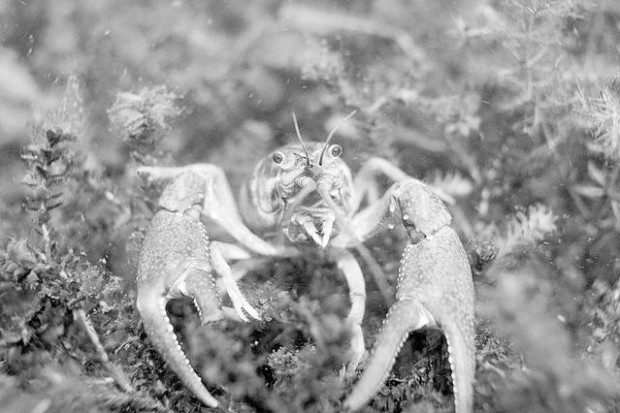
Brought to Arizona as fishing bait and for vegetation control, its tremendous appetite, which includes a taste for fish, frogs, reptiles and snails, is damaging water ecosystems. There are 500 species worldwide, none native to Arizona.
Red brome
This aggressive grass forms a thick carpet and is highly flammable when it dries out in the summer. Native to Europe and Eurasia.
American bullfrog
With a huge appetite and tastes that include reptiles, fish, other amphibians and even small birds and mammals, bullfrogs have few predators and can displace native species. Native to North America east of the Rockies.
Source: Arizona Invasive Species Advisory Council


