The Star's longtime columnist on the money-madness that led to Arizona, ASU, others joining the Big 12 ... the Big 12's stature as a basketball power conference ... remembering local multi-sport athlete Chuck Giles ... and more.
41 years ago, started a new life in a strange setting (Tucson). Arizona pretty much about to do the same thing.
August, 1982. I'm looking out the window of an airplane on its approach to the Tucson airport. The view of South Tucson isn't exactly Sweden.
“No way I'm living here," I told myself.
The Star's sports editor, Sam Pollak, picked me up for a two-day job interview. The air-conditioning in his car was on the fritz. Still, we drove around Tucson, baking, taking in the less-than-impressive summer sights.
People are also reading…
“No way I'm living here," I thought.
I had lived in Corvallis, Oregon, for three years, embracing my job at a small-town newspaper. The Beavers' basketball team had spent much of the previous year ranked No.1 in the nation. Gill Coliseum was the most happening arena in the Pac-10.
I loved the greenery. The freedom to drive 40 scenic miles to write about the Oregon Ducks. The Willamette River. The Cascade mountains. The lack of traffic congestion. My summer softball team.
Tucson was none of that.
I phoned my wife and told her not to worry. I wasn't going to uproot our young family and move us to what seemed like Death Valley. We had fled the overpopulation of Tampa Bay, where I covered the NFL's Buccaneers, hoping to find a college town for a superior quality of life and community togetherness.
But the following afternoon the Star's managing editor offered me almost double the money I was making in Corvallis. “Can you be here by Labor Day?" he asked.
By Labor Day I was standing in the late-afternoon sun at Arizona Stadium, watching a UA football practice in what seemed like hell.
That was my personal equivalent of jumping from the Pac-12 to the Big 12, a new life in a strange setting. It was about the money, which wasn't much different for a small-town sportswriter in 1982 as it is today for Arizona and ASU and their stressed $100-million athletic department budgets.
Is anyone in Tucson bubbling with I-can't-wait exuberance for the chance to compete against Cincinnati and Central Florida?
Literally, there can't be a single person in Tucson who wants to watch the Wildcats play football against West Virginia, home or road or anywhere.
Arizona is leaving the conference of John Wayne and John Wooden, Jackie Robinson and Jennie Finch, John Elway and Steve Kerr for the right to play football in Ames, Iowa, and Stillwater, Oklahoma, which I would put at the top of my “least favorite cities ever visited" list along with Lubbock, Texas, all of them you-can't-get-there-from-here Big 12 truck stops.
Who do I blame? Nobody. OK, maybe Larry Scott. The Pac-12 was never going to get a media deal to keep schools like Arizona and ASU from being buried by a growing debt service well past $100 million preventing them from building exotic locker rooms, regularly fly in charter jets and continue to gorge themselves on the excesses of college athletics.
Once ESPN and Fox Sports dedicated their inventories to the Big Ten, SEC and Big 12, the Pac-12 was doomed. To his credit, Arizona President Robert C. Robbins seemed to be ahead of his contemporaries, especially ASU president Michael Crow, fully aware that the Pac-12 could not pay its bills with the picked-over carcass of today's TV sports industry.
Robbins was much like former UA athletic director Dick Clausen, who rescued the UA after it bolted the Border Conference in the late 1950s and was the force behind the creation of the WAC, which added BYU, Utah, ASU, Wyoming and New Mexico.
“Had not we started the WAC," Clausen once told me, “we might've turned out like New Mexico State."
Had Robbins not been proactive in leaving the Pac-12, it might've turned out like Oregon State and Cal.

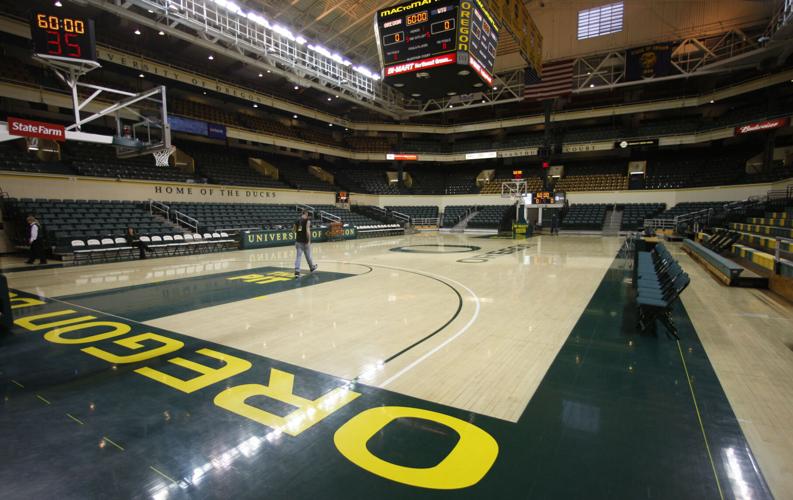
In the yesteryear of the Pac-10, the rowdy, close-quartered nature of Oregon's McArthur Court in Eugene, Oregon (pictured March 5, 2010), gave visiting teams fits for years. The venerable building was replaced in January 2011 by Matthew Knight Arena — a sparkling facility, but with a fraction of the character of "Mac Court."
What's left? Nostalgia and not much more. Such as:
• Maples Pavilion in the 1990s, with the floor vibrating and Stanford's sixth-man club making more noise than 20,000 people at Madison Square Garden.
• Mac Court in Eugene, any year, with Lute Olson forced to bulldoze a trail to an 80-year-old basement locker room through hundreds of loud-mouth Duck fans. It's amazing there wasn't a brawl.

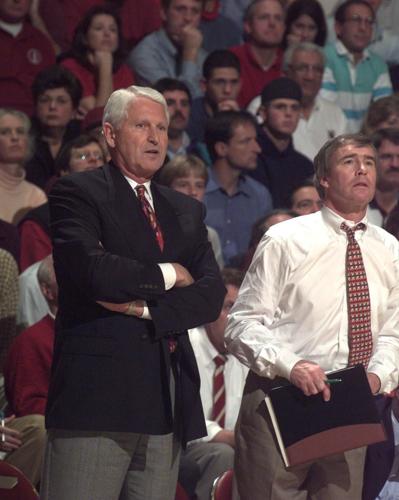
Arizona coach Lute Olson and assistant Jim Rosborough watch intently during second-half action with the Wildcats on the road at Stanford on Jan. 29, 1998 in Maples Pavilion.
• The Rose Bowl, on an autumn afternoon, when all the Rose Bowl-contending Wildcats had to do was prevent UCLA from marching 75-yards in the last 40 seconds. It was one of many times Arizona was THIS close to celebrating New Year's Day in Pasadena.
But all that has changed, touched by time, as the once chummy brotherhood of Pac-12 schools has been eroded by a self-indulgent, money-first enterprise with no soul. League partners became financial competitors as much as on-field rivals. A century of history has been forgotten.
Soon, leaders at Arizona and ASU will be looking out the plane window on an approach to Lubbock and Stillwater wondering if the new world they've gotten themselves into can be anywhere as pleasurable as the one they're about to leave behind.
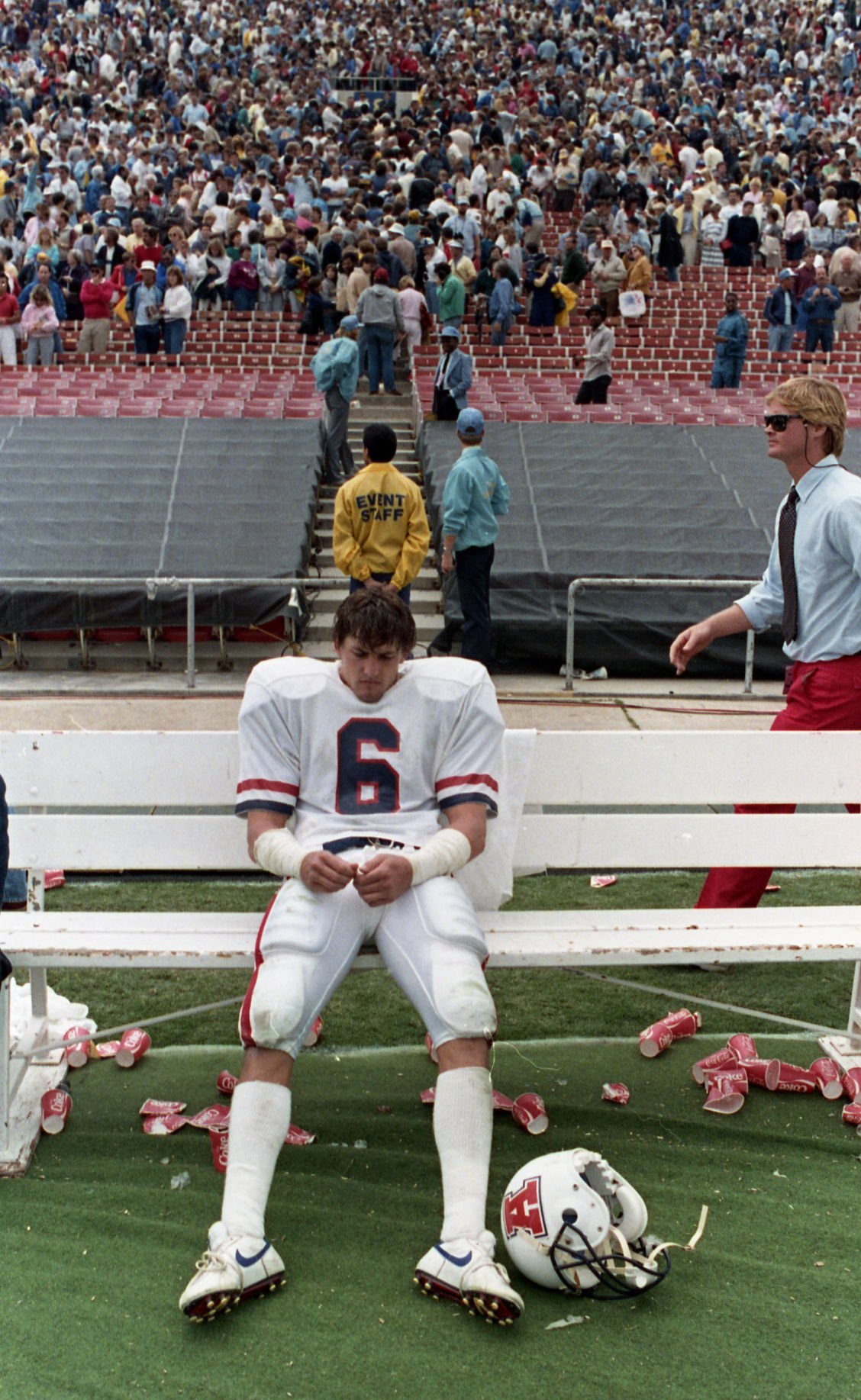
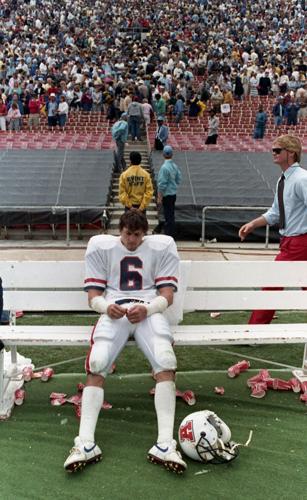
Arizona All-American safety Chuck Cecil sits dejected on the sidelines of the Rose Bowl stadium in 1986 after UCLA defeated the Wildcats on a late-game 75-yard drive. The loss kept Arizona from playing in the Rose Bowl Game later that season. Arizona’s forever drive to celebrate New Year’s in Pasadena will be left behind when the Wildcats formally leave the Pac-12 for the Big 12 in 2024

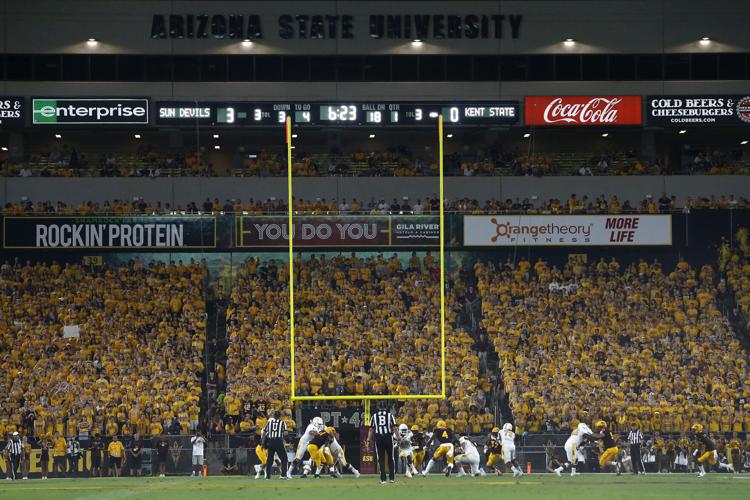
The Sun Devil Stadium — renamed last week Mountain America Stadium, home of the ASU Sun Devils — student section keeps an eye action during ASU's August 2019 matchup with Kent State in Tempe.
So long, Sun Devil Stadium (as we knew it)
ASU last week announced its football facility will henceforth be known as Mountain American Stadium, home of the ASU Sun Devils. It made me want to puke. Sun Devil Stadium's historical identification shouldn't have a price.
Worse, ASU's official news release said: “The 15-year partnership with Sun Devil athletics (is) the most important deal in athletics department history." Really?
After 100 years of athletics, renaming the football stadium and taking the money from a credit union has little relevance other than it will be temporary, 15 years, and then gone, the same way ASU's creaky basketball arena was once Wells Fargo Arena. Is that No. 2 in ASU athletic department history?
Let's hope Arizona never surrenders to money and tries to rename McKale Center. There would be a riot.
ASU is not unlike many of the Power 5 schools who sold naming rights for a quick buck. Minnesota plays football in Huntington Bank Stadium. Maryland plays in SECU Stadium. Kentucky plays at Kroger Field and Rutgers at SHI Stadium. And on and on.
That's not a group with any historical dignity.

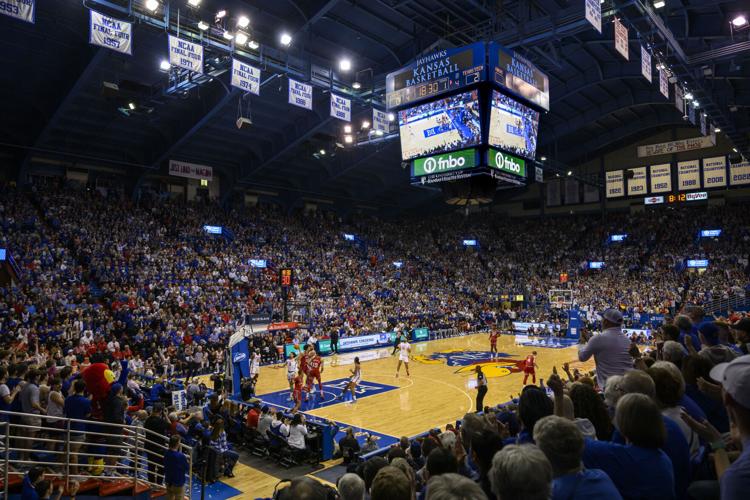
Kansas' Phog Allen Fieldhouse is the dean of a laundry list of strong Big 12 basketball backdrops. Arizona's McKale Center will join that list when the Wildcats begin Big 12 play starting with the 2024-25 season.
Big 12 is a big-time basketball league
As a group, Big 12 basketball teams averaged 11,029 in home basketball attendance last season, or roughly 91% capacity. Pac-12 teams averaged 6,237 per game, about 53% capacity.
If you think the Arizona-UCLA rivalry is intense, wait until Arizona plays at the following Big 12 arenas:
• Kansas' Phog Allen Fieldhouse: Averaged 16,300 last year, 100% capacity.
• BYU's Marriott Center: Averaged 14,117 last year (holds 17,978).
• Iowa State's Hilton Coliseum: Averaged 13,375 last year (holds 14,356).
• Texas Tech's United Supermarkets Center: Averaged 13,222 (holds 15,300).
• West Virginia's WVU Coliseum: Averaged 12,004 (holds 14,000).
• Cincinnati's Fifth Third Arena: Averaged 9,685 (holds 12,000).
• Kansas State's Bramlage Coliseum: Averaged 9,596 (holds 12,528).
All of those Big 12 arenas drew more fans than anyone in the Pac-12 except Arizona (14,115). UCLA was second at 9,276.
Even TCU, which has become a Top 25 program, drew 91% capacity (6.192) at Schollmaier Arena, which is higher than any capacity at a Pac-12 arena except Arizona.

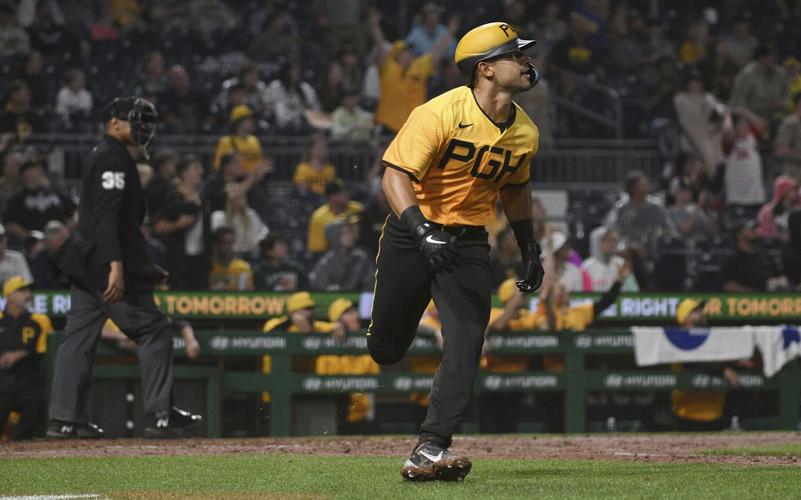
The Pittsburgh Pirates’ Nick Gonzales watches his first career home run, against the San Diego Padres during the seventh inning June 27 in Pittsburgh.
Short stuff: Gore's player-centric PGA role, remembering multi-sport athlete Giles
• Jason Dickens, who was one of Tucson's leading basketball players of the 1990s, the 1999 Tucson player of the year at Salpointe, has returned to Tucson and is the new head coach for the Tanque Verde High School girls team. Dickens played collegiately at Davidson and LMU. He is also coaching for Apex Athletix with another ex-Salpointe standout, Derek Hersha. ...
• Sad to hear that former Catalina High School athlete, UA grad and Tucson attorney Chuck Giles died late last month. A graduate of the UA Law School, Giles played semipro baseball in Tucson in the 1960s before becoming an avid cyclist over the last 40 years, one of Tucson's best. He joined forces with Pima County Sports Hall of Fame ultramarathoner Pam Reed about 20 years ago, influencing her to run — and win — the Badwater 135 Marathon through Death Valley, a triumph that earned her an appearance on the Late Night With David Letterman Show, and on 60 Minutes. Giles was also part of Reed's record-setting 301-mile marathon run near Picacho Peak in 2005, in which she set a world record. ...

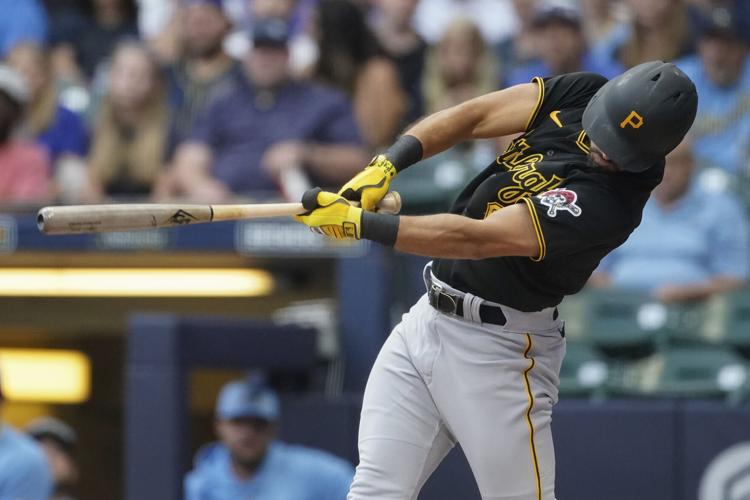
Pittsburgh Pirates' Alfonso Rivas hits a three-run home run during the first inning of a baseball game against the Milwaukee Brewers, Friday, Aug. 4, 2023, in Milwaukee.
• Cienega High School grad Nick Gonzales, the No. 7 overall draft pick in the 2019 MLB draft, was sent by the Pittsburgh Pirates to Triple-A Indianapolis last week. Gonzales, an infielder, was hitting .216 overall after an impressive start in July. He had gone 0-for-14 before being replaced on Pittsburgh's roster by former Arizona all-Pac-12 first baseman/outfielder Alfonso Rivas. ...
• Rather than prepare for the PGA Tour Champions in 2024, two-time Arizona Pac-10 golf champion Jason Gore accepted a position as “Chief Player Officer" for the PGA Tour. He is assigned to work directly with PGA Tour commissioner Jay Monahan and is part of a three-person task force to develop “potential pathways back to the PGA Tour for LIV players" who wish to apply for reinstatement on the PGA Tour. Gore won the 1994 and 1994 Pac-10 championships while at Arizona.

FILE - Jason Gore celebrates after hitting a birdie chip shot on the first green during the final round of the RSM Classic golf tournament on Nov. 18, 2018, in St. Simons Island, Ga. The tour announced Friday, Aug. 19, 2022, that it has hired Gore as a senior vice president and player adviser to the commissioner. (AP Photo/Stephen B. Morton, File)
My two cents: BYU/Arizona rivalry one of many likely 'Big' changes
• A football rivalry of more oomph than Arizona-USC or Arizona-Oregon will commence when BYU plays in Tucson. BYU's significant volume of Mormons in Southern Arizona should make sure the Territorial Cup will no longer be the lone sellout of the year.
• Athletes in the so-called minor sports were not considered whatsoever in this realignment. It's all football and football TV money. Don't be surprised if those athletes soon make their voices heard.
• Colorado's 12 years in the Pac-12 were underwhelming, to say the least. The Buffaloes only won championships in men's cross country, women's cross country, women's lacrosse and coed skiing. Playing CU, whether coached by Deion Sanders or anyone, should help UA in the win column in most sports.
• Talk about ironic timing: A construction crew at McKale Center last week removed Pac-12 logos from the court. The court is being refinished before school starts in two weeks. Wonder if they'll forget to re-paint the logos?

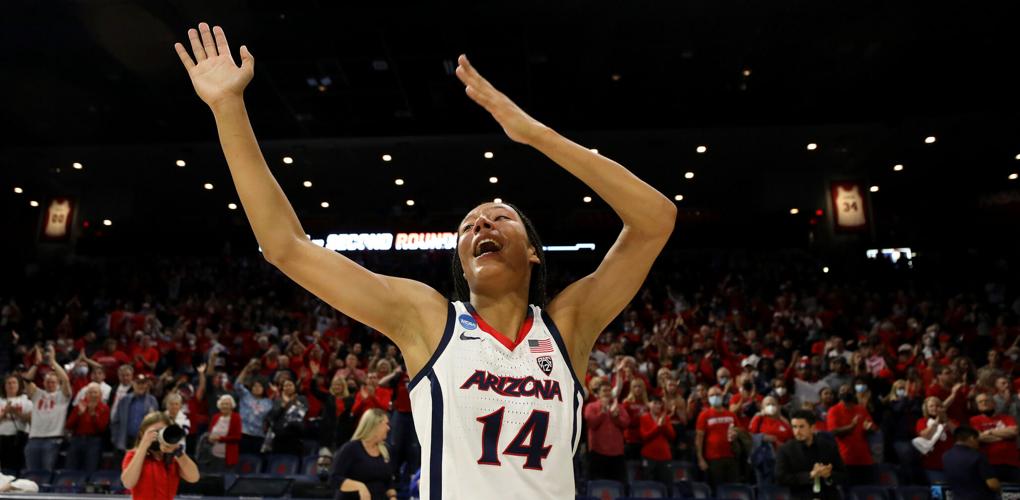
An emotional Arizona Wildcats forward Sam Thomas (14) kisses towards the crowd of more than 8,300 after the Wildcats' 63-45 loss to North Carolina in round two of the NCAA Women's Basketball Tournament — a game the UA hosted in McKale Center on March 21, 2022.
• Adia Barnes' reign leading the Pac-12 in women's basketball attendance (7,679 last season) will probably end in the Big 12. Iowa State averaged 10,323 last season at Hilton Coliseum in Ames.
• Sadly, there will be no more “McKale North" in the league's post-season basketball tournament, a takeover of Las Vegas by Arizona fans. The Big 12's men's basketball tournament has been held in Kansas City the last 14 years. Travel distance from Tucson to KC: 1,192 miles. Travel distance from Tucson to Las Vegas: 412 miles.

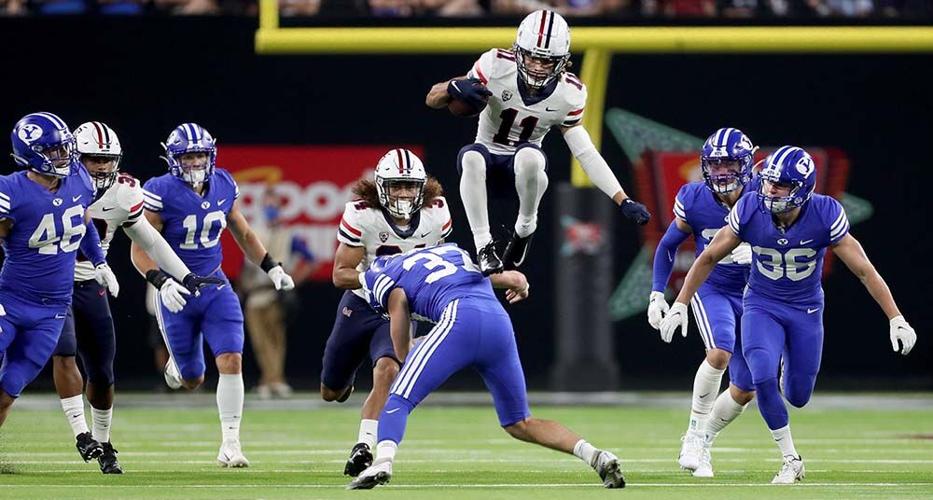
Just like how Arizona wide receiver Tayvian Cunningham (11) hurdled over BYU linebacker Isaac Matua (37) on a punt return during the Vegas Kickoff Classic on Sept. 4, 2021 at Allegiant Stadium in Las Vegas, local fans — many with ties to BYU — will hurdle for tickets to see the Wildcats and Cougars square off on the gridiron once both schools become full-fledged Big 12 members by Fall 2024.
Arizona football coach Jedd Fisch says his current players are "living through history" — not just with conference realignment, but name, image and likeness opportunities and playing through the COVID-19 pandemic. Video by Justin Spears/Arizona Daily Star
Contact sports columnist Greg Hansen at GHansenAZStar@gmail.com. On Twitter: @ghansen711

Greg Hansen
Columnist

 How Steve Kerr survived grief, injury and doubt to become an NBA icon | Greg Hansen