

With Día de los Muertos just around the corner, colorful ofrendas are beginning to pop up in homes, businesses and community spaces across Tucson.
Decorated with marigolds, candles, photographs and offerings of food, these altars are an important part of the traditional Mexican holiday, celebrated Nov. 1 and 2, when families remember and honor loved ones who have died.
But if you've never built an ofrenda before, figuring out where to start can feel a little overwhelming. Do you need multiple levels? What items should you include? And how much should you expect to spend?
According to Lupita Zepeda, owner of Tucson's Yolia Botanica, building an ofrenda doesn't have to be expensive or elaborate. What matters most is the intention behind it.
"An ofrenda shouldn't cost people their peace of mind," she said.
With that advice in mind, I visited two Tucson businesses and gathered a few things I already had at home to put together an ofrenda of my own.

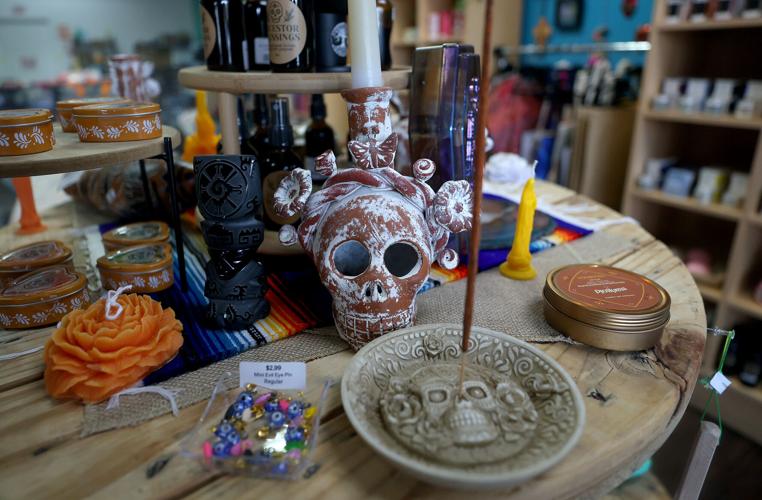
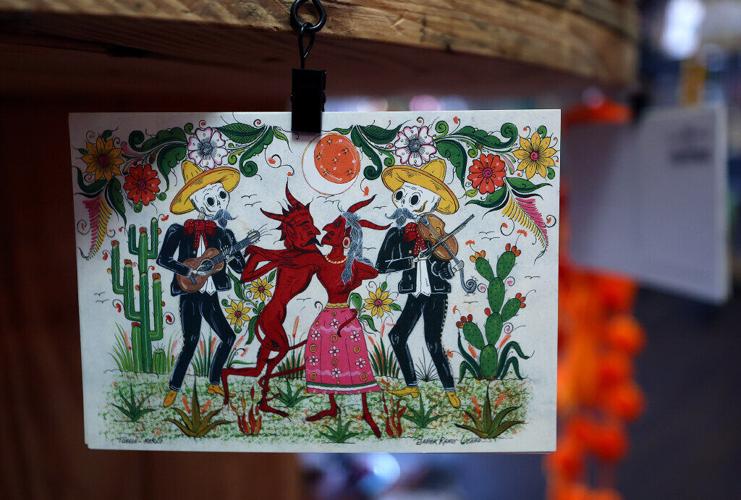
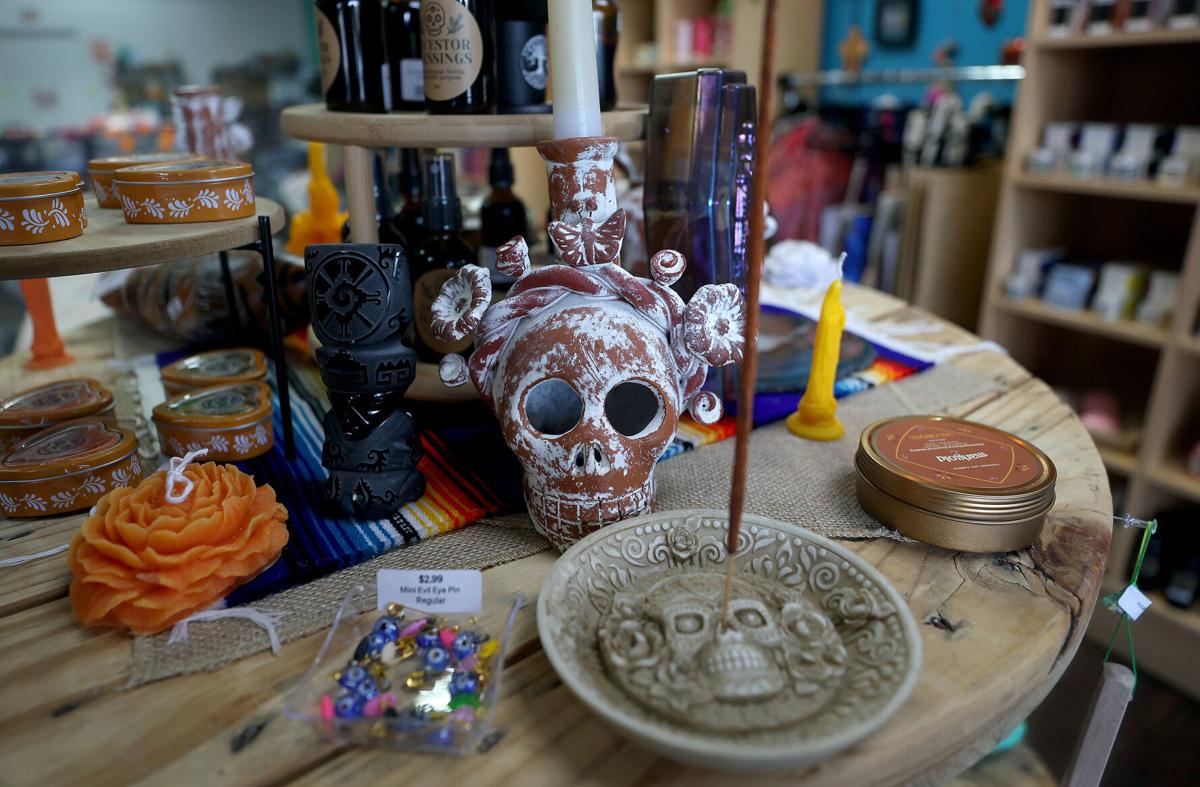
Images at Yolia Botanica, 1307 W St Marys Rd that can be placed on an ofrenda in Tucson, Ariz., on October 23, 2026.
Start with what you have
At Yolia Botanica, a metaphysical shop that carries spiritual supplies, candles and other offerings, Zepeda emphasized that ofrendas are deeply personal and can look different from household to household.
Traditional Mexican ofrendas often include multiple levels, photographs, candles, cempasúchil (marigolds), copal incense, food and other offerings.
But Zepeda said people shouldn't feel pressured to recreate the elaborate altars they might see online.
Many traditional ofrendas in Mexico have been built over generations, with families adding keepsakes and meaningful objects over time.
"Ofrendas hold history, and they hold ancestral history as well, and that takes time," she said.
For someone with limited space or a small budget, Zepeda suggested starting with a nightstand, a small altar cloth, a photograph, a candle and a glass of water.
She also suggested dried marigolds, small candles, postcards or saint cards for anyone looking to purchase just a few things.
In Mexican tradition, cempasúchil is believed to help guide the spirits of loved ones home through its fragrance. Other common elements include water, candles representing fire, and copal, a tree resin burned as an offering and used for spiritual cleansing.
But even if fresh marigolds aren't available, Zepeda said dried flowers or other decorations can be used to incorporate the traditional colors.
"The intention, the purpose of why you're adding that to the altar, that matters," she said.
And when it comes to deciding who to honor, Zepeda said ofrendas don't necessarily have to be dedicated to blood relatives.
They can also honor mentors, friends, pets or other people who have made an impact on someone's life.
"Ofrendas connect to your heart. Connect to your family. Connect to your upbringing," she said.
During our conversation, Zepeda shared a story about a customer who purchased a box of matches decorated with a snake because the image reminded him of a loved one.
He planned to use the matches specifically to light the candles and incense on his ofrenda.
It's an example of how even the simplest objects can hold personal meaning.
Zepeda said an ofrenda can also serve as a space to reflect on memories, process emotions and remember the people who are no longer here.
She emphasized that Día de los Muertos is a Mexican cultural tradition that should be approached with respect, even as families find their own ways to participate.
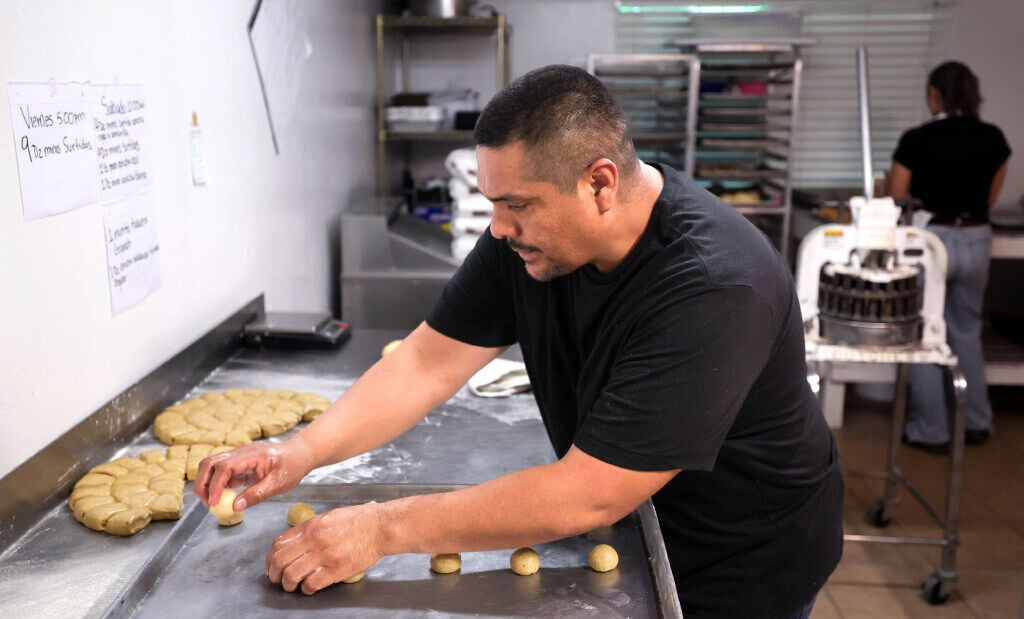
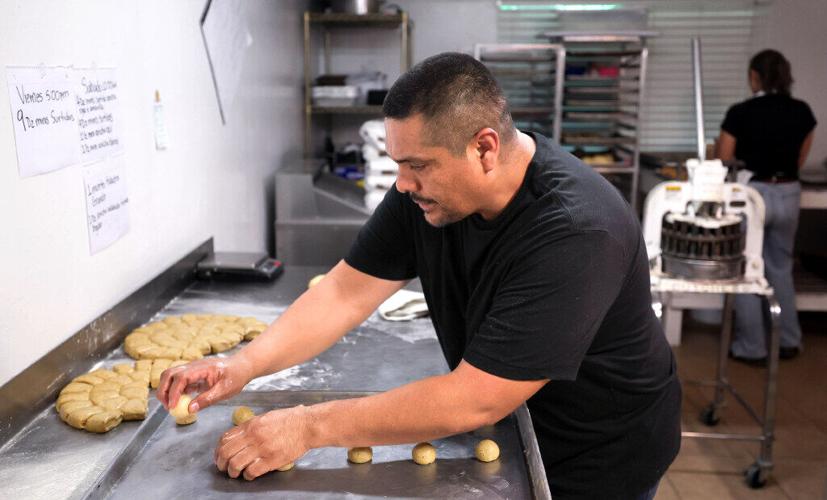
Luis Castaneda, owner of Luis Bakery 7 prepares concha dough inside his Tucson home bakery, 3820 East Dover Stravenue, Tucson, Ariz., Oct. 23, 2026.
A family tradition baked into every loaf
For many families, no ofrenda would be complete without pan de muerto, the traditional sweet bread associated with Día de los Muertos.
And at Luis Bakery 7, owner Luis Castañeda is continuing a family baking tradition that goes back generations.
Castañeda's connection to baking began with his father, Ignacio Castañeda, who established La Catedral bakery in Nogales, Sonora.
Today, the family's baking legacy continues on both sides of the U.S.-Mexico border, with Luis and other family members carrying on the trade.
The recipes he uses today are the same ones passed down by his father, allowing him to continue a tradition that has been part of his family for years.
But while the recipes have stayed the same, Castañeda has found ways to make his pan de muerto his own.
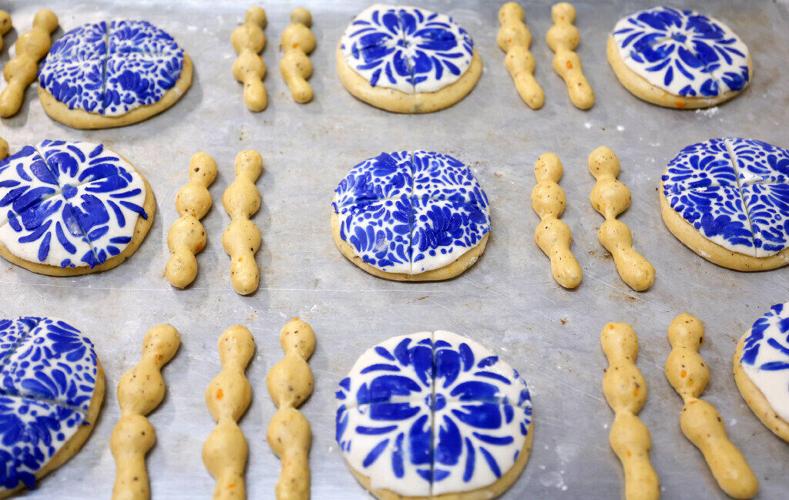
His breads feature colorful, Talavera-inspired designs, a departure from the more traditional pan de muerto he learned to make from his father.

Dia de los Muertos themed conchas are for sale at Luis Bakery 7, 3820 East Dover Stravenue, Tucson, Ariz., Oct. 23, 2026.
The idea came from his wife, who suggested incorporating the intricate patterns and bright colors associated with Mexican Talavera pottery.
Castañeda said creating the designs was challenging at first, but the effort paid off. His first batch sold out.
Now, the colorful breads have become one of the standout offerings at his Tucson home-based bakery, which he started about five months ago.
The breads are generously sized, with decorative designs in shades of pink, blue, orange and other bright colors.
While pan de muerto is traditionally placed on ofrendas as an offering to loved ones who have died, Castañeda said not everyone who purchases his bread plans to put it on an altar.
He estimates that about half of his customers buy it for their ofrendas, while the other half purchase it simply to enjoy eating.
For Castañeda, the bread represents both the continuation of his father's recipes and an opportunity to bring something new to a tradition that has been part of his family for generations.
Customers can purchase pan de muerto from Luis Bakery 7, 3820 E. Dover Stra, by calling ahead or stopping by during regular business hours, Wednesday-Saturday 9 AM to 8 PM, and Sundays 9 AM to 2 PM.

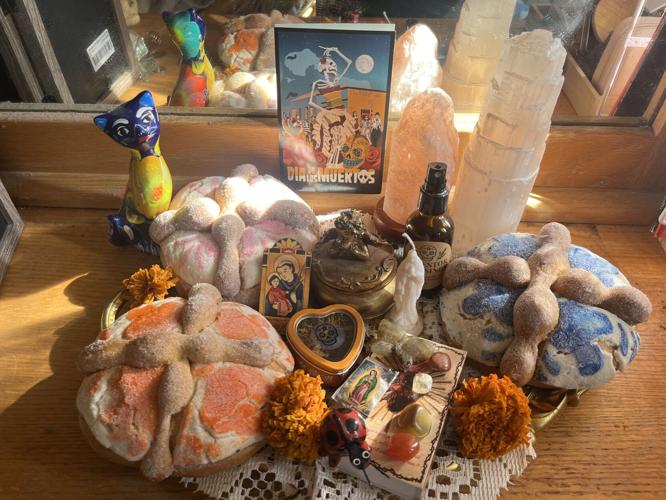
A Día de los Muertos ofrenda featuring colorful pan de muerto from Tucson’s Luis Bakery 7, items from Yolia Botanica and a mix of decorations and sentimental keepsakes already on hand.
Putting together my own ofrenda
After talking with Zepeda and Castañeda, it was time to put everything I'd learned into practice.
I've made ofrendas in previous years, so I already had a few things tucked away that I could reuse.
I started with a tray from my room and covered it with a lace mantel I'd used for previous ofrendas.
Before adding anything else, I sprayed the tray with Ancestor Blessings, a $14.44 spiritual cleansing spray I picked up at Yolia Botanica.
Zepeda created the limited-edition spray using an herbal extract she'd been fermenting for seven years, with ingredients including creosote, cinnamon, clove and allspice.
"Part of honoring death is also honoring life, and also honoring when something has fulfilled its purpose," she said of her decision to use the extract.
I also purchased a $13.33 container of Apapaxtli, a copal blend containing marigold petals, creosote, cedar and other herbs.
Zepeda explained that its name evokes the feeling of an embrace or hug. While the blend can be burned over charcoal, I chose to sprinkle a little over my mantel.
As I browsed the shop, I found myself thinking about the customer Zepeda had mentioned who purchased matches because they reminded him of a loved one.
A $6.99 box of matches decorated with the Sacred Heart caught my attention.
Growing up in Nogales, I attended Sacred Heart Catholic School, and Sacred Heart Catholic Church was the setting for many important moments in my family's life.
Seeing the familiar image immediately reminded me of home, my childhood and the people who shaped it.
I also picked up a miniature Virgin Mary candle for $8.50, another reminder of the traditions I grew up with, including celebrations surrounding Día de la Virgen de Guadalupe every Dec. 12.
Back at home, I added a small ladybug in memory of one of my favorite teachers, who taught me in second and seventh grade.
She died two years ago and loved ladybugs so much that I even got one tattooed in her honor.
Other additions included dried orange flowers from old fall decorations, crystals, a salt lamp, a selenite tower, a St. Anthony of Padua card and a small cat figurine a friend brought me from Mexico.
I also added a Día de los Muertos postcard I'd previously purchased from Antigone Books.
None of those items required a special shopping trip. They were things I already owned that found a new place on my ofrenda.
And, of course, I couldn't forget the pan de muerto.
At Luis Bakery 7, I picked up three of Castañeda's colorful breads, one decorated in orange, another in blue and a third in pink, for $5 each.
They were huge, beautifully decorated and easily became the centerpiece of my little ofrenda.
After finishing the altar, I couldn't resist trying some myself. The bread had the familiar sweetness of traditional pan dulce, with hints of orange and spices.
By the time I finished putting everything together, my ofrenda was a mix of new purchases, old decorations, sentimental keepsakes and a few things I hadn't initially considered using.
It wasn't a grand, multi-level altar, and it didn't need to be.
One of the things that stuck with me most from my conversation with Zepeda was her reminder that ofrendas aren't something families necessarily build overnight.
They grow with us, collecting new memories and meaning year after year.
And maybe that's the best place to start: with what you already have and the people and memories you want to honor.