

ASHEVILLE, N.C. — Cornelius Vanderbilt, known as "the commodore" because of his investments in shipping and railroads, made $100 million before he died in 1877.
In 10 years, his son, William Henry, doubled the family fortune.
His son, George W., inherited that $200 million, which in today's dollars would be a hefty $96 billion. And that's before there were income taxes.
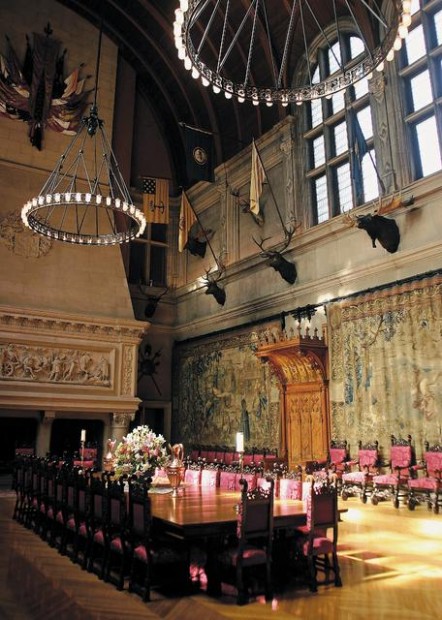
All that explains why young George could afford to walk away from the stuffy world of industry to devote his life to building the baronial Biltmore Estate's 250-room French Renaissance chateau and filling it with art and furniture from around the world.
When it opened in 1895, Biltmore House was the country's largest private residence, with 35 bedrooms and 43 bathrooms, at a time when most people used an outhouse. The home is still the largest in America, although no one lives there. The curious are welcome to tour for $38 a ticket.
People are also reading…
Vanderbilt, who began the project in 1889 when he was a 27-year-old bachelor, originally purchased some 125,000 acres, and that has shrunk to a mere 8,000 today. But the forests and gardens created by landscape architect Frederick Law Olmsted, who also designed New York's Central Park, are intact.
The cool, clean mountain air of western North Carolina was thought to have healing qualities, and Asheville attracted more than billionaires.
Sufferers of tuberculosis and other ailments flocked to the area after the railroad arrived in 1880.
Edwin Wiley Grove, owner of a pharmaceutical company that made Bromo-Quinine, came in 1900 and purchased a large tract of land to build a magnificent lodge. The Grove Park Inn is still magnificent.
Locals in this town of 69,000 people have pet names for two groups of new arrivals, who are boosting real estate prices and driving the spread of galleries. "Halfbacks" are transplanted Northerners leaving the congestion of South Florida and resettling in the moderate climate of Asheville, halfway back to their roots. "Trustafarians" are the dread-locked droves of young artists found in the coffeehouses. Most are struggling in Asheville's crowded art scene.
This corner of the Appalachian Mountains always has been a hotbed for arts and crafts. Today there are at least three dozen galleries in downtown Asheville. The Folk Art Center features the work of the more than 900 members of the Southern Highland Craft Guild.
The Inn on Biltmore Estate opened in 2001 with 213 rooms for guests. The inn has a gourmet restaurant that offers formal dining. I strolled through the vineyard to the Biltmore Estate Winery below.
There are several ways to see the entire estate — drive the winding roads, hike the trails, bike the paths, ride on horseback or carriage, or float the gentle stretch of the French Broad River.
George Vanderbilt, who had booked passage on the Titanic but canceled the trip at the last minute, died in 1914 of complications following an appendectomy. He and his wife, Edith, had one child, Cornelia. Cornelia and her husband, John Cecil, opened Biltmore to the public in 1930. Today, the estate employs some 1,600 people.
All those Asheville artists, starving and otherwise, need studio space, and a lot of them are setting up shop in the old warehouses along the riverfront. Some of the studios are open daily to visitors; some are open only by appointment. During a whirlwind tour, we visited:
● The Odyssey Center for the Ceramic Arts, which holds nine-week workshops with national artists.
● Pattiy Torno, who makes quilts that sell for up to $10,000.
● Marty and Eileen Black, who fire pottery with the difficult "copper-red" glaze.
● Genie Maples, who does large, colorful abstract oils that she calls "visual poetry."
I also saw some of nature's art at Chimney Rock Park at the end of a 25-mile drive through twisting Hickory Nut Gorge. The park's main feature is a towering rock spire, which was reached by a 26-story ride inside an elevator shaft blasted into the mountainside.
For more information: The Asheville Convention & Visitors Bureau is at www.exploreasheville.com.


