

The countryside of England is sublime… rolling hills, little valleys as well as lots of of hedges on both sides of the narrow roads. Also, there are the pervasive sheep (mothers and lambs) dotting the pastures everywhere. The Cotswolds, located in the southeast of England, are the iconic symbol of English countryside living and tourism. Here, in this area, both to the north and south, you will discover tiny towns and villages, with buildings of honey-colored stone, each more precious and charming than the next (and most with unusual names). Given the unusual architecture and surroundings, many of these sights are sought out for filming some of our favorite literary tales, starting with Harry Potter.
People conjecture about the meaning of the name “cotswolds” and relate it to the term “cot” which means enclosure and “wold” which means hill. Throughout the Medieval Ages, the Cotswolds were known for producing the best wool which was shipped all over Europe. In fact, they called a certain group of sheep there the “Cotswold Lion”, based on their long golden fleece. While wool production still exists today. There are many other competitors, too, such as Australia and Peru (where they have the vicuna, an animal in the llama family, which produces what is known as the softest wool available). But during its peak years in medieval times, many became wealthy, thus the large number of old mansions, palaces and country homes. Even the new King Charles has his country mansion there, called Highgrove House.
People are also reading…
Prior to reaching the Cotswolds, there are two important stops to make. First, a small jaunt to Oxford, the prestigious university, which originated in 1096, and today has 39 different colleges, followed by a stop at Blenheim Palace. At Oxford, students are assigned to a specific college, where they live and study during their time there. Their college is like their permanent dorm or fraternity.
Not far off is the palace of Blenheim, which is often associated with Churchill. The palace, over 300-years old, with over 187 rooms, sprawling over many well-manicured acres, was owned by the seventh Duke of Marlborough. The Duke had 11 children, one of which was Churchill’s father, Lord Randolph Churchill, who married Jennie Jerome, an American heiress and British socialite. Churchill’s association with Blenheim began early, as he happened to be born there, when his mother suddenly went into labor while attending a party at the palace. As a grandson of the Duke, Churchill enjoyed many memorable times there with his paternal grandparents, and even proposed to Clementine there in 1908. Upon his death, he chose to be buried nearby in a quaint graveyard at a small country church (St. Matthew’s Church).
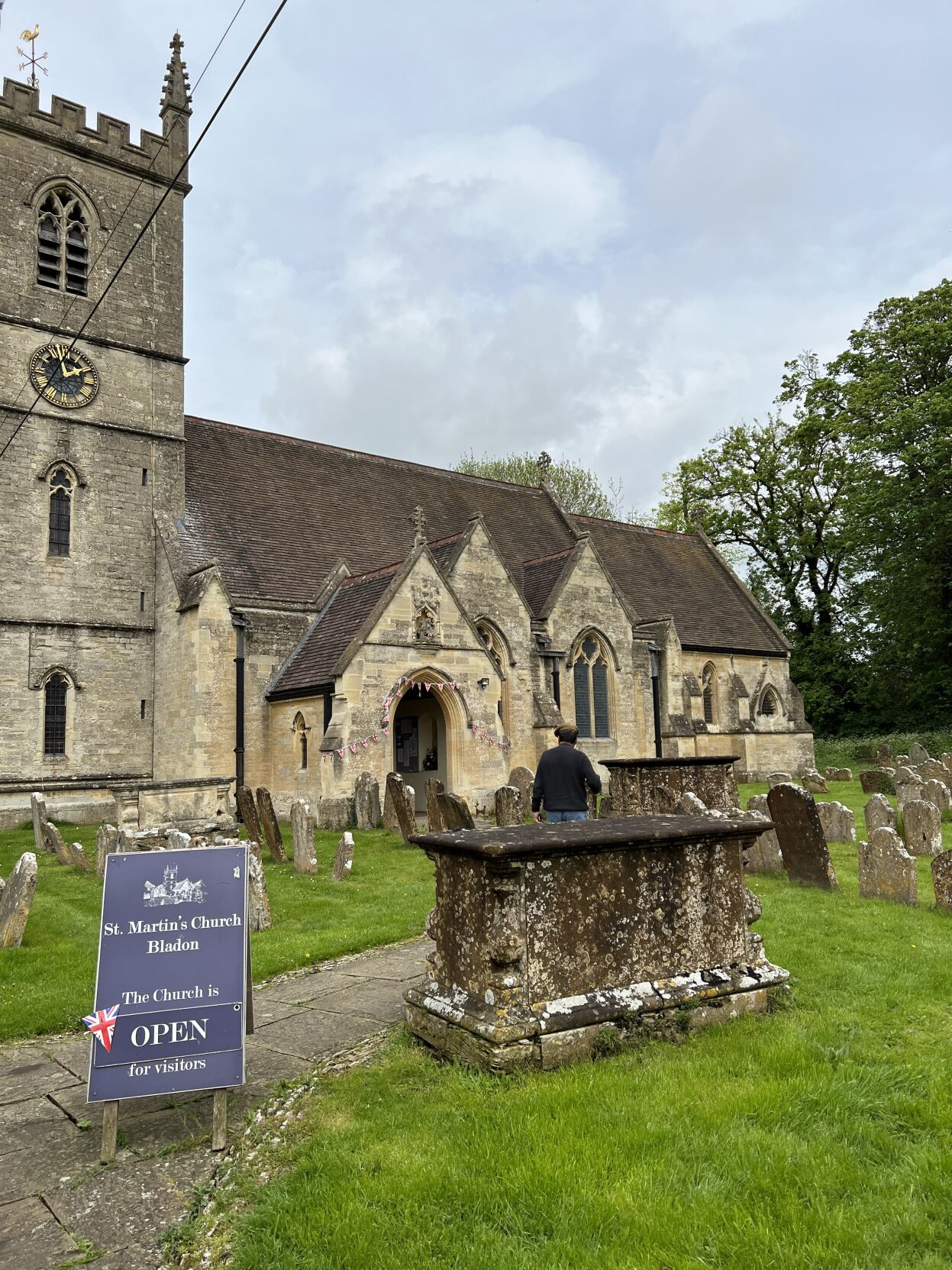
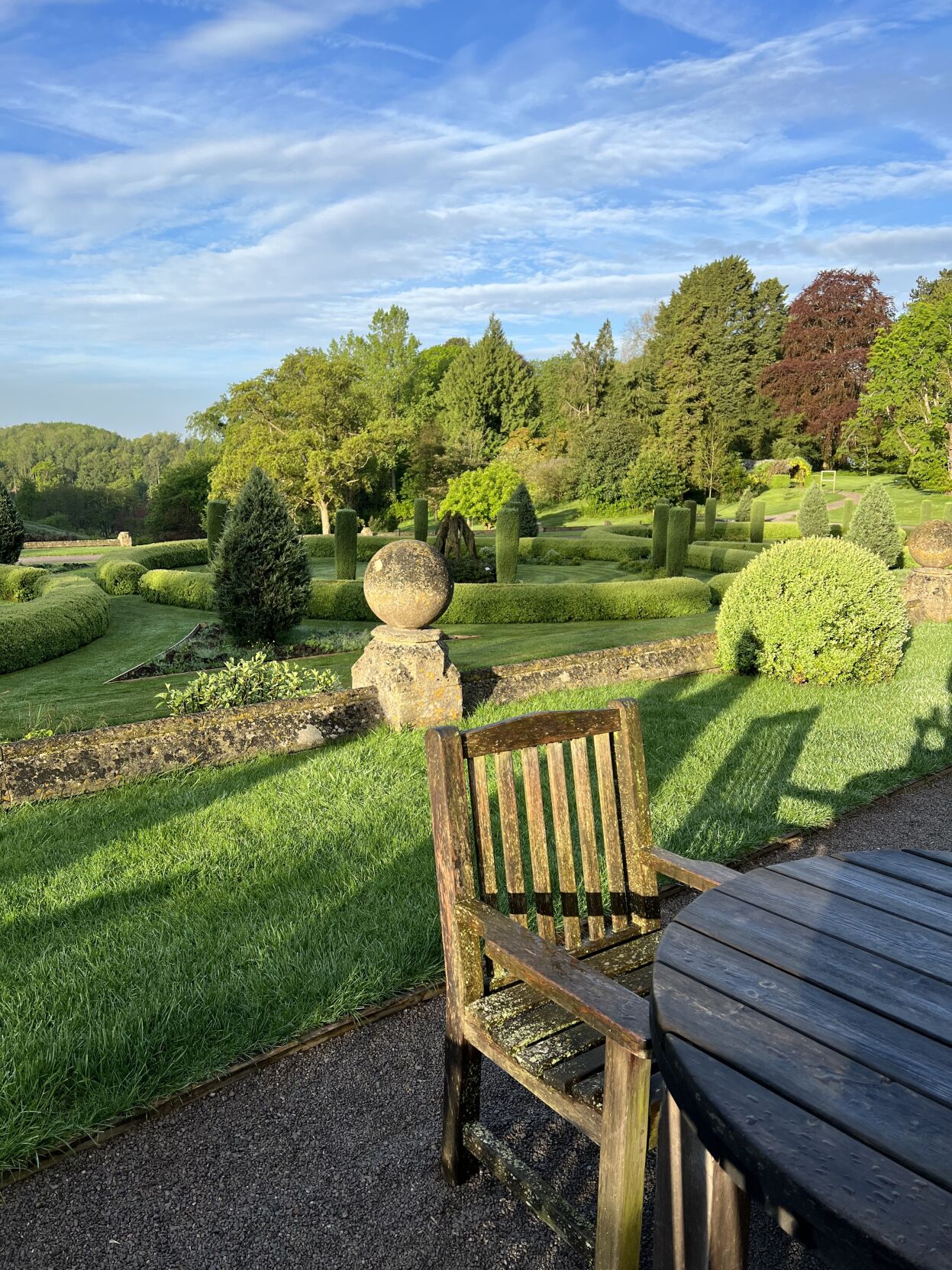
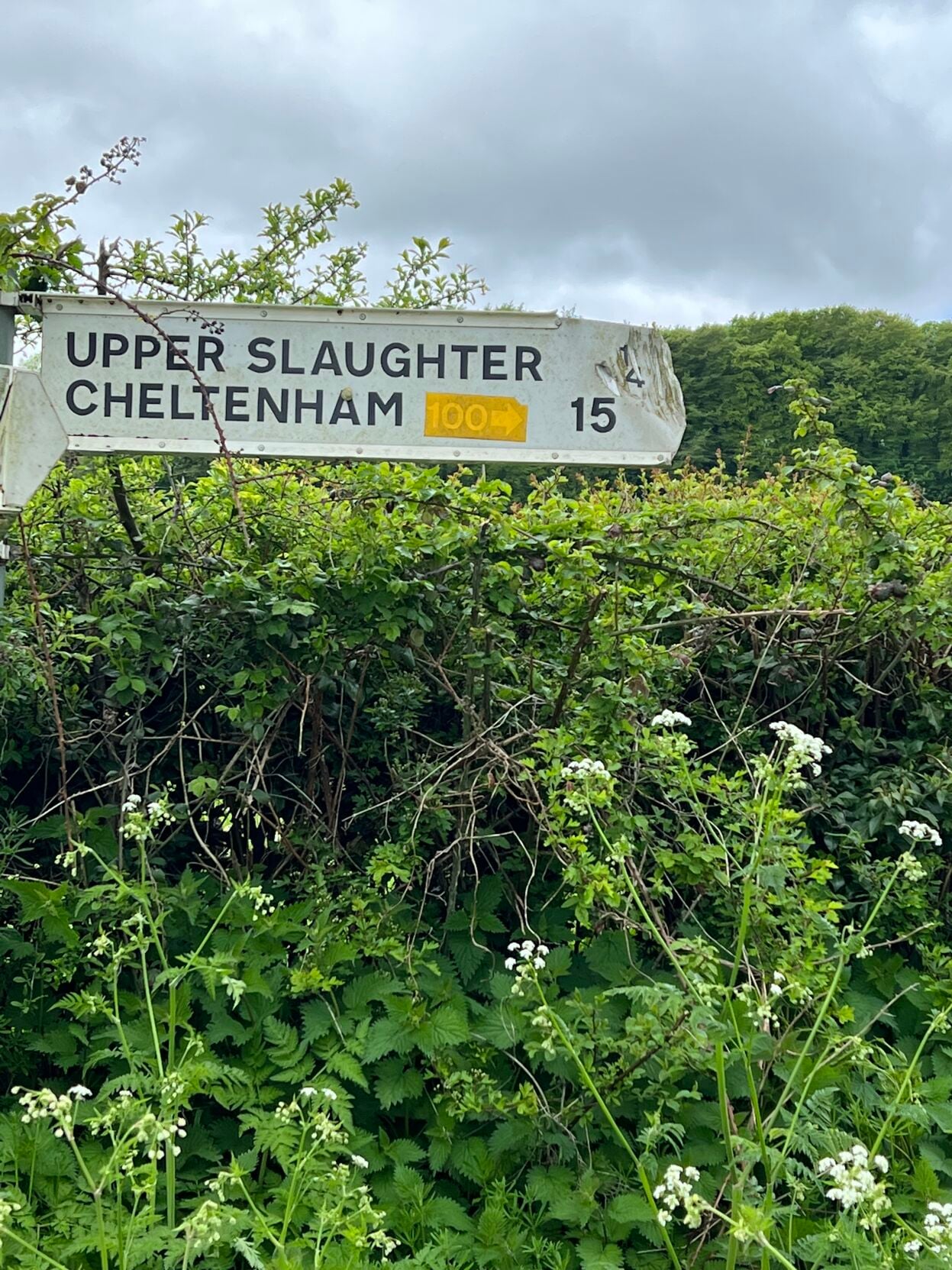
Our first stop in the Cotswolds: the town of Woodstock. Here, we nourished ourselves in the Crown. From there to Cheltenham and Upper Slaughter, (remember I mentioned that names are unique) stopping to walk around in an old country church with the proverbial graveyard all around. We decided to stay in the Tortworth Court Hotel, an old hunting lodge converted to a hotel, surrounded with acres of resplendent gardens and woodlands. This is a perfect base for daily outings, situated near the little town of Wotton Under Edge. For several days, we explored Bourton On The Water (the Venice of the Cotswolds), Stow On The Wold (here you find the famous Hobbit tree from Tolkien novel, Lacock known for its Harry Potter filming, and others, where we constantly enjoyed scenery, old stone buildings from centuries ago and little stores for shopping.
I think one of our most delightful visits was to an old Jacobean manor house knows as Stanway Manor (Jacobean refers to the group of Scottish people who wanted their Scottish king to rule versus an English king back in the 1640’s) for a private tour and a spot of tea and freshly made scones. In its day, it even hosted an English king and J. M. Barrie, the Peter Pan author. By the way, the current owner lives there, although the house shows considerable wear and tear and seems to lack financial resources to return it to its old glory. In Scotland, his son lives in a grand mansion.
Years back, I had a wonderful visit in the Cotswolds, particularly in the town of Broadway. We ate in Lambs Restaurant where they served a mushroom soup, which was beyond delicious. Upon returning home, I contacted Gourmet and asked them to request that recipe for me which they did. Today, I still make that soup, to rave reviews and think of the Cotswolds! On this visit, we did have some delectable food, but nothing as memorable as that soup.
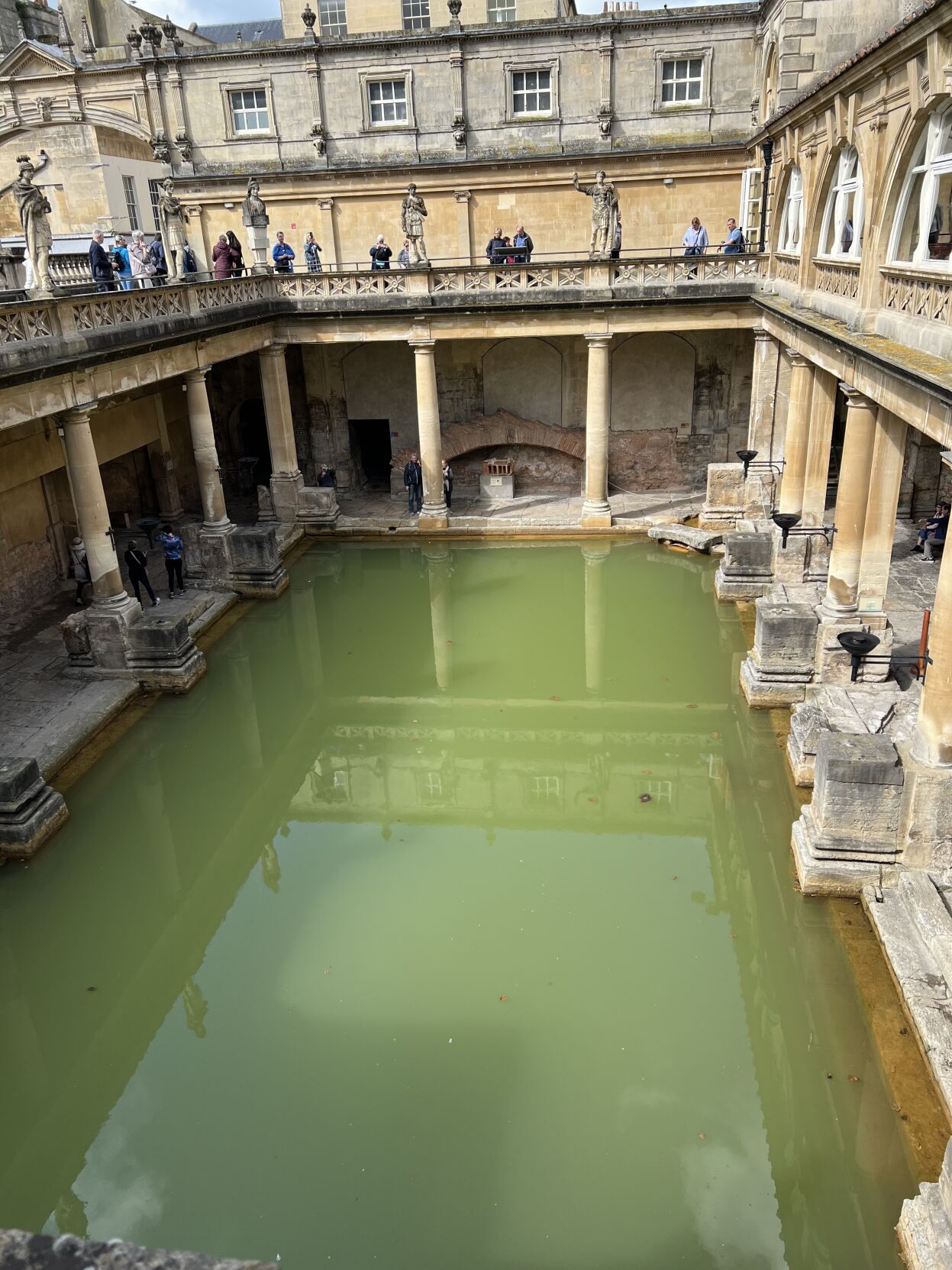
The English countryside encompasses much more than the Cotswolds. Two other wonderful stops for us were Bath, best known for its Roman baths from AD 43, situated on a thermal spring which is still used in a spa today. Also, Bath is home to some of the most glorious Georgian architecture, dating from 18th century, standing in areas called the Royal Crescent and the Circus. And then there is the medieval town of York to the north, where you find the 13th century fortress walls of the town and the awesome Gothic York Minister, a medieval masterpiece of stone and glass. The English countryside is delightful!
Linda Stack owns Travelinda LLC. Email her at LLStack9597@gmail.com.


