New books by Southern Arizona authors:
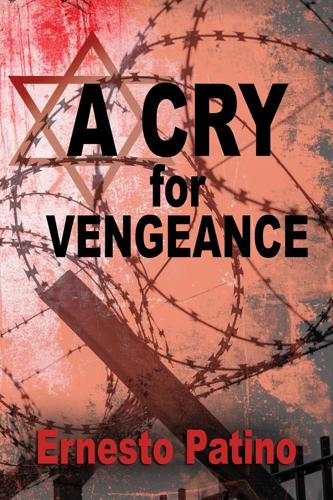
- A Cry for Vengeance
By Ernesto Patino. Rogue Phoenix Press, 171 pgs. $8.99; $2.99 Kindle

Espionage and retribution inform this historical novel, set in 1968 Tucson.
As a part-time professor with experience in international affairs, Bryan DeLuca is intrigued by the deathbed confession of a man claiming to be a former Nazi officer with the blood of thousands of Treblinka concentration camp victims on his hands. DeLuca realizes at once this is prime material for his planned book on Nazi officers who escaped punishment by fleeing to other countries — but how, he wonders, did this escapee manage to arrive in the U.S., assume a new identity, and evade authorities for so long?
Turns out this was just one of several former SS officers secretly recruited by the U.S. government to be Cold War spies. But as his investigation deepens, DeLuca finds himself in the middle of a deadly game of cat and mouse between two warring factions, one of which wants to maintain the government’s cover-up at all costs while the other will stop at nothing to take revenge on elusive war criminals.
People are also reading…
By introducing Holocaust survivors and their heartbreaking stories to his already heady mix of characters, Patino poses moral questions about personal responsibility and justice as the plot barrels headlong to an unanticipated conclusion.
Patino, a multi-genre author whose books range from mysteries and thrillers to romance and children's books, lives in Tucson.
— Helene Woodhams
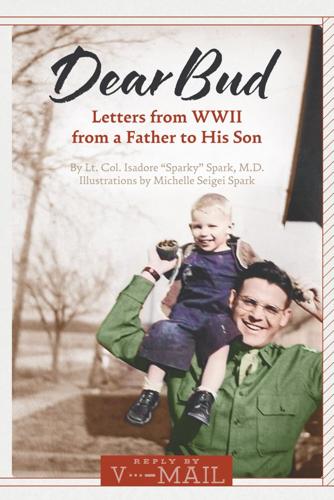
- Dear Bud: Letters from WWII from a Father to His Son
By Lt. Col. Isadore "Sparky" Spark; illustrated by Michelle Seigei Spark. Independently published, 50 pgs. $6.95; $0.99 Kindle
While Lt. Col Isadore “Sparky” Spark, MD, was stationed overseas during WWII, his letters home to Bud, his 3-year-old son, were his loving way of staying present in the little boy’s life. Sparky’s letters took the form of imaginative stories about things that would captivate a child, from dogs and rambunctious barnyard animals to snowmen, a friendly wood stove, and even a talking Jeep.

The letters, many of which begin “Did I ever tell you about …” before launching into a flight of fancy, were meant to be read at bedtime, and are evocative of the funny stories and cozy conversation a father might have with his child before tucking him in, safe and secure, for the night. They were the next-best thing to being there, simultaneously giggle-worthy and deeply personal. It warms the heart to read them.
The letters, which had gone missing for a number of years, were recently recovered with joy by Bud (Tucsonan Dr. Ronald Spark). With the help of his illustrator sister and his family, his dad’s letters are now available in print, and speak not only of a bygone era but also of the timeless bond between fathers and children.
— Helene Woodhams
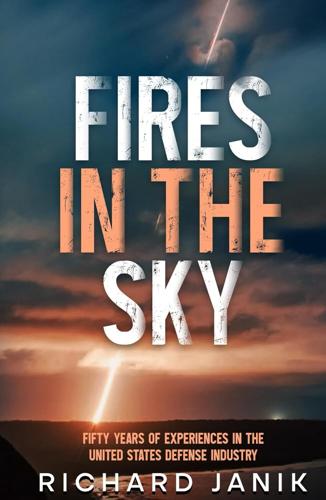
- Fires in the Sky: Fifty Years of Experiences in the United States Defense Industry
By Richard Janik. self publishing.com; 256 pgs. $29.95; $1.99 Kindle
“You forget a lot of things, but you don’t forget what you’ve experienced.” Tucson author and physicist Richard Janik brings half a century of experience in the defense industry to bear in this memoir, in which he provides a unique look-back on the leadership role he played in the development of strategic weapons systems for contractors that included Hughes Aircraft, Raytheon and Rockwell International, working both domestically and internationally.

His purpose is not, however, simply to reflect on a remarkable career, but rather to capture lessons learned to make those experiences applicable for a new generation of leaders in cutting-edge industries. It is through such sharing, he says, that a common language is established that facilitates knowledge and effective communication. The highly complex defense industry can’t be learned from a textbook, but a memoir that delves into the how’s and why’s of programs that worked — and those that didn’t — can be an invaluable resource.
Janik’s writing style is comfortable and anecdotal, but his subject, peppered with acronyms in true government-speak, may challenge those not technologically-minded. His experiences, however, will be a boon to those following him into the management of teams of diverse individuals working on groundbreaking projects.
—Helene Woodhams
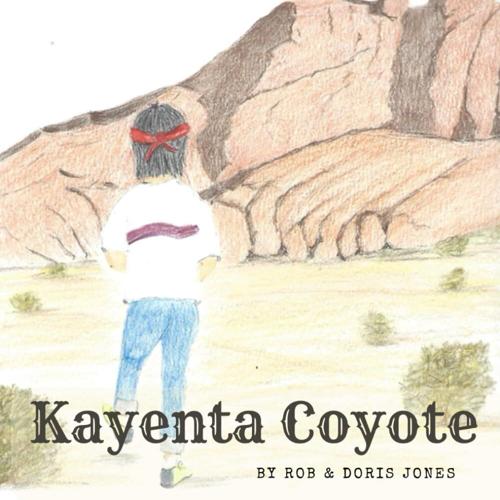
- Kayenta Coyote
By Rob & Doris Jones, edited by Rebecca Shoop, illustrated by Mary Anne Hopkins. Independently published; 24 pgs. $8.98 (ages 1-10 years)
The natural beauty of the Navajo Nation sets the stage for this endearing picture book about kindness and compassion.

It began as a boring, hot day in Kayenta, but it ended with Georgie Begay making a lifelong friend. Rambling through the rock formation known as “The Toes,” Georgie encounters a wounded coyote. Although his grandfather warned him that coyotes can be dangerous, he puts his fears aside and tends to the creature, who is clearly grateful. When the tables are turned, and Georgie is in danger, Kayenta Coyote has his back, protecting his friend Georgie from an aggressive wolf.
It’s a charming story, all the more meaningful for the rare opportunity it provides for Native American kids to see themselves reflected in a book that celebrates their home and culture. Authors Rob and Doris Jones wrote this book when they were teachers on the Navajo Reservation, and dedicated it to the Navajo children and their families.
— Helene Woodhams
- “The Most Interesting Man in the World”
By Bruce E. Weber (Stanfield Books). 196 pp. $14.99 paperback, Kindle and Draft2Digital.
“I had intended to stop writing books,” Bruce E. Weber tells us, “but it seems I have inadvertently written another one.”
And it, his 13th work of fiction, is welcome. Its stories are varied and entertaining, their settings ranging from Atlanta and L.A. to 19th-century Tombstone, 1861 London, an atoll in the mid-Pacific, Tucson, and even heaven. The characters are all on some species of search — for love, creative satisfaction, the next town or connection with a hero.
In one story, a young woman tries to justify why she’s dating a man who runs a sewage business. In another, an American in Thailand lets himself be scammed by a beautiful young prostitute. Weber’s longtime interest in art shows up in two tales — in one, a painter struggles to imbue spirit into a portrait; in the other, an adoring fan faces Vincent Van Gogh’s flawed human side.

The most compelling story in the collection is the one set in the middle of the Pacific. The central character decides to sail from New Zealand to the Palmerston Atoll, hundreds of miles from anywhere. Weber’s descriptions of solo sailing through a violent storm and the island itself are sharp and convincing.
It seems Bruce E. Weber hasn’t quite successfully shut his laptop. A novel is apparently in the hopper. Good.
— Christine Wald-Hopkins
- “El Pintado: An Anthology for 2025”
By Dexter K. Oliver. 362 pp. $20 at Country Chic Art Gallery & Crafters Boutique/Duncan Visitors’ Center or from P.O. Box 716, Duncan, AZ 85534.
Dexter Oliver’s “El Pintado,” with its 52 articles (plus novelette) published in Arizona and New Mexico news outlets between September 2024 and September 2025, is a sort of a 21st-century “Pepys’s Diary” or “Journal of the Plague Year.”
It’s a record of Donald Trump’s evolving chaotic return.
Naturalist and prolific “journeyman scribbler,” independent thinker Oliver practices unfiltered opinion in his writing. He’s used to audience blowback. As he reports here, letters to his editors have called him both a “useful idiot dupe” and “intelligent, accurate,” so the book comes with the proviso that it’s “only meant for the intellectually curious.”
And he touches on hot-button issues here — wolf reintroduction (disastrous), gun rights (complicated — open carry yes; AR 15s no), religion (a bane of civilization), homeschooling (want “ignorant certainty”?), politicians (dirty “allopreeners”), jaguar love (also complicated), the AZ Game and Fish Department (even more complicated).
But especially interesting about the volume is its Pepys-like quality. His articles are in-the-moment observations on current events during a historically unprecedented period. As such, they can prove either prescient or off-target. In October ’24, for example, Oliver identified discredited Nick Fuentes denouncing Trump as a sign that the MAGA movement was splintering. Fuentes is now back, and that splintering thing, well …. stay tuned. Oliver continued to monitor the mounting Trump depredations on democracy, but as the year wore on, depredations began to normalize, so he returned to more local issues, including the unthinkable mutilation and murder of 14-year-old San Carlos Apache Emily Pike.
Dexter K. Oliver, with his 14 books, 575+ articles, and spot in the Special Collections in the UA Library, is an Arizona phenom. Check him out. Particularly if you qualify as “intellectually curious.”
— Christine Wald-Hopkins
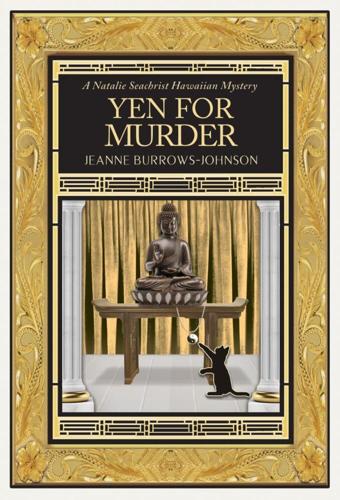
- “Yen for Murder”
By Jeanne Burrows-Johnson (Artemesia Publishing). 304 pp. $17.95 paperback.
This, the fourth book in the Natalie Seachrist Hawaiian Mystery series, finds Natalie secretly learning to cook. The semi-retired freelance journalist, famously incompetent in the kitchen, has decided to surprise life partner, semi-retired homicide detective Ke’oni Hewitt with culinary skills.

That, and Natalie’s previously demonstrated ability to solve crime using visions, provides the set-up for this “cozy” mystery.
When Natalie and Ke’oni see an ancient Buddha statue offered in an antiques auction, Natalie recognizes it as one she had seen in a vision in which a female priest was murdered. Ke’oni connects it to an unsolved murder. The two will then work with police to sleuth out its mystery.
Tucson writer Jeanne Burrows-Johnson, who lived in Hawaii for two decades, brings setting and cultural familiarity to the work. Those, along with its abundant detail about antiques, Pacific history, Buddhism, and food, could compensate to fans for its thin narrative.
— Christine Wald-Hopkins
- “On the Eradication of Smallpox and the Intractability of Racoons”
By Jamey Giddings (Attila Press). 285 pp. $29.99 hardcover, $17.99 paperback, $7.99 Ebook.
Jamey Giddings brings us an irresistible central character in this updated reissue of his 2001 novel. Quick-witted and self-effacing, Ned Alexander — newly graduated on the nine-year plan from Harvard — wangles the “last job in town” at a Tucson newspaper. Assigned to cover a prisoner execution in Florence, he quickly gets caught up in questions of ethics and capital punishment and then in solving the mystery of lethal acts of retribution. Threaded through with clues from philosophers, it’s a smart, engaging read. And the meaning of the title? Gotta read the book.
— Christine Wald-Hopkins
The top stories from Sunday's Home+Life section in the Arizona Daily Star.
Helene Woodhams is retired from Pima County Public Library, where she was the literary arts librarian.
Former English instructor Christine Wald-Hopkins is an occasional essayist and longtime regional and local book critic.
Submission criteria: If you are a Southern Arizona author and would like your book to be considered for this column, send a copy to Elaine Encinas, P.O. Box 26887, Tucson, AZ, 85726-6887. Give the price and contact name. Books must have been published within a year. Authors may submit no more than one book per calendar year.