In the course of a year, we see dozens of books by Southern Arizona authors, and the literary output of our fellow desert dwellers never fails to surprise and delight us. It’s our pleasure to be able to tell you about them: to that end, we offer a list of 10 titles that our reviewers found especially noteworthy in 2025.
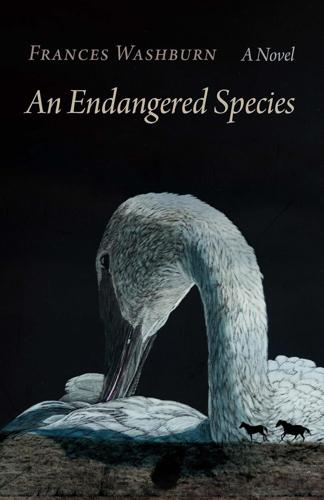
- “An Endangered Species” by Frances Washburn. Bison Books, 324 pgs. $13.60, $24.95 Kindle
On the Northern Great Plains, two families — one Native, one white — struggle to eke out a living during the transitional 1960s as the rules of survival evolve, threatening those who fail to adapt.

Moving between the families, Frances Washburn explores the profound effects of tradition, racial hierarchies, and family secrets as experienced by her brilliantly-realized characters. When Tom, who came of age on the Pine Ridge Reservation, is asked by his precocious daughter, “Are we an endangered species?” he replies, “Not yet.” It’s a spot-on answer to the novel’s pervasive question, and as this skillfully-plotted work hurtles to its startling conclusion, it’s clear that time is on no one’s side. Author Washburn is a University of Arizona emeritus professor. -— Helene Woodhams
People are also reading…
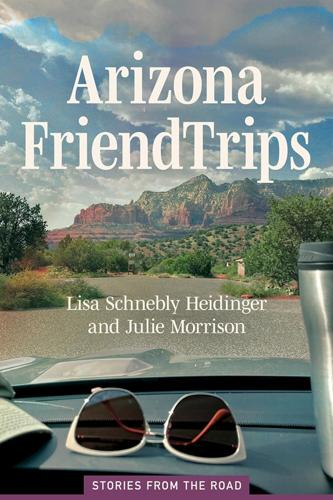
- “Arizona Friend Trips: Stories from the Road” by Lisa Schnebly Heidinger and Julie Morrison. The University of Arizona Press, 224 pages. $24.95 paperback, $24.99 Kindle
Writer/reporter Lisa Schnebly Heidinger and poet/rancher Julie Morrison take readers on a delightful tour of Arizona in this friends-to-favorite-destinations collaboration. Descendants of old Arizona families from different parts of the state, they bring varied experiences and perspectives to the sites they feature.

The two follow a route that’s vaguely clockwise: From the Grand Canyon’s North Rim through the Navajo Reservation, they drive east to the White Mountains, south to Sonoita and Patagonia, detour to Tucson and Phoenix, then wend northwest to Havasu and Prescott, and finish in Flagstaff and the South Rim. Each site entry includes a short essay by Heidinger, a poem by Morrison, and photographs. Personal, engaging, informative, and sometimes touching (the memory of Heidiger’s father, former KGUN TV personality Larry Schnebly, weaves throughout), it’s a fond snapshot album of a beloved state. — Christine Wald-Hopkins
- “The Backcourt” by Marquéz Price. Independently published. 341 pages. $9.99.

Tucson poet and essayist Marquéz Price has often referred to the influence on him of his father, educator Delano Price. In this book, Marquéz highlights Delano’s life in the context of family, African-American history in Tucson, local basketball, and the careers of Delano and his friend and co-basketball star Wallace “Hoagie” Simmons.
In high school in the ’60s, initially competitive, these two small guards, Price and Simmons, soon united to make a stellar backcourt that would make Tucson High state champions in 1969. With photos, stats, narrative and news clips, Price chronicles their high school success and then their lives post-high school. Their backgrounds and temperaments — Price’s stable and disciplined; Simmons’s undisciplined and fiery — presaged their basketball and personal lives into adulthood. An additional treat to locals is Price’s meticulous depiction of the basketball frenzy of the ‘70s — Fred Snowden, Bob Elliott, Eric Money, et al. It’s a reminder of how a sport can unite an entire community. — Christine Wald-Hopkins
- “Each Trail Has Its Own Story: Thirty-Five Years of Exploring the Grand Canyon” by Dave DeGroot. Published by the author. 348 pgs. $28.95 Available from the author’s website: thegrandcanyontrails.wordpress.com/about/
Part memoir, part trail guide, and 100% unadulterated outdoor enthusiasm: these elements blend seamlessly in master naturalist Dave DeGroot’s remarkable account of his 35 years leading hiking expeditions into the Grand Canyon.
With trail stories recounting his adventures and misadventures, DeGroot shares his encyclopedic knowledge about all things Grand Canyon: history, prehistory, geology, plant life, and critters are all grist for his mill. He even provides recipes for meals on the trail. There’s lots of reading pleasure here, for hikers and armchair travelers alike. — Helene Woodhams
- “El Pintado: An Anthology for 2025” by Dexter K. Oliver. 362 pp. $20 at Country Chic Art Gallery & Crafters Boutique/ Duncan Visitors’ Center or from P.O. Box 716, Duncan, AZ 85534
Dexter Oliver’s “El Pintado” — 52 articles (plus novelette) published in Arizona and New Mexico news outlets between September 2024 and September 2025 — is a sort of 21st-century “Pepys’s Diary” or “Journal of the Plague Year.”
It reflects Donald Trump’s evolving chaotic return to office. Naturalist and prolific “journeyman scribbler” Duncan, Arizona's Oliver practices unfiltered opinion in his writing, and it sparks controversy from all sides. In this collection, he opines on familiar regional hot-button issues — wolf reintroduction, gun rights, religion, home schooling, jaguar love, Arizona Game and Fish. But particularly interesting about the volume is its broader component — its Pepys’s Diary quality. His articles include in-the-moment observations on national events during an unprecedented period. They record the United States in real time, which will become history in inevitable time. — Christine Wald-Hopkins
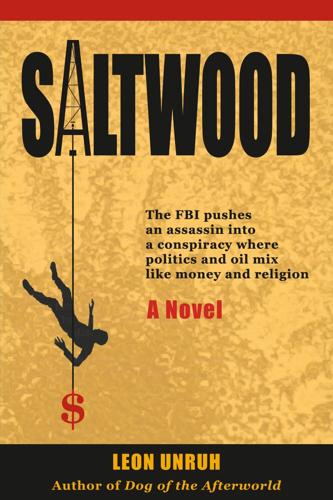
- “Saltwood” by Leon Unruh. Meadowlark Press. 352 pages. $25 paperback, $9.99 Kindle

This thriller, even more complex than its predecessor, featuring Russian spy/assassin Nick Deveraux (“Dog of the Underworld”), manages to cast a murderer as a sympathetic protagonist. In “Saltwood,” Deveraux’s assignment is to assassinate a Kansas senator, but neither he nor the reader knows who gave him the assignment. Was it the FBI, which just released him from custody? Or his old handler, a Russian spy master? And then Deveraux himself becomes a target.
Unruh’s setting is masterful. Central Kansas’s desolate, beastly hot, treeless, culturally evangelical, gun-toting MAGA components lend themselves to both the action (fast paced) and to the novel’s themes — politics, environmental contamination, gun rights, immigration, abortion, pastoral indiscretion, and time-honored financial and extra-spousal misbehavior.
Unruh’s next Deveraux setting? Tucson. Bueno. — Christine Wald-Hopkins
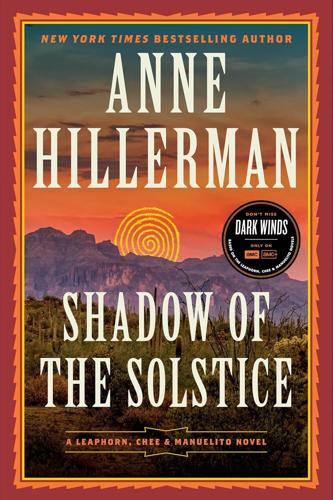
- “Shadow of the Solstice” by Anne Hillerman. Harper. 335 pages. $34 paperback, $14.99 Kindle

Anne Hillerman draws from topical events in this, her 10th Leaphorn, Chee, and Manuelito novel. The action opens with a strung-out 17-year-old Navajo Reservation boy coming across a dead body. The boy takes that as a sign he should accept a recent offer of alcohol- and drug- rehab. His grandmother gives permission, but only if she’s allowed to go too, so they’re loaded into a van headed to Phoenix. Problem? They don’t notify anyone —including the grandmother’s home-health caregiver, Tribal Police Officer Bernie’s sister Darleen.
Meanwhile, Bernie and husband Lt. Jim Chee have their plates full: normal reservation business, a sketchy group coming to Shiprock for the summer solstice, the upcoming visit of a US cabinet secretary, and Bernie’s mother’s dementia. Add to those lethal threats that Darleen, Bernie and Chee — not to mention a resourceful Navajo grandmother — are forced to confront, and you have yourself a page-turner. — Christine Wald-Hopkins
- “Star Gazers: Finding Joy in the Night Sky” by David H. Levy. University of Arizona Press, 172 pgs. $18.95, $9.99 Kindle
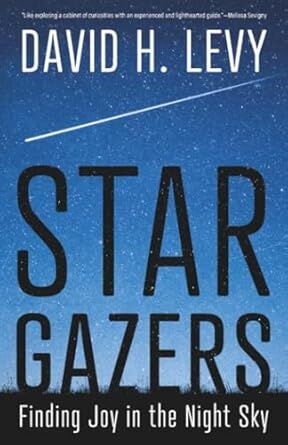
David Levy is an astronomer with the heart of a poet … or maybe it’s the other way around.
His discovery of the Shoemaker-Levy 9 comet brought him fame (and a visit to the White House), but is just one of 23 comets and countless asteroids Levy has identified during 60 years of stargazing. With this luminous collection of essays, Levy gives shape and form to his passion for the night sky by examining the big picture, then parsing the elements that have impacted him. The author’s affinity for poets and writers who share his cosmic fascination — from Shakespeare and Chaucer to Tennyson and Wordsworth — is evident. Levy’s book is an inspiring invitation to go outside at night, look up, and be amazed. — Helene Woodhams
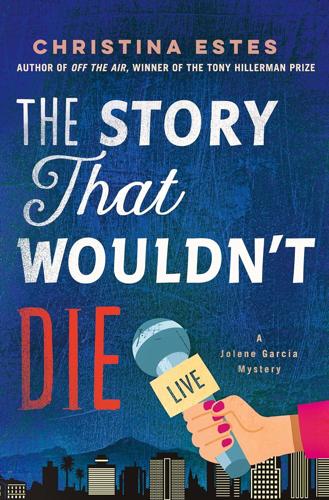
- “The Story That Wouldn't Die: A Jolene Garcia Mystery” by Christina Estes. Minotaur Books, 320 pgs. $28, $14.99 Kindle
Phoenix TV reporter Jolene Garcia has a nose for news and an unerring ability to sniff out greed and corruption, so when a local contractor questioning irregularities in City Hall’s bidding process turns up dead of “natural causes,” it’s a story that doesn’t pass her smell test. As Jolene’s dogged pursuit of the truth uncovers dangerous layers of deception in high places, it becomes apparent there’s someone who thinks one less nosy reporter in Phoenix wouldn’t be missed ....

This is the second outing for author Christina Estes’s quick-witted amateur sleuth, and its lively authenticity, brisk dialogue and clever plotting do not disappoint. Estes knows her way around a newsroom, having spent 20 years as an award-winning broadcast journalist in Phoenix. — Helene Woodhams
- “What Color Is Your Hand? ¿De Qué Color Es Tu Mano?” by Roni Capin Rivera-Ashford. Illustrated by Walter Thompson. Archway Publishing. 46pgs. $18.99; $14.99 pbk; $7.99 Kindle

“Like the rainbow after a storm, the world needs every color to be beautiful and complete.” In this luminous, bilingual picture book, a wise grandmother tenderly helps her troubled grandson imagine a future without prejudice and bullying, where all people are cherished for their differences. It’s a beautifully rendered story that exudes warmth as it celebrates the important bond between a grandma and her mijo, a safe haven in a complicated world.
This delightful work comes from award-winning author Roni Capin Rivera-Ashford, a writer with a gift for engaging young readers. Brilliant artwork by illustrator Walter Thompson rounds out this superior volume, which would be a welcome addition to any child’s bookshelf. — Helene Woodhams
The top stories from Sunday's Home+Life section in the Arizona Daily Star.
Former high school and college English instructor Christine Wald-Hopkins is an occasional essayist and longtime regional and local book critic.
Helene Woodhams is retired from Pima County Public Library, where she was literary arts librarian.
If you are a Southern Arizona author and would like your book to be considered for this column, send a copy to: Elaine Encinas, P.O. Box 26887, Tucson, AZ 85726-6887. Give the price and contact name. Books must have been published within a year. Authors may submit no more than one book per calendar year.