

“Aria” by Michael Ballard (independently published). 39 pp. $12.95 paperback.
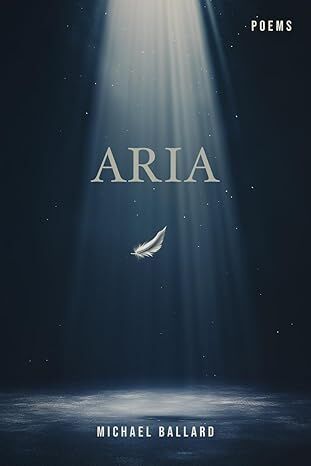
Okay, poet Michael Ballard hooked this reader at his back-cover, self-generated blurbs: They’re blurbs as if written by Walt Whitman (… “do not stand idly by for word of mouth, do not accept the tepid reviews of stodgy critics”), by Emily Dickinson (… “am happy to report I did experience a pleasant chill”), and by Billy Collins (“good luck, all the same”). This collection is serious enough but refreshingly witty.
Ballard, who wrote “on and off most of his adult life,” only turned to poetry at age 66. That being a mortality-aware time of life, many of these poems deal with death. Fortunately, Ballard’s death-awareness often highlights the pleasures of living.
Themes are universal. Topics are everyday — grocery shopping, dental appointments — but Ballard punches the unusual into them — “geezer Wednesdays” eliminate the shopper’s need to make choices; the dentist’s “hm” sets off speculation on why that ubiquitous sound hasn’t made its way into the dictionary.
People are also reading…
The poems’ real pleasure often comes with Ballard’s final line, as in this reflection on the glory of the night sky: “…the cosmos will never/ be able to treasure its own terrifying/ beauty. Only we, we futile ticks on/ the hide of eternity, have the power/ to give the indifferent incandescence its due. /
“It should thank its lucky stars.”
See what I mean?
“I, Ghost: A Paranormal Autobiography” by R.L. Clayton (R. Clayton International Enterprise, Inc.). 341 pp. $16.99 paperback; $4.99 e-book.
R. L. Clayton addresses his audience directly in the opening of this book. He, as everyone else, he writes, wonders about life after death. Good behavior = Paradise; bad behavior = Hell. Trained as an engineer, he decided to apply logic to answering life-after-death questions, and he writes that he thinks he nailed it.
This reader agrees.
“I, Ghost” opens with the first-person character in the middle of a series of tortures. He has been regularly waterboarded, frozen and thawed, and drugged until his memory and name have been eradicated. Now he’s being electro-shocked. His torturer steps out, and his son — against explicit orders — picks up the controls, ratchets up the power, and kills our character. As he dies, he sees below him the two torturers — father Leon and 17-year-old Jon — and is overcome with a desire for revenge. He can’t let it go.
He then finds himself in an afterlife full of souls like his — dead but tied somehow to the world of the living. A single notion seems to keep them linked. They, like he, had had a choice to continue their passage, but elected to remain close to their sources. There is no joy in this dimension.
The story is that our character has been part of a biomedical experiment in which criminals can avoid execution by participating in vaccine development. Our character discovers he can invade the minds and dreams of living souls, which comes in handy when an insidious international threat arises. Interestingly, the plot in this novel — different from Clayton’s normal action novels — seems secondary to “I, Ghost” as a meditation on the psychology of torture, the nature of the afterlife and the soul, an exploration of good and evil, and the possibility of redemption. It’s a worthy read.
“Urban Trails Tucson” by Sirena Rana (Mountaineers Books). 288 pp. $18.95.

This handsome pack-sized guidebook is a must-have for hiking in the Tucson area. It includes 65 color photos, 43 maps, plant and animal guides, cultural background, geographic notes, trail descriptions and key trail details such as distance, elevation gain, difficulty, fitness suitability, family- and dog-friendliness, amenities, etc.
Author Sirena Rana, founder of Trails Inspire, proves an engaging guide as she weaves personal anecdotes in the entries featuring 47 trails of varying levels of difficulty in and around Tucson. Put a copy in your guest room and tuck one into your day pack. You won’t regret it.
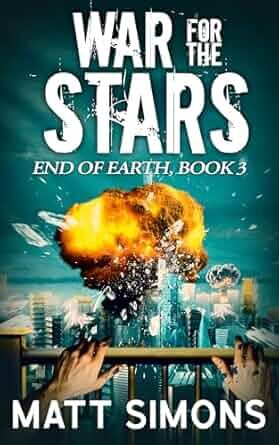
“War for the Stars: End of Earth, Book 3” by Matt Simons (Independently published). 223 pp. $11.99 paperback; available in e-book.
Tucsonan Matt Simons says the story that has become his “End of the Earth” series came to him when he was a kid. It’s evolved since. In this, Book 3, Earth is threatened by an interstellar alien species that has already conquered much of the galaxy. Thanks to the knowledge, Jason Baker passed to a friend in Book 2 — before he was flung back in time by a WW III nuclear blast — the U.S. has perfected a secret means to open corridors through space. Using that technology, Earth forces, led by four physically enhanced modern men and one 13,000-year-old one, will go to interstellar war.
You will like seeing Jason again, even though he’s cast back in time to his pre-war innocence, and it’s painful for him to be with the friends who would die before his eyes.
At the close of this volume, Simons invites readers to join him “as we slowly close in on The End of Earth. I’ll be there.”


