

BRENTWOOD, Tenn. — With the economy gasping for life this spring, about 1.3 million people gathered in 5,600 churches nationwide to behold the nation's leading prophet of personal finance.
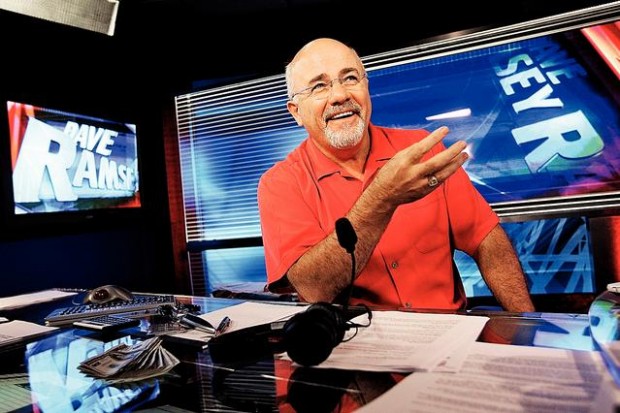
Televised live from a church in Edmond, Okla., Dave Ramsey's infomercial-style "Town Hall for Hope" was a masterful mix of inspiration, humor, advice, marketing and the Bible from a man dressed in jeans, dark jacket and an open-collar shirt.
"The Bible says the diligent prosper," Ramsey told a nationwide audience that included the Fox Business Network, available in 50 million homes.
At its core, the 90-minute show was a millionaire preaching to a struggling flock, and it raised anew the question of whether Ramsey's hugely profitable, tax-paying business — which he describes as a ministry — fits with Jesus' teachings.
It's a question one consumer, John Hoffman of Logan, Kan., began asking as he immersed himself in Ramsey's financial lessons for months. He listened on the radio, bought books, took Ramsey's financial management course at a church and paid for a $10-a-month subscription to his Web site.
People are also reading…
Hoffman came away from it all feeling like Ramsey's intermingling of faith and finances was some sort of unholy alliance. "It's not a ministry. To me, it's an insult to the word," said Hoffman. "It would be nice if it got out of the churches and got into the mainstream."
Ramsey doesn't deny mixing religion and business, and he doesn't apologize for getting rich doing it, either.
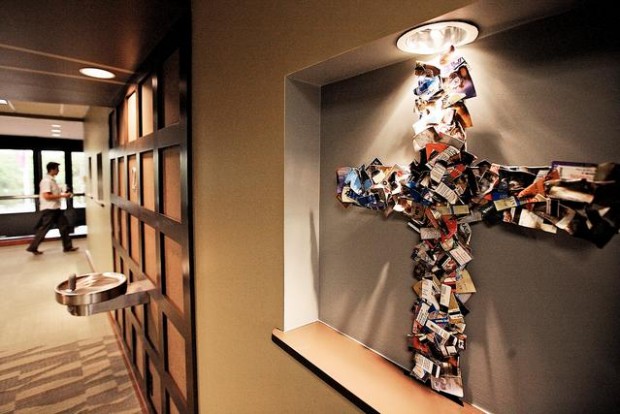
"Worship is work-ship, so I don't separate work from ministry," Ramsey said recently at his headquarters in suburban Nashville, where he does his syndicated radio and cable TV shows. Bible verses, crosses and photos of Ramsey decorate the building.
Ramsey's refrain is similar to the financial teachings of John Wesley, who started the Methodist movement more than 200 years ago: Earn all you can, save all you can, give away all you can.
Ramsey added a modern injunction to Jesus' teachings about not being a slave to money or possessions: Ditch your credit cards and pay cash. Callers to his radio show scream "I'm debt-free!" after paying off loans, and Ramsey cuts up credit cards on his TV program.
Almost 4.5 million people listen to Ramsey on the radio each week; millions more watch his show on Fox Business or have read his best-selling books. Disciples — and they are legion — know his no-credit mantra and inspiring, riches-to-rags-to-even-more-riches story.
It's all a bit much for some of the faithful, such as Arizonan T.J. Graff, of Queen Creek, a self-described "firm believer" in Ramsey's basic financial ideas about living within your means. Graff was shocked to see Ramsey charge $5,100 for a three-day seminar for small businesses.
"It was a way to make money instead of deliver a message," said Graff, whose Internet-based business sells truck supplies. "I think it's no different than the money changers in the temple, if you want to go biblical."
There was a time when few would have paid for financial advice from Ramsey, 48.
A broker with real estate investments worth some $4 million by age 26, Ramsey was forced to file for bankruptcy protection after lenders called his short-term debt. He was soon offering financial counseling at church as a Sunday school lesson with a simple message at its core: Don't spend more than you have.
Using a biblical Greek word for light as the company's name, Ramsey founded the Lampo Group Inc. in 1991 to offer one-on-one financial counseling. His signature course is Financial Peace University. The business exploded in 2001 when he created a department inside Lampo Group specifically to arrange courses through churches.
Today, more than 750,000 families have enrolled in Ramsey's DVD-based classes, many of which are still taught in churches and typically cost $99. Ramsey says people often won't complete the course if they don't pay for it.
Erin-Leigh Patterson, 24, took extra baby-sitting jobs to afford Ramsey's course at an Atlanta church and said she feels more in control of her finances.
"I don't mind that he's wealthy," said Patterson, who works for a fair-trade coffee company. "If he did it without debt, I want to learn from him."
A version of Ramsey's courses, minus the religious element, are taught in public schools and on 95 military bases, and he's heard on 450 radio stations, only a handful of them Christian. Still, Ramsey says: "Churches are a big part of what we do. It's a natural market for us in a sense."
Lampo has grown to about 300 employees, most working on commissions. Ramsey is the owner, CEO and product.
He is building a huge Tennessee home on a $1 million lot in a gated community. Tax records show Ramsey and his company own property worth more than $7 million, and Ramsey says that's low by a few million because of recent renovations.
Ramsey doesn't give out sales figures for his privately owned company, but says Lampo is far larger than a leading nonprofit group that offers Bible-based financial courses, Crown Financial Ministries. Crown reported revenues of $20.2 million in 2007; its course costs $55 for a couple, or about half what Ramsey charges.
Alexander Hill, author of "Just Business: Christian Ethics for the Marketplace," said churches can inadvertently become a tool for marketers as they try to help members through a tough economy.
"I think it's fine for churches to provide services for the congregants, and that can be profit or nonprofit," said Hill, president of a campus ministry based in Madison, Wis. "It's the potential confusion that is a concern."
Jon and Dorothy Bridges aren't worried about Ramsey's purpose. They were $90,000 in debt when they took his class in 2003. Heeding his guidance, they put themselves on a strict budget, cashed out a whole-life insurance policy and used the pay hike from a new job to erase all the red ink in two years.
Today, Jon Bridges is executive director at Asbury United Methodist Church in Madison, Ala. Nearly half the church's 2,400 regular attendees have taken Financial Peace University.
Not everything Ramsey does turns a profit. While the "Town Hall for Hope" earlier this year was a huge success in some ways — "It was good for the brand," he said — it ended up costing him about $60,000 once all the bills were paid, he said.
Fans can buy DVD copies of the event — 10 for $38.95.
LOCAL ANGLE
Tucson's KNST (790-AM) carries Dave Ramsey's radio show. Fox Business carries his TV show.