

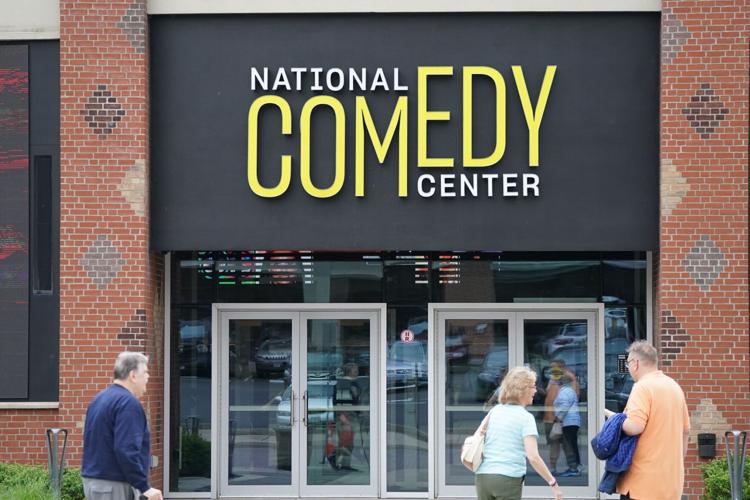
It took eight years for the National Comedy Center in Jamestown to travel a bumpy road from idea to reality. Even when it was just a few days from opening, Executive Director Journey Gunderson still wasn't sure of its prospects for success.
“I have always had a level of skepticism about our ability to pull this off,” she told The Buffalo News in 2018, in an article that used the word "pipe dream" in the headline.
Five years into its existence, based on what it has managed to accumulate, it's safe to say it's a pipe dream no more.
• In June, the center announced it would become the home of Joan Rivers’ career archive including a file cabinet containing more than 65,000 original jokes, from the earliest days of her career in the 1950s through her death in 2014.
• The same month, the center cut the ribbon on an exhibit celebrating New York City comedy club Carolines on Broadway. The Times Square venue played host to a who's who of comedy legends, including Jerry Seinfeld, Robin Williams, Chris Rock, Wanda Sykes, Billy Crystal, Amy Schumer, Tracy Morgan, Norm Macdonald and Kevin Hart. Carolines closed at the end of 2022.
People are also reading…
• In 2022, the center became the home archive from the groundbreaking 1990s sketch comedy series "In Living Color." The collection includes scripts, creative materials and artifacts that show the development of the series – including censorship battles with then-fledgling Fox network.
• Those developments followed the acquisition of the archives of other giants in comedy, including George Carlin – whose family contributed his material two years before the center officially opened – and Carl Reiner, whose artifacts and documents include Reiner’s typewriter case and original, typed manuscript for the first episode of "Head of the Family" – which would become the "The Dick Van Dyke Show."
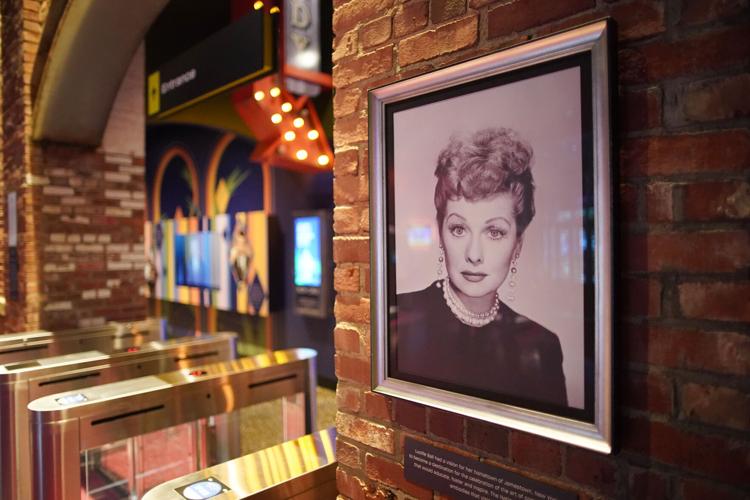
The center, which Gunderson hoped would become a kind of comedy hall of fame that could play off of its location in the hometown of Lucille Ball, has parlayed the attention it began receiving from national media in its earliest days into the development of exhibits that are drawing a range of visitors from Western New York and beyond – some of them too young to have seen or heard of many of the figures the center celebrates.
"Tackling the subject matter of comedy is a pretty broad subject matter to explain within the walls of any museum," Gunderson said. "I could not be happier that in our five-year history as a young institution, both casual comedy consumers, everyday tourists, comedians themselves and the most ardent cultural critics say that it does justice to the art form we set out to do justice to."
Building that audience is why the center is giving free admission to children younger than 17 this summer, as long as they are accompanied by an adult.
“Part of it is getting the word out that it is a family-friendly and kid-friendly attraction,” she said. “It wasn’t designed to be a kids museum. Yet, there are so many kids-friendly exhibits.”
Julia Green came to the center with her parents Carol and Roger, who grew up in Western New York, about 40 miles from Buffalo. Cara Schaus came from North Carolina with her sister and mother to see the museum. They were in the area visiting her husband's family and decided to stop by.
Denise and Pedro Nascimento visited the museum with their two children. Denise said that there was a lot for their kids to do and that they specifically enjoyed the tactile interactive exhibits.
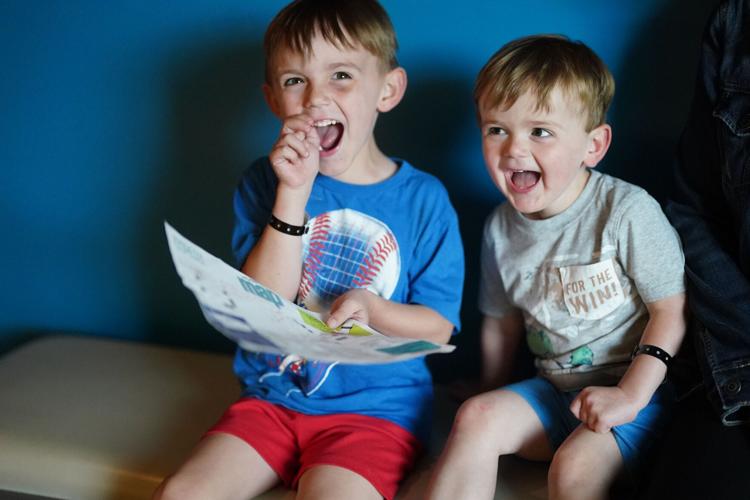
"They had a kids map which was really nice in figuring out what exhibits would be most appropriate for them," Denise Nascimento said. "It was helpful in weeding things out."
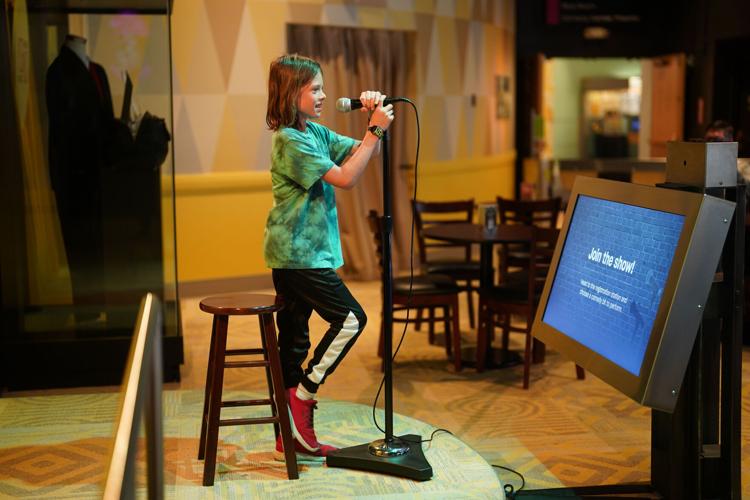
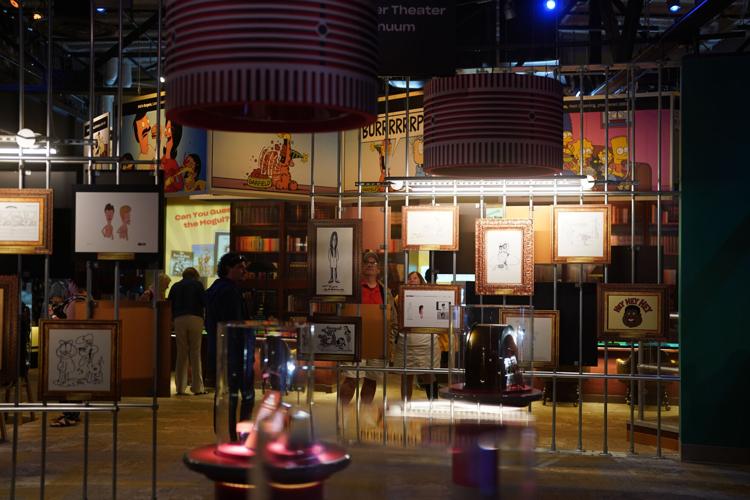
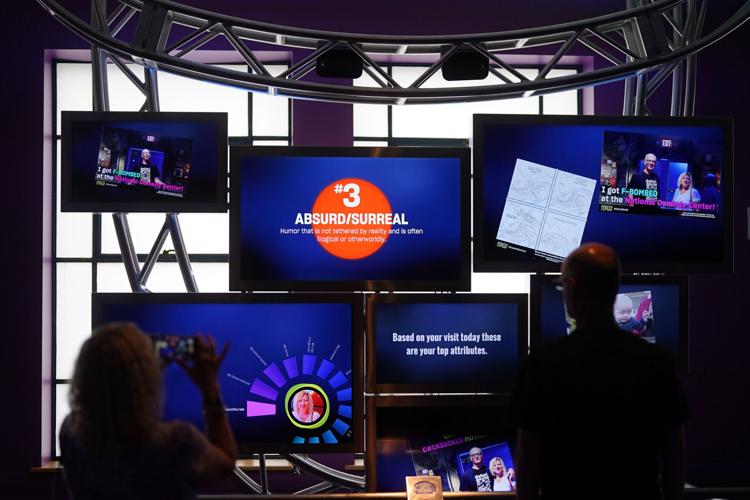
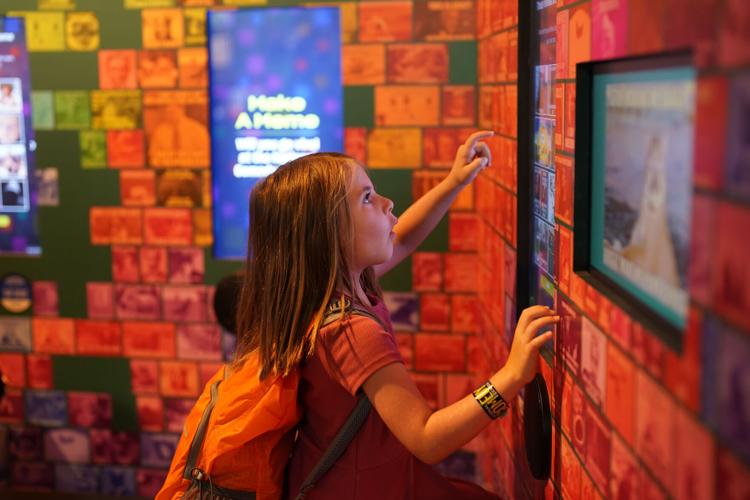
The near 37,000-square-foot museum contains more than 50 exhibits. Visitors start off creating a profile tailored to their sense of humor and interests by scanning a wristband. Gunderson said that center officials realize that comedy is subjective, so they wanted to create an experience that gauges each visitor's preferences. Visitors select their favorite comedians, movies and TV shows at the start to create their profile.
“The best comedians are able to read the room,” Gunderson said. “... We use personalization and a personal sense of humor profile as an entry point to all of our storytelling.”
There are no narrators for the exhibits. Instead, the exhibits are told through the “lenses” of the industry professionals and comedians themselves.
The Johnny Carson movie theater experience celebrates “The King of Late Night” and includes a hologram of Jimmy Fallon doing his Thank You Notes bit. Fallon jokingly thanks Carson for retiring before he could be compared to him. Roger Green said that the Johnny Carson exhibit was his favorite.
In the late-night show area, visitors can rotate a tower viewer to get a look inside different late-night television studios.
Visitors can sit down to watch stand-up comedy in the late-night area. They can swipe a table to add different comedians to their profiles.
“You continue to hone that profile throughout your visit. People are making connections between different generations and eras. You have people discovering new artists and comedians,” Gunderson said. “When you leave, we give you a very scientific breakdown of your sense of humor and the artists, comedians and content you like.”
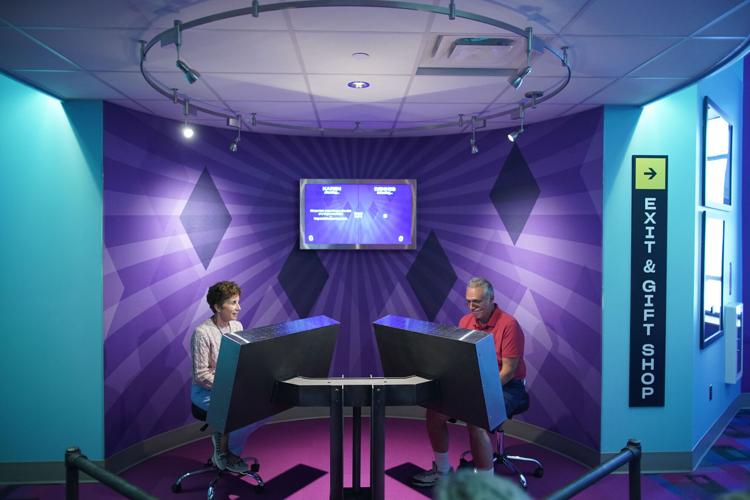
In "Hall of Moguls," visitors guess who an entertainer is after being given a series of clues. Hints start out vague but become clearer as the game progresses.
“The point of this is that you might know someone for one thing, and you don’t know that they had their hand in a dozen different things in comedy,” Gunderson said.
In other exhibits, visitors can make memes, design cartoons and have a try at matching the facial expressions of their favorite comedians.
For Carlin's joke files, the museum had staff members transcribe more than 1,000 handwritten notes by Carlin of his opinions on topics such as death, religion and stupid people.
"If you are a Carlin fan, this is Mecca. You could spend hours right here," Gunderson said. "We really designed this museum for the skimmers, swimmers and divers. There is hardcore comedy aficionados and also casual consumers of comedy who we designed for as well."
Carlin's famous seven dirty words can be found in the basement of the museum, "The Blue Room." The room features raw, uncensored and off-color comedy content.
"I liked The Blue Room," Julia Green said. "I am usually not a fan of comedy that is really out there, but I think the exhibit talks about the reason why comedians push boundaries. I have a newfound appreciation for the comedy my husband likes."
When the comedy center first opened, the main goal was attracting in-person visitors. After the museum temporarily closed at the beginning of the pandemic, they switched to doing some online programming. In 2020, the center helped host the first virtual Lucille Ball Comedy Fest. Gunderson said that she is thankful people can come visit the museum in-person again.
"The center is as busy as ever, and we are welcoming people from all over the country to the nation's first official museum that is dedicated to preserving comedy's heritage," Gunderson said. "Simply put, the museum is like somebody curated comedy's greatest hits and built a fun interactive museum about it."


