“Nightmare Alley,” Guillermo del Toro's film noir starring an A-list ensemble cast including Bradley Cooper, Cate Blanchett and Willem Dafoe, spent four days filming in Buffalo in early 2020 to add authentic details to the film set circa 1940.
Del Toro's press conference on the first day of shooting here on Feb. 25, 2020, was inside one of the film’s key locations: Buffalo City Hall. It is one of the architectural gems the the Oscar-winning director said drew him to Buffalo.

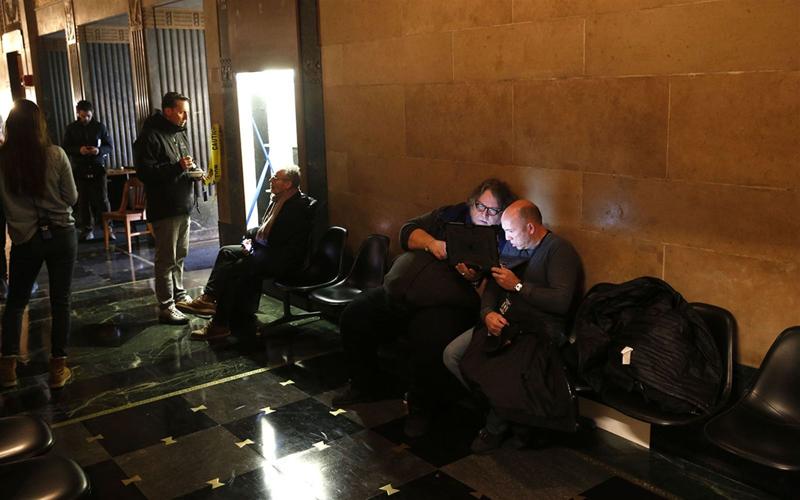
Guillermo del Toro, left, and producer J. Miles Dale take a break in Buffalo City Hall during filming of "Nightmare Alley."
“I wanted to find a city that was really interesting to visit for an audience and that was a city that they weren’t overtly familiar with,” del Toro said at the press conference.
“When you look at period films, it’s always New York or Los Angeles – two or three cities in the entirety of America revisited for their significant historical or architectural terms.”
People are also reading…
Bradley Cooper and Rooney Mara will begin filming scenes in Buffalo this
Critics have already taken notice.
“The film’s vision of snowy Buffalo, with its imposing brick edifices, is a refreshingly unfamiliar movie setting, and one that del Toro uses eloquently to convey a sense of municipal power and wealth – and of a world closing in on Stanton Carlisle [Bradley Cooper] precisely when he believes he has it in the palm of his hand,” wrote Sheri Linden of The Hollywood Reporter.
Here are four Buffalo locations that make an impression during the city scenes.

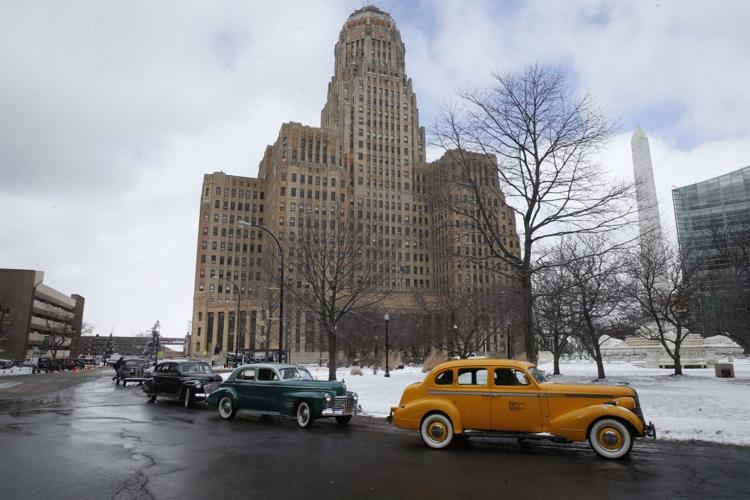
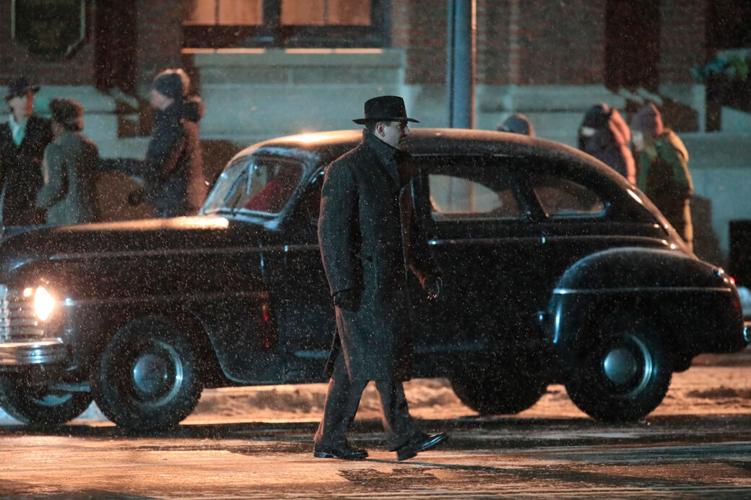
Vintage cars line Niagara Square outside City Hall during filming of "Nightmare Alley" on Feb. 27, 2020
Buffalo City Hall (built 1929-31)
When the film moves from its carnival setting to the big city in its second half, the abrupt change is clearly illustrated as the camera starts at the top of City Hall and pans down the 32 stories of the art deco masterpiece. Star Bradley Cooper, stylishly dressed in 1940s garb, walks up the steps of City Hall. The scene cuts inside where Cooper strides through the grand lobby, under the impressive arches and murals toward the ornately gilded bronze elevator doors. He steps out of the elevator on to the sixth-floor hallway and into a waiting room. That ends the City Hall location for that scene; the stunning art deco office of psychiatrist Lilith Ritter (Cate Blanchett) was created elsewhere. You’ll notice Cooper in the corridors of City Hall a few times later, most noticeably running and leaving bloodied handprints.

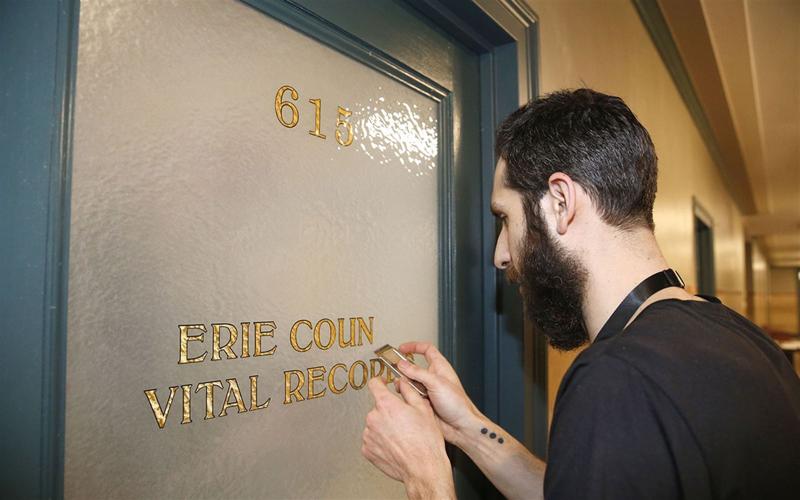
In "Nightmare Alley," you will see this hallway where scenic artist Tyler Kirchmeyer changed the names on the doors in City Hall.
Walter J. Mahoney State Office Building
City Hall isn’t the only art deco masterpiece in “Nightmare Alley.” The lobby of the Mahoney Building, built from 1928 to 1932, is more period eye candy. The camera picks up so many details that it’s easy to get lost in time. Cooper’s character is there to research information on one of his marks.
Karpeles Manuscript Museum
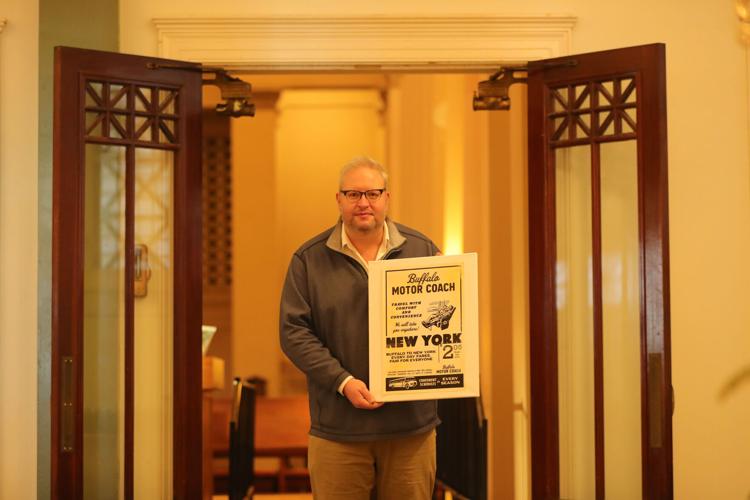
There's a scene where Cooper heads to the bus station searching for Rooney Mara. While the exterior of the station was filmed in Toronto, the impressive interior is the Karpeles Manuscript Library Museum in Buffalo. The 3,000-square-foot interior foyer was transformed into the bus station waiting and ticketing area. The crew even borrowed some antique door hardware to keep the continuity when the scene shifted to a bathroom interior that was done in Canada.
The Howard Street Bridge
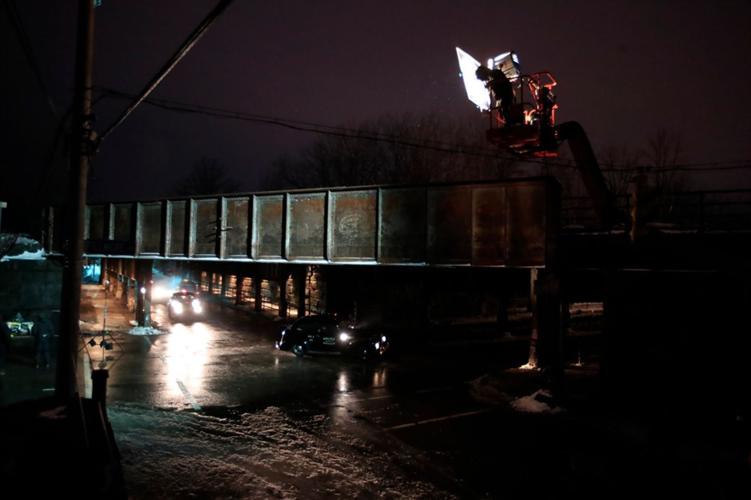
This location doesn’t have the glamour and period details of the other Buffalo sites, but that’s not why it’s in the film. Located at the corner of Howard Street and Fillmore Avenue, the railroad bridge dates back to 1904 and is a great, gritty backdrop for a scene of a desperate man on the run.

The Howard Street Bridge in Buffalo is used in a key scene in "Nightmare Alley" that includes period-authentic police cars.
Add vintage police cars moving along the streets and a train crossing overhead to see how this corner in Buffalo sets the scene perfectly.