Some of Hollywood’s biggest stars will be walking down the red carpet of the Dolby Theatre, Sunday night, when Oscars are handed out at the 96th annual Academy Awards ceremonies.
In the midst of the Coopers, the De Niros and the Goslings will be Jordan Dykstra, a Sioux City native whose musical score is featured in “20 Days in Mariupol” – a documentary which revolves around a team of Ukrainian journalists trapped in the besieged city of Mariupol when Russian troops invade Ukraine.
The film – directed by Mstyslav Chernov as part of PBS’ “Frontline” series – was nominated in the category of Best Documentary Feature.

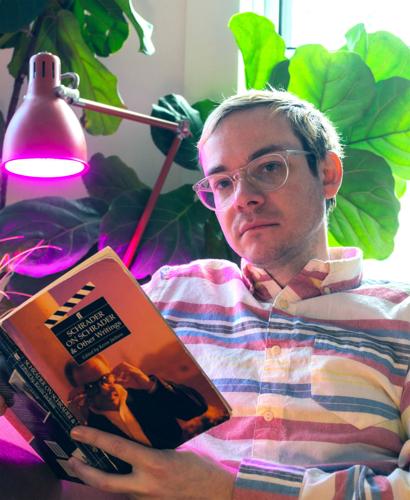
Sioux City native Jordan Dykstra has written music scores for several dramatic and documentary movies. Dykstra said a musical score can add a dramatic pop to the action or become an unobtrusive element based upon a film director's vision.
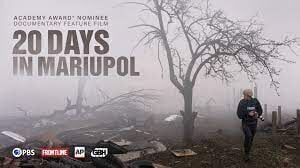
Originally presented as part of PBS's long-running "Frontline" series, Mstyslav Chernov's "20 Days in Mariupol" (featuring a music score by fo…
So, how did Dykstra, a 2003 Bishop Heelan Catholic High School graduate, begin writing scores for movies? It began with a lifelong love of music.
“I grew up in a family where music was very important,” he explained. “My siblings all played musical instruments and I began playing the violin at age 4.”
People are also reading…
Indeed, the now 38-year-old Dykstra spent much of his 20s on the West Coast as a professional musician.
“I was totally into chamber music,” he said. “I always liked movies but it wasn’t my focus.”
That all began to change when Dykstra moved to the East Coast and began accepting offers to write musical scores for both documentaries and dramatic movies.
Since then, he’s written score for such films as “Blow the Man Down,” “Hail Satan?” and 2019’s “Documenting Hate,” which was an Emmy Award winner for Outstanding Investigative Documentary.
While Dykstra has found success in creating film scores, concert music remains his passion.
“I feel liberated from film music when my chamber music is performed,” he said. “I see the ensemble interacting with my scores, the space interacting with the sound and the audience interacting with both.”
“These moments are – and always will be – unattainable in the realm of cinema, which is why I will never fall on that sword entirely,” Dykstra added.

Photographer Evgeniy Maloletka points at the smoke rising after an airstrike on a maternity hospital in Mariupol, Ukraine, March 9, 2022. Still from FRONTLINE PBS and AP’s feature film “20 Days in Mariupol.”
You’ve written scores for both dramatic movies as well as documentaries. How do you approach writing the two very different types of films?
“The main difference in scoring narrative films and documentary films is the director’s intentions. I’ve done a bunch of art docs where music plays a very subtle role while, on the other hand, some more conventional docs have music almost throughout. For instance, ‘20 Days’ is 94 minutes long and features 71 minutes of music.”
Tell me more about “20 Days in Mariupol.” What stood out about this particular project?
“’20 Days’ was such a tough film for me to work on. I can’t stress this enough, I’ve never wept so much alone on the job before. I was not prepared for the impact. I muscle my way through it only to find – after a particularly intense year of scoring ‘20 Days’ (as well as) an upcoming doc called ‘Shaken’ – about the bad science behind shaken baby syndrome – and then, ‘Inside the Uvalde Response’ – about the school shooting in Texas – that I had not properly or honestly dealt with the secondary trauma associated with working hundreds of hours with the material. I’m still working through it.”
When you were working on “20 Days in Mariupol,” did you think it would attract so much industry buzz? I know the movie just picked up a British Academy Film Award (BAFTA) trophy for Best Documentary of the Year a few weeks back.
“I think I can speak for the whole team in saying we knew the film was going to have an impact. But when it got into (the) Sundance (Film Festival), we were absolutely shocked. I can assure you, receiving an Oscar, let along being nominated for one, was not on our minds.”
I know that film composers work behind the scenes. What’s it like to suddenly be in front of the cameras for a change?
“At Sundance the ‘20 Days’ whole crew wore all black to a photo shoot. I felt a bit awkward when I showed up in a baby blue shirt.”
Well, you know I have to finish with the inevitable pre-Oscar question. What will you be wearing on the red carpet?
“I’ll be wearing a responsible wool suit by COS as well as a beautiful off-white shirt by Another Aspect.”
Sandra Huller, who stars in two Best Picture nominees, "Anatomy of a Fall," and "The Zone of Interest," is also nominated for Best Actress for her role in the former. Movie critic Bruce Miller calls Huller's performances incredible and says her Best Actress nomination is one of the most deserving honors of the year.