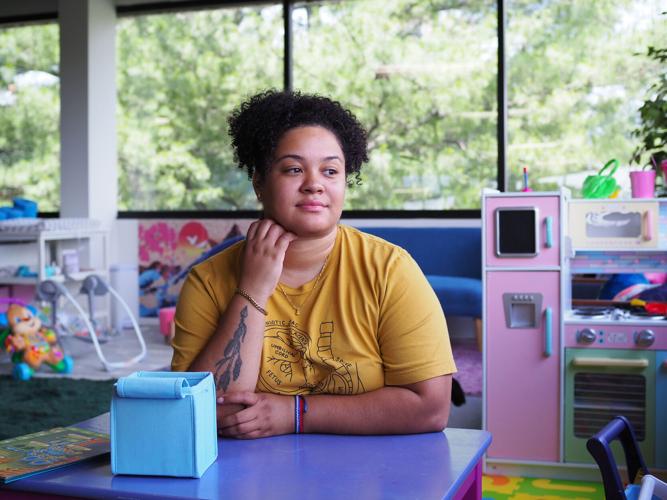
Doula Taja Iglesias and her business partner have built a space in Alexandria, Virginia, that’s all things pregnancy, birth and childcare.
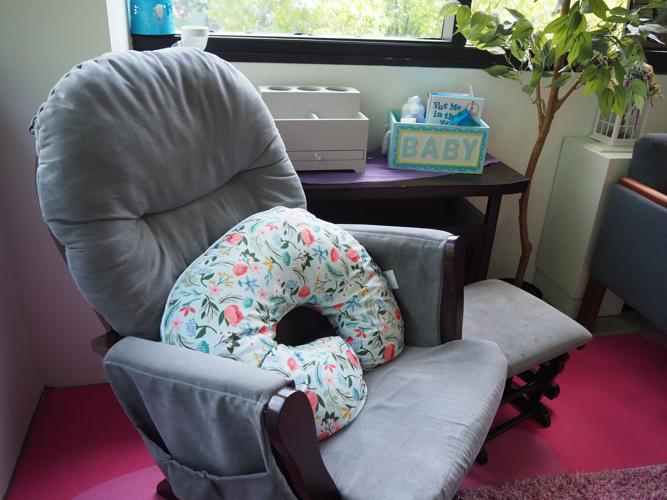
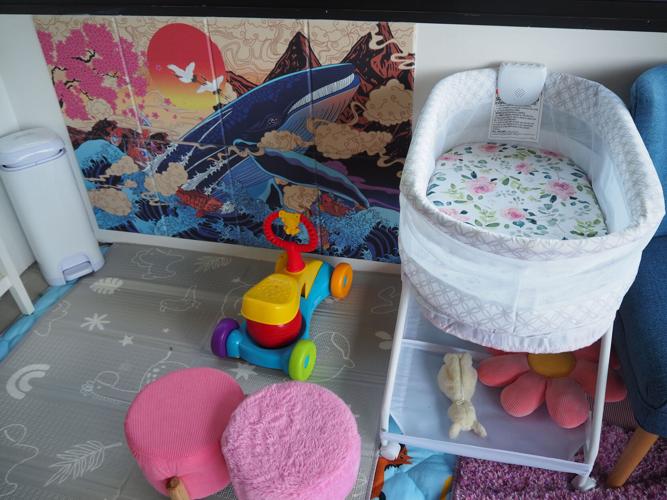
Comfortable couches in one area invite expectant parents to settle in for birth education classes. In another, a colorful pile of toys await the babies and toddlers. And there’s a free supply of diapers and food. Years ago, as Iglesias was giving birth and expressing her wish not to have an epidural for pain, she felt isolated and that her preferences were dismissed by the medical staff. Today, she works hard to make sure other parents can have the support of a doula.

Taja Iglesias, founder of The Momager Co. in Alexandria, Va., and co-chair of Virginia’s task force on doula regulations, says one of the widest gaps in providing doula care is a lack of access for parents on Medicaid.
“We kind of created this to fill the gaps that we realized existed because we had to go through it,” said Iglesias, founder of The Momager Co., a doula agency dedicated to giving parents care throughout the perinatal process.
Iglesias said one of the widest gaps is the lack of access to doula care for parents on Medicaid.
People are also reading…
Doula care has been associated with improved breastfeeding initiation and less maternal anxiety. Perinatal doula care covers education about pregnancy and birth, advocacy for new parents in the hospital, and help with lactation and recovery after delivery. Doulas often work alongside doctors or midwives who provide medical care.

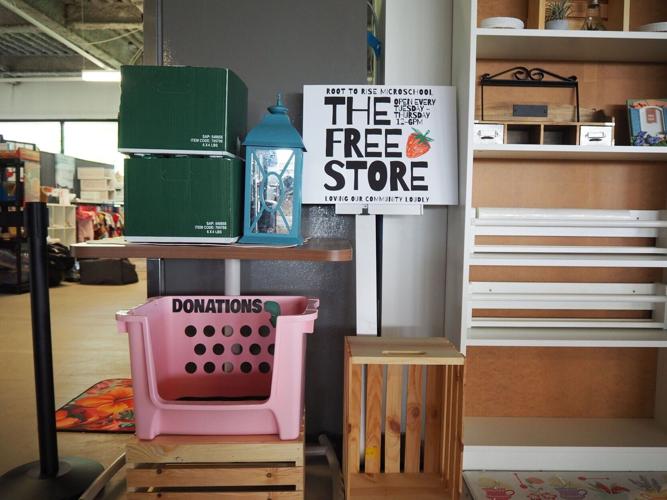
The Momager Co., a doula agency in Alexandria, Va., operates a store with free postpartum provisions, maternity clothes, baby essentials, breast/chestfeeding supplies, and food and hygiene items.
“The doula is the person that already knows what you want. We know what your dream birth is,” Iglesias explained. “We’re somebody that is standing on the side of the parent.”
In 2022, Virginia became the fourth state to start reimbursing doulas through Medicaid. A push to address the country’s maternal mortality rates, which are higher than in other high-income countries, has been an engine for lawmakers looking to give women on Medicaid the support of doula care. For example, another Virginia law requires hospitals to allow an extra person, other than a family member, in the delivery room.

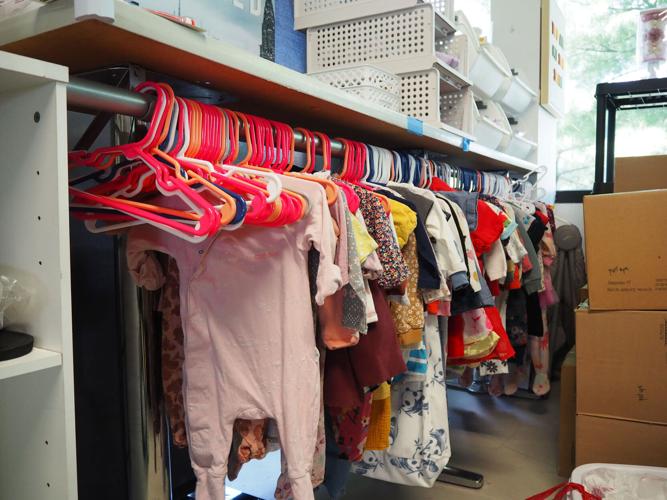
Donated baby clothing is available free to parents in the space where The Momager Co., an Alexandria, Va.-based doula agency, offers group classes and appointments.
The services offered and the number of visits covered by Medicaid vary by state, but today doulas are covered in 26 states and Washington, D.C. An additional 20 states have considered proposals or are working to implement similar policies.

Doula Taja Iglesias, founder of The Momager Co., a doula agency, offers some of her services from a welcoming space in Alexandria, Va.
In Virginia, doulas say the administrative and logistical challenges they encounter are trickling down to moms. A review of the Virginia Certification Board’s Doula Registry in June found that just 19 doulas based in Northern Virginia accept payment from Medicaid.
Doulas say while Medicaid coverage of their services is a good first step, the amount of paperwork required in the approval process and the low reimbursement rates mean fewer doulas participate in the Medicaid program, reducing access for beneficiaries.

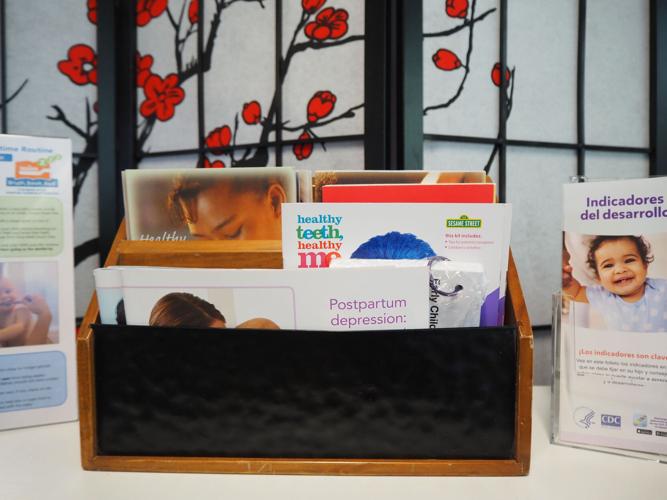
Informational pamphlets are displayed at The Momager Co. in Alexandria, Va., a doula agency that offers appointments and group classes.
A 2021 law that extended doula benefits to Medicaid enrollees sought to improve the health of Virginia parents and decrease the number of mothers who die during the time surrounding birth. The state’s maternal mortality rate is among the nation’s highest.
To access doula services in Virginia, parents on Medicaid must have a referral from a doctor, and their doula must be approved by the state to care for Medicaid beneficiaries. Iglesias would like to see that process be quicker and less costly for doulas, who pay $75-$150 for certification.
While the policy debates continue, Iglesias has decided not to get certified to care for parents on Medicaid. Instead, she raises money to provide doula care for parents on Medicaid outside the system.
“I don’t want to be state-certified with a training that I feel is not full and complete, a training that doesn’t touch on that community aspect of work,” she said.
Iglesias said the services covered are too limited and Medicaid does not allow her to work with clients as she sees fit. Virginia’s payment covers up to eight doula visits. All but the first visit are limited to one hour, which Iglesias said isn’t enough time.

Doula Taja Iglesias, founder of The Momager Co., a doula agency, offers some of her services from a welcoming space in Alexandria, Va.
While pursuing her Ph.D. at George Mason University, Desirae Leaphart Mensah studied the initial implementation of the doula reimbursement policy in Virginia.
She collected data from 2022-24 for a study published this year, and interviewed doulas eager to serve clients on Medicaid. But some told her they got bogged down in the paperwork and never were certified.
Mensah said the mismatch between the size of the Medicaid population and the low number of doulas available leads to fewer parents receiving doula care.
Coverage is a good first step, Mensah noted, but it doesn’t translate to enough access. During the first two years of implementation, fewer than 1% of Medicaid births in Virginia used doula services.
Kenda Denia, executive director of Birth in Color, a statewide doula collective in Virginia, welcomed the law at first.
“But now we’re looking at certain logistics that are not working,” she said.
Private-pay doulas in Virginia commonly charge $1,200 to $3,000 per pregnancy. For families wanting more extensive prenatal or postpartum services, the fee can be as much as $6,000. Virginia’s Medicaid program reimburses doulas $859 per pregnancy. They receive an additional $100 if their client attends prenatal and postpartum doctors’ visits.
The pay is too low and does not reflect the value of the services they provide, Denia said.
“Midwives don’t get paid this. Doctors don’t get paid this,” she explained. “We are driving to people’s homes for postpartum and prenatal care.”
Doulas might wait weeks or months for reimbursement, and the pay is not flexible. The Medicaid reimbursement rate is the same across the state and does not capture the higher cost of living in areas like Alexandria.
Despite the barriers, Denia applauded parts of the policy. Medicaid coverage of doulas means more parents can have a “birthing bestie,” she said.
Before getting pregnant, Juliana Navia had no idea what doulas did. But while at a free clinic for her prenatal checkups, she connected with Iglesias. Later, Iglesias became Navia’s doula and helped her navigate a difficult situation when she wasn’t getting the kind of care she wanted at the hospital.
“I was stressed giving birth, but my doula helped me,” Navia said. “I was advocated for.”
KFF Health News is a national newsroom that produces in-depth journalism about health issues and is one of the core operating programs of KFF, the independent source for health policy research, polling and journalism.