They fell in love with future spouses and made lifelong friends.
They experienced delight, surprise and terror.
They enjoyed extraordinary itineraries, unforeseen adventures, unsavory food and breathtaking views. They're the stories of Star readers' most memorable vacation experiences. Read them today, and next week learn who won the contest. The fascinating stories entered in our "My Most Memorable Vacation Experience" contest had us laughing, crying and marveling at the photos of the 500-plus submitted. The eventual choices were difficult, but the ones we're offering today are representative of the amazing trips taken by Arizona Daily Star readers.
Next week, meet the winner of the three-day cruise to Mexico — or $1,000 toward another cruise — from Bon Voyage Travel. We'll also have the three runners-up and more of these remarkable tales. You can read all the tales at http://go.azstarnet.com/memories.
People are also reading…
In 1996, my wife and I traveled to Indonesia.
One day while reading, we decided to wing it and take off for Borneo — with no plans. All decisions were made on the fly. Soon we were in Kalimantan (formerly Borneo), looking for a way to get into the jungle.
I made arrangements for a boat and guide.
My wife was not happy with the boat. It was basically a large canoe with a motor. Going to the bathroom meant you went off the edge of the boat. You slept on the wooden slats of the boat.
Most days were spent on the boat, since the surrounding land was swamp. Among the animals we saw were flying foxes, probos-cis monkeys and exotic birds.
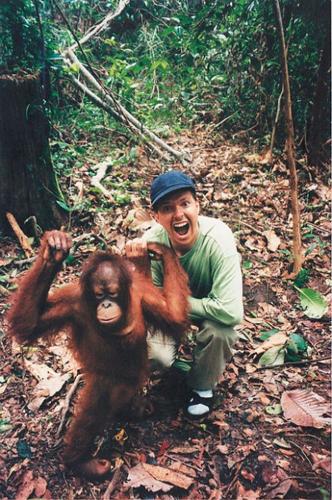
On day two, we were able to dock. (As we were) following our guide while picking leeches off our legs along the way and lagging behind about 50 feet, suddenly an orange creature jumped down from the trees in front of us, reached out to take my hand and then my wife's hand.
We walked hand-in-hand with this young orangutan through the jungle, feeling like proud parents — what an experience!
It was the trip we will never forget.
Kevin Reid, 54, insurance broker
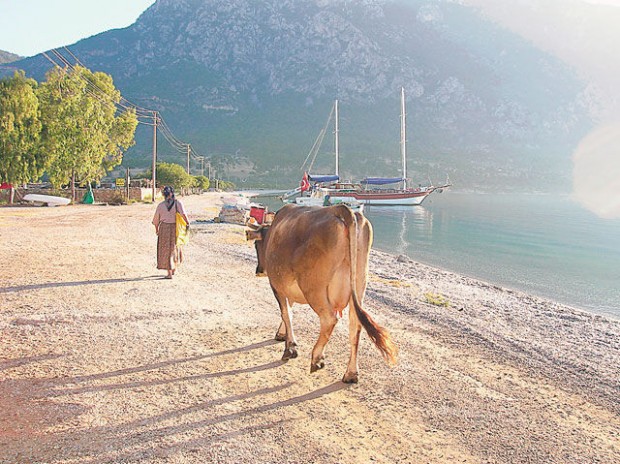
Several years ago when I was studying ethnomusicology in Peru, a family living in the village of Sapallanga invited our small group to their Santiago festival, where livestock is celebrated and blessed for the coming year. After much dancing, music and celebration, including several rounds of passing the communal "calientito" (home-brewed alcohol) bottle, I was told to hang onto the halter of a young bull. Within moments, a ceremonial blanket had been placed over my head, the onlookers were spraying beer and flinging flour into the air, and the family fed a special brew to the bull. The ceremony was complete. Only then did I find out that I had just been symbolically "married" to the young bull in order to bring him luck and virility for the coming year!
Apparently, the family thought their bull would be extra profitable if he were married to an American girl. My memories of the experience still make me laugh, and it holds the distinction of being one of the few times in my life where I had no idea what was going on and managed to enjoy every minute of it.
Maya Abela, 24, law student
To avoid the possible turmoil of Y2K — the impact on the modern world in changing from the year 1999 to 2000 — my wife and I decided to go to one of the world's poorest and most backward countries, Mali in West Africa. There on New Year's Eve, my wife, Pam, and I slept in the Dogon tribal village of Nombori atop the chief's house. The chief, a rich man by Dogon standards, had five wives, many goats, cattle and a rifle. The next morning he approached me, rifle in hand, and noted that he lacked a Western wife. He made a generous offer to obtain Pam as wife No. 6 — nine goats and one cow. Rifle or not, the offer was refused. He accepted the refusal graciously and did not use the rifle to make the deal. Pam and I are still happily together, pending a better offer from Mali.
Dennis Winsten, 63, health-care systems consultant
It was on a street corner near a sandy, white beach in Cozumel, Mexico. And it was time to catch a taxi back to the waiting cruise ship.
In those days, it was the custom of us younger ones to share taxis. After all, it was convenient and it also saved us a little money.
"Would you like to split the expense on going back to the ship?" I asked a couple waiting on the corner.
They accepted graciously, and I had done my good deed for the day: saved them a little cash.
Onboard, I discovered for whom I had done the good deed. They were from Napa Valley and were Mr. and Mrs. Robert Mondavi. I had saved the owners of vineyards and producers of Mondavi wines a few pesos! I couldn't face them for the whole cruise.
Recently, I heard on the news that the nationally known wine producer had died. I still felt a rush of embarrassment by my long-ago, "helpful" offer.
Ruth E. Means, 85, retired elementary school teacher
My most memorable vacation experience is a four-month trip to Europe my girlfriend and I took when we were 18 years old.
In 1976, as seniors at Catalina High School, we dreamed of roaming around Europe together. Our parents agreed to let us go if we made our home base with a Dutch family who befriended my girlfriend's father when his platoon liberated their village during World War II.
After graduation, I got a job at a shoe store in Park Mall, and my girlfriend, Rhonda Mallis, worked there as a waitress. It took us six months to save $1,500.
On March 1, 1977, clutching a copy of "Europe on $10 a Day," we boarded a Greyhound bus to New York City to catch a cheap flight. I remember looking out the bus window and seeing our mothers crying together as we departed.
We skied in Austria, snorkeled in the Mediterranean, and learned about food, history, art and, of course, love, in Paris, Rome and Stockholm. We also made lifelong friends with the Dutch family.
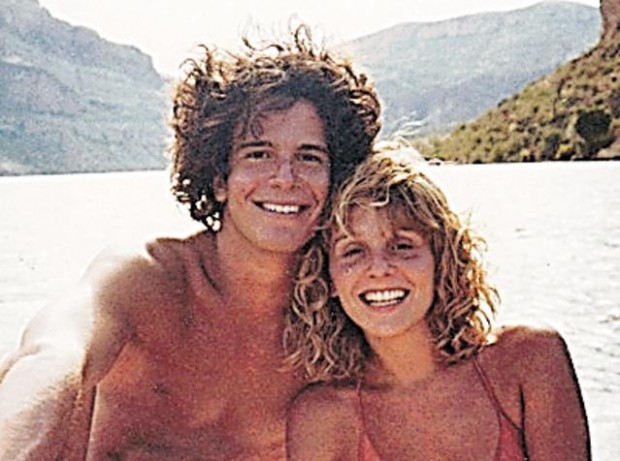
Since that wonderful four-month trip, Rhonda Mallis Rosenbaum is now my wife, and we have become lawyers, parents, and have traveled all over the world.
Joe Rosenbaum, 49, business owner
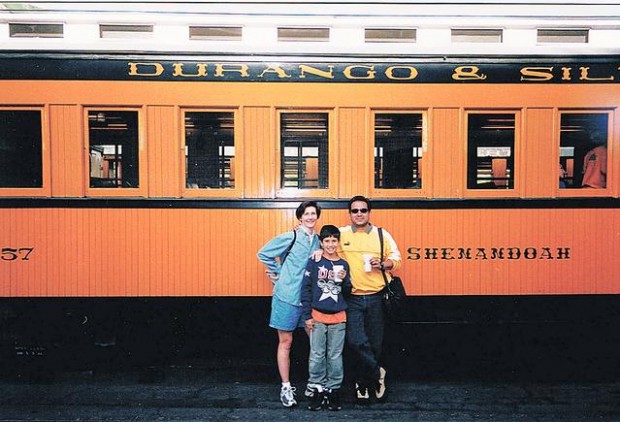
Back in 1984, my son's godmother and my wife decided to vacation together and visit the Grand Canyon. All the way up, they discussed the splendor and beauty of taking mule rides to the bottom. Having always been afraid of heights and four-legged transportation, the merging of the two seemed unnatural.
We checked in, were assigned our cabin and walked down to register for the mule ride. Walking up to register for my "big burro of death," I saw a sign that brought tears of joy to my eyes: Mule Rides — 200 Pound Limit! I merrily skipped to Bright Angel Lodge and ordered a beer, hefty as I, at four bucks a bottle, yet still cheaper than a ride even the Flying Wallendas would pass on.
The others went on their ride and I walked around, viewing the Canyon from every imaginable angle. As the sun bid adios, I and others leaned on our own Great Wall overlooking the Canyon, witnessing a palate of colors and brightness that would have inspired Rembrandt to even greater glory! Apparently, "oohs" and "ahhs" are universal in languages from people of almost as many colors as were on those walls. As darkness hit, I appropriately toasted God for the magnificence that is Arizona's Grand Canyon. That, and for that 200 Pound Limit sign!
Roland Estrada, 63, retired
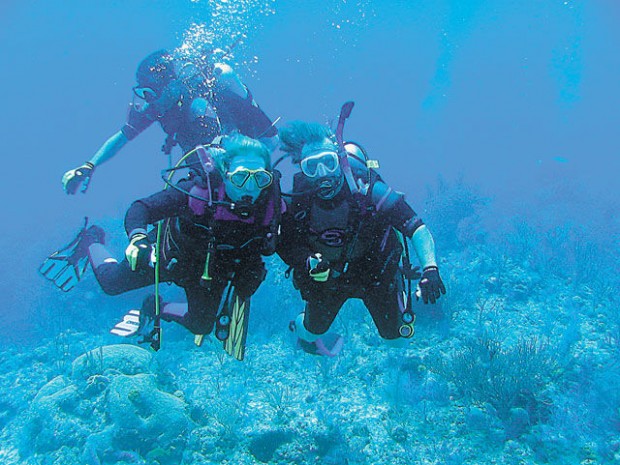
Once in San Carlos, Mexico, I was lucky enough to stay in a condo where dolphins swam past each morning only a few feet off shore. They would flee when approached, but I soon learned that if you floated in their path, they sometimes approached you.
One morning, I found myself hanging out in chilly water with two other dolphin lovers, one of whom owned a collie that anxiously barked from shore, frantic to "save" us. The collie eventually swam out to us, tried to persuade us to go in, and, finally giving up, paddled back toward shore. At exactly this moment, two dolphins arrived, clearly fascinated by our four-legged companion. Quietly, they followed the collie into less than 2 feet of water and, just before being beached, turned back to deeper water, creating a terrific splash. Only then did the collie realize he had been followed. The shock, fascination and joy on his face when he first saw the dolphins were unmistakable. Out he swam, and the dolphins and collie spent nearly a half-hour playing the oddest game of interspecies chase imaginable.
It was an experience I will never forget.
Virginia Novak, 49, counselor
My year in Venezuela (1962-63) had been outstanding and the school had given me a ticket home to Tucson by way of Europe. I landed in Lisbon and boarded the train to northern Spain. At Oporto (just north of Lisbon) a young couple boarded and shared my compartment. They were on their honeymoon. When we arrived in northern Spain, it turned out that we were staying in the same hotel. We exchanged addresses and wrote to each other. The next year I visited Madrid and looked them up. They had their first child. They wined and dined me in Madrid and we went to museums, restaurants and the opera. I continued the correspondence, and with the years they had a family of five. I got married and had two young ones. When their oldest was a teenager, he spent a summer with us in Tucson. My son became an engineer and his position was in Madrid. Now there was so much interaction between the families that we felt more like relatives. This friendship started in 1963 and now we e-mail and call on our cells. That was a vacation that gave me and my family another country and another family. It truly was a most memorable vacation.
Oscar-Ernesto Morales, 75, retired Spanish teacher
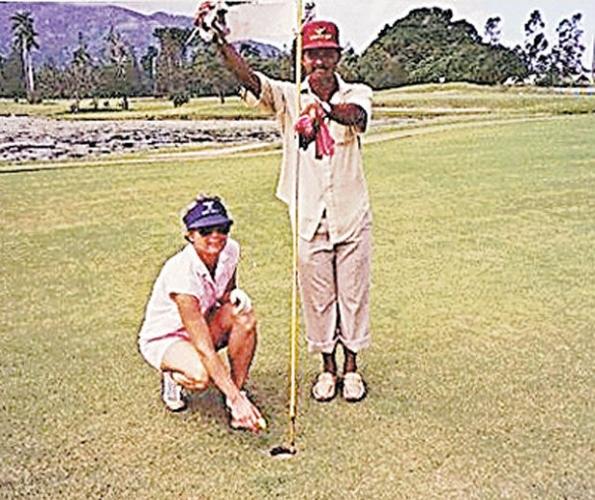
My husband, Bill, and I were on a trip to the Dominican Republic. We had been there twice before and stayed at the same place each time. We played golf several times during our stay, using the same caddies each visit. On this last visit, I was lucky enough to score a hole-in-one. That was exciting, and as we were buying beer for the caddies and players in our group following the round, my caddy excused himself, saying he would be back in less than 30 minutes.
He came rushing back on his motorbike with the most beautiful, 3-month-old baby boy on the bike with him. He also had a plastic grocery sack. He came over to me and said, handing me the baby, "This is my son and he is your present for your hole-in-one. I have been with you many times now and I know you and Bill are good people. Take him to America, raise him to be a good boy. You can offer him a good life and I cannot."
Well, needless to say, I was flattered, shocked and felt badly that I had to explain that I could not take a baby back with me. But I feel that was the ultimate compliment that someone from another country could pay me. It definitely was a unique experience and one I will never forget.
Karen Good, 67, retired teacher and office manager
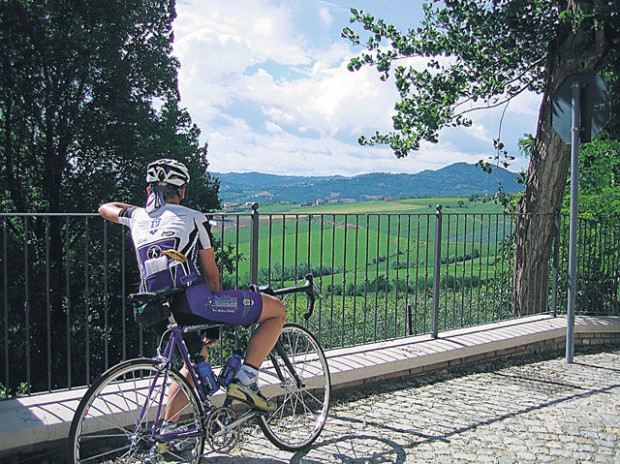
On a recent trip to Italy, I found myself in a beautiful valley overlooking the pre-Alps of Italy. The environmental group that invited me (of Yaqui heritage) and a prominent Inuit woman from Greenland to speak at their Healing the Earth conference had graciously housed us at a beautiful five-star Italian resort.
While there, my former Tucson Italian friend, Giovanni Panza, found me through the announcements of my presentation. During our gourmet Italian dinner, Giovanni shared the uniqueness of the valley. He told me that it was a sacred valley. It holds the largest glacier in Italy. Different indigenous tribes from the U.S. have come to this place several times to have ceremonies due to the ancient petroglyphs that are carved in the rocks. I think, "Now the Yaqui and Inuit tribes have been brought here, too."
Throughout my travels, I have visited many petroglyph sights, large and small, throughout Colorado, Utah, New Mexico, Arizona and Mexico, so I was familiar with the drawings and designs the ancient peoples had carved on the rocks. Now in Italy, I was taken to the "Mother Rock," which holds hundreds of carvings of their indigenous peoples and I am surprised to see that they are very similar to the ones at home! It was a very sacred place that I had been brought to. I would not have known its secrets if it wasn't for my friend Giovanni. Thank you, my friend.
Caren Trujillo, 58, wellness consultant
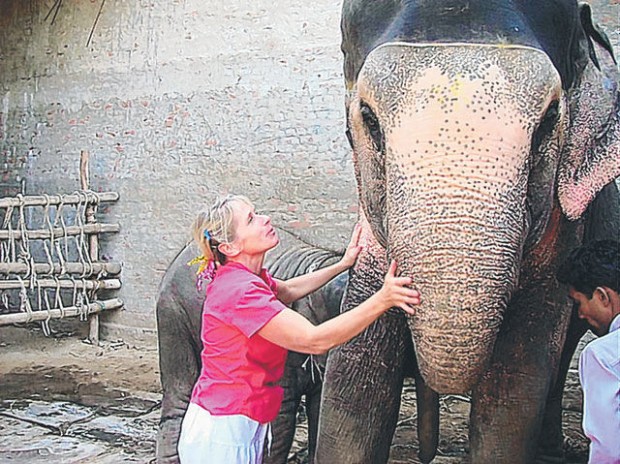
Following a 14-hour plane ride, a two-hour commuter flight, a bumpy bus trip, an elephant ride and a hike through the jungle to the river's edge, my wife, Sunny, and I found ourselves paddling a canoe headed for the border of the war-torn country formerly known as Burma.
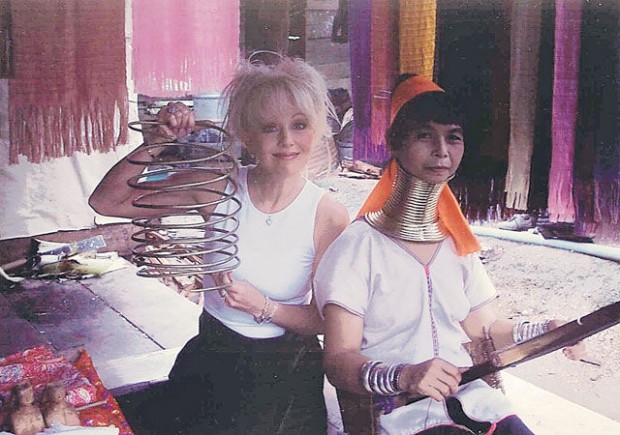
Tucked away in a remote northwest corner of Thailand, we came upon a small village of tribesmen living in open-air grass huts, much as their ancestors must have existed generations ago. While the men of the village were gone hunting, the old women of the tribe, their necks stretched to over a foot in height by countless ringed coils, pleaded with us to take their pictures and put money in their jars.
Soon we began to see middle-age women without "long-necks," but as we passed an open-air schoolhouse we noticed young girls already beginning to stretch their necks by adding more rings with each birthday. Driven from their homeland, the tribe was now so poor the practice of stretching women's necks, which was abandoned just a generation ago, was now in revival as this dangerous novelty generated much-needed tourist dollars, which had become the tribe's major source of income.
We took our photos and made our offerings, and then left confused and saddened, but the memories of the "long-neck-tribe" will stay with us much longer than those glamorous trips to New York, Las Vegas and Hawaii.
Some trips educate, some help you relax, some are just fun. But some make you think about how lucky you are.
Greg Thompson, 67, producer
Ebola virus, Kenya election riots and a plane crash!
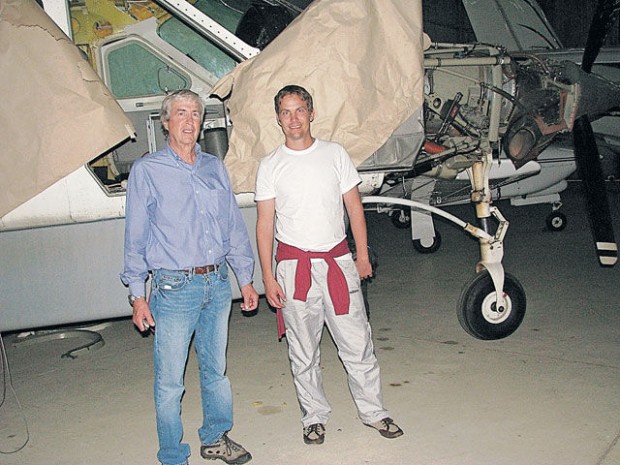
In mid-December 2007, my son Lance, now 35, and I departed for a monthlong safari to Kenya and Uganda. We arrived in Nairobi and immediately left for Amboseli National Park, followed by the Masai Mara Game Reserve. We were accompanied by our guide and driver, the affable Simon Njornje of the Kikuyu tribe.
After 10 days of viewing elephants, rhinos and myriad African wildlife, we boarded a single-engine, 14-passenger Cessna for the one-hour flight back to Nairobi. We landed and were immediately struck by a large turbo-prop aircraft, which cut our right wing off and injured several people.
Although covered in fuel and with no luggage, we flew to Kampala, Uganda, that night to be informed that our primary destination, the Gulu district, was stricken with the Ebola virus. We altered our plans southward to trek to see the mountain gorillas and were rewarded with a three-mile uphill walk (accompanied by four AK-47- toting guards) and a scary but exhilarating close-up view of these fascinating animals.
We returned to Nairobi in time for the Dec. 27 contested elections and the ensuing bloody riots that killed hundreds of people. Shortening our trip, we luckily caught a flight to London and returned to Tucson.
Larry Stern, 69, retired hospital executive