
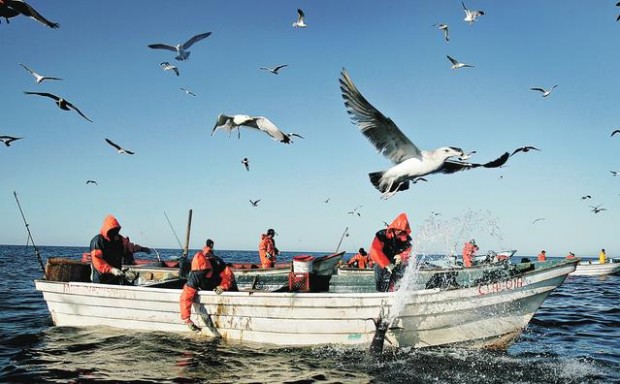
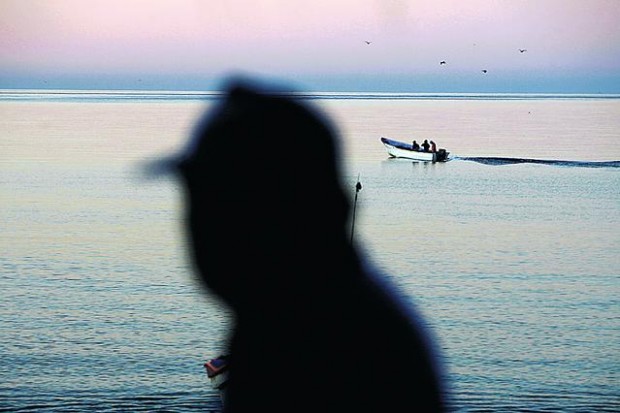
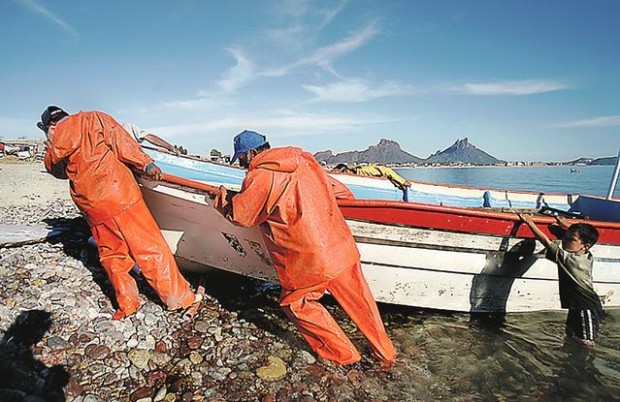
SAN CARLOS, SONORA — Ricardo Felix, 22, keeps a quick pace as he pulls a thick cord of fishing line hand over hand, rubbing a groove into the 25-foot boat, or "panga," that he and his partners use to fetch their living from the sea.
The sight of pangas carrying hundreds of fishermen like Felix to their workday may be familiar to the tourists who frequent the beaches of this popular resort town about 300 miles south of Tucson.
For the fishermen, it is their way of life. "It's what I do. It's who I am," Felix says in Spanish. "We take what the sea will give us. If there are no squid today, we'll try something else tomorrow. We'll try for crab, or we'll fish with nets."
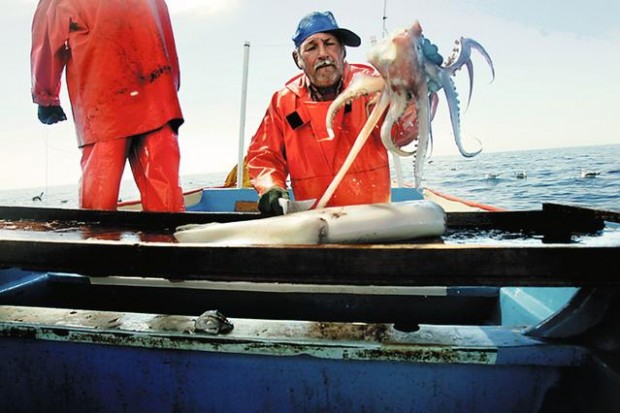
Today, the sea gives them a bounty of giant Humboldt squid — often called the "red devil."
— James Gregg
People are also reading…
Fishermen love and fear 'red devil'
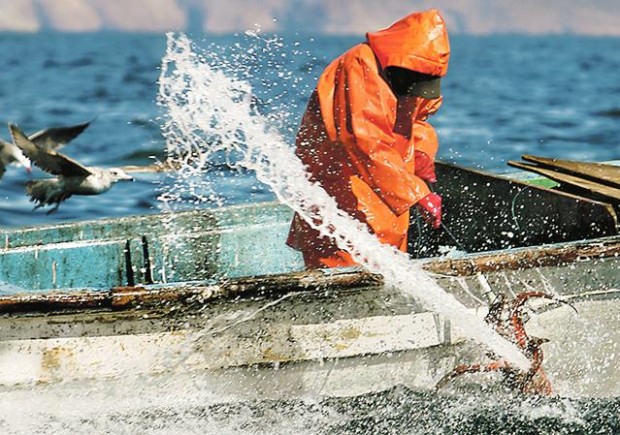
An explosion of water sprays with a "whoosh!" as the giant Humboldt squid expels its load of seawater into the air, attempting to escape by the same jet propulsion that carries it through the water.
Ricardo Felix ducks out of the way, heaves the squid into the boat and promptly grabs his knife. He cleaves the squid into three parts, separates them by their monetary value and tosses the entrails over the side. Squawking masses of seagulls immediately plunge into the water to gorge themselves on the leftovers and fight over scraps.
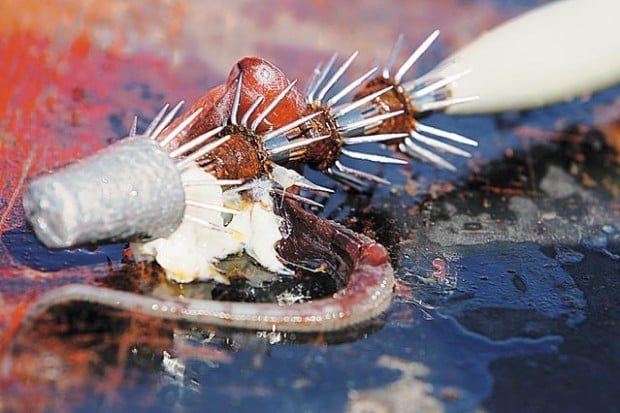
He plops the large barbed lure back overboard and waits for it to drop to the ocean to be grabbed by the tentacles of another squid.
At 22, Felix is a veteran fisherman who began going out in boats 10 years ago. Now he supports his wife and child and lives in a one-room concrete-block house in La Manga fishing village, just north of the popular resort town of San Carlos.
The giant Humboldt squid are plentiful this day, and Felix and his partners know where to drop their hand lines by looking for seagulls overhead picking off sardines, a squid's favorite food. Or they follow the dozens of other pangas with four- to five-man crews pulling up the "red devils."
The squid's nickname is earned from the Mexican fishermen who count on them as their mainstay during the spring months when the squid are most plentiful on the eastern coast of the Sea of Cortez.
The squid have special skin cells called chromatophores that allow them to rapidly change color from a deep red to gray or white. They can grow up to 7 feet long and weigh 100 pounds in a relatively short life span, just around a year, after which they spawn and die.
Humboldts are legendary predators, moving in large numbers with warm water currents and feeding on lantern fish and sardines. They are aggressive enough to cannibalize themselves in some circumstances and have been known to attack divers.
The fishermen fear them, sure that entering the water will invite a rapture by the squid that will pull a man to the depths of the sea floor.
Today, though, they will count on them, hoping to catch up to a metric ton of squid to be sold to middlemen who then truck the catch into the port city of Guaymas. From there they go to processing plants that freeze and package the squid for shipment all over the world.
Tucson teacher attacked by squid
The late Alex Kerstitch was one of the first widely reported cases of a diver being attacked by a Humboldt squid.
Kerstitch, who died in 2001, was a research associate with the University of Arizona and a science teacher at Sabino High School. Retired University of Arizona professor and marine biologist Donald A. Thomson of Tucson knew Kerstitch and the story of the attacking squid well.
Thomson says Kerstitch was working with a film crew in 1990 when they came upon a large group of Humboldts. Kerstitch was in the water photographing when one of the larger squid approached, he says.
"It wrapped its tentacles around his neck and his arm," says Thomson of Kerstitch's story. "It pulled off a gold necklace he had and a dive computer, and it started to pull off his (diving) gear, and he had to fight him off. He was fine, but I guess it was a little scary at the time."
In all fairness to the squid, Thomson says, it was probably enticed to attack because the crew was baiting the water with food, and the squid were likely in a feeding frenzy.