

You've just finished dinner, something spicy and full of flavor, probably Mexican food that leaves your mouth and tongue tingling.
Now it's time to chill out with dessert — you want something cool and sweet, silky and milky, to relieve your overheated taste buds and top off the meal.
In a word, you want flan.
Flan, a lovely and delicate baked custard soaked in caramel, is by far the top-selling dessert at local Mexican eateries, from the historic El Charro Café to the new and trendy Zivaz. "There's not a dessert order that goes out of here that there is not a piece of flan at the table," said Carlotta Flores, owner/chef of the 85-year-old El Charro, which now has four locations around Tucson.
Felipe Valenzuela, owner of the 18-month-old Zivaz, credits flan's popularity to "the simplicity of it — ice cream is big, too, in Mexican food. The flan is something your grandma makes and your mama makes and you eat it little by little. It's easy to make, and custard is cool. And it ties together with the complex flavors and the spiciness — the peppers — that were used in your main dish.
People are also reading…
"It's a good conclusion," he added. "It's sweet, but it's not overpowering."
Indeed, flan is a simple dish, at least in terms of ingredients. You can make a fine flan with just four — milk, eggs, sugar and, usually, some flavoring agent, such as vanilla or lemon zest. Other additions — cream, evaporated milk, puréed pumpkin, shredded coconut — are just commentary.
Unfortunately, making flan also requires two procedures that scare off many cooks: cooking sugar and water into caramel, and cooking eggs in milk without scrambling them.
We've assembled a batch of suggestions and recipes to make both tasks less intimidating.
Once you master a basic flan, the fun starts. You can make a coconut flan, or a pumpkin one for fall desserts. "I also like chocolate, orange, coffee and cinnamon — just to name a few," star chef Aarón Sanchez, whose family hails from Douglas/Agua Prieta, wrote in his cookbook "La Comida del Barrio: Latin-American Cooking in the U.S.A." (Clarkson Potter/ Publishers, 2003, $30).
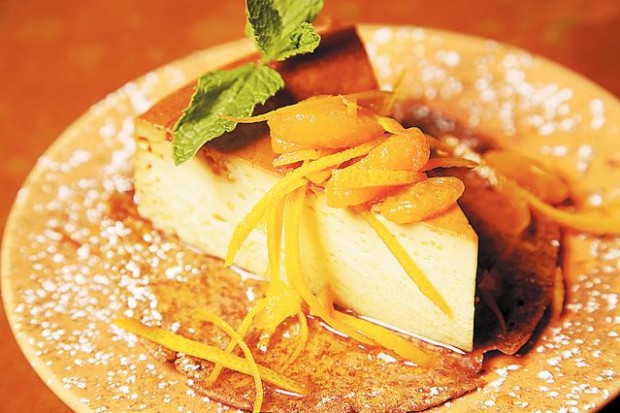
For Zivaz's dessert menu, Valenzuela's father created a mandarin orange flan, which develops a sort of cheesecake texture through prolonged baking at a higher-than-normal temperature. Candela Peruvian restaurant serves its flan with an orange sauce.
While Spanish flan is made with fresh milk, many recipes from the Americas use sweetened condensed milk. El Charro's Flores changed her recipe to use the canned milk, partly in response to the rage for tres leches cake, which also uses the distinctive flavor of the super-sweet condensed milk.
There are even recipes for sweet-potato and savory flans.
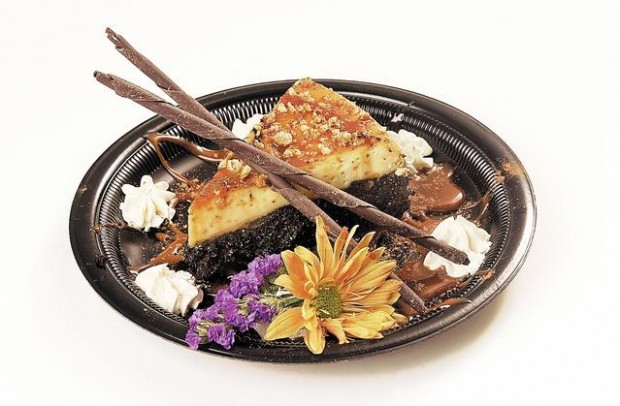
And then there's choco flan, which is not, as you might expect, a chocolate flan. Instead it's a layer of flan baked on top of a chocolate cake so the flan forms a sort of frosting. Yum.
Choco flan recipes appear in various parts of the Latin American world, and the dish itself tends to pop up as a special at local restaurants like El Charro, which is featuring the cake this month.
"I do not know where the actual idea of putting cake and the custard on top came from," Flores said. "Except it is very reminiscent of other recipes grandmas made, and they would put a pudding on it instead of frosting the cake with frosting . . . and it worked."
Flan de Coco (Coconut Flan)
Makes 10 servings
* 1 3/4 cups sugar
* 1/2 cup water
* 1 tablespoon lemon juice
* 6 large eggs
* 3 large egg yolks
* 2 cups whole milk
* 1 (13 1/2-ounce) can unsweetened coconut milk
* 3 tablespoons light rum (optional)
* 1/2 cup toasted shredded unsweetened coconut (see note)
To make the caramel, have ready 10 6-ounce custard cups and a large roasting pan. Combine 1 1/4 cups of the sugar and 1/2 cup of water in a heavy-bottomed pot. Place over medium-high heat and cook until the sugar begins to melt, about 5 minutes; don't stir with a spoon.
Add the lemon juice while sugar is heating; the acid prevents the sugar from crystallizing, keeping the caramel smooth and clear.
Swirl the pan over the heat until the syrup darkens to a medium amber color, about 5 minutes. Remove from the heat and immediately divide among the custard cups. Tilt the dishes so that the caramel evenly coats the bottom and a bit of the sides. Place the cups in the roasting pan and set aside.
Preheat the oven to 325 degrees, and bring a kettle of water to a boil for the water bath and keep it hot.
In a large bowl, cream together the whole eggs and yolks with the remaining 1/2 cup of sugar. Whisk until the mixture is pale yellow and thick.
Pour the milk and coconut milk (and rum if you are using it) into a saucepan over a medium-low flame. Bring the milk to a brief simmer, stirring occasionally. Take care not to let the milk come to a full boil to prevent overflow. Temper the egg mixture by gradually whisking in the hot milk mixture; don't add it too quickly or the eggs will cook. Pass the mixture through a strainer into a large measuring cup to ensure that that the flan will be perfectly smooth. Divide the mixture among the caramel-coated molds.
To create the water bath, pour the hot (not boiling) water into the roasting pan to come halfway up the sides of the ramekins; be careful not to get water into the custard. Carefully transfer the roasting pan to the middle oven rack and bake for 45 minutes, until the custard is barely set and just jiggles slightly. Let the flan cool in the water bath, then refrigerate for at least 4 hours or overnight.
When you are ready to serve, run a knife around the inside of the molds to loosen the flan. Place a dessert plate on top of the flan and invert to pop it out. Garnish with any remaining caramel and the toasted coconut.
Note: To toast coconut, preheat the oven to 350 degrees. Spread the coconut on a cookie sheet and bake for 10 minutes, tossing it halfway through cooking.
– From: "La Comida del Barrio: Latin American Cooking in the U.S.A." by Aarón Sanchez
Yazmin's Choco Flan at El Charro Café
Makes 1 rich chocolate cake (2 9-inch layer)
* 1 cup cajeta (Mexican caramel); melted Kraft caramels can be substituted
Cake:
* 12/3 cups all purpose flour, or 2 cups of cake flour
* 12/3 cups sugar
* 2/3 cup unsweetened cocoa powder
* 1 1/2 teaspoons baking soda
* 1 teaspoon salt
* 1 1/2 cups buttermilk
* 1/2 cup shortening
* 2 eggs
* 1 teaspoon vanilla
Flan:
* 1 (14-ounce) can sweetened condensed milk
* 1 (12-ounce) can evaporated milk
* 3 eggs
* 2 egg whites
* 2 teaspoons vanilla To make the cake, grease a baking pan with the cajeta. Use the whole cup. Beat the flour, sugar, cocoa, baking soda, salt, buttermilk, shortening, eggs and vanilla in a mixing bowl on low speed, mixing the batter constantly for at least 30 seconds. Beat on high for 3 minutes. Pour the batter into the pan.
To make the flan, beat the condensed milk, evaporated milk, eggs, egg whites and vanilla in a large mixing bowl on high speed for 2 minutes and then pour the flan mixture into the pan on top of the cake mixture. Let the pan with the flan and the chocolate cake sit out for 20 minutes. Preheat the oven to 350 degrees. Bake for 45 minutes.
– Carlotta Flores, El Charro Café
Tips for producing a fabulous flan
• Flan is best made ahead of time and chilled overnight.
• You can make one large flan, or a bunch of individual servings. Cooking time for custard cups/ramekins will be 40 to 45 minutes; for a single flan, expect one hour.
• Use cane sugar (such as C&H brand), not beet sugar, for the caramel.
• Swirl the caramel-making saucepan by the handle to ensure even cooking; do not stir with a spoon or other utensil.
• When working with caramel, work quickly. Once caramel turns amber, immediately pour into prepared baking dish(es). If for some reason you must wait, submerge bottom of caramel pan in a bowl of cold water to stop cooking.
• Burned caramel will ruin the entire dessert. If you have any doubts about yours, drop a small amount from a spoon into a glass of cold water and taste it. If it's burned, throw it out and start over — better to waste the sugar than an entire batch of ingredients.
• When beating the eggs and egg yolks, gradually add the sugar. For the best texture, beat until thick and pale, but not until the egg/sugar mixture turns to foam. If you have foam, stir to break it up and set aside until foam subsides.
• Pour hot milk slowly into egg mixture, whisking constantly.
• Sieve the custard before pouring it into baking dish(es). It takes only moments, and your flan will have a silkier texture.
• Use hot, not boiling, water in the bath surrounding the flan.
• If flan is cooking too quickly (i.e., forming a skin), reduce oven temperature.
• Flan is done when it is just set — the top should be barely firm, and it should still move, but not really jiggle, when you shake the pan. Remember, flan will continue cooking for a while after you remove it from the oven.
• Large bubbles are a sign of overcooked flan.
• Don't worry about the leftover caramel that may appear glued to the bottom of your baking pan(s). It comes off easily when you soak the pan in hot, soapy water.
namely, it's a treat
What you get when you order flan — and what you should ask for if you want the silky caramel-coated custard — can depend on what country you are in (or the country your restaurant's owner hails from).
• In Spain and Latin America, flan is the custard dessert common to Mexican restaurants here. While the Spanish version is generally an egg-and-fresh-milk custard, the flan of the Americans is frequently made with evaporated and/or sweetened condensed milk.
• In Latin America, though, the name "flan" is sometimes associated with a cheap pudding made from a powdered mix. To avoid that problem, Candela Peruvian restaurant calls its orange-sauced flan leche volteava, or upside-down milk.
• In France and Great Britain, however, flan is the name for a tart, which can be sweet or savory, and usually has a cream cheese or custard base. It's baked in a "flan ring" — a bottomless tart form designed to sit on a baking sheet.
• If you want the caramel and pudding dessert flan, ask for crème caramel or crème reversee in France. In Italy, it's crema caramella. In Britain, a sugar topping is added at the end of cooking, to form a crisp caramel crust, and the dessert is crème brûlèe (which, despite its name, was invented at Cambridge University).