

We own several Wurlitzer jukeboxes from the 1950s. All are original and in perfect condition. How do we sell?
— Sherry, Tucson
As the old saw goes, a drink tastes better at a bar, and a song sounds better on a jukebox.
Jukes listed in the query are from the 1940s, not '50s. The earlier boxes are called "Golden Age" jukeboxes. Boxes from the 1950s are "Silver Age." Golden Age jukes have boxy wooden frames; '50s boxes are sleek chrome and glass.
Wurlitzer ruled the field in the 1940s. Seeburg became a dominant player in the 1950s.
Judging from models listed, the reader knows she has prime boxes. Model 1015 is the famous "bubbler." No. 1080 is celebrated for a lyre front, and tabletop No. 61 has a stand, which adds to value if original. And there are more. Her question is about how to sell.
People are also reading…
I can lay money that when this column appears, my inbox will be swamped by appeals from dealers to buy. We don't pass on contact info or act as a source or go-between. This column is about informing readers how to be smart collectors. Period. Buyers, don't bother.
Repros and the economy have done a number on jukeboxes, but prices are beginning to rebound. Before the 1015 was reproduced in solid-state form a decade or so ago, the market was hot and prices soared. International buyers paid astounding prices to buy a piece of American cultural history.
As with all antiques and collectibles, value depends on condition. Intact coin gear and original plastics are a big plus. If in excellent condition, the fresh-to-the-market jukes will be catnip to buyers.
A smart seller's first task — always — is to scope the going rate. Since the market is international, I recommend a look at completed sales on eBay. Also, search for specific model numbers in Google to see prices listed online. If certain sellers appeal, contact them to determine interest. Have a price in mind.
Another option is a good regional auction that sells jukes. Machines in excellent condition may benefit from being sold as a collection. Buyers flock to quality collections, and the auction house may market them more aggressively.
With big-ticket items, it pays to pay for access to a prices-realized database, the kind auction houses use. Checking results on www.artfact.com, we found that within the past year James D. Julia in Maine sold 1080s for $3,565 and $6,325. The house sold 1015s for $7,800 and $4,715.
I would shop the boxes to see what different houses offer.
3/4 AUCTION ACTION
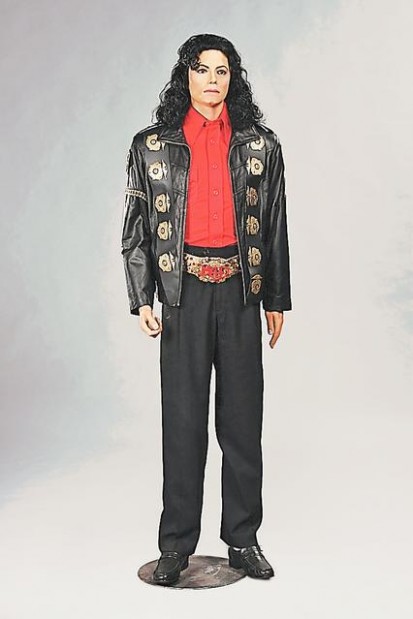
When Profiles in History sold more than 200 figures from the Hollywood Wax Museum, costumes and memorabilia also sold. A hot lot in the recent sale was Michael Jackson's custom-made, black-leather motorcycle jacket and gold belt from the 1988 " Bad" tour. The set sold for $35,400.