

DETROIT - Morris Cucksey would burst through the door, excited about showing off his newfound treasure.
"Wait till you see what I have," he'd say.
"Grandpa, where did you get it?" Cari Cucksey recalled asking.
"Alongside the road," he'd tell her, time after time in his gruff voice.
Furniture, tables, chairs - "anything and everything that he thought he could salvage," Cari said.
Morris Cucksey, a World War II veteran, taught Cari that everything had potential - all it took was some creativity and vision to uncover it.
She sat on a stool in RePurpose, a resale shop she opened three months ago in Northville, Mich., and looked around at the things she sells - furniture, tables, chairs and countless home items that have been salvaged and transformed, including a bowling alley turned into a kitchen table.
People are also reading…
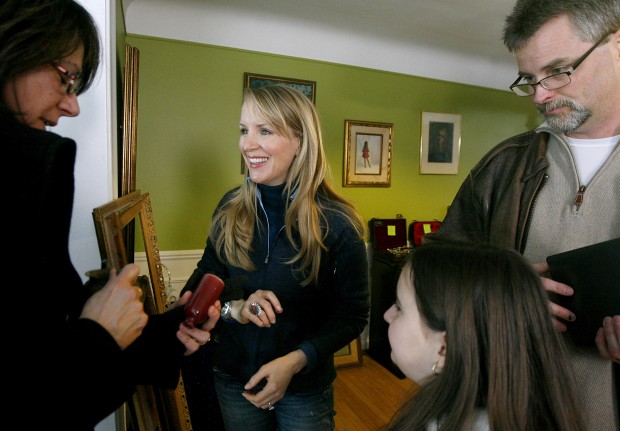
"I heard my name," she said, her head snapping to the big-screen television tuned to HGTV. She watched a commercial for her new reality show, "Cash & Cari," which is based on her estate-sales business. "Cool. That must be the next episode."
In many ways, Cari, 35, has taken her grandfather's advice and applied it to her life. This onetime fitness instructor has evolved into a businesswoman, entrepreneur and budding TV star. "With the way the world is, you have to re-create and repurpose yourself, just to keep up with technology," she said.
It all started in 1998, when Cari wanted to go to Europe after graduating from Central Michigan University. She didn't have enough money, so she started buying and selling things on eBay, making enough to go overseas for two weeks.
When she returned to Michigan, she started shopping estate sales for items with resale potential.
"I started realizing I knew a little about a lot of things," she said. "The light bulb went off" and she started an estate-sales business.
In early 2010, TV executives were scouting for a female liquidator for a reality show on estate sales. A woman with a British accent saw Cari's Web site, called her and said: "Cari, I'm on your Facebook page, and you are very tele-worthy."
Producers came to Michigan and filmed 12 hours of Cari in action. The series was sold to HGTV and premiered Jan. 3.
"We already have a contract for a second season," said Cari's fiance and business partner, Vincenzo Iafano. "They are already talking about a third season, and they are predicting five to seven."
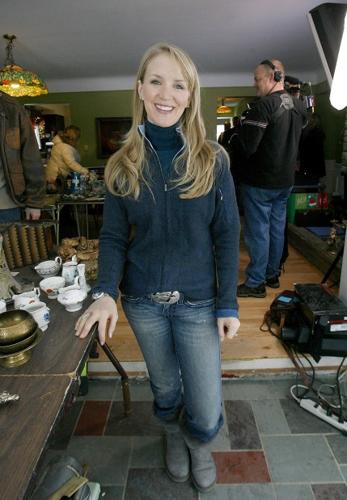
Cari's team of roughly 25 employees is made up of everyday, hardworking Michiganders who've suddenly been thrust into a national television show, doing the same things they did before the cameras showed up.
"We are like a super dysfunctional family," said Sharon Gabrian, 46, of Bloomfield Township, whom Cari describes as her "right hand" and her "left hand." "Cari is like my sister. We banter back and forth all the time.
That banter, built on relationships formed long before the cameras started filming, is what makes the show. And the banter keeps on going when the cameras are turned off.
Haas Sleiman and Moe Jaafar are 29-year-old cousins who grew up together in Dearborn, Mich. "Haas breaks; I fix. It's an ongoing joke," Jaafar said. "Don't Haas it."
The final episode was filmed while Cari holds an estate sale at her grandparents' home in Lake Orion, Mich.
Morris Cucksey, 88, and his wife, Rosa Lee, 88, are in an assisted-living facility.
"My grandmother has a little bit of Alzheimer's, and my grandfather is getting dementia," Cari said.
The basement is filled to the ceiling and the garage is jampacked with tools. The family wants to sell the house, so an estate sale is needed. But it will also make for great TV.
"This is going to be extraordinary for Cari because she is going to be able to see the history of her family, going through her grandfather's belongings," said Dennis Beauchamp, who is directing the first two seasons of "Cash & Cari."
How to shop an estate sale
Here are some of Cari Cucksey's tips:
• Dealing with antique dealers: It's not always easy to find exactly the right antique. Don't lose hope! Visit local antique shops and speak with experts to let them know what you are looking for. They will have better connections with dealers than you and will be able to source your new treasure faster.
• Negotiating a price: Negotiating can make some people nervous. The best way to start the conversation is by asking what the seller's best price is. Think about how much you would pay for the item and see if you can find a compromise somewhere in the middle. This way, everyone comes away from the deal happy.
• Consider before cleaning: When you acquire a new item, research it thoroughly before attempting to clean it up. Some furniture is best treated with chemical cleaners, whereas other pieces will thrive with a little beeswax and a lot of elbow grease.
How to sell your items
Tips from Cari Cucksey:
• Research: I can't tell you how important it is to research items. It is the backbone of my business. Whether that means going online or doing price comparisons with other stores and sales, you need to know the true value of your treasure. To take your research to the next level, visit antique dealers or make an appointment with an expert.
• Staging: Setting up sales means more than putting all your items on a table. Group similar colors or pieces to entice the buyers - and make sure everything is spotless.
• Connect collectibles with the right buyer: There is a whole world of collectibles out there in the estate-sale world. Just remember: Not every item has a great value, but it will have a collector out there somewhere. Find the right collector and you will raise the value of your piece.