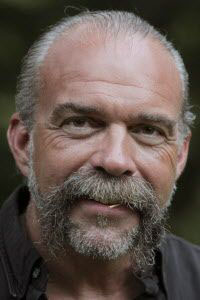

Sam Childers describes himself as a “Christian warrior.”
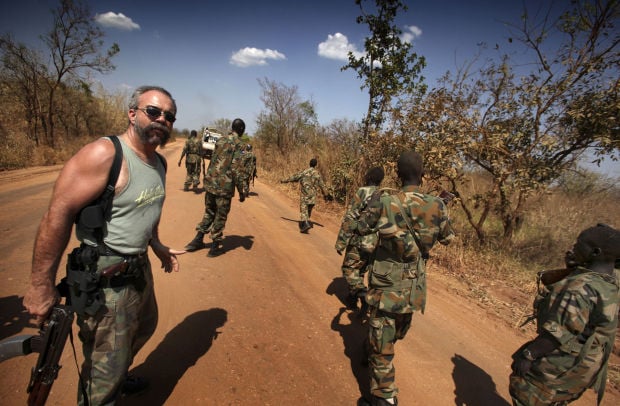
Others describe him as a controversial preacher — “The Machine Gun Preacher,” who in 1998 was usually armed with an AK-47 rifle in Sudan, rescuing kidnapped orphans from the Lord’s Resistance Army, a guerrilla movement that forced children to be soldiers or sex slaves.
Childers, 51, is in Tucson as part of a national tour talking about his ministry, international work, autobiographies, the 2011 Hollywood film “The Machine Gun Preacher,” and a documentary that will be released next month. (See box.)
The Covenant Generations Church, 2550 N. Tucson Blvd., invited Childers to speak at services this weekend.
Co-pastors Scott and Jamie Gurule heard Childers speak on a program for Trinity Broadcasting Network in the Los Angeles area last year. Scott Gurule was a guest on the same program.
People are also reading…
“We have wanted him to come here and reach out to the community,” said Jamie Gurule.
Childers will share his life with the congregation and his work with Angels of East Africa, a U.S. nonprofit aid organization. Through donations, including proceeds from Childers’ books and DVD sales, the organization supports five orphanages; feeding programs; and job training and educational programs in Sudan, Uganda, Ethiopia and India. A sixth orphanage is under construction.
Childers, a native of Grand Forks, North Dakota, said he grew up attending an Assembly of God church, under the eyes of decent and honest parents. But, at an early age he found trouble. By his teens, he was promiscuous, sold drugs and became an armed guard for drug dealers.
As a young man, he was haunted by his father’s words: “ ‘Boy, somebody’s gonna kill you one of these days,’ ” he recalled in an interview Wednesday.
The message became clearer because of his drug-addicted lifestyle, explained Childers. He slowly began to distance himself from his life of crime and found a job in construction, later starting his own construction business.
He began to re-establish his relationship with God, and he and his wife, Lynn, who also returned to church, raised a family.
In 1998 at age 36, Childers went on a five-week mission to southern Sudan, which was in the midst of the second Sudanese civil war. Childers was urged by his pastor to help repair huts damaged in the conflict.
Childers recalled seeing the body of a child who had stepped on a land mine. “He was dead for two days. I remember thinking, ‘How could this happen in the world today?’
“I told God I would do whatever it takes to help these people,” recalled Childers, who returned three months later to run a mobile clinic. He said while he passed the village of Nimule, on the Ugandan border, he heard God’s message for him to build an orphanage there.
It was in this area that the rebel militia had kidnapped hundreds of children and killed scores of villagers, said Childers.
He went to work in Africa, clearing land and building huts by day, and by night sleeping under a mosquito net with the Bible and his assault rifle.
The first orphanage opened in 2000, said Childers, who sold his construction business and worked full-time in ministry in Sudan.
“I hope to inspire people to do something good in life. Help your neighbor, your friend, a relative, a stranger with a flat tire. Mission work begins in your own town,” said Childers, who founded Shekina Fellowship Church in Central City, Pennsylvania, an independent Christian church where his wife is senior pastor.
Childers spends eight months each year in Africa, as founder and chief executive officer of Angels of East Africa. He oversees his projects, which operate on a $1 million annual budget, employing about 100 Africans.
Currently, Childers has more than 300 children under his care, but the organization has housed and fed more than 1,000 in orphanages. There are orphans who now live with families through a program similar to foster care that the organization supports, said Childers.
The feeding programs serve 4,000 meals a day, and Childers also operates a farm in Uganda. He purchased 1,000 acres two years ago, and grows Irish potatoes, onions and tomatoes.
Fruit trees, including mango, lemon and orange, also are cultivated. The farm has cattle, and people 18 to 26 are paid to work there and are also learning how to ranch.
“We also sponsor students to attend universities in Uganda and India,” said Childers. The first of 30 students is graduating in October from Gulu University in Uganda.
“She is majoring in business, and I will give her an opportunity to run our branch office in Uganda if she is interested,” said Childers.
“Education can literally change a nation. I want to help youth change the lives of people in their countries. I want them to have opportunities to become lawyers, doctors, pilots, businessmen and businesswomen and work in government. They can make change given the opportunity,” Childers said.