


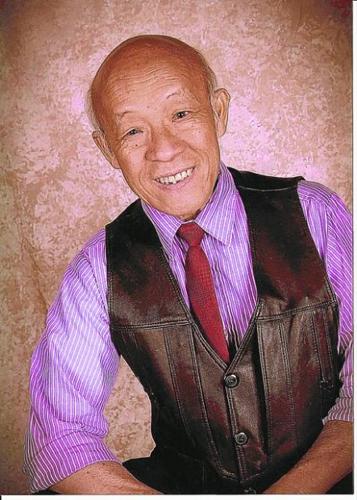
Cheng Cho Chang stood 5 feet 2 inches tall, but he was a superman.
He could bend steel bars around his neck, pull swords through his fist, paint intricate Bible verses in Vietnamese characters on small stones, gourds and bits of wood — and he could whip up a mean plate of duck at his Tucson restaurant.
In his youth, Chang traveled the Far East competing and winning medals in the Asian Olympics. He was a sharp-shooter, martial artist, lion dancer, painter and sculptor.
He knew how to fix air- conditioning units and care for exotic zoo animals. He tutored students and could speak six languages. And he translated documents for the Taiwanese Embassy in Costa Rica, too.
In comparison to the childhood traumas he suffered, the feats of intellect, talent and might were a cinch for Chang.
People are also reading…
Even in his final months, as leukemia robbed Chang of his vitality, he continued to pursue his interests. He died in hospice care Aug. 2, surrounded by his family. He was 70. The father of three was preceded in death by his only son, 18-year-old Juan Pablo Chang, in 2001.
The elder Chang was born in Vietnam but went to school in Taiwan. He was always vague about why he moved to Taiwan, and his children never questioned him. In the weeks before he died, though, Chang told his daughters about his childhood.
Even as a boy, Chang was very outspoken, calling attention to any injustice he saw.
Because he spoke so freely, at age 12, Chang was accused of being a communist and was thrown into a Vietnamese jail, where he was tortured.
The boy was incarcerated for almost a month, until his grandfather, a chairman for the Nationalist Party, could secure his release.
Decades later, his wife and daughters remember how startled Chang would be whenever they woke him from a deep sleep. That's because in jail, the guards often came to the cell Chang shared with other prisoners and hauled inmates away to be shot, his daughter, Rosa Amphayvong said.
Still fearing for his safety, Chang's family sent him to school in Taiwan when he was 14. Because he was a talented sharpshooter, runner and bicyclist, he qualified for the Asian Olympic team.
His wife, Ana Wang, keeps dozens of Chang's medals wrapped in cloth and tucked into a box of his boyhood memorabilia.
Chang's athletic prowess earned him scholarships to high school and college, but he still had to pay for his own food and other essentials.
If he didn't have any money, Chang wouldn't eat for days at a time, daughter Rosa Amphayvong said.
In Taiwan, Chang was very involved in Boy Scouts and rose to the rank of Eagle Scout. He also was required, as a citizen of Taiwan, to join the military.
In most of the photos taken of a youthful Chang, he is stoic, refusing to smile.
"He liked to look stern and heroic," his daughter, Maria Stewart, said.
To earn money during school, Chang worked odd jobs, including lifeguarding and tutoring. It was while helping Wang prepare for her high school entrance exams that Chang fell in love. She was 16, and he was 26, but when Wang graduated from high school, the couple wed.
To find work, Chang had to leave his wife and children in Taiwan while he went to Hong Kong, then Costa Rica, in search of work. He took jobs silk-screening, etching tableware and painting pottery, all freehand. His talents stemmed from his boyhood in Vietnam, where his family earned money by painting paper lanterns.
He also found work as a salesman, a cook, a zookeeper and a photographer for the Taiwan Embassy in Costa Rica. He eventually moved his family to the Central America country. In an attempt to indoctrinate his wife and children into the culture, Chang had them adopt names more common to the country.
The family moved to California in the early 1980s and by 1985 was living in Tucson, where Chang took a job as a chef.
A few years later, he opened King's Chinese Restaurant on West Grant Road. With her husband's death, running the restaurant will be too difficult for Wang to manage alone, so the family will sell the eatery.
"That restaurant put us through college," Amphayvong said. "And paid for all our needs," Stewart added.
No matter what else Chang was doing to support his family, he always maintained a sense of showmanship he learned from Scouting, his wife said.
While living in Costa Rica, he donned elaborate and weighty costumes to perform lion dances at community events.
He learned the dance during his early years in Vietnam. That's also where he learned martial arts. He was a sickly child and his family thought it would improve his health.
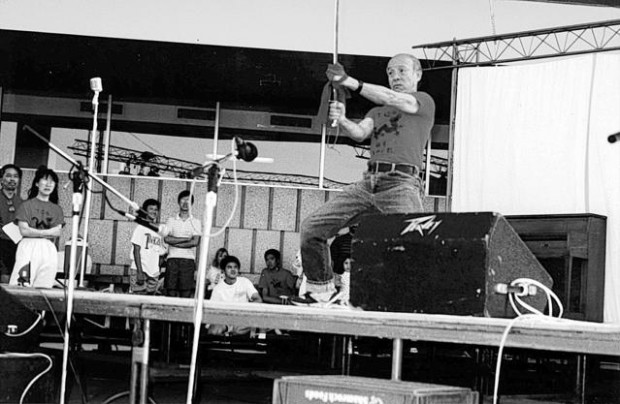
When the family moved to Tucson, Chang continued the performances at community events, and he added a repertoire of martial-arts moves.
He'd combine his skill, might and will to bend rebar across his neck and pull sharpened swords through his fists.
"He always did something that was more risky than we needed him to do," said Peter Chan, past president of the Tucson Chinese Association. And, "he'd always have a story to tell about his adventures. He was a unique person."
Chang's daughters had no interest in martial arts, but their father insisted they at least learn to shoot. As teenagers, he even included them in some of his performances — persuading Rosa to shoot a pingpong ball off the top of his head with a pellet gun and getting Maria to throw a knife at a balloon clenched in his teeth.
"He had great faith in his kids and what he taught them and how he brought them up," Chan said.
Wang could never watch her husband's death-defying demonstrations. Just looking at photos from his shows causes her to shudder and look away.
Chang's last public performance was drumming during a lion dance in February in celebration of Chinese New Year.
"He knew his life was getting close to the end. He wanted to have the last freedom to do things for the community," said Gary Low, who performed with Chang in February. "He was a very strong person."
Find a photo gallery of this Life Story at azstarnet.com/slideshows
"He'd always have a story to tell about his adventures. He was a unique person."
Peter Chan, Tucson Chinese Association past president


