Proposed logging in the Rattlesnake National Recreation Area would violate the law that created it, according to one of the people who shepherded the legislation through Congress.
“When I heard about that, I couldn’t sleep,” said Cass Chinske, who helped draft the policies governing the area north of Missoula in 1980. “I had to go find all the old hearing reports. The pages have all turned yellow now, but I have them.”
The Lolo National Forest's Missoula Ranger District put its final draft of the Marshall Woods Project up for public review this week.
The project envisions about 4,000 acres of treatment to improve forest health, such as prescribed burning, slash removal, tree thinning and replanting. But it also includes about 225 acres of commercial logging, entailing about 80 truckloads of timber coming out of the main Rattlesnake Creek corridor.
People are also reading…
Chinske’s documents include the House Committee on Interior and Interior Affairs report on House Resolution 5891 “to establish the Rattlesnake National Education and Recreation Area and Wilderness.”
In its "Background and Need" section, the report states, “Due to its high watershed values, the proposed National Education and Recreation Area and Wilderness is unsuited for livestock grazing, timber harvest, mining or other resource development.”
“Thinning and burning for fire management is allowed – we discussed that 30 years ago,” Chinske said. “I’m not going to oppose that if it’s done right. But the Rattlesnake is not a place for high-impact commercial activity. And it would set a precedent: If logs can come out on trucks from the Rattlesnake National Recreation Area, where’s the next one going to be? That prohibition was written purposefully for this issue.”
Missoula District Ranger Jen Hensiek respectfully disagrees. The law designating the Rattlesnake as a special area was passed in 1980, and the Lolo National Forest took it into account when it created its forest plan in 1986.
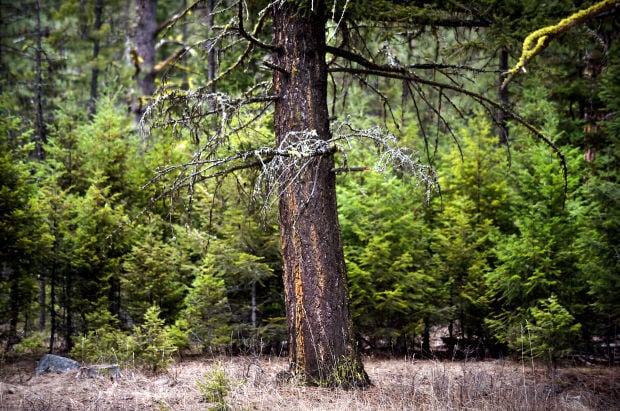
And that plan specifically mentions the need to encourage healthy ponderosa pine stands in the hillsides northwest of Rattlesnake Creek above the trail’s first three miles. That’s the most publicly visible part of the Marshall Woods Project, and the one slated for mechanical removal of trees between 9 and 16 inches in diameter.
***
But insistence on logging that area could break apart the Lolo Restoration Committee, a group of conservationists, industry representatives and scholars who’ve been advising the Lolo National Forest on management activity.
“I’m definitely thinking about resigning,” said Jake Kreilick, who chairs the committee. “I don’t feel comfortable spending my energy working with them after the process they’ve unfolded here.”
Kreilick said the Marshall Woods plan had developed another alternative without commercial logging five years ago in response to the committee’s concerns about logging necessity and public reaction.
“That was what the previous district ranger felt the most comfortable with, based on where the LRC ended up,” Kreilick said. “All that has been ignored now. I really feel stabbed in the back by the agency on this.”
The Lolo Restoration Committee operates on consensus, and before the Marshall Woods draft release last week, Kreilick said the membership was in support of about 95 percent of the project.
“It doesn’t make sense to me that they refuse to acknowledge the compromise was built around the non-commercial work there,” Kreilick said. “That’s what everybody was supportive of. There are members on the committee that would support those commercial activities, but others have a different opinion. Now with what they’re proposing, it's likely the project will get challenged. The Forest Service is using these two units to hold the rest of the project hostage, after all the work we did.”
***
The Rattlesnake part of the 1986 Lolo Forest Plan has a “timber practices” section that states: “Timber removal will be limited to that needed to maintain or improve recreation values. ... The ponderosa pine flat between Spring Creek and Poe Meadow bordered by Strawberry Ridge and Rattlesnake Creek will be treated by cutting and/or prescribed fire to encourage a mosaic of old-growth pine with interspersed openings and thickets.”
“The plan has specific language to enhance and protect the recreation values of that area with timber practices,” Hensiek said. “And it doesn’t tell us not to in the act (creating the Rattlesnake).”
Furthermore, Hensiek noted the Rattlesnake has such an extensive history of logging, firewood cutting, homesteading and irrigation that none of the proposed logging areas qualify as old-growth forest.
The logging was proposed to give the larger trees in those acres a chance to become a healthy ponderosa pine stand by providing more sunlight and air flow, removing pockets of root disease and clearing out the overstocked smaller trees.
The complication is some of those trees along the trail corridor have grown too large to handle by hand. Hensiek said that’s what prompted the move to a commercial logging component, which she added would barely produce enough logs to pay for the work involved.
Lolo Forest natural resource specialist Al Hilshey said the logging plan was developed with the recreation and wilderness qualities of scenic beauty, opportunities for solitude and limited change in mind.
“We tried to be very sensitive to the visitor experience,” Hilshey said. “We’ve been very specific about where to stage equipment and deck logs. There’s going to be nothing at the trailhead or most of the first mile, which is the most popular section. And we’re going to feather the vegetation as we go to prevent trail cutting and switchbacks afterward.”
Public comments on the Marshall Woods plan will be accepted through April 6. Send comments to Tami Paulsen, Missoula Ranger District, 24 Fort Missoula Road, Missoula, MT 59804, or email them to comments-northern-lolo-missoula@fs.fed.us.