

Shares in RTX Inc., parent of defense contractor Raytheon in Tucson, rose Tuesday after the company’s adjusted third-quarter results beat Wall Street forecasts.
The company also announced a $10 billion stock buyback and an agreement to sell off Raytheon’s cybersecurity, intelligence and services business for $1.3 billion.
The company posted a third-quarter net loss of $964 million, or 68 cents per share, after taking a $5.4 billion charge related to defective powder metal used in engines made by its Pratt & Whitney unit that led to a recall of engines used in many airliners.
Third-quarter unadjusted revenue was $13.5 billion, down 21%.
But after adjustment for the special charges, RTX posted sales of $18.95 billion, up 12% versus prior year, and earnings per share up 3% at $1.25, both beating average estimates of analysts polled by Zacks Investment Research.
People are also reading…
Shares in RTX, which have fallen since the company revealed the engine problem in July, rose on Tuesday to $78.35, up $5.22 or more than 7%, in trading on the New York Stock Exchange.
RTX also said it had entered into an agreement with an undisclosed buyer to sell its Virginia-based Raytheon cybersecurity business, which employs about 2,200 people.
RTX Chairman and CEO Greg Hayes said the company has made significant progress on its assessment of the Pratt & Whitney metal issue and expects the financial impact to be in line with the previously disclosed charge.
Raytheon has said its planned repairs to Pratt & Whitney geared turbofan engines will ground an average of 350 Airbus A320 series planes per year from next year through 2026 and cost the company some $7 billion.
Hayes said “historic demand” across the company’s commercial aerospace and defense businesses drove 12% organic sales growth during the third quarter and led to another record backlog of $190 billion.
Raytheon, whose defense businesses are all managed in Tucson, had third-quarter sales of $6.47 billion, up 3% versus prior year, mainly driven by increased sales in naval weapon systems, including the AIM-9X Sidewinder air-combat missile and “advanced technology” classified programs.
Raytheon recorded an operating profit of $560 million, down 18% from third-quarter 2022, amid higher sales volume on lower-margin programs and lower net program efficiencies, the company said.
Collins Aerospace posted revenue of $6.63 billion, up 16% from the prior year, with operating profit of $903 million, up 22%.
Collins’ unadjusted results included $1.4 billion in one-time special charges related to litigation and restructuring costs.
Pratt & Whitney had third-quarter sales of $926 million, down 83% from third-quarter 2022 after the $5.4 billion charge related to the powder-metal issue and recorded an operating loss of $2.48 billion, compared with a profit of $316 million in the prior year, after a $2.89 billion charge for the powder-metal matter.
Without the charge, Pratt earned an adjusted operating profit of $413 million in the third quarter, up 30% from the same period a year ago.
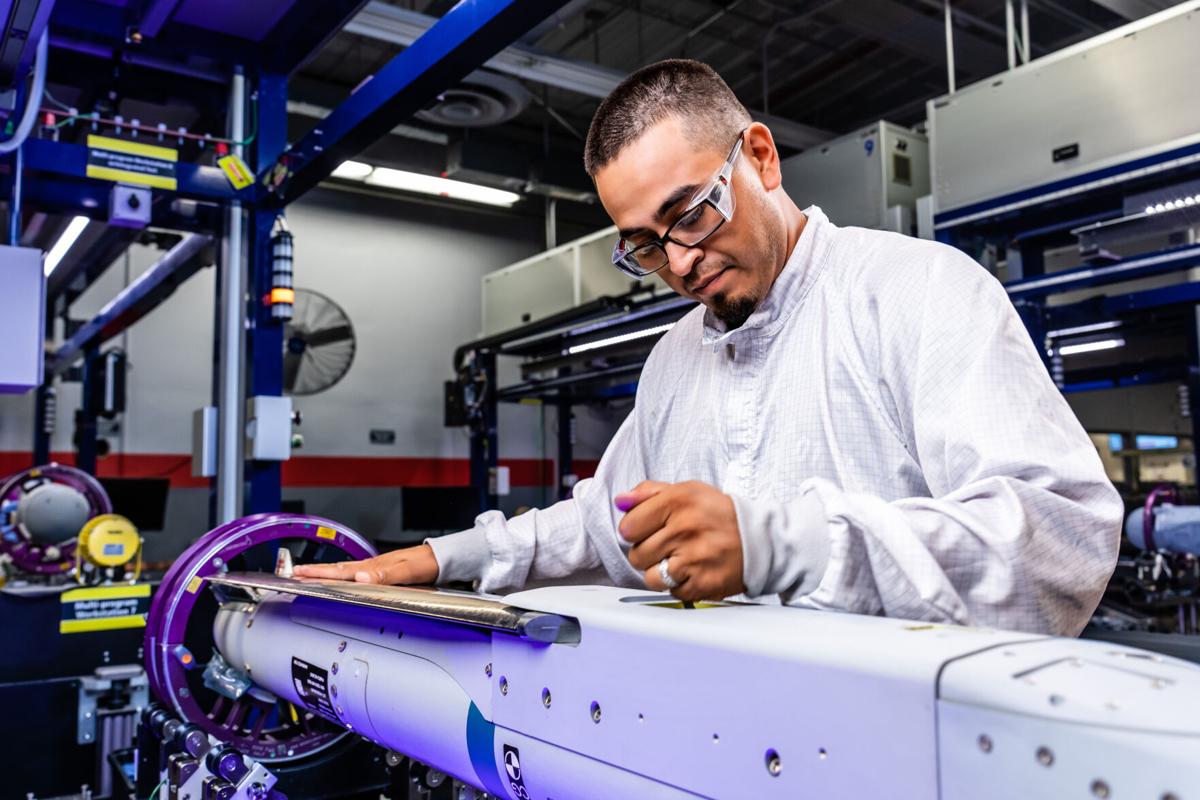
A mainstay air-combat weapon used by the U.S. and more than 40 allied nations, the Advanced Medium Range Air-to-Air Missile has been upgraded over three decades to meet emerging threats.
Contact senior reporter David Wichner at dwichner@tucson.com or 520-573-4181. On Twitter: @dwichner. On Facebook: Facebook.com/DailyStarBiz

David Wichner
Reporter

 Wage increases, improved benefits planned for about 1,000 Raytheon Tucson employees


