They could have just said “no.”
When the Tucson City Council considered renaming Joaquin Murrieta Park after local civil-rights leader Salomon Baldenegro on Sept. 9, yes and no were the clear options.
But there were criss-crossing currents — an old criminal accusation, social issues, political relationships — that created a swirl of confusion.
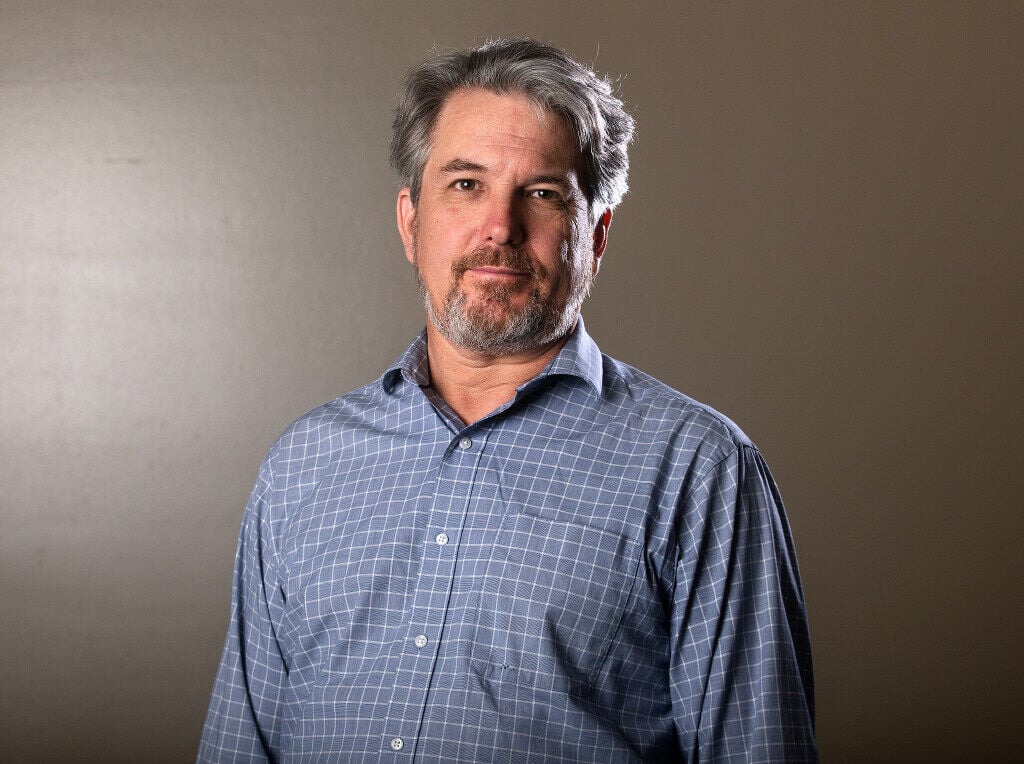
Arizona Daily Star columnist Tim Steller
That’s how, instead, of a clear answer, the council landed on a third, surprising option: A moratorium on all renamings.
I’m guessing this would not have been the outcome if the council had considered renaming the park before March 18 this year.
That was the day the New York Times published an account of sexual assaults by the famed farmworker organizer César Chávez. The story included an especially shocking accusation by fellow movement leader Dolores Huerta that Chávez had raped her.
People are also reading…
There apparently were those who knew of Chávez's abuse in the upper ranks of the United Farm Workers. But the broader American public didn’t know much about it and, in subsequent decades, we named a holiday, streets and parks after him around the country.
After the Times’ expose was published, in Tucson, Chávez's name was stripped from an arch, a park and a holiday, while a statue of him also was removed.
That was in the recent memory when the renaming of Joaquin Murrieta Park in honor of Baldenegro came to the council Sept. 9.

The potential renaming of Joaquin Murrieta Park on Tucson's west side after a long-time community leader who helped establish it revealed a social and political aspect behind the effort and rejection.
In 1973, still the era of his prominent activism, Tucson police arrested Baldenegro and accused him of domestic violence. Short stories in the Star and the Tucson Citizen said a gas station attendant and another witness saw him kicking and hitting his then-wife in a car.
Baldenegro vehemently denies the allegations, which were quickly dropped and never led to a conviction. His current wife, Cecila Cruz Baldenegro, told the City Council she had known her husband for more than 50 years and never saw him be violent.
“I better than anyone else knows Salomon’s character,” she said. “He is a hardworking, caring and humble human being.”
In the era after the Chávez revelations, though, the 1973 accusation was enough to derail Baldenegro’s honor and reignite old political conflicts.
Political undertone
While the Chávez revelations set the social context of the council’s decision, there also is a political context that outsiders to West Side and Mexican-American community politics may not be privy to.
Outsiders tend to think that Latinos in Tucson think and vote as a bloc, largely supporting, in the years before he died, Raúl Grijalva and his favored candidates. Indeed, Grijalva formed the most powerful political network in Tucson before his death in March 2025.
But Latino voters in Tucson have never been a monolith, and the Baldenegro-Grijalva relationship is one reason why not.
The two activists fought together in the 1960s and 1970s, but a split occurred by 2002, when Grijalva first ran for Congress, leaving his seat on the Pima County Board of Supervisors. Many thought that Baldenegro, Grijalva’s old comrade-in-arms from the protest days, would get Grijalva’s endorsement.
Instead, Grijalva endorsed Richard Elias, who won the election and served 4 1/2 terms on the supervisors before dying in 2020.

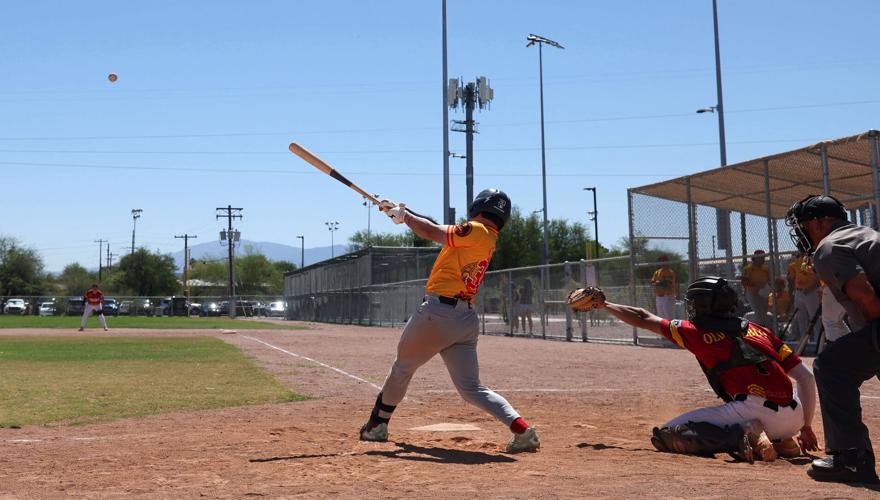
The ball fields at Joaquin Murrieta Park were recently refurbished as part of massive improvements at the popular park on Tucson's west side at 1400 N. Silverbell Road. An effort to rename the park was recently rejected by the Tucson City Council, who went on to pause all renaming for parks and other public spaces.
“The Chicanos are fractured between those who support the machine, the Grijalvas, and those who supported Salomon and what he stood for,” said Raul Ramirez, who spearheaded the effort to rename the park after Baldenegro, raising $10,000, following the process and winning unanimous approval from the Tucson Parks and Recreation Commission.
In this telling, Mayor Regina Romero, Ward 1 Council Member Lane Santa Cruz and U.S. Rep. Adelita Grijalva, among others, are all part of that machine. The Baldenegro-allied crowd has remained largely out of power, though some associated dissident Democrats such as Rep. Alma Hernandez and Sen. Sally Ann Gonzales do hold elected office.
“We told them we wanted to heal the fracture,” Ramirez said. “Now people are taking sides again.”
Valid arguments on both sides
In fact, Baldenegro supported Santa Cruz’s last Democratic challenger, Miguel Ortega, in the 2023 primary election. But when I asked her, she said this was not the issue in the renaming.
“Whatever conflict is being framed, I refuse to be pulled into it,” she said by text.
To me, the question comes down to whether the accusation leveled against Baldenegro in 1973 is enough to undermine his name being stamped on a park that he helped establish. There are decent arguments on both sides.
On the one hand, there were witnesses, according to the news reports, who saw Baldenegro assaulting his then-wife. On the other hand, Baldenegro vehemently denies it, charges were quickly dropped and he was never convicted. On the other other hand, this is common in domestic violence situations — that a victim decides not to press charges.
West Side native and resident Patricia Palomera made a strong case that the lack of a conviction is not enough to discount the accusation, because victims unwilling to be witnesses are so common in domestic violence situations.
And the Chávez comparison was in the background — he was long dead and never convicted when cities started tearing their memorials down.
Frank Sotomayor, who helped lead the renaming effort, discounts that context.
“César Chávez and Salomon Baldenegro are two different people,” Sotomayor said. “In my mind, the information about Cesar Chavez was not relevant.”
'No' is usually enough
Santa Cruz did find it relevant, though.
“In light of how the community responded to the Chávez sexual assault allegations, I paused moving forward with park renamings that were in the queue,” she wrote in a text. “As a sexual assault survivor myself, a lot came up for me and for many other folks in our Tucson community who’ve experienced gender-based violence.”
“As a result, we needed to have hard conversations about what this means moving forward when we’re tasked with re/naming public spaces.”
The council agreed, approving her proposal to put a moratorium on renamings by a 4-3 vote. Tellingly, though, the moratorium was approved immediately after the council supported the naming of the Stacy Redondo Fields at Kennedy Park for the late Cholla High softball player who went on to help the U of A softball team win two national titles. They slipped that noncontroversial naming in before considering Baldenegro’s renaming and the moratorium.
I think the Redondo case is relevant, because it shows the problem is not about renamings writ large. The process for approving renamings is spelled out in a 2020 directive signed by then-City Manager Mike Ortega, not an ancient ordinance.
The problem is simply how to handle credible but unproven allegations of wrongdoing by people who are being considered for having something named after them. These are tough situations, involving a lot of strong feelings, histories and relationships.
But if the council finds allegations of wrongdoing are credible enough, they can always simply say “no” — ideally before anyone gets their hopes up.
Contact columnist Tim Steller at tsteller@tucson.com or 520-807-7789. On Bluesky: @timsteller.bsky.social

Tim Steller
Columnist


 Political Notebook: ‘Evil Torta,’ three other weird Tucson signs, explained