Tucson can’t catch a break.
For as long as I’ve lived here, 30 years, Tucson has been a town with more than its fair share of crimes, some of them shocking. Still this year, especially the last couple of months, has felt different.

Arizona Daily Star columnist Tim Steller
It’s not so much the number of crimes but the disheartening spectacle that a series of them has produced. It of course hurts our image in the outside world, and it also, I think, shakes our self-confidence, even in cases like the most recent one, which was not caused by any problem in Tucson itself.
In that case, the killing of Vincent Siqueiros and Cameron Capara outside the Venture-N bar early Monday, the gunman had lived in Tucson only a month. He wasn’t really a local.

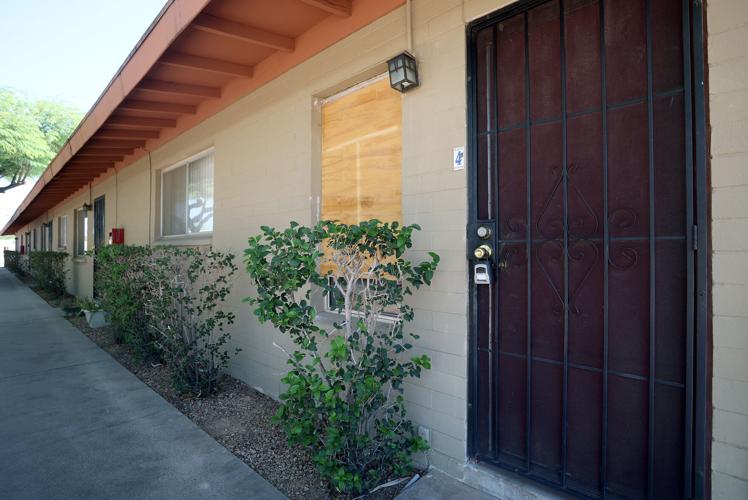
Ousman Ceesay, the man police say gunned down two people outside a Tucson gay bar before shooting himself, had moved to Tucson from Oklahoma about a month ago and was living in a midtown apartment.
It was horrible in any case, and became a spectacle when Tucson police announced Monday afternoon that the killer, Ousman Ceesay, was apparently motivated by hatred toward gay people.
People are also reading…
Once again, Tucson was in the national or international news for an especially shocking crime.
This came after a terrible series of high-profile incidents in 2026:
• Nancy Guthrie’s apparent abduction and disappearance from her Catalina Foothills home on Feb. 1.
• A mass shooting on Congress Street downtown in the early morning hours of July 19 that left nine people injured.
• The killing of a Tucson Police Department recruit, Carlos Ramirez, Aug. 20 in his far southwest-side house by home invaders, and the wounding of his fiancee, a Pima County corrections officer.
There’s no direct link between the incidents, except for the unease they cause. The main similarities you can find are between the Congress Street shooting suspect and the accused home invaders. All three have recent felony records, and two benefited from generous recent plea deals or sentences.
But they all took place in a Tucson atmosphere where crime continues to be a part of everyday life, even if violent crime has decreased, as city and county officials say.
There have been 31 homicides in Tucson so far this year, as compared to 39 at this time last year, and more the previous years. The Pima County Sheriff’s Department has investigated eight homicides so far this year, the same number as at this time last year, but has shown decreases in the other major categories of crime.
With these disturbing, high-profile cases at the front of mind, it doesn’t feel like violent crime is dropping, even if the numbers say so.
America ‘gave him the gun’
Monday morning’s murders have proven irresistible for people with political axes to grind. Many people I’ve encountered have wanted to boil the incident down to this simple explanation: A Muslim immigrant, motivated by his anti-gay cultural background, decided to kill gay people. Case closed.
The unspoken corollary is often that this incident shows Muslims don’t belong here.
I don’t think this story is that simple, and I think it matters that we find out more specifically why these killings happened. Among those who want to know are the victims’ families. Berni Capara, Cameron’s mom, told me via Facebook message:
“I’m trying to make sense of this horrible tragedy and I’m looking for answers to why. Why this person is so hateful to have done this to such a kind loving person. Yes, I wonder did something happen over this last month? Why did he come to Tucson in the first place?”
I suspect the explanation is individual to Ceesay’s experience, not reducible to his background. After all, there are millions of Muslims in the United States, many of them immigrants, who do not attack gay people or anyone else.
Ceesay, 44, grew up as a Muslim in The Gambia, a country with strict anti-gay laws and norms. This may have led to the anti-gay opinions that, according to the Tucson Police Department, he expressed in notes. Those notes have not been made public.
As my colleagues Emily Bregel and Henry Brean reported, Ceesay came to the United States at least 17 years ago to attend college in Oklahoma. He married an American who is Christian and became a U.S. citizen.
He had no record of crimes or any controversies except personal financial trouble all that time. But records suggest that he and his wife separated in the last year or two.
Then about a month ago, he moved alone from Oklahoma, where he appears to have lived his entire time in the United States, to Tucson. There was clearly a big change, possibly an upheaval, in his life that brought him here.
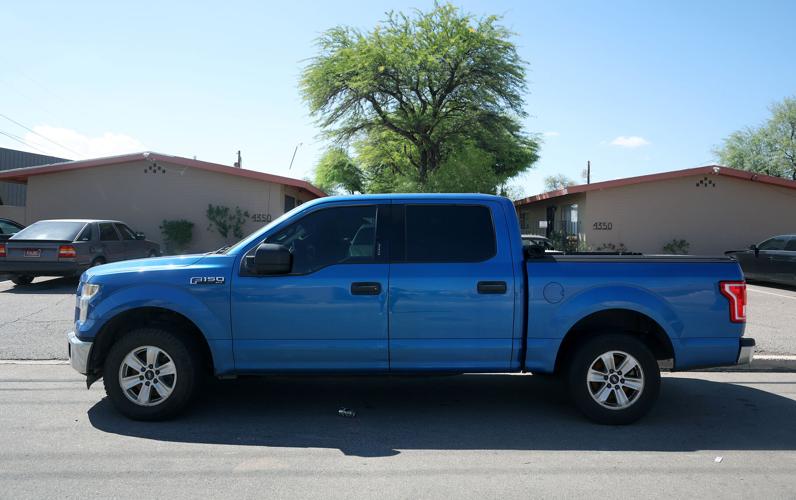
The three neighbors I spoke with on Friday near his apartment on East Fairmount Street knew nothing about Ceesay personally. They just saw him come and go, walking to his vehicle: a blue 2016 Ford F-150 XLT with Oklahoma plates, registered into 2027. It was still sitting outside the apartments.

Ousman Ceesay's blue Ford pickup truck remained parked outside his midtown apartment late last week.
He was an American citizen who drove a quintessentially American pickup. It would be self-excusing for Americans to argue that his upbringing in The Gambia caused him to kill people, but his adulthood in the USA. had nothing to do with it.
The United States is a violent country with easy access to firearms. The Gambia may have given Ceesay the ammunition — his beliefs — but the United States gave him the gun.
Info slow coming out
The news of the killings at a gay bar after midnight Monday circulated fast in Tucson’s LGBTQ community after people woke up that morning. But there wasn’t much information available.
A few scanner pages online reported that two or three people had been killed near North Sixth Avenue and East Speedway, or even gave the specific address of the bar where it happened, but details were scant.
The inevitable suspicion was that the killings were an attack on people for their identity — a scary thought that made people wonder about their own safety. But they didn’t learn the perpetrator himself had died until about 3 p.m.

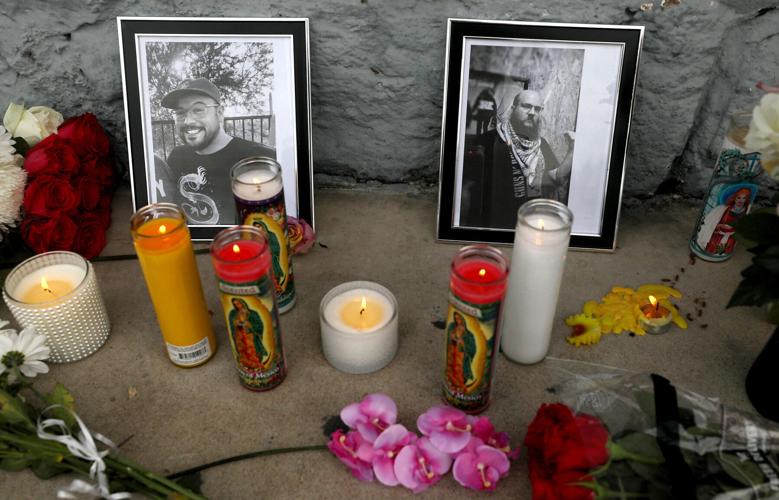
Photos of Vincent Anthony Siqueiros, 42, left, and Cameron Davis Capara, 33, were part of a community memorial in front of the Venture-N, the bar where they were shot and killed early Monday. The hate-influenced double-killing sheds light on the ongoing challenges with crime in the city.
From talking to Pima County Attorney Laura Conover, I know that the homicide prosecutor called by police at 3:45 a.m. decided not to go to the scene. It was already clear enough that the perpetrator had died.
On Wednesday, after a couple of days had passed, I talked with Tucson police Capt. Dominic Flores about Monday’s information flow. He noted it was not immediately clear to detectives what the killer’s motive was.
“We don’t want to cause unnecessary panic in the community if it’s not a targeted attack,” he said.
But they got a clue that his motive was hatred for gays when they found a list of businesses in his pocket. They confirmed their suspicion when they served a search warrant and found anti-gay writing at his apartment early Monday afternoon. They put out a news release at 2:56 p.m.
Flores pointed out that the 14½ hours between when the incident occurred and when TPD’s first news release came out was faster than in some recent cases. Certainly it wasn’t an unusually long period.
And he said although the department’s public information office wasn’t giving out much information yet that morning, the fact there was no remaining danger was available to those reporters who asked. I called TPD that morning and confirmed the number of dead but neglected to ask the danger question, so that was my own fault.
Still, as I told Flores, it could be good in a situation like this, when a group perceives itself in danger, to put out a brief statement clarifying the basics, that three people were dead but that there is no ongoing danger. Then a longer statement can wait for later. He was receptive.
That way, not just the journalists for news outlets, but all the online posters and the group-text senders can spread the word. In today’s information ecosystem, it helps to have that specific info widely available.
Seeing danger in context
It’s important, I think, for people to neither exaggerate nor minimize the significance of these spectacular crimes. They are horrifying and upsetting, but they don’t necessarily change the public-safety equation in Tucson.
It’s a city and area with too much crime, still, but where both city and county officials have acknowledged the problem and are carrying out strategies to reduce it, with the numbers showing some success. In Tucson, you can reduce your exposure yourself simply by staying out of drug deals, not hanging around homeless camps and avoiding the criminal world. Getting home before midnight also helps.
Ideally, we should be able to walk the streets anytime and count on being safe, but that is still an aspiration. We can’t account for outliers like a man moving to town, renting an apartment and deciding to kill, but we can work steadily toward reducing risk.
Contact columnist Tim Steller at tsteller@tucson.com or 520-807-7789. On Bluesky: @timsteller.bsky.social

Tim Steller
Columnist


 Tim Steller’s column: Laid-back Tucson bar community torn up by attack