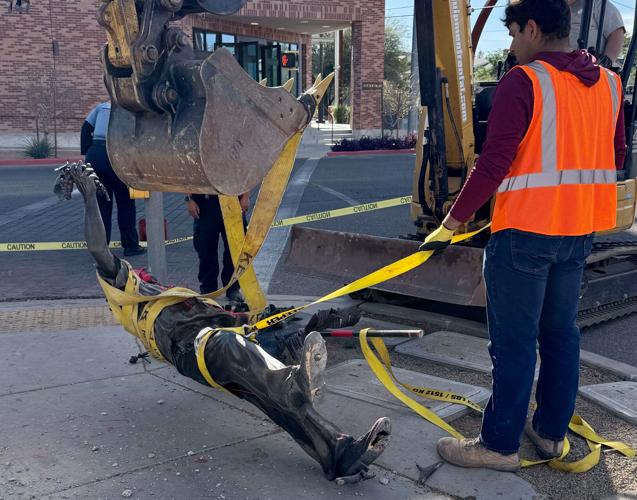
The César Chávez statue that welcomed visitors to Tucson's Barrio Viejo, south of downtown, has been taken down.
Crews removed the statue that was located at Five Points on Monday morning, days after sex-crime allegations were leveled against the late co-founder of the United Farm Workers of America union and Latino icon.
The removal marks the beginning of the city's effort to distance itself from Chávez, who died in April 1993.
City crews began work to remove the 1,000-pound, six-foot-tall bronze statue beginning about 6 a.m. Monday, said Andy Squire, a city spokesman. The removal took about three hours.
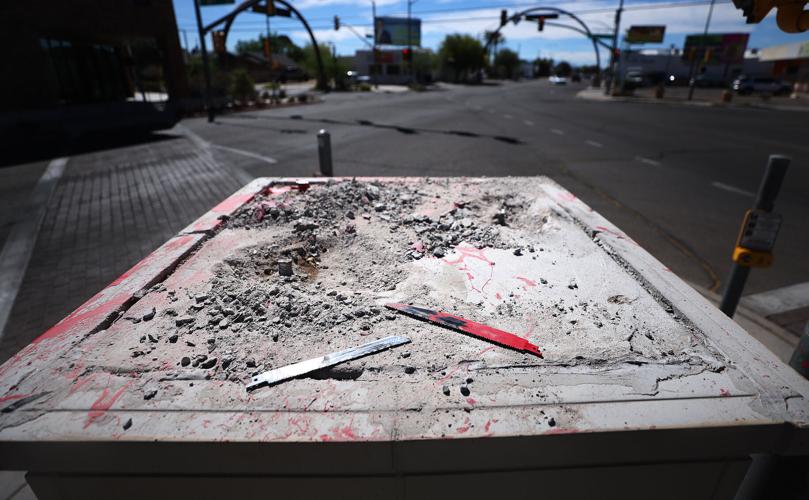
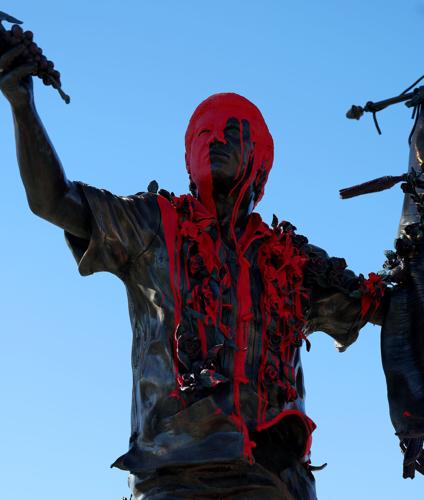
City Manager Tim Thomure, after consulting with Mayor Regina Romero, ordered that the statue's removal be expedited. That's because it was deemed a safety risk after being vandalized last week with red paint, Squire said.
People are also reading…
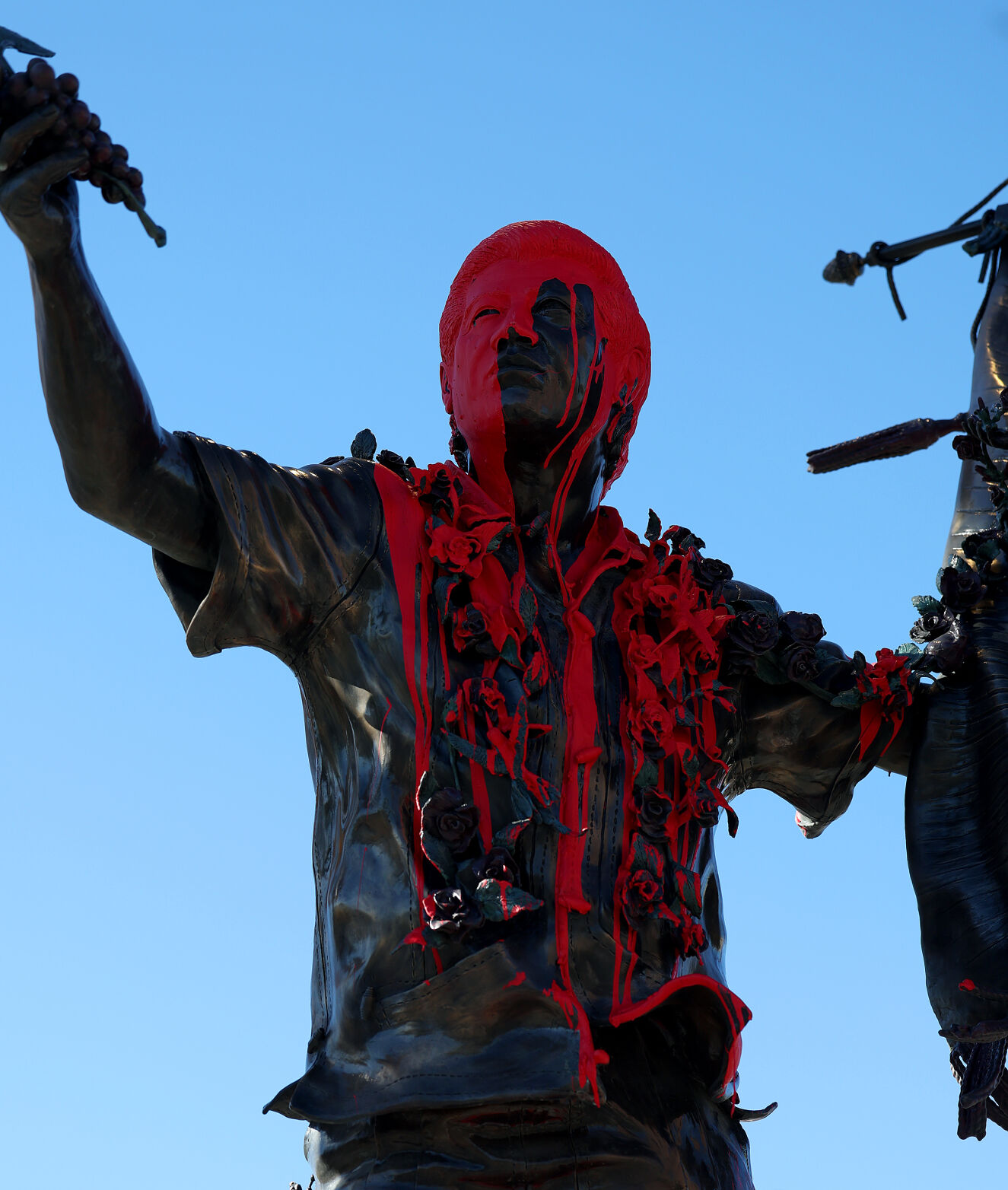
Red paint drips off the César Chávez statue that was vandalized days after sex-crime allegations surfaced against the cofounder of the United Farm Workers of America union and labor icon. The statue stood at the Five Points intersection.
The statue, made by local artist Luis Gustavo Mena, was installed in 2020 at the intersection, where South Stone and South Sixth avenues meet with 18th Street. It was part of a larger art project planned for the intersection known as Five Points by the city’s Transportation Department.
The removal comes on the heels of a yearslong New York Times investigation last week that revealed the United Farm Workers of America cofounder groomed and sexually abused young girls who worked in the farmworkers' civil rights movement. Dolores Huerta, who cofounded UFW with Chávez, and others told the Times that Chavez sexually assaulted them.
News of the allegations spread before the Times' reporting was even published, prompting the Tucson City Council to pause its proclamation of March 31, Chavez's birthday, as "César Chávez and Dolores Huerta Day." Additionally, prior to the Times' report, the Arizona César E. Chávez + Dolores Huerta Holiday Coalition renamed its event Saturday and canceled its annual march and car show.
Mena told the Star the city never notified him of plans to take down his Chávez statue and that he learned of its removal after it happened. Mena said his heart goes out to artists like him as officials across the country look to erase Chávez's name and likeness from signage, libraries, community centers and pieces of art — but Mena also said that it's not the first time his art has encountered removal.
"It's heartbreaking to all the artists throughout the nation who put their heart and soul and passion to the design of creating a hero," Mena told the Star Monday. "I started muralism in the early '70s, and a lot of my murals were erased. They were whitewashed ... All the artists who put their passion, and their hard work, something that they believed in, and has come to an end. It's spiritually heartbreaking."
Regarding what happens to the statue, Mena said he believes it "maybe belongs in a museum."
"Whoever is free of sin, cast the first stone, and that's how I really feel about it ... There's other worse people on the planet," Mena said. "We have Confederate street names ... makes me feel ashamed nobody has done anything about it. And then you have William Oury, the first mayor of Tucson, hanging in (City Hall)."
Oury, who was appointed mayor of Tucson by Gov. John Noble Goodwin in 1864, led a force of 92 Tohono O'odham Indians, 48 Mexican-Americans and six European-Americans in a retaliatory attack against the Aravaipa Apache, in which 85 to 125 Aravaipa Apaches were killed. It came to be called the Camp Grant Massacre.
"Where do you draw the line there? Nobody does nothing about it, but they're quick do other things," like take down his art, Mena said.

City crews removed a 6-foot bronze statue of the late labor leader César Chávez Monday from the Five Points intersection south of downtown Tucson.
The city, which has recognized a paid holiday named after Chávez and Huerta for its employees, "will be observing a holiday on Monday, March 30th that will likely be renamed or reconsidered by the Mayor and Council in the near future," Christina Polsgrove, spokeswoman for the city's environmental services department said in a corrected news release Monday morning. The original news release from the department noted the day off was for "Cesar Chavez Day."
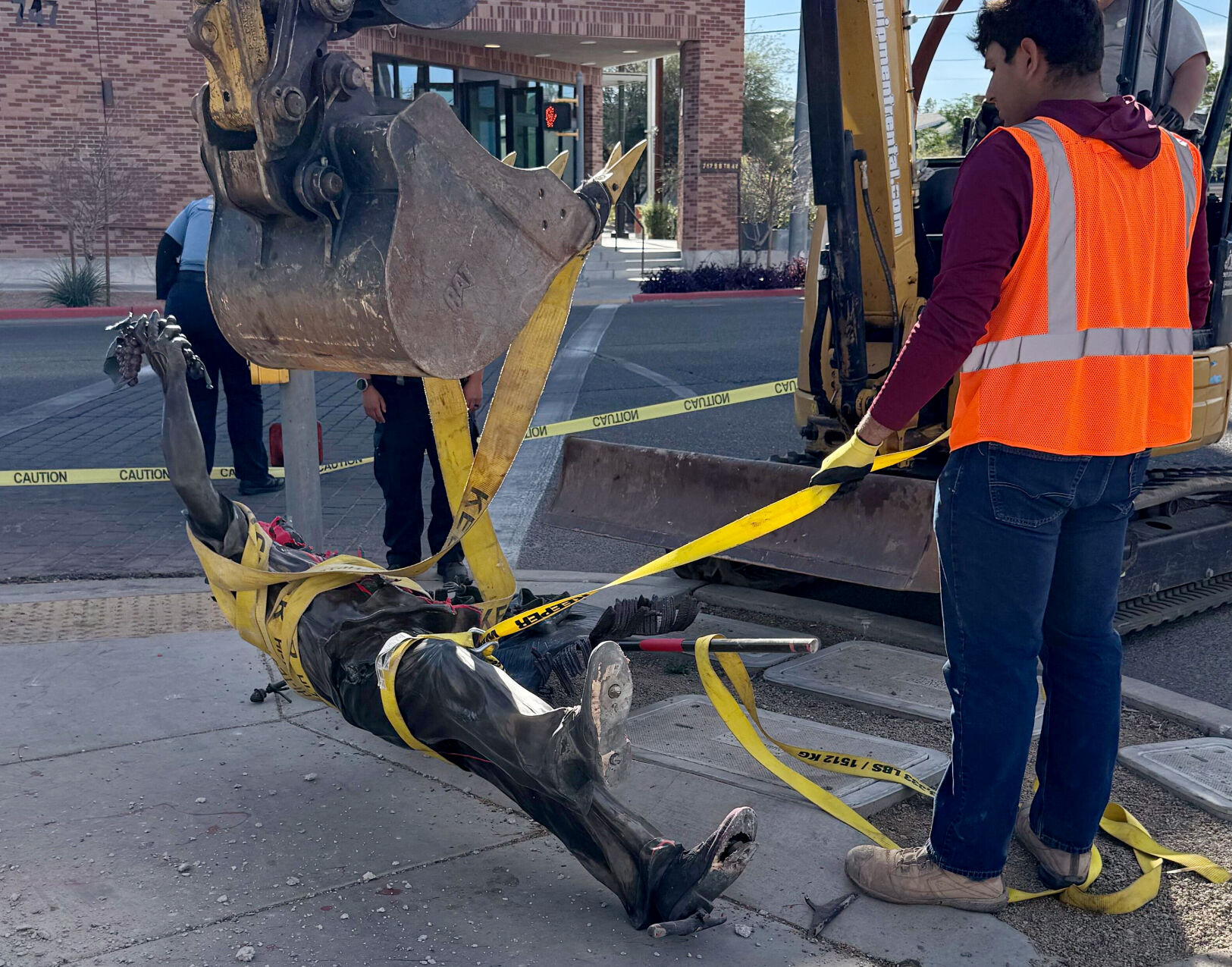
The César Chávez statue at the Five Points intersection south of downtown was removed Monday morning by city of Tucson crews.
Pedro Gonzales, a lifelong resident of Barrio Viejo and chair of the neighborhood association, said the neighborhood's art at Five Points is something that residents fought for, and funded, for 10 years. He confirmed that the city did not notify Mena or the barrio about the statue's removal.
Gonzales told the Star he isn't speaking out against the statue's removal, but the city "should at least have the decency to let us know what their plans were."
"They could have had us in the conversation about that. When they're looking for our votes they come knocking at our door, they know our names, they know our numbers. When there's an issue that they want to talk to us about, they make a very big effort to make sure that we're notified," he said. "At least have the respect to do (tell us about the statue), because we're just not anybody, you know. We fought really hard to do this ... (the city) should have more respect towards our participation all this."
Gonzales said the trauma that barrio residents felt due to gentrification and the urban renewal plans of the 1960s, what he called "Urban Removal," is why the 'outdoor museum' at Five Points is so important, because the barrio "wanted to express and show our culture."
"We see all the cultures everywhere else in this town, but we don't see it here. We don't see our culture, the many families that lived here in the barrios and all the issues that have happened here with their urban removal," he said. "We wanted to make sure that people would never forget ... We were so proud of the artwork that we put there, and so it'll continue for us because we just keep revolving. It's a bump in the road, but it doesn't define us (or) who we are.
"There's a lot of heroes in our culture, a lot of heroes that have fought and a lot of people have been fighting for years," Gonzales said.
City and Pima County officials announced last week that the two governments would be reviewing the holiday's name and other "assets" named in his honor. Pima County, which employs 7,000 people, observes a floating holiday for its workers at the end of March.
The Pima County Board of Supervisors will be discussing renaming the holiday and the "Potential Removal" of Chavez's name and image from county assets during its meeting Tuesday morning.
City offices will be closed Monday in accordance with the holiday, although trash and recycling collection will continue that day on its regular schedule, and the Los Reales landfill will remain open, the news release says.
Photos: UFW founders César Chávez and Dolores Huerta in Tucson over the years
César Chávez
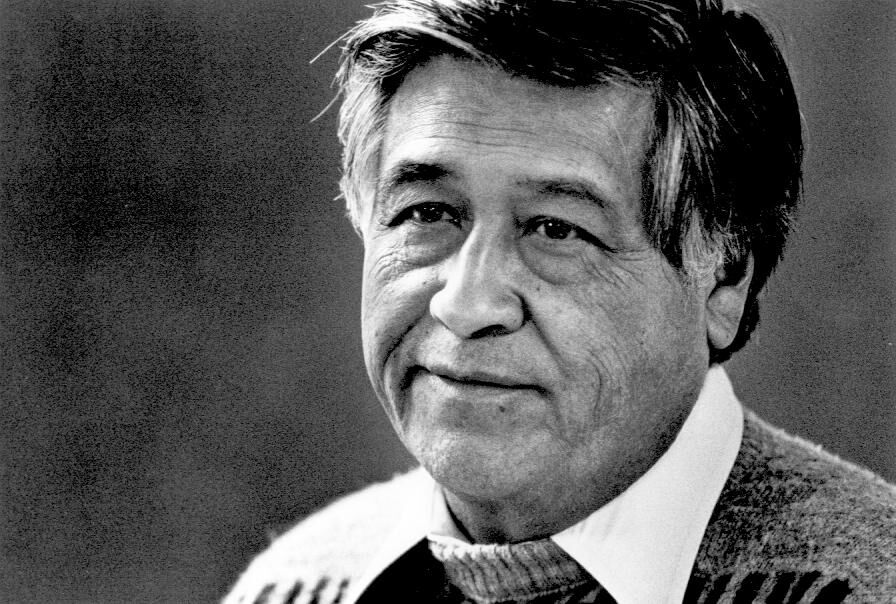
César Chávez on December 19, 1986.
César Chávez
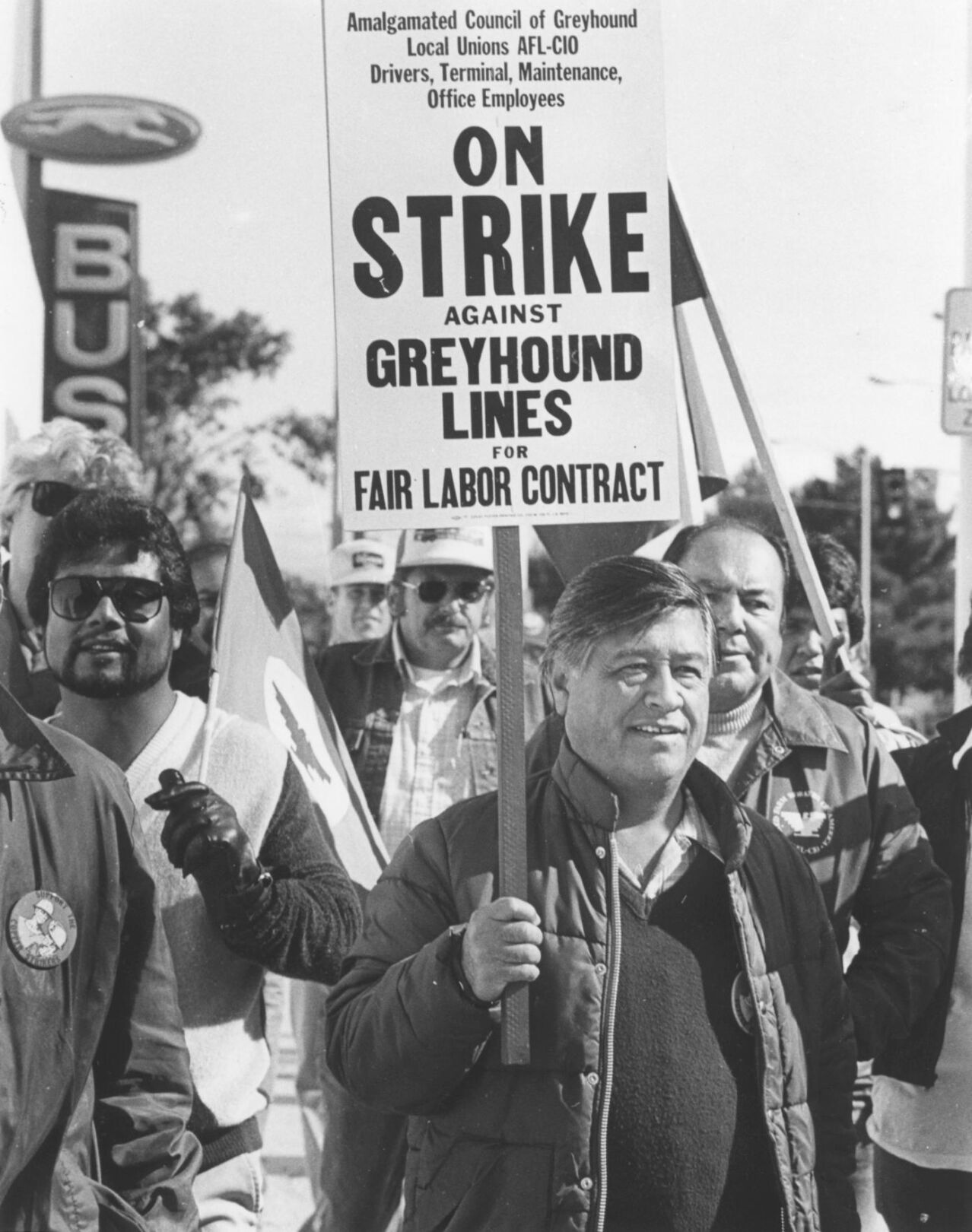
United Farmworkers Chief César Chávez joins strikers at the Tucson Greyhound Bus Station November 26, 1983. He had been at the IBEW Electricians Local 769, and was on his way to Ajo Ariz. to speak to copper strikers.
César Chávez

César Chávez
Dolores Huerta

Dolores Huerta, co-founder of the United Farm Worker's Union, speaks at the University of Arizona’s Mexican American students convocation on May 16, 1997.
Dolores Huerta

Dolores Huerta with a portrait of César Chávez, both civil rights leaders and co-founders of the United Farm Workers on July 26, 2000.
Dolores Huerta

Dolores Huerta, co-founder and current secretary-treasurer of the United Farm Workers, speaks at Rudy Garcia Park as part of a remembrance of César Chávez on April 2, 2006. Huerta co-founded the UFW with Chávez.
Dolores Huerta

Activist Dolores Huerta holds a sign with Maya Arce, far right, during the annual César Chávez March in Tucson, Ariz., on Saturday, March 31, 2007. Hundreds marched from Pueblo High School to Rudy Garcia Park near the rodeo grounds then listened to music and speeches from local politicos and Huerta.
Dolores Huerta

Dolores Huerta, second from right, sings Las Mananitas, a traditional Spanish birthday song, with Salvador Martinez, far right, and the members of the group Mariachi Las Aguilas de Aztlan at Rudy Garcia Park in Tucson on Saturday, March 31, 2007. Huerta cofounded United Farm Workers with César Chávez. She participated in a march for Chavez’s birthday.
Dolores Huerta

Activist Dolores Huerta, a close associate of the late Chicano activist César Chávez, gives a speech in Tucson after participating in a march commemorating his birthday on Saturday, March 31, 2007.
Dolores Huerta

Dolores Huerta, co-founder of the United Farm Workers of America speaks to students at Sunnyside High School in Tucson, Ariz. Friday, April 4, 2008.
Dolores Huerta

Dolores Huerta, co-founder of the United Farm Workers of America, talks to marchers before the start of the 8th Annual César Chávez March and Rally for Peace and Justice at Pueblo High School on April 5, 2008. Richard Chávez, brother of César Chávez, stands on the right.
Dolores Huerta

Dolores Huerta, a life-long civil rights activist and friend of Congressman Raul M. Grijalva speaks during his celebration of life ceremony at El Casino Ballroom, 437 East 26th Street, Tucson, Ariz., March 26, 2025.