

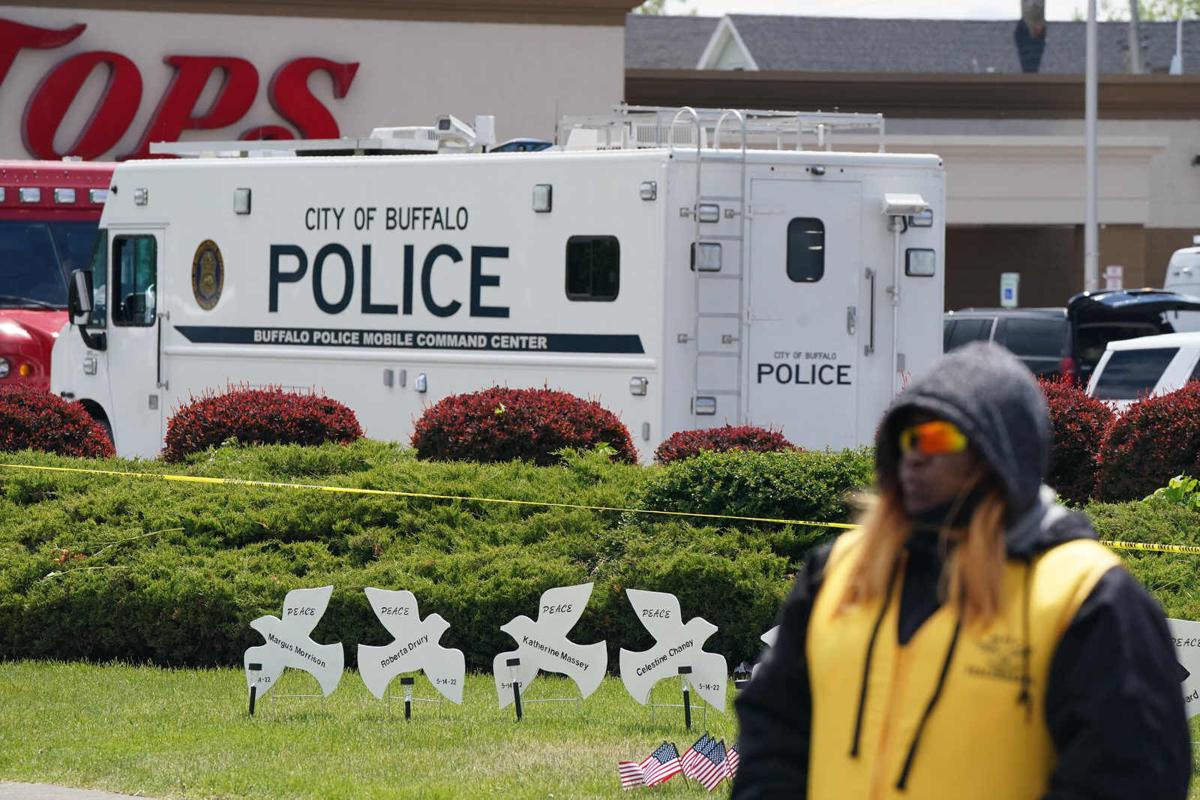
The man who killed 10 people in a racist hate crime was on the radar of state police more than a year before his rampage in Buffalo.
He underwent a required mental health evaluation, but still could buy weapons, post online his plans to murder Black people and scope out his target.
Payton Gendron lived in a state with some of the nation's strictest gun laws, but none of that was enough to stop him from slaughtering as many Black people as he could on Saturday.
"From all indications, due to the allegations, it appears that it didn't work," Erie County District Attorney John J. Flynn Jr. said of the state's "red flag" law, which was designed to take away weapons from people with a mental illness "which is likely to result in serious harm to himself or others."

The messaging underscores both the degree to which the gunman was influenced by previous acts of white supremacist terrorism, and his stated wish to inspire copycat violence, one expert on extremism said.
Why did that happen? How did an increasingly radicalized Southern Tier man slip through the cracks of a system that was changed to prevent such a massacre in the wake of shootings in Connecticut and Florida?
People are also reading…
Experts say the answer is complicated and involves overlapping institutions in the worlds of law enforcement, mental health, education, politics and the courts – and the fact that they don't always talk to each other particularly well.
Made threat at school
The most glaring red flag was raised when Gendron made troubling remarks in June 2021 – the New York Times reported they involved a mention of a murder-suicide – at Susquehanna Valley High School in Broome County.
At most schools, the red flag moment would result in a trained counselor making a threat assessment, and part of that assessment could be reaching out to police to assess whether the person has access to firearms or weapons, local school officials said.
If someone mentioned plans for the summer include murder-suicide, “I don’t know a single school that’s going to under-react to that type of a statement,” said Hamburg Superintendent Michael Cornell, who also is president of the Erie Niagara School Superintendents Association.
However, just because a school notifies police doesn't mean the person will be charged – especially when, as in Gendron's case, the threat is general and does not target a specific person or place.
"You have to remember, there is a thing called free speech in this country and as much as a lot of that speech is hateful and disgusting and upsetting and threatening, people still have a right to free speech," said Jeffrey Rinaldo, a retired Buffalo police captain.
Broome County District Attorney Michael A. Korchak on Tuesday said in a written statement that Gendron – in an online class in June 2021 – "made disturbing comments regarding murder/suicide."
"The school followed protocol and contacted the New York State Police," Korchak said. "Based on information currently in my possession, no direct threat was made to the school or any student. There was no mention of firearms. The New York State Police responded to the subject's residence and transported him to a local hospital for evaluation. The subject was evaluated and released. He subsequently returned to school, and even participated in his graduation without incident."
"From the information provided to this office, the Susquehanna Valley Central School District and the New York State Police followed the procedures and protocols that were in place at that time," Korchak said.
Speaking generally, Flynn said police can only hold someone for so long if they don't yet have solid evidence that they committed a crime.
"This is not a traffic ticket – it’s a serious charge, and we’ve got to be able to prove that case beyond a reasonable doubt in a court of law," Flynn said.
Starting in 2018, Flynn assigned one prosecutor to each school district in Erie County to take calls about threats of violence reported to or noticed by teachers, counselors and school administrators.

Payton Gendron said he decided to use an AR-15 semi-automatic rifle in his killing spree both for its effectiveness and potential to generate controversy.
Roughly a dozen times since 2018, Flynn said he has considered charging students with making a terroristic threat. In each of those instances, he said, the cases went to Family Court because the students were minors. Three of the cases, he said, were serious enough that he tried to charge the students as adults, but judges denied his motions.
Law enforcement officials in Chautauqua County have previously said they receive about three credible threats each year from school districts, though most of the students are not charged because officials are able to prevent violence before it occurs.
Mental health and policing
In Broome County, Gendron was brought in by state police for a mental health evaluation at a hospital, Buffalo Police Commissioner Joseph A. Gramaglia said.
Mental health experts said there is a distinction between a mental health evaluation and psychiatric evaluation.
A mental health evaluation is typically done by a licensed social worker or a licensed clinician and typically ends with recommendations such as treatment, counseling, medication management that the patient may or may not follow. A psychiatric evaluation, meanwhile, is typically made by a psychiatrist; the physician uses screening and assessments based on symptoms and risk factors for lethality.
If someone is not stable and is a danger to themselves or others, they can be held for 72 hours or until a psychiatrist clears them, said Brandy Vandermark-Murray, senior vice president of operations at Horizon Health Services.
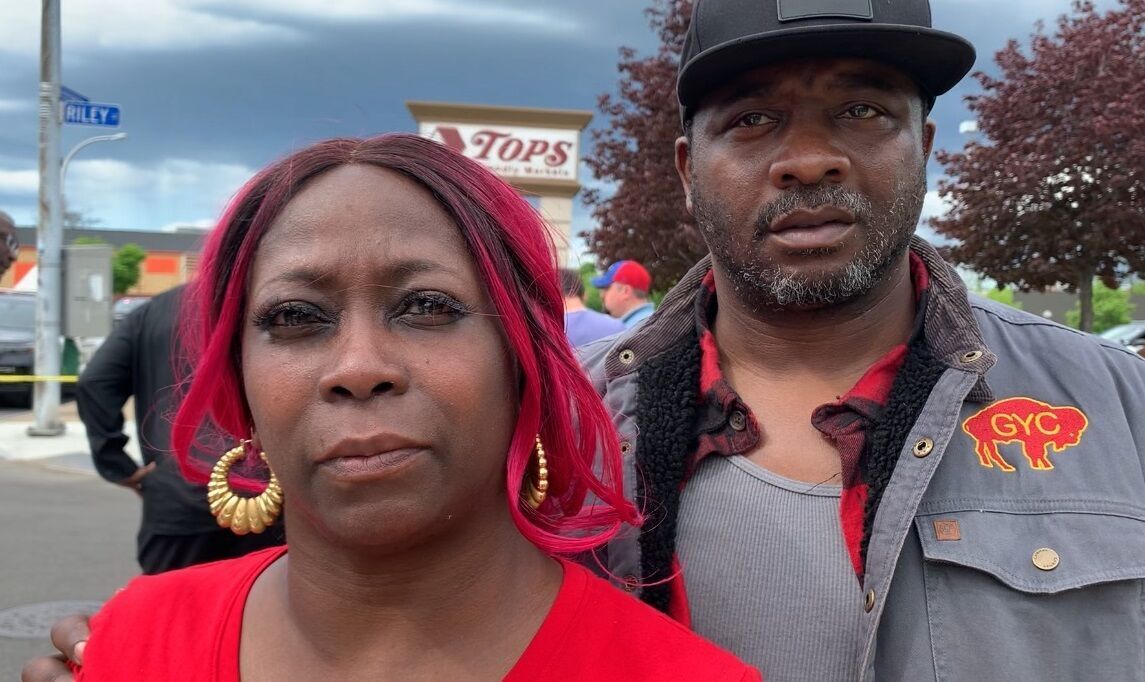
The 18-year-old man accused in Saturday’s racist massacre scoped out the Tops supermarket in Buffalo the day before the shooting and was asked by a manager to leave, according to the manager’s brother.
But Rinaldo said that doesn't always happen. He has seen cases where troubled people were taken to the psychiatric ward at local hospitals and released within hours.
Vandermark-Murray also cautioned that just because Gendron carried out a mass shooting does not mean he was mentally ill.
“Hate is not a mental health disorder,” she said.
Evaded 'red flag' law
The state's "red flag law," enacted in 2019, gives judges the authority to take away a person's guns if a person “is likely to engage in conduct that would result in serious harm to self or others.”
That has happened 589 times since its passage, according to the Office of Court Administration. But it didn't happen in Gendron's case.
"How is he not red flagged?" asked Rinaldo, the retired police captain. "Even if he wasn’t old enough to buy the gun, how is he not red flagged?"
The shooter partially answers that question in a diatribe he posted to an online site describing his racist and antisemitic views.
"I got out of it because I stuck with the story that I was getting out of class and I just stupidly wrote that down," Gendron said of the murder-suicide statement. "That is the reason I believe I am still able to purchase guns.
While the "red flag" law allows judges to seize weapons, Rinaldo and Flynn said it would not necessarily prevent a troubled person from purchasing them later, as the shooter did.
Adding someone to the "red flag" list isn't easy. A person must come forward and report the threat to the district attorney, who then goes before a judge to have the weapons taken away. The person in question then has the opportunity to argue against the measure in court.
"It's not a quick and easy, and if you try to make it any faster, you’re going to have the Second Amendment types coming out of the woodwork saying, 'Hey, what are you doing here? This is arbitrary,'" Rinaldo said.
Rinaldo said there remains a "disconnect" between police agencies, the mental health community and gun retailers, though he said no one part of the system alone shares blame.
"I don’t think it’s fair to point the finger at any one of them and say, 'They messed this up,' " Rinaldo said. "I think, though, you need to figure out some sort of coordination. You’ve got to ensure the gun stores and gun shows get their hands on that kind of information and say, 'Hey, don’t sell this guy a gun right now.' "
Civil rights attorney Ben Crump, surrounded by the family of slain mother and grandmother Ruth Whitfield, promises to pursue a legal strategy that exposes the roots of the mass killings in Buffalo during a news conference at Durham Memorial A.M.E. Zion Church.
In this Series
Complete coverage: 10 killed, 3 wounded in mass shooting at Buffalo supermarket
-
Updated
Hochul pledges pursuit of justice after shooting, calls on sites to crack down on white supremacist content
-
Updated
Sean Kirst: In Buffalo, hearing the song of a grieving child who 'could not weep anymore'
-
Updated
Recently retired police officer, mother of former fire commissioner both killed in Tops shooting
- 249 updates


