

Maybe it was in the stars for Rita Ranch resident Greg Cranwell.
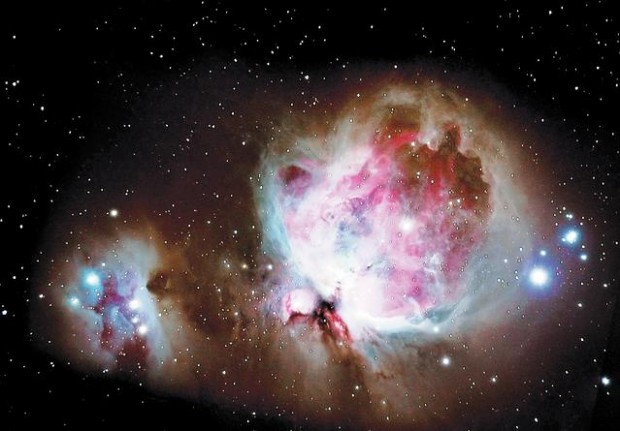
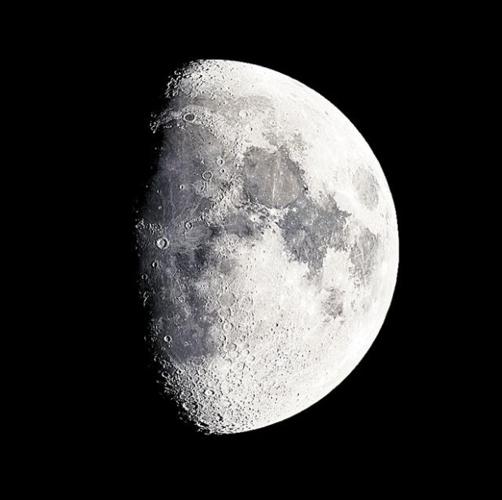
Three to four years after picking up a hobby in astrophotography, his work will be featured at the Smithsonian National Air and Space Museum in Washington, D.C. Astrophotographers take pictures of objects in space, such as the moon and constellations.
"He had some really great images that we felt would capture people's attention as they go through the gallery," said Katie Moore, an astronomy educator at the museum.
Starting later this month, three of Cranwell's photos of space will be in "First Light," an amateur-astrophotography feature in the museum's "Explore the Universe" exhibition.
The purpose of "First Light" is to show off work done by everyday people, not professional photographers, Moore said. The "Explore the Universe" gallery features a new amateur photographer every three or four weeks.
People are also reading…
Moore estimated that Cranwell's photos would be on display May 15-June 4, though she said those dates are tentative.
For Cranwell, 38, a retired Marine who grew up in central New Jersey, getting his photos accepted into the Smithsonian was a surprise and an honor.
Here are excerpts from a recent interview:
How did you get involved in astrophotography?
"I just like all kinds of photography. I was little — probably 10 — when my father got me my first telescope. We used to go out in the park and try to look for stuff, and in our backyard."
Did you immediately go from looking in the telescope to taking pictures?
"No. This is new. I've only been doing (astrophotography) for three or four years, on and off. It's something I picked up and enjoy — that, storms, landscapes, nature, flowers, people and all kinds of stuff — anything that's interesting."
What do you do exactly? Do you take a picture through the telescope?
"Yeah, it's a long exposure. It's really hard because any movement at all from the telescope and your picture's gone, because it will make it blurry. You can't have any wind. It has to be absolutely dark, so there can't be any lights from the city . . . you can't have any clouds, so it's got to be on a perfect night.
"(The telescope) electronically tracks an object, but you have to be perfectly centered on the North Star.
"I'll take a bunch of pictures and then put them all together (using photo-editing software). The more pictures of the same thing that you can put on top of each other, the clearer the image will be."
How often do you do astrophotography?
"It's been a while because my telescope broke. The camera and the equipment are just too heavy for the telescope, so it really doesn't track well. . . . I've kind of had to stop doing that, but I do so much landscape shooting.
"I don't really miss it much right now because I'm doing other things. Once I get a telescope that will handle the camera, I'll probably go back into it."
What was the first object in the sky that you photographed?
"Orion. That's the easiest thing to find. . . . Without binoculars or anything, you could at least find it in the sky if you know where to look."
What would be the overall hardest thing in space to photograph?
"To do it correctly, Orion, because it's so bright and there's so much to it. It's like trying to take a picture in a room full of people at night, having somebody hold a big light bulb in the middle of the room and being able to get the light bulb and all the people in the background all the way to the end of the room."
Is there anything that you've photographed that has surprised you by how it actually looks?
"All of them. When you look through a telescope, your eye can only pick up the lights coming to you at that point in time. Imagine watching a movie but only getting to see one frame."
Do you photograph the planets, too?
"No, not so much because the type of telescope I have isn't really a planetary telescope. It's more for deep space."
Did you have to study a lot of astronomy before you got involved in this?
"No, you've got to study your telescope. If you have the right telescope and it has the right type of mount — there's a thing called a go-to mount, where it has a library of like a million items in there, different objects in the sky."
What's the best place in Southern Arizona to do astrophotography?
"Anywhere it's dark. I like outside of Sonoita because, when you get down below the highway, you don't have to worry so much about highway lights. . . . Anywhere out here is pretty good. For me, it's anywhere southeast of Vail."
Have you ever been to the Smithsonian National Air and Space Museum?
"Once, when I was little, with my dad."
Thinking of becoming an astrophotographer?
Greg Cranwell's startup costs were about:
• $800 for the camera.
• $1,300 for the original telescope he had, which he has since upgraded.
• $500 for photo-editing software.
• $35 for a remote shutter release for his camera.
Total: About $2,635.
"But that was for me," he said. He estimates that it costs a bare minimum of $1,500 to $2,000 to get started, or $800 to $900 for all used equipment.
For more information
• Smithsonian National Air and Space Museum: Go online to www.nasm.si.edu.
• Greg Cranwell: Contact him at 574-0841 or azpaleo@cox.net.


