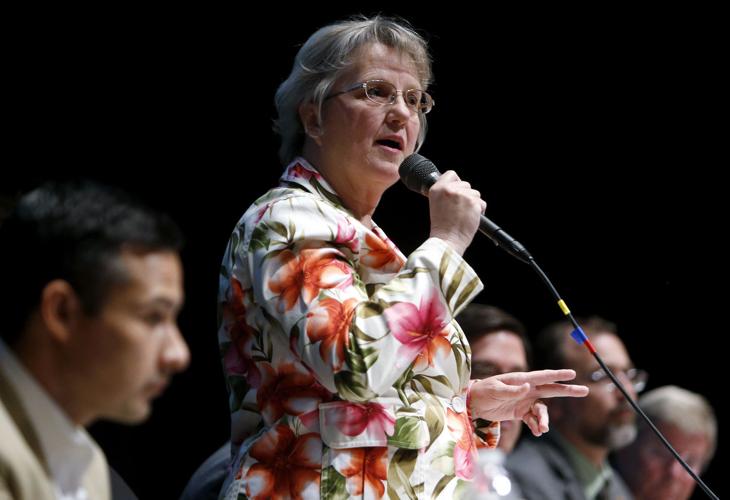
When Arizona Schools Chief Diane Douglas headed south to hear Tucsonans concerns about K-12 education, the Common Core detractor expected some opposition.
What she may not have anticipated was support from an unlikely source — TUSD ethnic studies educator Andrew Walanski, who teaches African American literature and government at Cholla High Magnet School.
Teachings in Walanski’s class, specifically the use of rapper KRS-One’s “Introduction to Hip Hop,” were part of a finding by Douglas’ predecessor that the Tucson Unified School District was violating state law.
While Douglas has not necessarily upheld that finding, she has called for ongoing monitoring of the culturally relevant courses and the submission of multitudes of documentation.
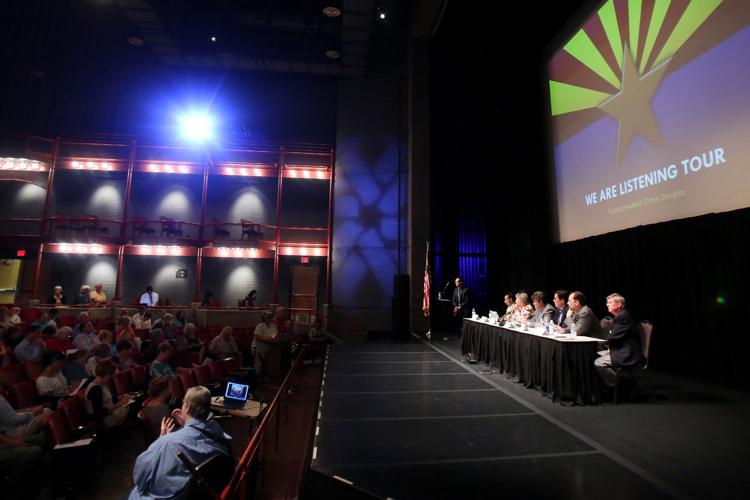
“Generally speaking, my politics don’t agree with your politics. But I’m actually here, despite all of the extra work we have to do thanks to the compliance work for our culturally relevant program,” Walanski told Douglas Thursday night at Pima Community College’s west campus where more than 150 community members gathered for the superintendents statewide “We Are Listening” tour.
People are also reading…
Walanski likened Douglas to Malcom X in terms of having the ability to “make it plain.”
Walanski pointed to Douglas’ criticism of the state’s resistance to pay schools money owed while giving “corporate cronies” tax cuts; condemning the AzMerit test; and calling on lawmakers and Ducey to put children first.
“All of these things are true, and I want to thank you so much for speaking the truth to the people who are in charge and in power in this state who are manipulating the public and who are destroying the public education system,” Walanski told Douglas, adding he feels she has been vilified by the media unfairly.
“I’m here to encourage you to continue to fight and continue speaking up, continue listening to the public,” he said. “You haven’t earned my vote yet but you certainly have my respect.”
As the name of the tour implies, the 2½ hour session was not interactive as Douglas and a panel of stakeholders including state representatives, senators, TUSD Superintendent H.T. Sanchez, and an Arizona Department of Education associate superintendent took in both praise and criticism.
Douglas did however intervene when one speaker insisted on discussing the presence of “illegal aliens” in the country, reminding her that input must focus on K-12 education.
The only other direct response was to Walanski, who she jokingly told that her husband calls it “making friends wherever I go when I make my comments.”
Before approximately 50 speakers took the microphone, audience members were encouraged by Sen. Steve Farley not to mince words.
“This is vital to our future,” he said. “Say what’s on your mind and what needs to happen in order to make Arizona the best place it can be.”
That was followed by pleas that called for both embracing Common Core standards and the elimination of them — a promise Douglas campaigned on.
But for Douglas, the event was not an opportunity to force her stance on anyone.
“This is not about politics,” she said before public comment began. “This is not about any campaigns past, present or future. It’s about how we move forward as Arizonans in the education of our children.”
Douglas vowed to forward the recommendations to the appropriate parties including the legislature and the state board of education.
Though speakers acknowledged the importance of gathering data to inform instruction and narrow achievement gaps, many spoke against high-stakes assessments, calling them excessive and abusive to students and teachers alike.
While the crowd was split on Common Core standards and the federal government’s influence on education, the underfunding of education in Arizona seemed to unite the group of educators — current and former, along with business people, parents and others.
Also moving the crowd were testimonies about valuing educators by trusting that they teach effectively and efficiently, by providing the tools needed to do their jobs and paying them accordingly.
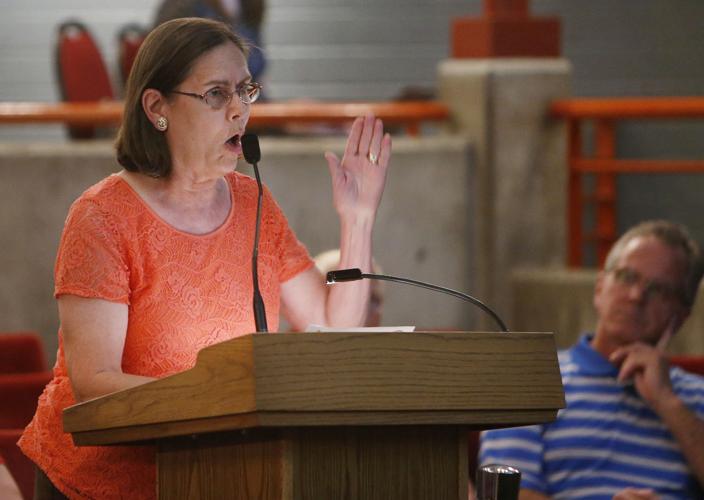
Saying she was disappointed by the state of affairs in public education, Amphitheater teacher Darlene Rowe shared that after teaching for 23 years, she brings home less than $900 every two weeks.
“This is a noble profession, but I don’t feel like it,” she said.
Other topics touched upon included special education, English-language learners, career and technical education, charter school funding and education’s impact on the economy.
Douglas’ tiff with the governor and the board of education was also raised with community members characterizing it as bickering that is impacting the education of children.
Following the forum, Douglas defended her position and her priorities.
“We are a nation of laws, following laws are important and making sure we adhere to them,” she said. “If that’s a little lesson our children take away from it, maybe that’s not a bad thing, but the important thing is what goes on in the classroom everyday and that’s where my focus is and remains.”
Contact reporter Alexis Huicochea at ahuicochea@tucson.com or 573-4175. On Twitter: @AlexisHuicochea

Alexis Huicochea
Team leader