With their final federal approval now in hand, developers are moving ahead with a new critical minerals mine in the Patagonia Mountains, despite a $1.1 billion increase in the cost of the project over the past two years.
The U.S. Forest Service issued a record of decision on Tuesday, clearing the Hermosa Mine to build a powerline, an access road and other support infrastructure across federal land adjacent to the company’s roughly 750-acre site 75 miles southeast of Tucson.
The approval completes a National Environmental Policy Act review that began in 2024 for the proposed zinc, silver, lead and manganese mine.
Back then, Australia-based global mining company South32 expected to spend $2.16 billion to develop the underground mine. Those upfront costs have since ballooned to $3.3 billion.
People are also reading…
South32 Hermosa President Pat Risner said inflation accounts for most of the increase. Since early 2024, “the installed cost of steel is up 2½ times, the installed cost of piping is up just over two times (and) the installed electrical component costs have gone up significantly,” he said. “Concrete has doubled in terms of installed unit price. So everything, all the materials we're putting into the project, are more expensive.”

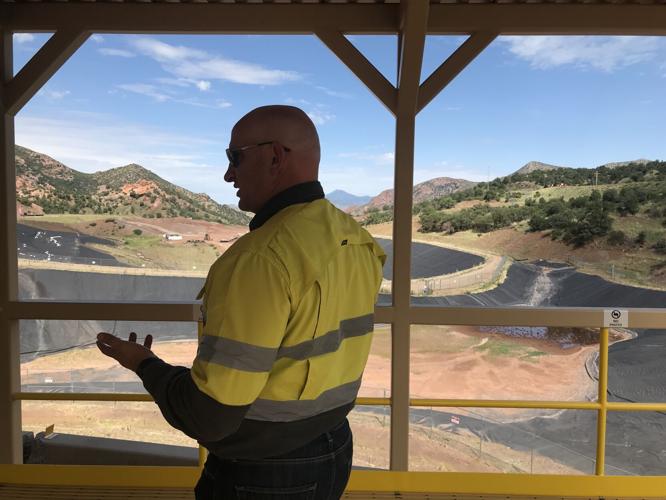
Pat Risner, president of the South32 Hermosa mine, says inflation accounts for most of the increase in cost for the project.
Meanwhile, tariffs imposed by the Trump administration have cost the mine an additional $70 million, Risner said.
The project has also experienced construction delays that have pushed back the start date for mining operations. South32 originally expected to begin underground mining and production at Hermosa during the first half of next year. Now the first mining is slated for the second half of 2027, with initial ore processing at the onsite plant to follow by March of 2028.
Risner blamed the delays on “productivity issues with the contractor” responsible for excavating the two 25-foot-wide vertical shafts that will provide access to the underground ore deposits.
Those shafts will eventually reach a depth of about 2,900 feet, allowing a network of mine tunnels and block chambers to be excavated outward from there. Risner said the ventilation shaft is currently on track to reach the first underground mining level probably by the end of August, and the main shaft should reach its final depth sometime in October or November.
“So we are getting close, but that has taken longer than originally forecast,” he said. “The shaft-sinking process has definitely gone slower than planned.”
Still in demand
Opponents of the project said the rising costs and construction delays should cast doubt on South32’s overall site assessment, including assumptions the company has made about underground water flow and possible migration of pollutants from the site.
Risner dismissed such concerns as “just not factual.”

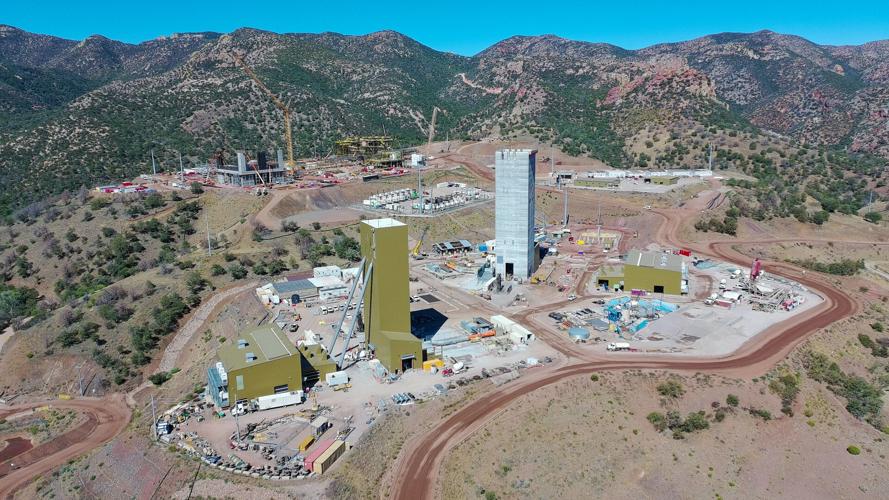
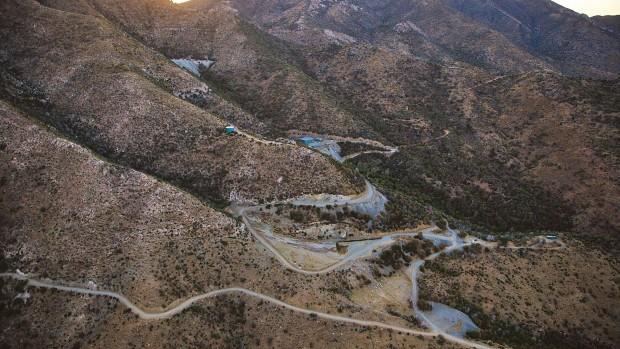
An aerial image from July 2 shows progress at the site of the South32 Hermosa critical minerals mine in the Patagonia Mountains.
“The cost increases have nothing to do with underground conditions whatsoever,” he said. “We haven't had any water surprises, and we haven't had any geotechnical surprises.”
Risner added that other major mine development projects around the globe are experiencing similar inflationary pressures.
“You only need to look around the industry. You'll see the same trends,” he said. “I would guess when you go to the grocery store and the gas pump, things are costing you more as well. We're all experiencing this, but when you have cost increases on a $2.2 billion project — you know, an equivalent percent cost increase — that's a lot of money.”
But with its ability to produce a domestic supply of at least four federally designated critical minerals, the mine remains a sound investment for South32 and the U.S., even at a markup of more than 50%, Risner said.
“We're still forecasting a 4 million ton gap between zinc supply and demand less than 10 years out. You'd have to develop three Hermosa(-sized mines) every year between now and then to close that gap,” he said. “It's strategically really important, not just for the company and the community but for the country as well, that we continue to develop the project.”
The South32 board of directors signed off on the new capital estimate for Hermosa in late April, resulting in a temporary dip in the company’s stock price after the cost increase and construction delays were announced.
With Tuesday’s approval from the Forest Service, the mine can now push some of its infrastructure into the surrounding Coronado National Forest.

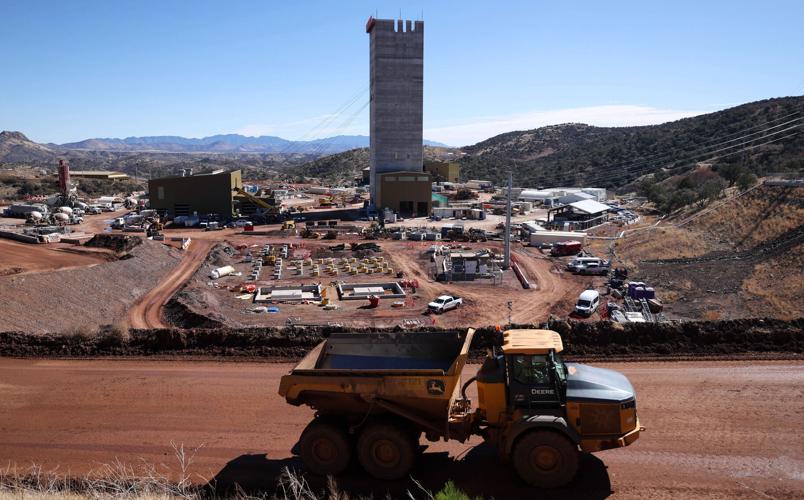
The view from an observation platform in February shows construction activity at the South32 Hermosa critical minerals mine in the Patagonia Mountains.
Work is already well underway on the powerline, which is being built by UniSource Energy Services and its sister company Tucson Electric Power to deliver electricity to the mine and reduce the need for gas-fired generators at the site. The 163-page record of decision from Coronado National Forest supervisor Kerwin Dewberry clears the way for the last few miles of the 138-kilovolt overhead transmission line to be built through the forest.
South32 was also granted permission to eventually place a second tailings pile on adjacent forestland and construct a new 7-mile access road that would skirt the town of Patagonia by connecting the mine to Arizona Highway 82 near the turn-off for Patagonia Lake State Park.
Risner said they still need to gather “geotechnical information” from the field before they can finish the design for the access road. That information will be collected as soon as they receive a final “notice to proceed” from the Forest Service in early September, he said.
Questions remain
The agency also signed off on Hermosa’s plan to return treated wastewater from its mining operation to the local watershed through controlled discharges into three ephemeral streams surrounding the site.
The mine is already sending treated water down Harshaw Creek, raising concerns from residents and conservation groups about possible contamination downstream.
Last year, the mine reported a release into the creek that exceeded the allowable level of the heavy metal antimony, but the Arizona Department of Environmental Quality determined the isolated discharge did not warrant any sort of public health advisory.
The company responded by shutting down two of the mine’s groundwater wells that were producing elevated levels of antimony while it upgraded its on-site water treatment plant.
Arizona’s two Democratic senators, Mark Kelly and Ruben Gallego, both praised the successful completion of the federal permitting process for the new mine.
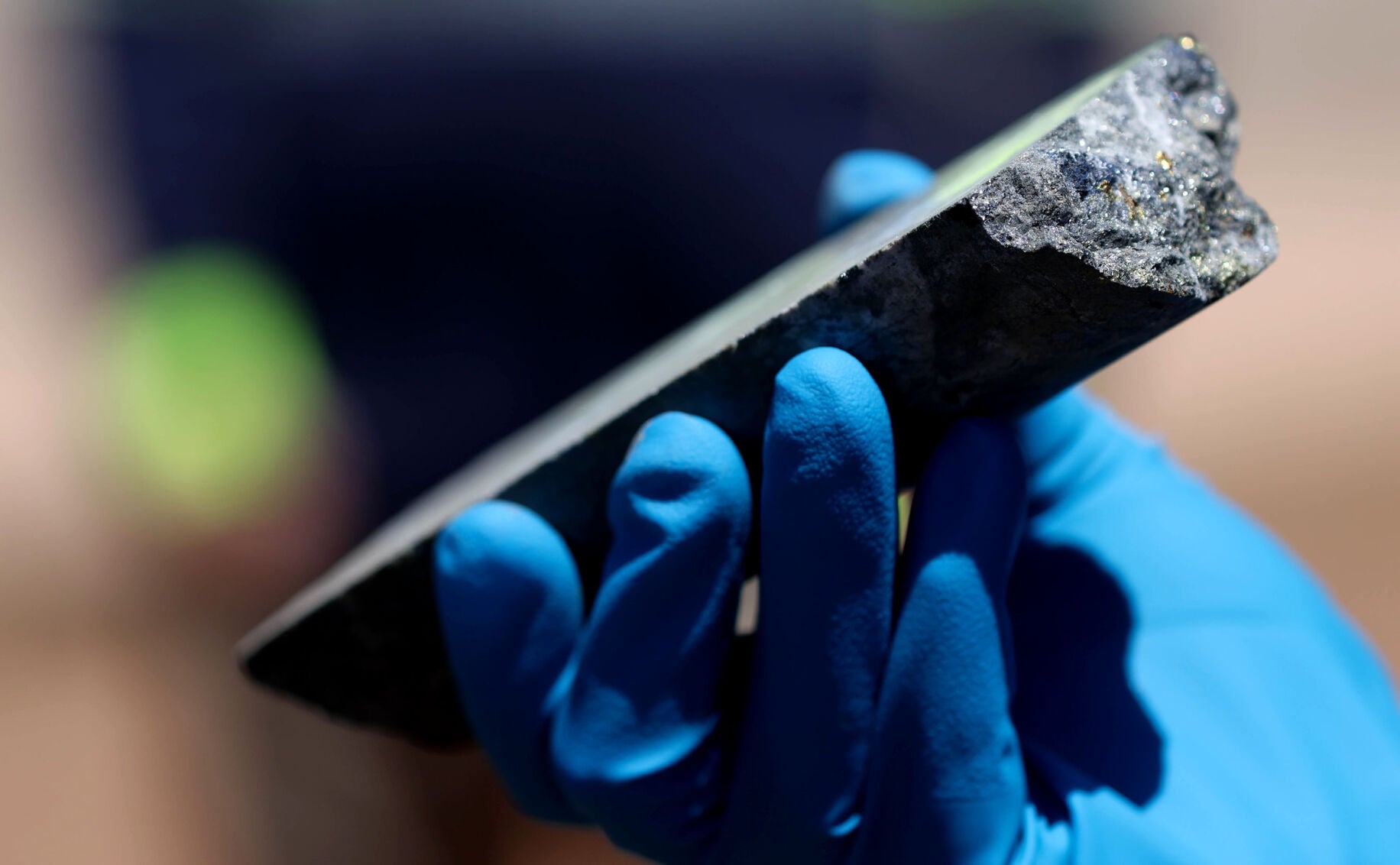
A South32 employee holds a core sample containing zinc ore during a media tour of the Hermosa project site in the Patagonia Mountains in 2024.
“If we’re serious about bringing supply chains back to America and reducing our dependence on foreign countries, we need to responsibly produce more critical minerals here at home,” said Kelly in a written statement. “This is exactly what the Hermosa project is doing.”
But local and national conservation groups condemned Tuesday's approval of the mine and the fast-tracked federal review process that led to it.
Patagonia Area Resource Alliance and the Tucson-based Center for Biological Diversity accused the Forest Service of carving out exceptions for the mine instead of upholding longstanding protections for what they called “one of Arizona's most biologically rich landscapes.” As a result, critics said, the agency failed to fully address the project’s long-term impacts on water resources, wildlife habitat, air quality and public health.
"Our community has spent years participating in this process because we believed the agencies responsible for protecting our public lands would carefully evaluate the facts before making a decision," said Anna Darian, executive director for Patagonia Area Resource Alliance. "Instead, the Forest Service approved this project while serious legal questions remain unresolved, leaving many residents wondering whether these agencies are still serving the public interest.”



 Japanese company invests in mine near Mount Lemmon