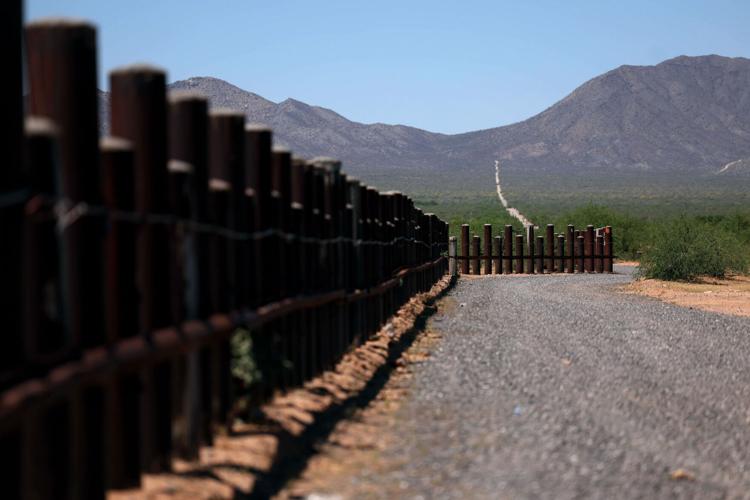
PHOENIX — Top Republican state lawmakers are lining up with the Department of Homeland Security — and against the Tohono O'odham Nation — over whether the federal agency can build 62 miles of border wall through the reservation.
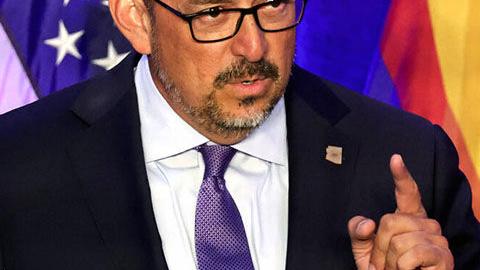
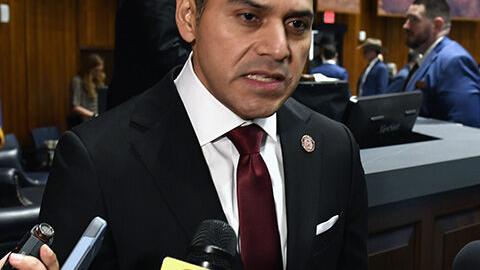
In a new legal brief, House Speaker Steve Montenegro and Senate President Warren Petersen say that Arizona is on the front line — and most affected — by those who cross the border illegally. That includes not just having people in the country who are not vetted but also the drugs they smuggle and the crime they cause.
And that, they are telling U.S. District Court Judge Richard Leon, is why he should conclude that the interests of Homeland Security outweigh the concerns of the Tohono O'odham, both in terms of erecting a fence on what it says is reservation land as well as dividing the tribe, which has existed for centuries on both sides of the border.
People are also reading…
To back up their claim, Lee Whitesell, a private attorney retained by the pair, cited the history of Arizona dealing with border crime and incidents, including "millions of dollars that the state has spent to assist with border related security."
The two GOP leaders blame pretty much all of it on the Biden administration.
"Because of the federal government's reckless policies and lack of enforcement at the border during that time, individuals traveled from various parts of the world, not just from Mexico and nearby Central America, to enter the United States through the southwest border," the pair told the judge.
They also cite the 2023 congressional testimony by Cochise County Sheriff Mark Dannels, who told federal lawmakers that border-related crime is "at an all-time high," emphasizing deaths and murder investigations, assaults and even attacks on law enforcement officers.
There is also mention of other issues, all of which they argue show that any potential harms to the tribe are outweighed by the "national security" implications. And they told the judge that he should defer to what Homeland Security wants — in this case, a 62-mile stretch of border wall through the reservation.
"If the federal government has determined that this measure is needed at the border to protect national security and its citizens, then the balance of equities and public interest should tip heavily in favor of the United States," they argued
Still, the incidents they cited to justify the wall are somewhat dated. And they acknowledged that the tribe's police chief has said that "border crossings on the reservation are at historic lows."
That, the GOP lawmakers said, is irrelevant.
In fact, they contend, even if the statistics are true, that just shows all the more the need for a wall.
Montenegro and Petersen said that any decrease is due to the change of administration "from one that failed at the border to one that made border security a top priority."
And they said that the situation isn't guaranteed to continue.
"A future administration may return to the lax practices of prior administration and choose to pull personnel from the border; to retract border security policies; and to again send an implied message to the world that the integrity of our border will not be enforced," their legal filing states.
The two Arizona GOP legislators aren't the only ones telling the federal judge he should toss out the lawsuit filed by the tribe.
Much of the claim by the Tohono O'odham goes to the question of whether the project shrinks the boundaries of the reservation.
As described by the Department of Justice, it includes a physical barrier and roads as well as other features like lights, sensors and other "detection technology." There is also an option for a secondary fence, though government lawyers say that has yet to be decided.

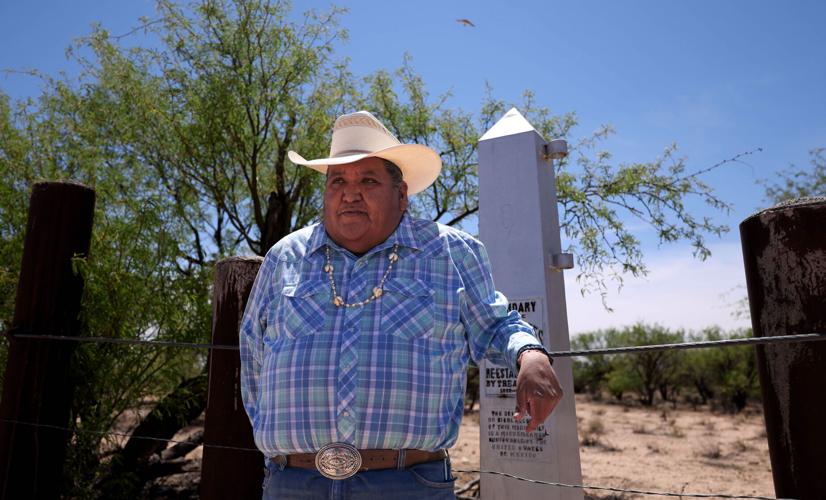
Tohono O'odham Nation Chairman Verlon Jose stands on the U.S. side of the San Miguel Gate earlier this year. In a new legal brief, Arizona House Speaker Steve Montenegro and Senate President Warren Petersen say border security outweighs concerns about border wall construction raised by the the tribe in a lawsuit.
Tribal attorney Riyan Kanji contends that Homeland Security can't do that because the reservation itself and its boundaries were created by Congress.
Then there's a 1927 law that says changes in reservation boundaries "shall not be made except by Act of Congress." And Kanji says the plans to build new primary and secondary barriers within 60 feet of the international border on what is reservation land — the congressionally created boundary — illegally change those lines.
But Stacy Stoller, an assistant federal attorney general, said that ignores other crucial facts.
One is that in 1907, then-President Theodore Roosevelt declared that a 60-foot-wide strip of federal land along the border be set aside for border security. That is a decade before the first boundaries of the reservation were set by executive order, with Congress approving an expansion in 1937.
And in 2025, President Trump put the "Roosevelt Reservation" land directly under the control of the military.
Even if that were not the case, Stoller said that putting up a fence — or even two — on that land does not legally change the boundaries of the reservation.
"It would not even prevent members of the Nation from accessing the border themselves, provided gates were installed," she said. And Stoller told the judge that, long before a wall was contemplated, the tribe supported installing a vehicle barrier in roughly the same areas.
"It presumably did not think that barrier changed the boundary of the reservation," she said.
Stoller also said this isn't like Homeland Security is acting on its own.
"In four separate acts, Congress has directed the Secretary of Homeland Security to install necessary barriers and roads to secure the border," she wrote in her legal pleadings.
"Most recently, Congress expressly instructed the secretary to gain operational control of the southwest border," Stoller continued. Then there's the fact that Congress actually has empowered the secretary to "waive all legal requirements (when necessary) to accomplish this goal."
Finally, she said, Congress has backed up that intent with "tens of billions of dollars" to make all that happen.
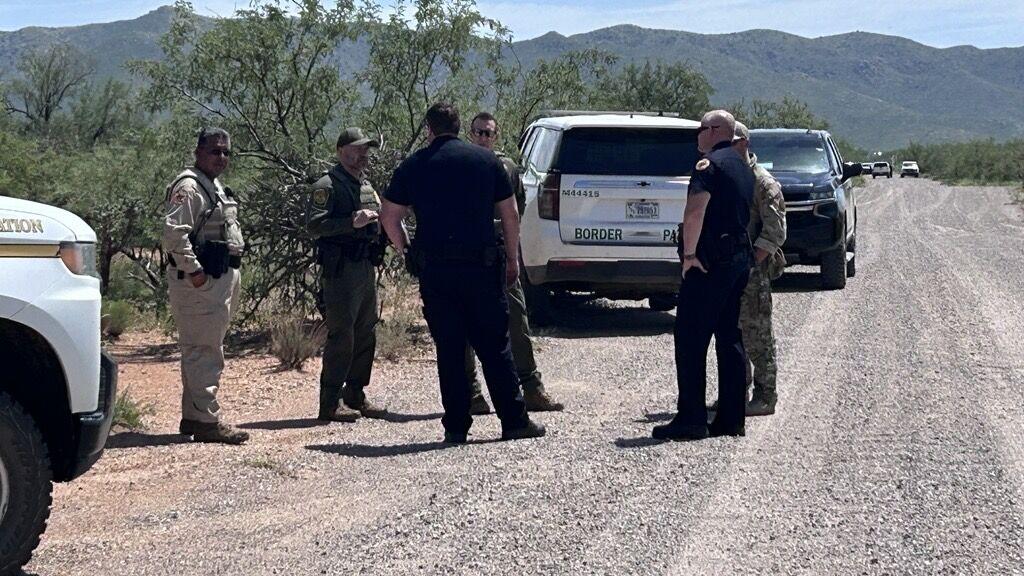
According to the government, the contract was awarded last month, with design work starting this month. Construction activities are not anticipated to start before Oct. 12.

According to the government, the contract for miles of new border fencing in Arizona was awarded last month, with design work starting this month. Construction activities are not anticipated to start before Oct. 12.
The issues go beyond the question of whether Homeland Security has the right to build the 62-mile fence through what the tribe says is its land. There's also the question of what could be damaged.
Construction crews working in the Cabeza Prieta National Wildlife Refuge earlier this year — outside the reservation — damaged a 1,000-year-old geoglyph. The 200-foot-long fish-shaped geoglyph — essentially a design drawn directly on open ground — was damaged by blading directly through the site to build a border barrier.
Customs and Border Patrol said the incident was an accident and that the remainder of the site has been secured. But Rep. Adelita Grijalva said she didn't see it that way.
"Bulldozing a 1,000-year-old sacred site is not an accident," she said in a statement, calling it "a predictable result of rushing forward" with border wall protection.
No date has been set for the hearing.
Howard Fischer is a veteran journalist who has been reporting since 1970 and covering state politics and the Legislature since 1982. Follow him on X, formerly known as Twitter, Bluesky, and Threads at @azcapmedia or email azcapmedia@gmail.com.


 Plans for border walls on Tohono O'odham land a 'betrayal,' chairman says