It's official: The bill to upgrade Chiricahua National Monument to national park status was signed Tuesday afternoon by President Donald Trump.
U.S. Interior Secretary Doug Burgum and Rep. Juan Ciscomani are scheduled to be at the Chiricahua Mountains Tuesday afternoon to mark the official designation.
The monument 120 miles southeast of Tucson is already managed by the National Park Service, and its current boundaries and land uses remain the same under the new law.

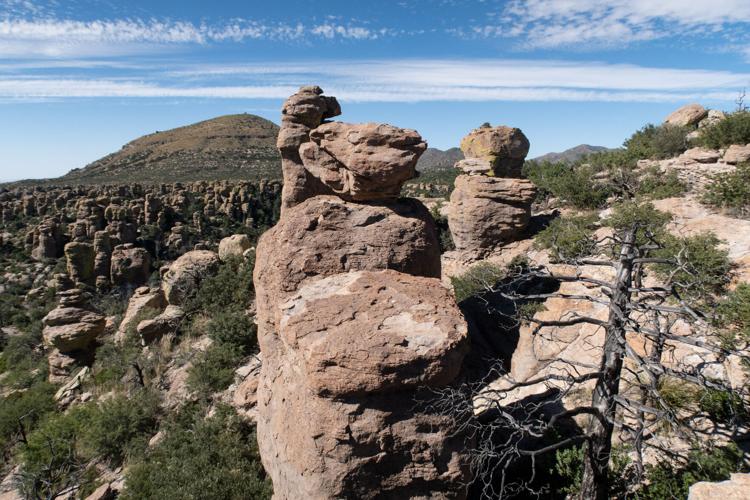
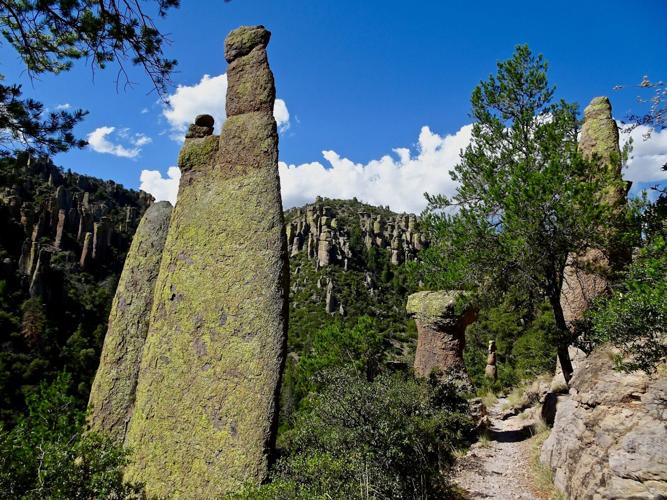
Trails at the newly named Chiricahua National Park explore the rhyolite towers, spires and hoodoos that crown the mountains.
Elected officials, business owners, outdoor groups and others in nearby communities hope the national park name will draw more tourists to the region.
Nicknamed the “Wonderland of Rocks,” the monument is known for its balanced boulders, rhyolite pinnacles, dark night skies and unique, sky-island wildlife. Throughout its rich history, the area has been home to prehistoric people, Apaches, Buffalo Soldiers, ranchers, homesteaders and laborers from the Civilian Conservation Corps.
People are also reading…
Most of the land there is already protected as wilderness and as a national historic district. The park legislation reinforces protections for cultural and religious sites, requiring consultation with tribes and continued access for traditional tribal uses.
Arizona was already home to three national parks — Grand Canyon, Petrified Forest and Saguaro — and about 20 sites in all managed by the Park Service.

Chiricahua National Monument, with its towering, volcanic ash spires, will now be upgraded to national park status under a bill signed Tuesday by President Donald Trump.
Members of the state’s congressional delegation have been trying to win Chiricahua a promotion for a while now. At least five similar measures have been introduced since 2016, but none advanced to a vote of the full House or Senate.
To help increase the odds this time around, Democratic U.S. Sens. Mark Kelly and Ruben Gallego sponsored companion legislation in the Senate in January that was identical to the bill from Ciscomani, a Tucson Republican.
"Today is a historic day for Arizona. Making Chiricahua a national park has been a priority of mine since I first came to the Senate, so I’m thrilled this day has finally arrived,” Kelly said in a written statement Tuesday.
“A bipartisan effort from the start, this is a win for the communities in southeastern Arizona and for everyone who worked to protect this extraordinary place so our kids and our grandkids can enjoy it," he said.
The Marana-based Association of National Park Rangers came out in favor of the upgrade for Chiricahua, though the advocacy group says the preserve will likely need more staffing and infrastructure improvements to handle the expected surge in visitation.
“We believe that Chiricahua is certainly worthy of national park status,” said Bill Wade, a retired park ranger and superintendent who now serves as executive director for the association. “Like a lot of other areas, it is most likely understaffed.”
With just over 70,000 visitors, Chiricahua National Monument ranked 254th out of almost 400 Park Service sites nationwide last year.
By comparison, Grand Canyon was the nation’s 15th busiest park in 2025 with more than 4.4 million visitors, while Saguaro came in 84th with about 848,000 and Petrified Forest finished 156th with about 316,000.
President Calvin Coolidge used his authority under the Antiquities Act in 1924 to establish the national monument on less than 4,300 acres in the Chiricahua Mountains. Another 6,407 acres were added to the monument in 1938 by President Franklin Roosevelt.
Several smaller additions have followed since then, including the acquisition of the historic 440-acre Faraway Ranch in 1978.