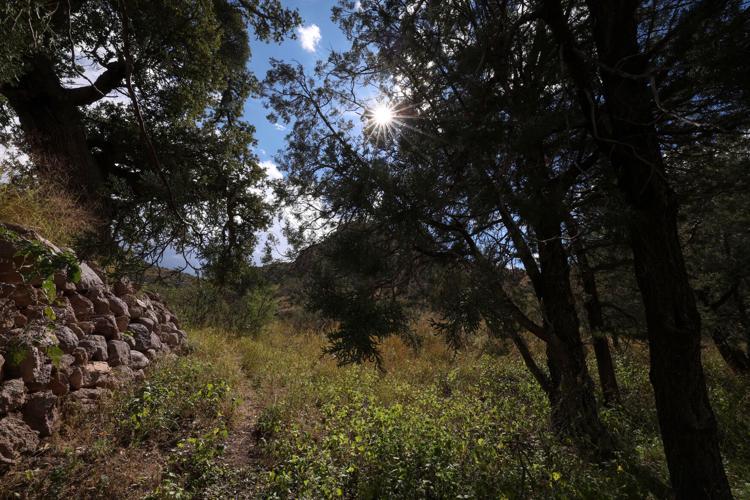
Chiricahua is going to need a bunch of new signs.
The 102-year-old national monument at the southeastern corner of Arizona was officially promoted on Tuesday, when President Donald Trump signed the “Chiricahua National Park Act” into law after its approval by Congress late last month.
The legislation was introduced in the House in December by Arizona Republican Juan Ciscomani and in the Senate in January by Democrats Mark Kelly and Ruben Gallego.
Their success followed at least a half-dozen previous attempts by members of the state’s congressional delegation to elevate the national monument over the past decade.
Kelly called it a "historic day for Arizona.”
“A bipartisan effort from the start, this is a win for the communities in southeastern Arizona and for everyone who worked to protect this extraordinary place so our kids and our grandkids can enjoy it," the senator said in a written statement.
People are also reading…
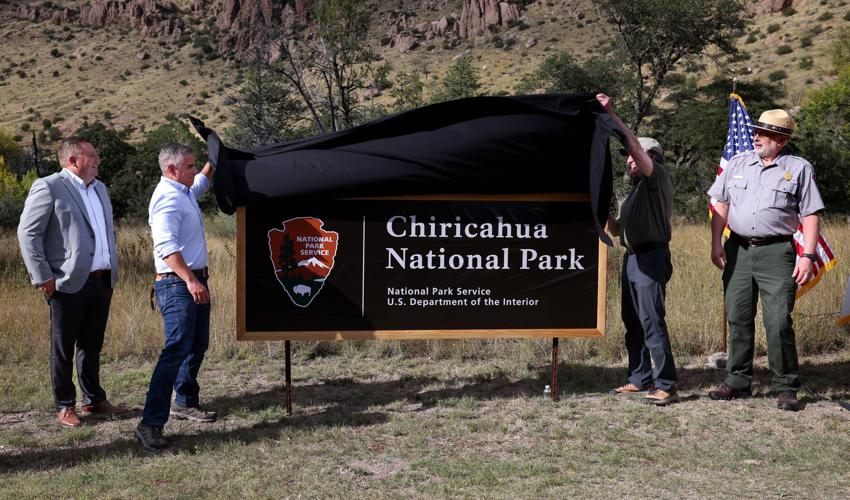
The first new sign for Arizona’s fourth national park was unveiled Tuesday afternoon during a designation ceremony, headlined by Ciscomani and Interior Secretary Doug Burgum, at the 12,000-acre preserve 120 miles southeast of Tucson.

U.S. Rep. Juan Ciscomani, left, and Secretary of the Interior Doug Burgum unveil the first official signage for Chiricahua National Park, after President Donald Trump signed the Chiricahua National Park Act into law Tuesday afternoon.
“Chiricahua will now stand as America’s newest national park, its 64th national park,” said Burgum. “This is important not just for Arizona and for the National Park Service, but it’s important for all Americans who treasure our nation’s most extraordinary landscapes.”
Willcox willing

Chiricahua National Park, created by a law signed Tuesday, is on land that has been home during its history to prehistoric people, Apaches, Buffalo Soldiers, ranchers, homesteaders and laborers from the Civilian Conservation Corps.
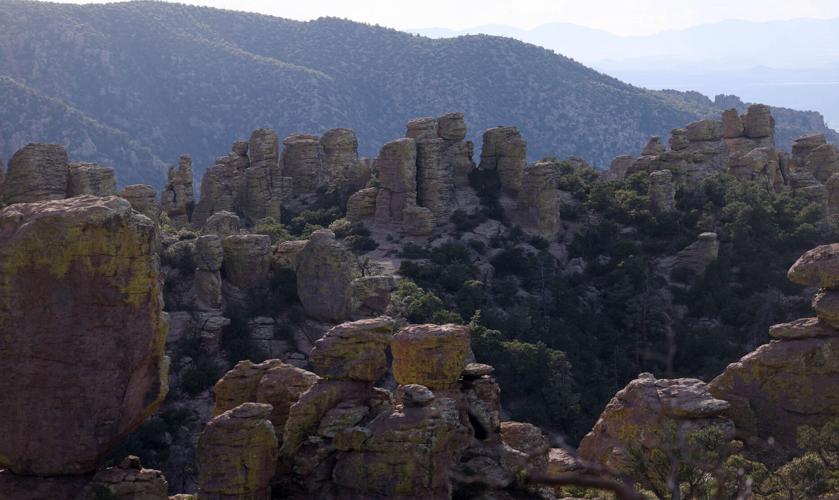
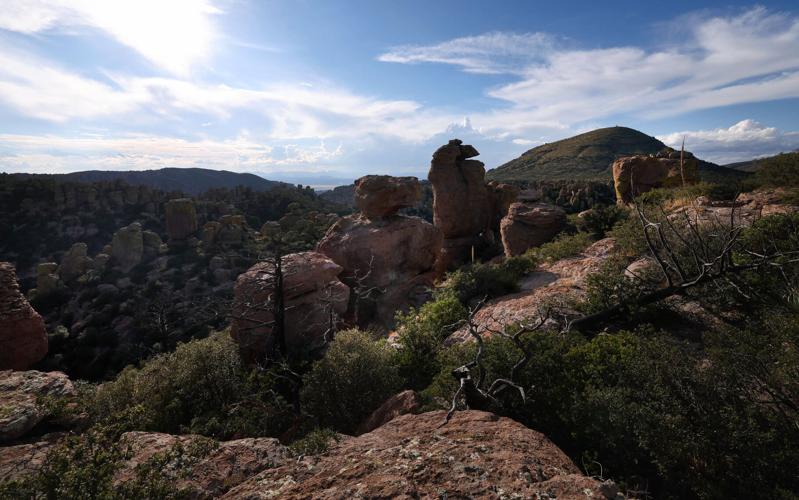
The so-called “Wonderland of Rocks” in the heart of the Chiricahua Mountains features towering stone pinnacles, world-class birdwatching, dark night skies, diverse sky-island wildlife and a rich human history that stretches from the earliest Indigenous inhabitants to the Civilian Conservation Corps.
As Ciscomani noted, Chiricahua is the first new national park to be established anywhere in the U.S. since 2020 and the first in Arizona since Saguaro was upgraded from a monument to a park in 1994.
“This doesn’t happen every year. It doesn’t even happen every decade or so,” he said. “This is the biggest thing going on in the country today, and we’re right here witnessing it (while) being in this beautiful nature and being able to take it in and enjoy it.”

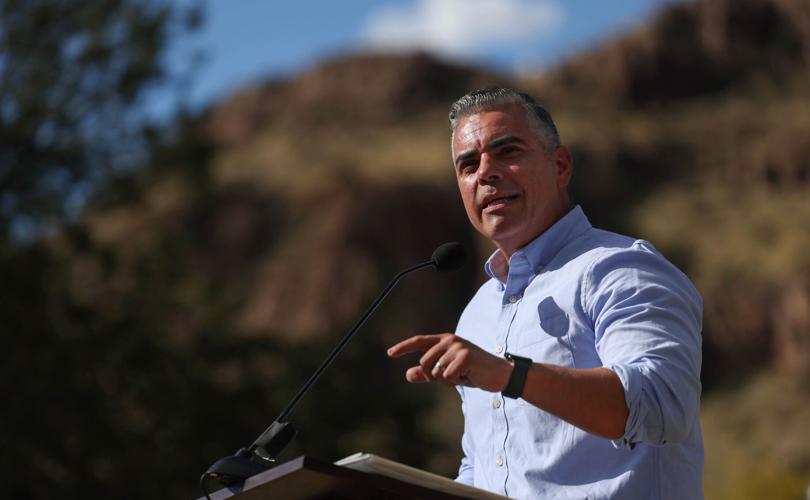
U.S. Rep. Juan Ciscomani speaks at a ribbon cutting ceremony for Chiricahua National Park, which was created through bipartisan legislation in Congress.
Trump’s bill signing session at the White House came less than an hour before Tuesday’s ceremony was set to begin. Though cell service was spotty, word quickly spread through the crowd of park rangers and park advocates gathered in the grass at Chiricahua’s historic Faraway Ranch.
“We did it! We’ve got a national park here in Willcox! It’s so exciting!” exclaimed Willcox Mayor Greg Hancock to applause from the audience. “What an incredible day for Willcox, Cochise County, the state of Arizona and our entire nation.”
The monument was already managed by the National Park Service, with most of its land protected as wilderness or set aside as a historic district. The new designation does not change the existing boundaries or land uses, and it won’t automatically result in an increase in funds or staffing.
But it is expected to draw more attention — and more traffic — to this sleepy corner of the state. Local officials and business owners are banking on it.
Hancock considers it “an investment in rural America.”

The new Chiricahua National Park is a roughly 12,000-acre preserve 120 miles southeast of Tucson.
“We weren’t looking to simply put a name on a sign. We pursued it because we believe in the future of our community,” the mayor said. “National park status will bring national recognition, increased tourism opportunities and the potential for new businesses and investments in Willcox and throughout Southern Arizona.”
A park “Thing”
Apparently, excitement over the new designation has already reached all the way to “The Thing.” Ciscomani said he stopped at the famous roadside attraction on Interstate 10 near Dragoon on his way to Chiricahua, and the people there told him they were eager to see the increase in business the national park could bring to the entire region.
“They’re very excited about this because they know that it’s coming (and) they know what it is,” he said.
Burgum all but guaranteed a big boost in tourism, calling the national park name “one of the most powerful brands in America.”
“If 70,000 people visited (Chiricahua) in 2025, that number’s gonna go way up,” he said, “and then we have to back that up with support staffing, dollars for infrastructure and programming.”
That’s exactly what worries some critics of the Trump administration’s treatment of the nation’s parks.
“Staff at Grand Canyon National Park are still waiting on funding for recovery work and safety upgrades following last year’s Dragon Bravo fire and the recent deadly flash floods,” said Rob Arnberger, former superintendent of Grand Canyon and Saguaro national parks. “It’s inexcusable for our Interior Secretary to trumpet a new national park designation while he refuses to take care of the places that his department has been charged with stewarding for more than a century.”
Bill Wade, Marana-based executive director of the Association of National Park Rangers, accused Burgum of working to systematically dismantle the Park Service “by firing staff, cutting budgets, and redirecting visitor entrance fees to President Trump’s vanity projects in Washington, D.C.”
According to the association, Park Service staffing shrunk by 24% nationwide during the first six months of Burgum’s tenure, with Arizona ranking among the top 10 states for job losses at public land agencies overall in 2025.
As a result, Wade said, the national parks are already “at a breaking point” in Arizona.
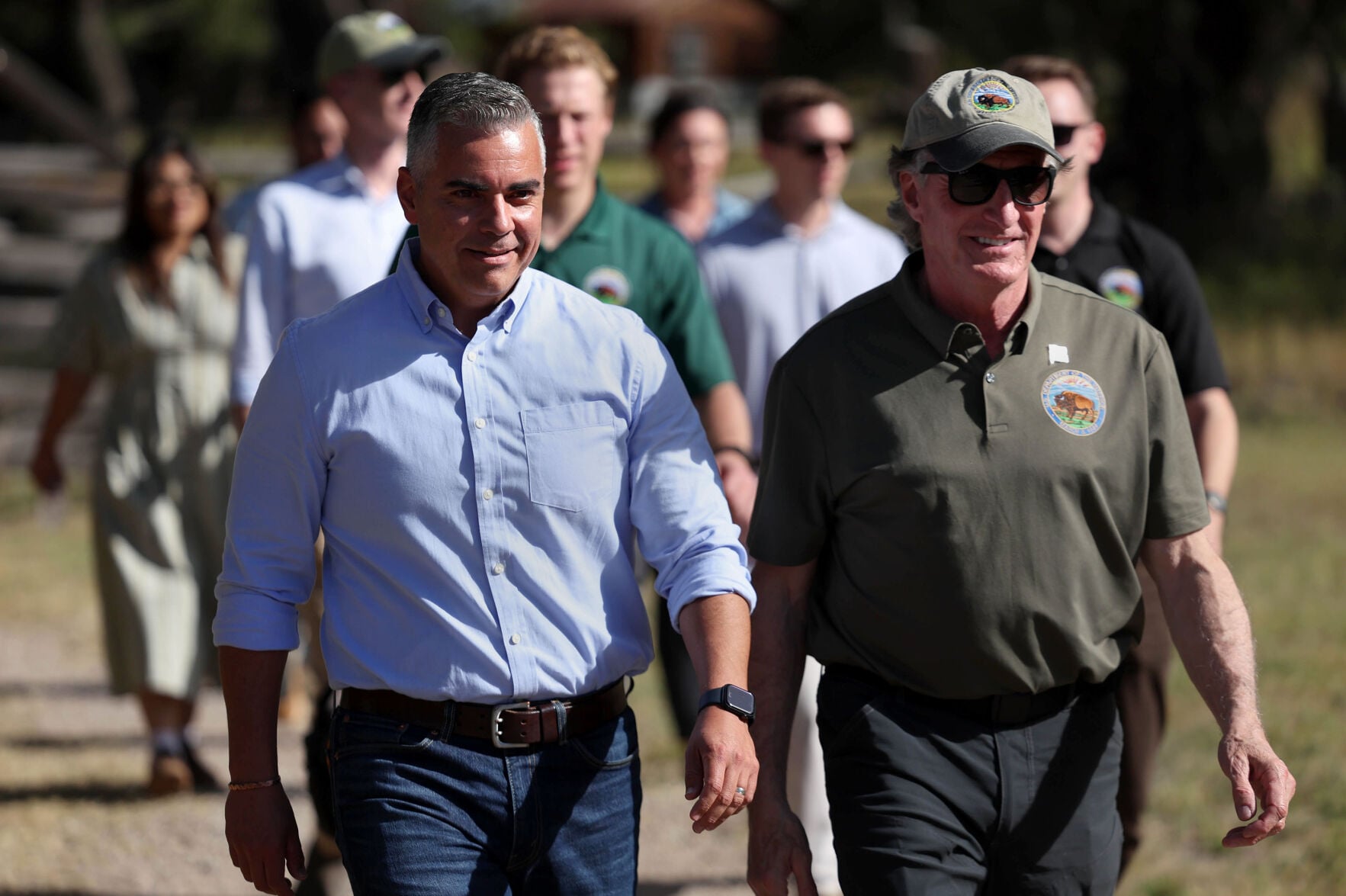
U.S. Rep. Juan Ciscomani arrives at newly upgraded Chiricahua National Park alongside Secretary of the Interior Doug Burgum.
“Rebranding” time
While taking questions from reporters after Tuesday’s ceremony, Burgum hinted that Chiricahua’s new title will make it a higher priority when it comes to federal funding.
“When there’s more visitation, then we have to do our job for the National Park Service flagship parks where we put more dollars in in terms of infrastructure,” he said. “All those budgets get bigger once you become a national park.”
As for immediate changes at the new park, Burgum said they will be largely superficial.
“The first thing you’re going to see is extensive rebranding, if you want to call it that, across the websites and across the signage coming in, and that will take some time.”

Nicknamed the “Wonderland of Rocks,” the national monument just upgraded to a national park is known for its balanced boulders, rhyolite pinnacles, dark night skies and unique, sky-island wildlife.
Since the gates were already open when the name change became official, it’s impossible to know for sure who the national park’s first visitor might have been. But Armand Santilli was almost surely the first one to hear about it.
The hiker from Casa Grande had just spent the day bagging as many trails as he could at Chiricahua when he literally wandered into Tuesday’s invitation-only ceremony.
“I just saw a lot of people with fancy (park ranger) hats on, so I thought it might be something important,” Santilli said.
It was his first visit to the monument-turned-park, and it was a memorable one. He posed for pictures with top government officials, then had several microphones thrust at him as he answered questions during an impromptu press conference.
“And I got a sticker. From the secretary of Interior,” Santilli said, holding up the decal Burgum had just given him from America’s newest national park.