Arizona is one signature away from getting a new national park.
A bill to upgrade Chiricahua National Monument to national park status was approved by the U.S. Senate on Wednesday and is now headed to President Donald Trump's desk for final approval.
Tucson Republican Rep. Juan Ciscomani, who introduced the House version of the bill in December, celebrated its passage and tagged the president in a post on X Wednesday night.
“After years of work, Arizona is one signature away from its fourth national park,” he wrote. “@POTUS, let's get this across the finish line for Cochise County and all of Southern Arizona.”

Visitors tour Massai Point at Chiricahua National Monument.
Not much is expected to change for the roughly 12,000-acre preserve, other than its profile.
People are also reading…
The monument 120 miles southeast of Tucson is already managed by the National Park Service, and its current boundaries and land uses remain the same under the legislation.
But elected officials, business owners, outdoor groups and others in nearby communities are hoping the national park name will draw more tourists to the region.
Willcox Mayor Greg Hancock was in Washington, D.C., on Wednesday to lobby for the bipartisan bill when he learned that it had passed out of the Senate by unanimous consent.
“This is an incredible day for Willcox, Cochise County and all of southeastern Arizona,” Hancock said in a written statement. “Tonight is a night to celebrate. So many people have worked for years to make this happen. We are now one signature away from welcoming visitors from around the world to Chiricahua National Park.”
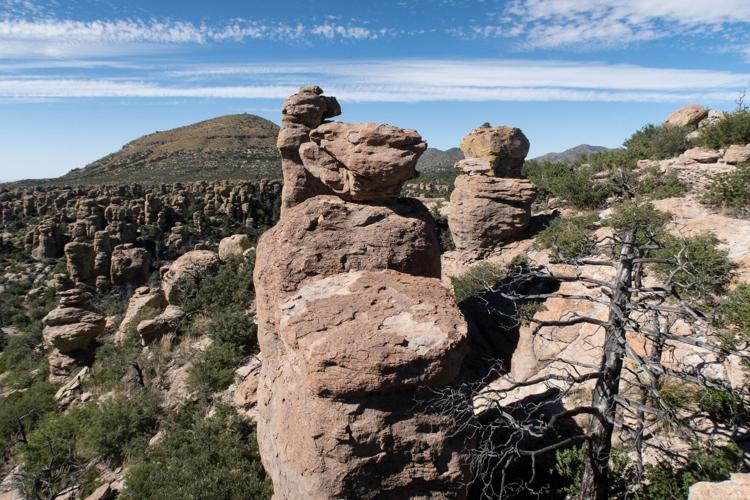
Nicknamed the “Wonderland of Rocks,” the monument is known for its balanced boulders, rhyolite pinnacles, dark night skies and unique, sky-island wildlife. Throughout its rich history, the area has been home to prehistoric people, Apaches, Buffalo Soldiers, ranchers, homesteaders and laborers from the Civilian Conservation Corps.

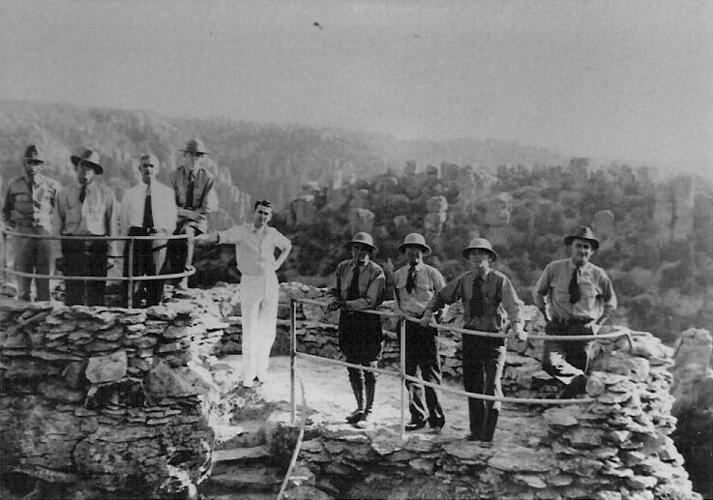
An undated National Park Service photo shows men posing on an overlook built by the Civilian Conservation Corps in 1934 for the dedication of Chiricahua National Monument.
Most of the land there is already protected as wilderness and as a national historic district. The park legislation reinforces protections for cultural and religious sites, requiring consultation with tribes and continued access for traditional tribal uses.
Arizona is currently home to three national parks — Grand Canyon, Petrified Forest and Saguaro — and about 20 sites in all managed by the Park Service.
Surge in visitation expected
Members of the state’s congressional delegation have been trying to win Chiricahua a promotion for a while now. At least five similar measures have been introduced since 2016, but none advanced to a vote of the full House or Senate.
To help increase the odds this time around, Democratic U.S. Sens. Mark Kelly and Ruben Gallego sponsored companion legislation in the Senate in January that was identical to the bill from Ciscomani.
The Marana-based Association of National Park Rangers has come out in favor of the upgrade for Chiricahua, though the advocacy group says the preserve will likely need more staffing and infrastructure improvements to handle the expected surge in visitation.

Chiricahua National Monument, with its towering, volcanic ash spires, is on the cusp of becoming Arizona’s fourth national park.
“We believe that Chiricahua is certainly worthy of national park status,” said Bill Wade, a retired park ranger and superintendent who now serves as executive director for the association. “Like a lot of other areas, it is most likely understaffed.”
With just over 70,000 visitors, Chiricahua National Monument ranked 254th out of almost 400 Park Service sites nationwide last year.
By comparison, Grand Canyon was the nation’s 15th busiest park in 2025 with more than 4.4 million visitors, while Saguaro came in 84th with about 848,000 and Petrified Forest finished 156th with about 316,000.
President Calvin Coolidge used his authority under the Antiquities Act in 1924 to establish the national monument on less than 4,300 acres in the Chiricahua Mountains. Another 6,407 acres were added to the monument in 1938 by President Franklin Roosevelt.
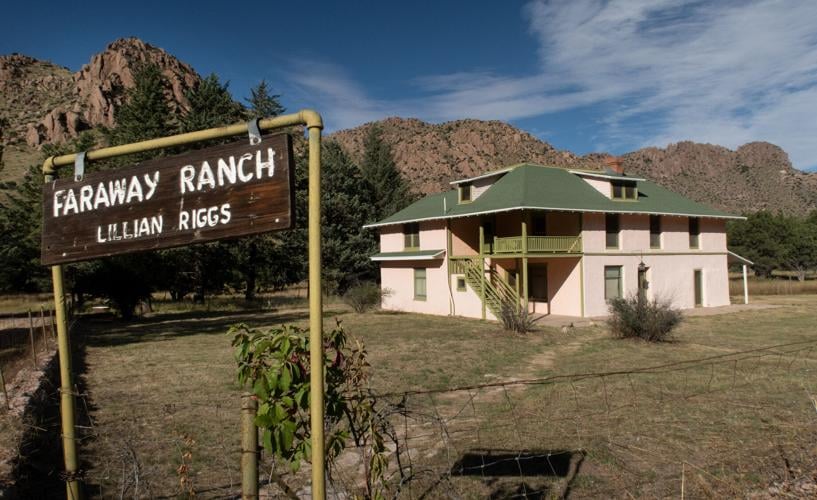
Several smaller additions have followed since then, including the acquisition of the historic 440-acre Faraway Ranch in 1978.

Faraway Ranch was the home of Swedish immigrants Emma and Neil Erickson, who settled on the 160-acre homestead in the late 1880s. It is now part of Chiricahua National Monument near Willcox.
Pressures from reduced staffing levels
The change in status for Chiricahua comes as the Park Service faces increased pressure from the Trump administration, which has reduced staffing levels, sought to rewrite interpretive signs and diverted funds for long-awaited maintenance to pay for beautification efforts in Washington, D.C., ahead of the nation’s 250th anniversary.
On Thursday, the Colorado-based conservation group Center for Western Priorities released an interactive map, based on reporting from the Associated Press, showing almost 1,500 projects at more than 200 park sites that were classified as “low priority” by Interior Department officials.
According to the center, those projects have been indefinitely delayed while top-priority work has been fast-tracked, including the botched, $16 million effort to paint the Lincoln Memorial Reflecting Pool blue.
Meanwhile, the center said the Park Service's repair backlog has doubled over the last decade to more than $24 billion, and the agency has lost at least a quarter of its permanent workforce under the current administration.
The group’s map includes more than 60 projects deemed low priority across Arizona, including three at Chiricahua: emergency mold abatement in an occupied staff housing unit, electrical system replacement in several historic buildings and security upgrades.
"These are the everyday projects that keep parks open and running: roof repairs, replacing outdated computers, even buying toilet paper and garbage bags. None of that is low priority. It's the basic work of national parks,” said Lilly Bock-Brownstein, creative content and policy manager for the center. "The National Park Service is supposed to protect every park. Instead, parks across the country are being neglected while money flows to the president's pet projects."