

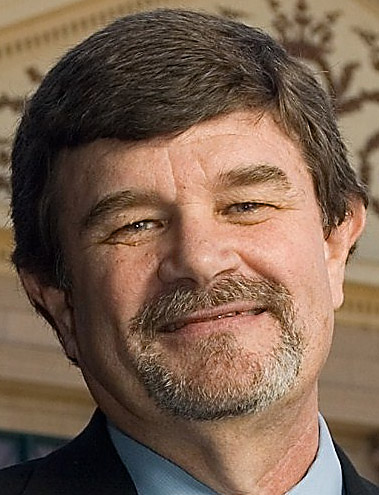
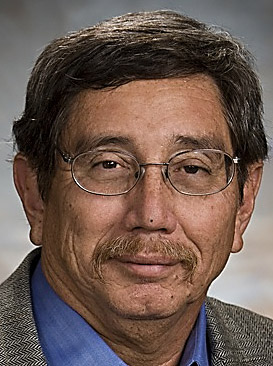
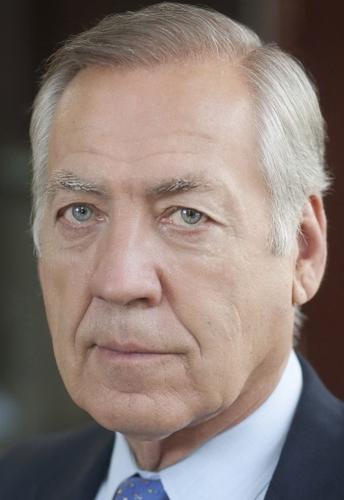
A former longtime member of the Arizona Corporation Commission and two former state legislators are pledging to push renewable energy if elected to fill one of two available seats on the utility panel.
But first the trio has to go through a Democratic primary elimination round, which will advance two of them to the November general election ballot.
Phoenician Renz Jennings, who served on the Corporation Commission from 1985 to 1999, is running against former lawmakers David Bradley and Jorge Luis Garcia, both of Tucson.
All three say their top priority is to preserve and expand the state's Renewable Energy Standard, which requires utilities to increase the percentage of power they get from renewables to 15 percent by 2025.
Jennings says he's trying to return to the commission to fill what he sees as a coming "leadership vacuum" on the commission with the impending departure of Republican Chairman Kris Mayes, a champion of renewables who is reaching her term limit.
People are also reading…
Just before he left office at the end of 1999, ending a long-running Democratic majority on the Corporation Commission, Jennings successfully pushed a "solar portfolio" standard as part of electric competition rules.
The standard would have required utilities to get 1 percent of their power from solar by 2002, but the incoming Republican majority deleted the standard, and the competition rules were later scrapped altogether.
"I think it's at risk, though everybody says they're for it," Jennings said of the current Renewable Energy Standard, which was adopted by a Republican-majority commission in 2006.
Garcia said he wants to be part of a "solar majority, to promote the renewable-energy standards and to protect them."
Garcia, a social worker who is now a full-time candidate, said he wants to increase the renewable-energy standard to 20 percent by 2025.
"I think that's a very doable goal, based on my conversations with the utilities, and the public supports renewables," Garcia said.
Bradley, the CEO of a local nonprofit, said supporting renewables is part of his larger priority of helping the state plan for future energy needs - including dramatically boosting energy efficiency.
Bradley said he supports rules adopted by the commission in December that require utilities to cut customer energy use by 22 percent by 2020 through conservation.
"I think it's the quickest way to impact cost for the consumer, and the most practical way," he said.
Bradley called the efficiency goal "daunting" to the utilities but said regulators can help by structuring rates to encourage efficiency.
Meeting the renewable-energy standards - and increasing them in the future - can help drive clean-energy economic development in the state, Bradley said.
Jennings said renewable energy sources need to be developed to assure Arizona's energy future.
"Right now, we're too dependent on too few fuels," he said, contending that Arizona's main power sources - coal, natural gas and nuclear power - all have limitations.
Coal is too polluting, gas suffers from volatile price swings and is used mainly for supplemental power, and nuclear is "stratospherically expensive" because of its high capital cost, he said.
Jennings said the most promising alternatives are wind power - mainly purchased from elsewhere because most of Arizona isn't windy enough - and solar.
Water regulation also is high on the priority list for the three Democrats.
Jennings said he would push for water-efficiency standards for power plants, and he said he favors consolidation of small water companies - the state regulates more than 350 - to spread out costs.
Bradley agreed.
"We have to set up mechanisms to reward people to consolidate as much as they can," Bradley said.
Garcia said some consolidation makes sense, but he's concerned about "rate shock" among small water ratepayers, citing a pending case in the Phoenix area in which residents are facing a proposal to double their rates.
All three Democrats said they support efforts at the federal level to impose some kind of carbon tax or regulation to reduce greenhouse-gas emissions.
The candidates say they also support a move by the commission to make developers pay for power-line extensions for new subdivisions. The issue is currently the subject of statewide public-comment meetings after complaints that the move is stifling rural development.
"I support the concept that development should pay for itself," Garcia said.
Bradley said it may be reasonable to extend power to well-planned communities, but the rules shouldn't encourage "wildcat development."
Jennings said free line extensions may essentially subsidize sprawl, but he said he might support extensions for individual property owners who bought years ago thinking they could get power.
"I think the commission may have overdone it, but they're on the right track," he said.
CANDIDATES' BACKGROUNDS
David Bradley
Home: Tucson
Age: 57
Occupation: CEO, La Paloma Family Services
Political experience: State representative, 2003-11
Jorge Luis Garcia
Home: Tucson
Age: 56
Occupation: Social worker
Political experience: State senator, 2003-11; state representative, 1993-97
Renz Jennings
Home: Phoenix
Age: 68
Occupation: Small-farm owner-operator
Political experience: Arizona Corporation Commission member, 1985-99; state representative, 1979-83 and 1969-70
Contact Assistant Business Editor David Wichner at 573-4181 or dwichner@azstarnet.com


