

The usually staid election race for the Arizona Corporation Commission has been sidetracked by a hot-button issue over which the utility panel has little control: illegal immigration.
But three Republican candidates for the commission have plenty of more normal issues to talk about, as two seats on the five-member commission are up for grabs in November.
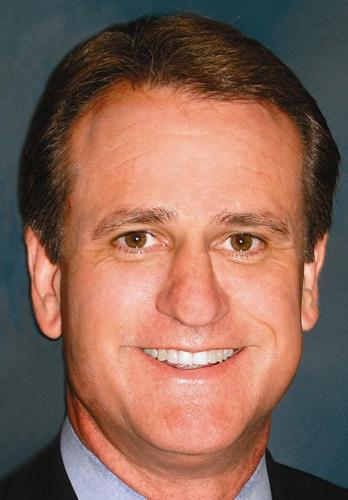
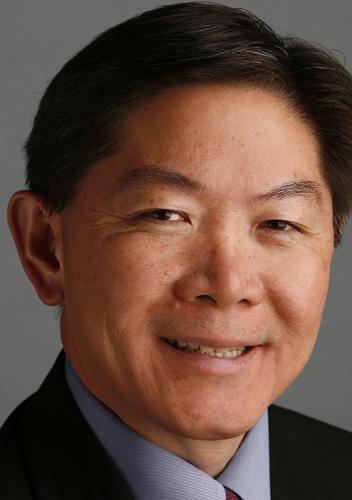
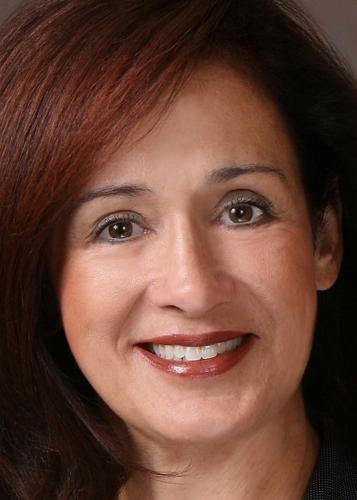
Squaring off in the Republican primary are incumbent Gary Pierce, a former auto dealer and state legislator; former state Senate President Brenda Burns; and Barry Wong, a Phoenix business attorney who served on the commission as an appointee for six months in 2006.
The campaign has been marked by the fallout of comments made by Wong regarding Arizona's tough new immigration law.
Wong made national news recently when he said the Corporation Commission could help curb illegal immigration by requiring utilities to deny service to people who can't prove U.S. citizenship.
People are also reading…
Pierce joined the fray, saying he would do what he can to stop the flow of Arizona-generated electricity to Los Angeles in response to that city's vote to boycott Arizona over SB 1070.
But beyond the uproar over those statements, neither of which is possible, the candidates have plenty of bread-and-butter utility issues on their plates.
Pierce, 57, says his major priority is keeping utility rates stable and balanced.
"To attract more business, we have to have stable rates," he said.
He also wants to streamline the commission's operations, particularly the process for incorporating limited liability companies (LLCs) by using more online filing.
Burns, 59, says her top priority is "meeting the needs of our growing population while keeping rates as low as possible."
"I'm a huge proponent of long-term planning," she said, praising a recent move by the commission to require electric utilities to file reports every two years on how they plan to meet energy needs over the next 15 years.
She also wants to streamline commission operations, to shorten the time it takes to approve new rates, allow the public to access more information and monitor hearings online, and limit fees the commission charges.
Wong, a University of Arizona law school alumnus, says among his top goals is careful planning to meet energy needs he believes will rise rapidly when the recession gives way to new growth.
"We need to have a very broad mix of energy sources, which would include nuclear power, renewables like solar and wind, natural gas and clean coal," he said.
Wong say's he'll work to keep rates as low as possible, citing his experience on an Arizona Public Service Co. rate case during his 2006 stint on the commission and his background in law and accounting.
Wong said denying electric service to illegal immigrants is part of his rate strategy, contending a rising illegal-immigrant population hastens the need to build new power plants.
Wong also said he would focus on water conservation, prompting the state's 300-plus regulated water companies to take conservation steps and limiting the use of groundwater by power-plant operators.
All three Republican contenders say they support the state's Renewable Energy Standard, which requires utilities to get 15 percent of their power from renewable sources by 2025.
To push renewable energy, the commission has created a system of rebates for renewable-energy installations like rooftop solar water heaters and photovoltaics, paid for by monthly surcharges on ratepayers' bills.
The rebates have become so popular money has run out in some cases, prompting utilities including TEP to seek lower rebates and higher surcharges.
Wong said he remains a big backer of so-called "distributed" solar energy - installations on the site of users, such as rooftop photovoltaics. Wong, who serves on the Arizona Power Plant and Transmission Line Siting Committee, said utility-operated solar power plants are important, but he's concerned with water usage.
Burns said she strongly supports the renewable standard, but amid concerns surcharges are getting too high, she said she would look for other ways to fund the program, though she didn't have specifics.
"We need to make sure the ratepayer is getting the economic and environmental benefit," she said, adding she hopes falling prices for solar equipment will help drive future installations without the need for rebates.
Pierce said the standard is fine the way it is, and the market will dictate any increase in the standard.
"That's the way this is intended to go, that we'd reduce and remove subsidies because renewables become a way of life," he said.
All three Republicans said they would revisit commission decisions in APS and TEP rate cases which changed the rules for extending power lines to new homes, shifting thousands of dollars in costs for each line to developers or homeowners.
Addressing complaints the extension costs are stifling rural development, the commission is currently holding statewide public meetings on the issue.
"It's really harming rural Arizona, because what the commission decided was, new customers were not of value, and that's simply not the case," Pierce said.
Pierce said that after initially voting for the first APS rate case that cut the extensions, he has since tried to restore the free extension footage and pushed for the current public discussions.
Burns said she is closely monitoring the public meetings on the extension issue and is concerned about the impact on development.
Wong said he's heard some of the complaints and is committed to finding a "middle ground" that would help rural development while protecting ratepayers.
All three Republicans say they oppose - and the state should oppose - a move by the federal government to impose any kind of "carbon tax" or cap-and-trade regulation on utilities and other industries.
Contact Assistant Business Editor David Wichner at dwichner@azstarnet.com or 573-4181.


