
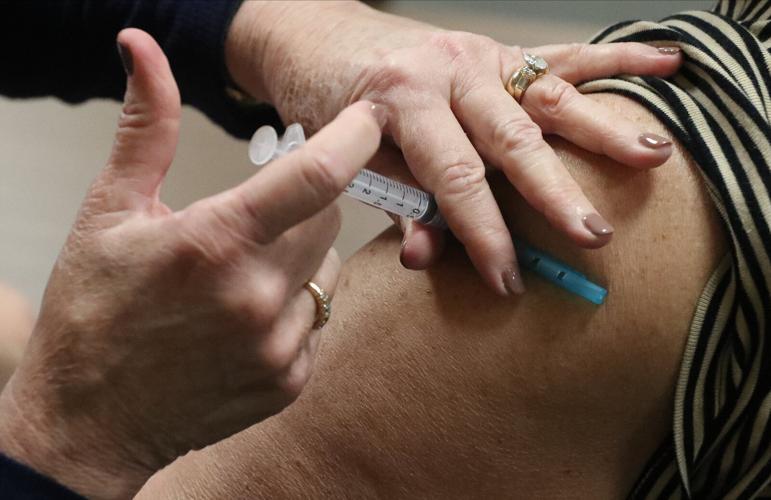
Gov. Andrew M. Cuomo's unexpected decision Tuesday to expand the pool of people who will be eligible to get Covid-19 vaccinations fits neatly into the reaction pattern regarding the pandemic that has played out repeatedly in recent weeks:
Cautious optimism, tempered with worry.
Some people in the health field said Cuomo's move to make the vaccine available to people ages 60 to 64 and many government workers was timely, because the supply of vaccines is flowing better than it ever has.
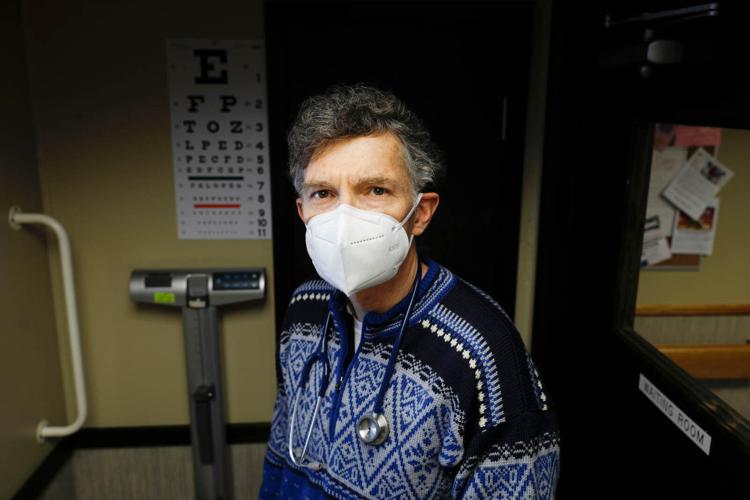
“The supply’s still somewhat constrained, but it does appear to be improving," said Dr. Thomas Madejski, an Orleans County physician whose office received 300 doses this week, its first shipment ever.
"We are getting vaccine with regularity now," said Jeff Rutowski, co-owner of seven independent pharmacies, who took time out from administering shots at Kenmore Prescription Center to speak to a reporter.
People are also reading…
Tuesday's shots there were second doses, following up on shots given at the store four weeks ago. Rutowski said his staff expects to administer first doses Wednesday and Thursday, then more second doses Friday.
"I think it's a good time (for Cuomo's decision)," Rutowski said.
"If the supply is increasing, we can then increase our distribution levels," Cuomo said.
But some said they thought Cuomo's decision simply made more people eligible to join the ranks of the frustrated who can't find appointments to be vaccinated.
“It creates more anxiety and more unmet expectations when vaccine eligibility numbers increase with no increase in vaccine supply," Niagara County Public Health Director Daniel J. Stapleton said.
He said he thought his department would vaccinate 6,500 people this week – until the state told him Niagara County would receive only 800 doses of vaccine.
"There's not enough vaccine," Cuomo conceded during his announcement. "You are going to see this ebb and flow in the supply from the federal government."
“The biggest thing we want people to know is eligibility does not mean availability,” Erie County Executive Mark C. Poloncarz said.
In fact, as of Tuesday afternoon, Erie County had been green-lighted to receive roughly half the vaccine doses it got last week, with no vaccine set aside for older eligible adults.
Last week, Erie County received 7,280 vaccine doses. This week, it has been given clearance to receive only 3,710 doses, though the county Health Department is still hoping to receive an additional allocation of 3,510 doses from the state for seniors.
Poloncarz said that the county has been working with Microsoft to design its own vaccine appointment website and call center, to launch by March 17, in hopes it will work better than the state website.
Poloncarz and Erie County Health Commissioner Dr. Gale Burstein said they didn't see Cuomo's move coming.
Poloncarz said county leaders were on a call Monday with Larry Schwartz, the state’s vaccine czar, and no mention was made of the decision to lower the age.
"They gave us no guidance on that," Poloncarz said.
"You can take different strategies to get vaccine into people, and at the end of the day we do need to get it to everybody," Madejski said. "Having said that, the way that we’ve allocated the vaccine thus far is that those who would get the greatest benefit are at the greatest risk."
There were no official figures available Tuesday on how many people Cuomo added to the vaccine hunt by lowering the age for an eligible senior citizen from 65 to 60, and by adding large numbers of government employees to the list.
Those who are 60 to 64 can begin chasing vaccine appointments at 8 a.m. Wednesday.
"Public-facing" government workers have to wait until March 17 to seek an appointment.
They include public works employees, social service and child service caseworkers, government inspectors, sanitation workers, Department of Motor Vehicle workers, county clerks, building service workers and election workers, according to Cuomo's announcement.
Also part of the latest eligibility expansion are employees of not-for-profit agencies "who provide public-facing services to New Yorkers in need," according to Cuomo's news release, along with "essential in-person public-facing building service workers."
"These are the people who are the everyday heroes, who are out here, doing their jobs, they're putting themselves in a position of possible exposure," said Cuomo, whose office issued a news release that contained praise for his decision from the leaders of five public employee unions.
"They are essential for us to continue operating," Cuomo said in an appearance at the State Fairgrounds near Syracuse, whose exposition center has become one of the state's main mass vaccination sites.
Read the full story from News Home and Style Editor Susan Martin
The state's list of certain types of vaccination sites for certain types of people became less confusing Tuesday. At first, hospitals vaccinated health care workers, local health departments vaccinated essential workers and drugstores served only senior citizens.
"To simplify the situation," Cuomo said, starting March 17, any site may serve anyone who is eligible – except for pharmacies. Starting March 17, they may vaccinate teachers, as well as those 60 and over.
“Most of the teachers I’ve talked to, and that’s a lot, said they’ve been having a lot of difficulty," said Phil Rumore, president of the Buffalo Teachers Federation. "They hear that there are shots available and then they’re closed in five minutes, so this is a step in the right direction."
“There’s efforts all around to have every teacher offered their shot by the end of this month, which I applaud our local and state governments for wishing to do, but until the supply catches up with that, there’s not going to be much headway," said Daniel Weiss, president of Niagara Falls Teachers Local 801.
Weiss estimated that 65% to 70% of Falls teachers have received at least one dose of vaccine.
Rumore said other staff members at schools need to be vaccinated to make the buildings safer. And they're not the only ones who need a needle in their arm, stat.
"Many have difficulty accessing mass vaccination sites and pharmacies. As we move along, we need to get to the nooks and crannies of unvaccinated patients. Physician offices and home care agencies are probably key to get to the last mile," Madejski said.
Those still left out are still fuming. For example, New York Farm Bureau President David Fisher issued a statement saying it is "frustrating" that farm workers are still not eligible.
"The CDC recommends that food and agricultural workers be eligible for their own safety and that of our food system," Fisher said. "It is time do what is right and prioritize the essential workers who help ensure New Yorkers have food on their tables."