The likelihood of unprecedented Colorado River water shortages has triggered plans by Tucson and Phoenix to engage in unprecedented water-sharing efforts.
By early 2027, the state's two largest cities stand a good chance of sharing small amounts of their Central Arizona Project supplies from the river with other cities or other water users that need them because they won't otherwise have enough, water officials in both cities said.
The two cities are starting the Secure Water Arizona Program. Under it, cities with more water than they need today could provide it over a short- or long-term period to cities that need it.
While a lot of details about this effort remain to be worked out, Phoenix and Tucson officials stress that participation in the program would be entirely voluntary, and that they're looking for a "coalition of the willing" to get involved.
People are also reading…
The Tucson Water and Phoenix Water utilities hope to start signing agreements later this year, presuming their city councils approve the idea, for short-term deals to start in 2027, both utilities' representatives told the Star.
"The idea is, how we can build in central Arizona cooperation to move water around in the face of unprecedented shortages?" said Chris Avery, a Tucson assistant city attorney who handles water issues for Tucson Water.
"How do we prepare for not only short-term but long-term criticalities on the CAP canal?" asked Avery, referring to the possibility of major future shortages in CAP deliveries to the Phoenix and Tucson areas.
"How do you deal with unprecedented shortages when you don’t have lots of time to respond?" he said.
Ultimately, Arizona cities that have come to depend on CAP water — like Phoenix and Tucson do — are facing two challenges simultaneously, said Max Wilson, Phoenix's water resources management adviser, in a separate interview.
For one, all the cities in Central and Southern Arizona have different mixes of various kinds of water supplies, be they CAP water, groundwater, treated sewage effluent or other surface water supplies, mainly the Salt and Verde rivers in the Phoenix area, Wilson said. So they all have different needs, meaning no one solution can be applied to all of them.
"We wanted to develop a program here that's flexible enough for people to anticipate what the water needs are of their own water portfolio," said Wilson, referring to each city's various mix of supplies. "Ultimately water managers themselves are the best ones to to make those choices. They are most in touch with community needs."
The second problem is that shortages on the Colorado River are coming faster and harder than officials had anticipated, he said.
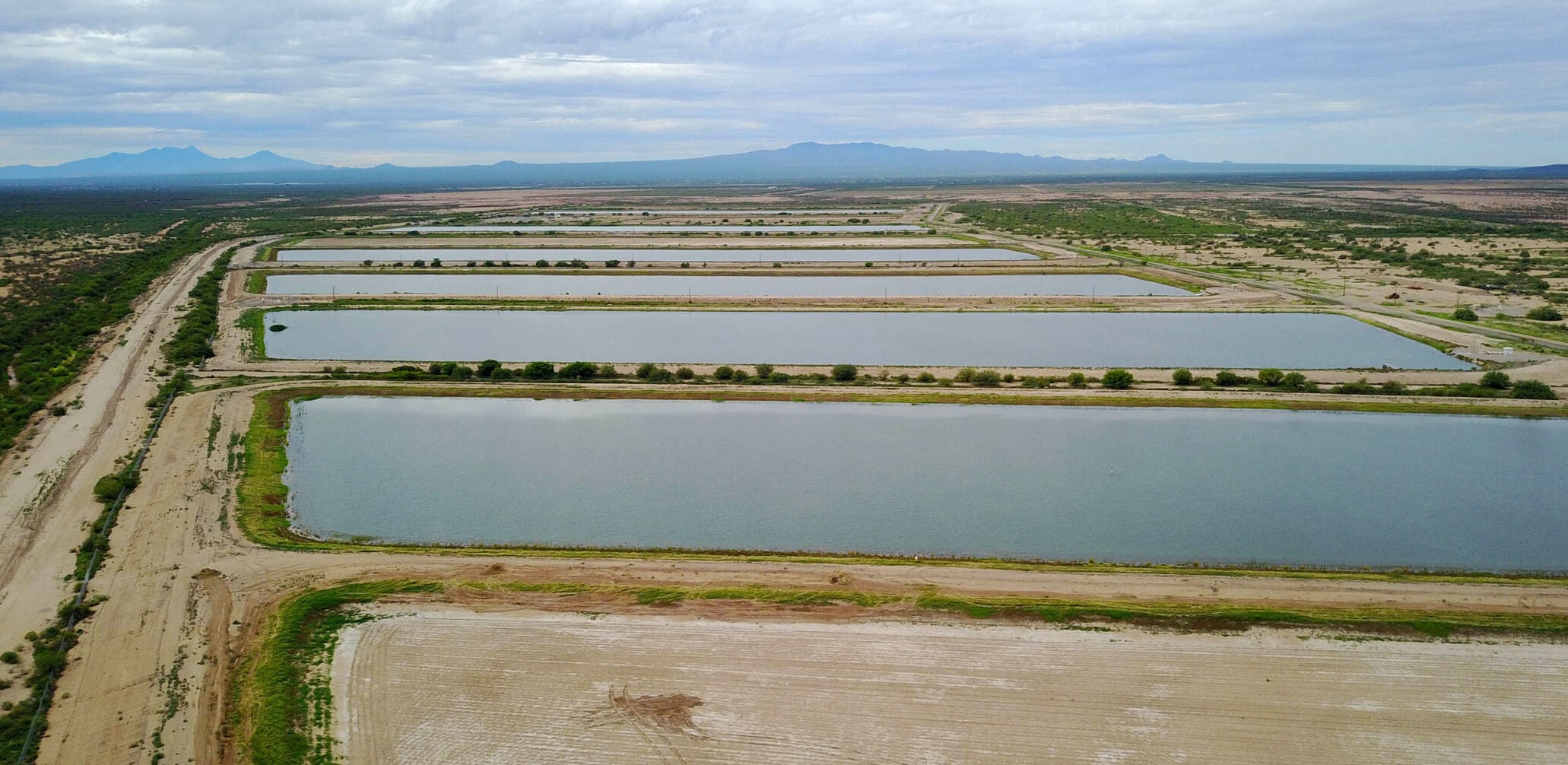
Tucson Water has stored Colorado River water in these basins in the Avra Valley north of the city since the early 2000s. Now, Tucson and Phoenix are starting the Secure Water Arizona Program. Under it, cities with more water than they need today could provide it over a short- or long-term period to cities that need it.
Earlier this year, the U.S. Bureau of Reclamation issued a draft environmental impact statement for the Colorado River that laid out four options for how its water use could be cut to balance the river's dwindling supply with human demands. One of the options would cut virtually all CAP deliveries to Arizona while two others would cut them by at 77% and 82%, respectively, CAP officials have said.
Then, as forecasts for this year's river flows dropped drastically through the winter and spring, Arizona, Nevada and California early this month submitted to the feds a separate plan to cut their water use by 3.25 million acre-feet of water through 2028. While that's much less than what those three Lower Colorado River Basin states would take under Reclamation's proposal, it's still significantly more than the states had proposed cutting in the past.
"We wanted to make sure Phoenix and Tucson had an opportunity to show some leadership, to set up a basic safety net," Wilson said. "We wanted to have a little bit of runway to solve those problems; in case shortages hit much sooner and harder than people were expecting it."
The new program will have three elements:
• A short-term emergency program to provide cities with the small amounts of water that they need immediately. In Tucson, Avery said he envisions that under this program, cities could provide other cities anywhere from 5,000 to 20,000 acre-feet of water for limited periods.
• A longer-term program to provide additional water supplies beyond short-term emergency needs to communities facing CAP cuts. But the water-sharing program wouldn't be leasing the supplies to other entities or making long-term transfers of CAP water rights, Avery said.
• An experimental program to encourage cities and other water-using entities to come up with and share innovative ideas for producing and using water supplies.
"These are experiments, not long-term commitments," Wilson told the Phoenix City Council in describing this program at a public meeting in late April.
Avery said, "We haven’t got it fully figured out yet. Obviously, we will try to put together a pool of shared water resources, and a pot of money, of federal resources, to mitigate effects of shortages."
Three outside water experts, one in Tucson and two in Phoenix, praised the water-sharing idea the two cities are working on.
"When you think about all the moves Tucson Water can make, such as do more conservation or do a new water source, it’s one of those tools we can use, but it's more in the policy partnership space," said Andrea Gerlak, director of the University of Arizona's Udall Center for studies in Public Policy. "It's about making friends with each other, and having arrangements or deals to move water or share water."
"If you just think about the geography, we're south. It makes good sense for us to make friends in the Phoenix area. Their straw is going to be out (for the CAP water) before ours. It makes sense to approach it from the stance of friendship or partnership as opposed to be being competitors," Gerlak said.
Cynthia Campbell, a former top Phoenix Water official, was involved more than a decade ago in setting up an earlier Phoenix-Tucson water sharing program in which Phoenix and other Phoenix-area cities stored some of their CAP supplies in Tucson's more plentiful and much larger CAP recharge basins. In return, Phoenix can pull some of Tucson's CAP supplies off the canal when it needs them.

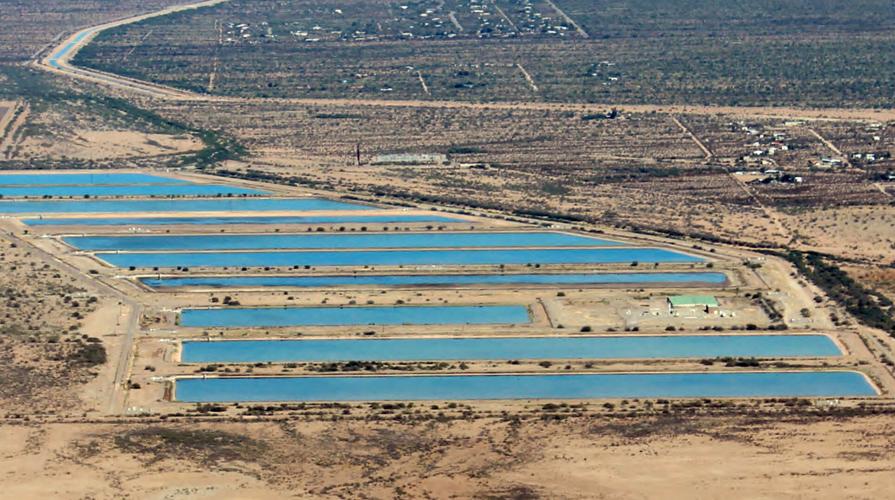
Tucson Water has stored Colorado River water in these Avra Valley basins since the early 2000s.
That was a long-term plan, but today, "We really need this level of flexibility right now," said Campbell, now director of policy innovation at Arizona State University's Arizona Water Innovation Initiative.
"With shortages coming, there are going to be instances where cities are not going to have enough water or it's not going to be in the right place. Having some mechanism for an agreement to take place, to move water around easier, is going to be really important during shortages," she said.
As the program is now envisioned, in the short term, parties that have slight surpluses would provide water to parties facing a deficit in their supplies due to shortages that could occur next year, Avery said.
"In the longer term, we will try to make investments for the future," using exchanges of water or providing other cities with "credits" allowing them to use groundwater supplies that Tucson has stored, he said.
This program is a good response to the continuing lack of certainty about how Colorado River shortages will affect Arizona cities, said Sarah Porter, director of ASU's Kyl Center for Water Policy.
This program will mean that a problem like not having the right infrastructure in place to get water to where it’s needed to get to people's taps is less of a problem, Porter said.
"It gives participants more flexibility to get to other water supplies. In the face of uncertainty this provides a little bit of relief," she said.
Once the program is up and running, cities using Tucson's supplies would not pay the city directly, Avery said. Instead, they would pay the CAP's management in Phoenix for the right to use this water, as well as paying something to offset the administrative costs of managing this program.
The cities giving up water for the water-sharing program wouldn't be leasing the supplies to other entities or making long-term transfers of CAP water rights, Avery said.
Asked why Tucson would want to participate in this program, Avery responded that the city has a long history of collaboration and cooperation with other water users in this area, and that this would be a continuation of those efforts.
Besides citing the Tucson-Phoenix water storage plan, he noted that locally, "for the last 20 years, and sometimes for much longer than that, Tucson has helped its regional partners with joint access to renewable water supply infrastructure," including recharge basins and pipelines.
And, it "has had emergency service agreements for a wide number of cities, towns, and domestic water providers in case of water supply failures," he said. "We already supply water to customers and water providers in Marana, South Tucson, Oro Valley, the Pascua Yaqui and Tohono O’odham Nation reservations, and reclaimed water to Pima County parks."
"It’s not a great leap of logic to provide temporary water supplies to our common partners in order to respond to the upcoming CAP shortages," he said.
He and Wilson also cited a desire to avoid a repeat of the 2023 cutoff of water service to the Rio Verde area of unincorporated Maricopa County. They see that as an extreme case that happened because widespread developer splitting of home lots allowed a community to be legally established without a known water supply.
The residents struck a deal with Scottsdale to get their water, but then Scottsdale cut that supply off because it needed the water for its residents. This gave Arizona a bad national reputation until another supply was found for Rio Verde, Wilson said.
"It became a nationwide story about Arizona’s failures of water management rather than a recognition that Arizona’s successful management of water supply issues since 1979-80 prevented thousands of Rio Verdes from Prescott to Nogales," Avery said.
As for this program's mechanics, the Phoenix City Council has already given Phoenix Water the authority to start negotiating water-sharing agreements with other cities.
In Tucson, Avery said he hopes to have concrete proposals to bring to the mayor and City Council in August and September, the time in which the city makes its annual order for CAP water supplies for the following year.
"It's reasonable to assume we would have details start coming out then. We intend to start providing water to folks in 2027," Avery said.
Asked how much total water Tucson will be willing to provide other cities, Avery said that's "still under discussion" among utility officials.
"We'll have that discussion with the mayor and council in August. It's too soon to say," Avery said. "There's too many many working hypotheses and far too little certainty."
Contact Tony Davis at 520-349-0350 or tdavis@tucson.com. Follow Davis on Twitter@tonydavis987.

Tony Davis
Reporter



 Arizona could get water from San Diego within 6 months