The mythical little boy who stirs the Pacific Ocean is behaving more like an angry grown-up in recent decades, and human-caused global warming is likely to blame, according to new research by scientists at the University of Arizona and elsewhere.
Their study of corals dating back centuries in the Galapagos Islands found that the global climate phenomenon known as El Niño was nearly 40% stronger during the past 40 years than at any time in the past millennium.

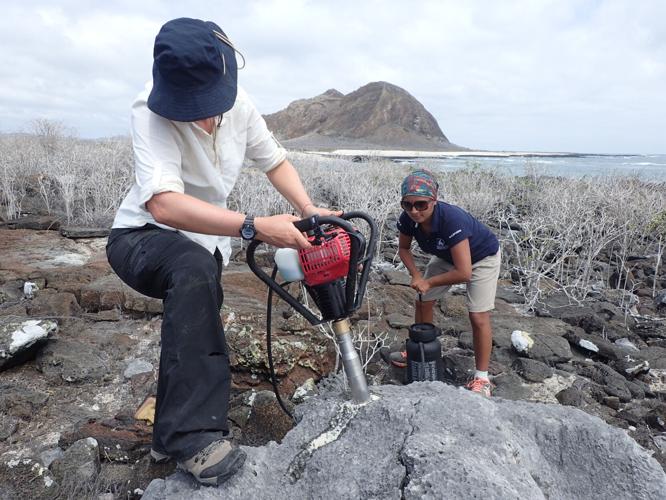
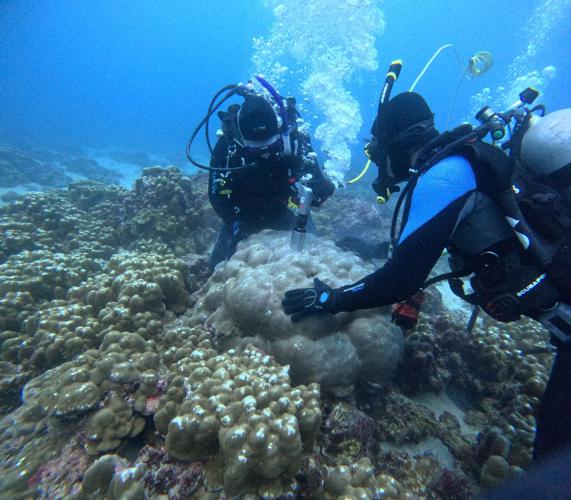
University of Arizona researcher Diane Thompson drills a core sample from an ancient coral in the Galapagos Islands, as Andrea Lema, formerly of Charles Darwin Research Station, looks on.
"We don't see a time in the past where El Niños have been as strong as today, and we show that the strength of El Niño changes in parallel with the warming of global temperature," said University of Michigan researcher Julia Cole, lead author of the study published last month in the journal Science. "Our findings tell us that the big El Niño events of the last 40 years are not normal in the context of the last thousand years."
People are also reading…
The research comes as the semi-cyclical phenomenon churns to life once again in the tropical Pacific, where water temperatures have been rising since June in what forecasters at the National Oceanic and Atmospheric Administration's Climate Prediction Center now expect to be a "very strong” El Niño event, maybe even a record-setting one.
The natural climate pattern occurs every two to seven years and impacts the weather in various ways around the globe, triggering droughts, flooding and heat waves, while intensifying the hurricane season in some places and weakening it in others.
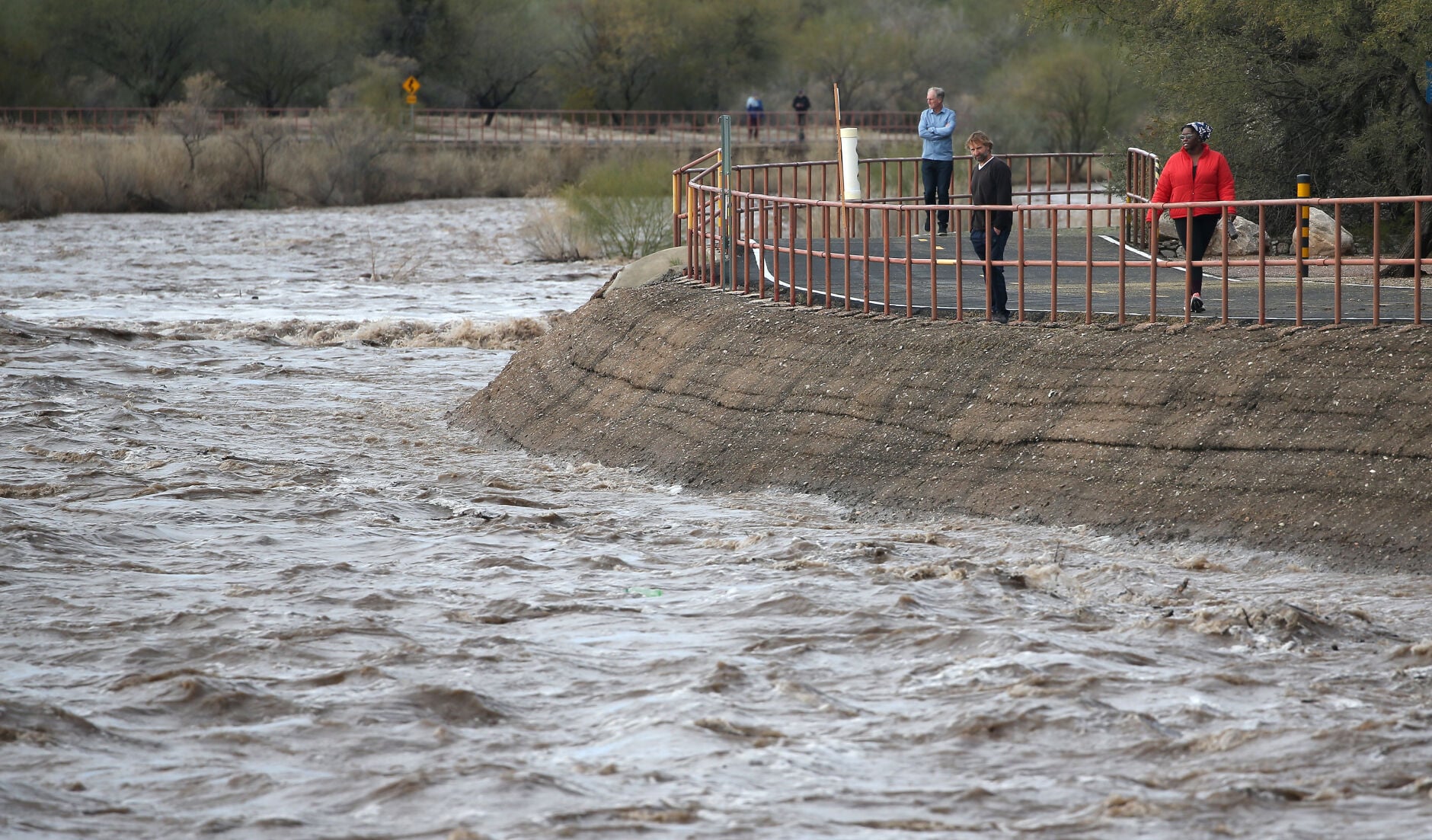
People watch winter storm runoff rushing down the Rillito River west of Craycroft Road in Tucson on Jan. 17, 2023. A strong El Niño this year could lead to wetter-than-normal conditions this fall and winter across Southern Arizona.
El Niño years often result in wetter winters across the southern U.S. — the desert Southwest included — and warmer, drier winters farther north into Canada, as the Pacific jet stream migrates south from its usual position.
The phenomenon can also spin up tropical cyclones, including the sort that occasionally funnels unseasonal moisture into Southern Arizona.
No guarantees
El Niño doesn’t guarantee more rain and snow for the Old Pueblo. But according to an analysis of the past 75 years by National Weather Service meteorologist Glenn Lader, Tucson saw more precipitation than usual from November through April during nine of the last 11 moderate to strong El Niño events.
"The question is not whether the current El Niño is going to happen, but how bad is it going to be, and how bad will the impacts be?" said Cole, a professor and chair of Michigan University’s Department of Earth and Environmental Sciences. "This event is superimposed on global warming, and it's likely to supercharge the temperature increase that we would normally see from greenhouse gases."
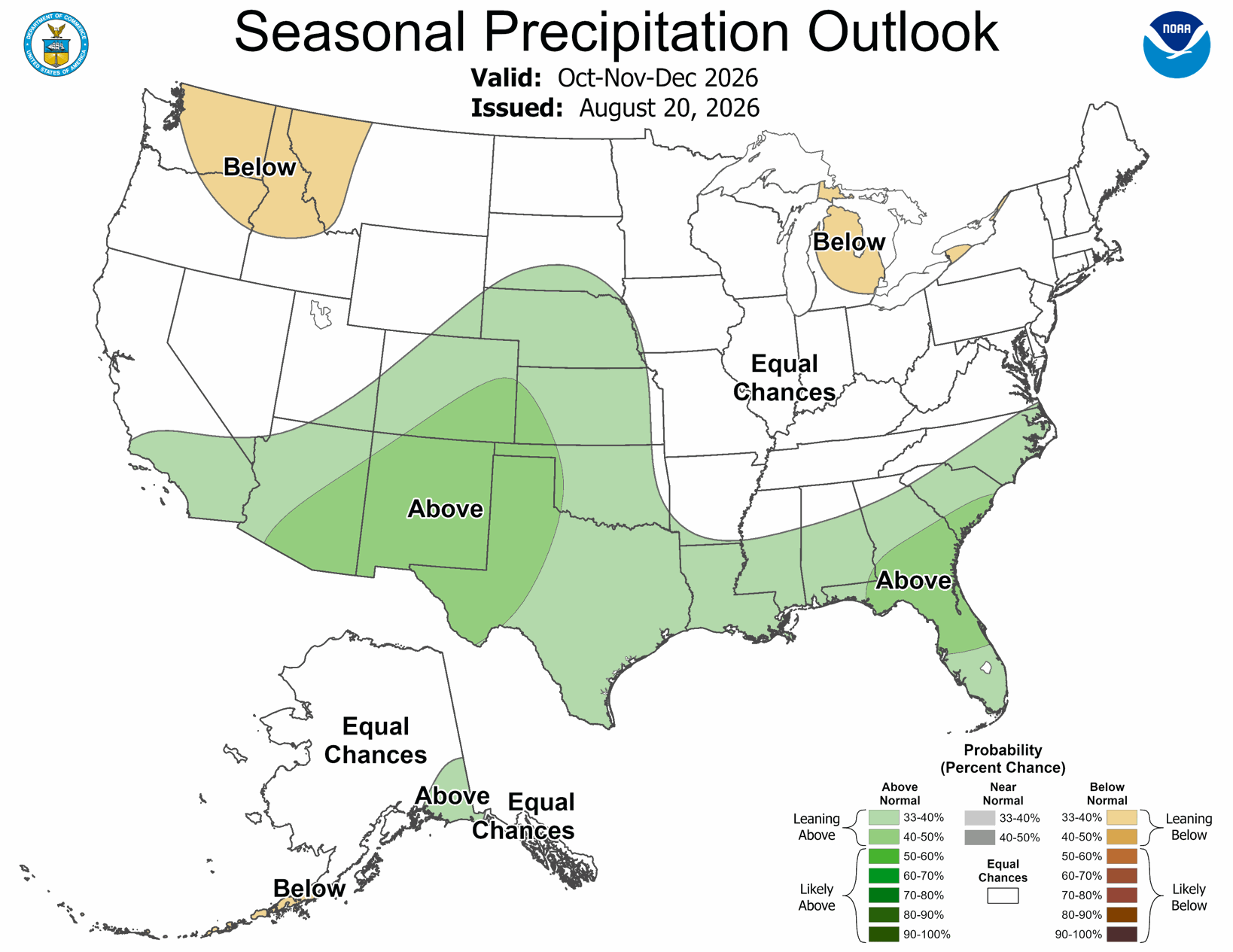
According to the latest forecast from the National Oceanic and Atmospheric Administration's Climate Prediction Center, Southern Arizona is likely to receive above-average precipitation from October to December as a result of a strong El Niño now building in the Pacific Ocean.
She and fellow researchers collected core samples from coral — both ancient deposits and living colonies — and used them to reconstruct past fluctuations in seawater temperature based on the chemical composition of the coral’s annual growth layers. They chose the Pacific island chain 600 miles west of Ecuador because that’s where El Niño has its largest impact.
"As the world's largest ocean basin, the Pacific has an oversized impact on the Earth's climate," said University of Arizona geosciences professor Diane Thompson, a co-author of the new study. "If we are going to understand how the Pacific is changing, we need to look in places that are right in the center of action, like the Galapagos."

Julia Cole, left, chair of the University of Michigan Department of Earth and Environmental Sciences, takes a sample from a coral reef in the Galapagos Islands, alongside fellow Michigan researcher Cameron Tripp.
The job of Thompson and her U of A team was to help pin down a possible cause for El Niño’s newfound strength.
She and fellow geosciences professor Marcus Lofverstrom used computer modeling to tease out whether the intensifying events of recent decades were the result of natural variations in an already variable phenomenon or if the change was being driven by atmospheric warming from the unchecked burning of fossil fuels.
The results were unmistakable, Thompson said. "What we're seeing is the last few decades being pretty exceptional relative to what we'd expect if El Niño was just behaving as it has in the past.”
Cole was surprised to see findings so definitive. "We kept adding records thinking, well, this is going to get more complicated, but it really didn't. This is such a clear story," she said. "We believe global warming is supercharging El Niño, and if that's true, then we expect stronger climate extremes that will amplify ecological, infrastructural and human losses."

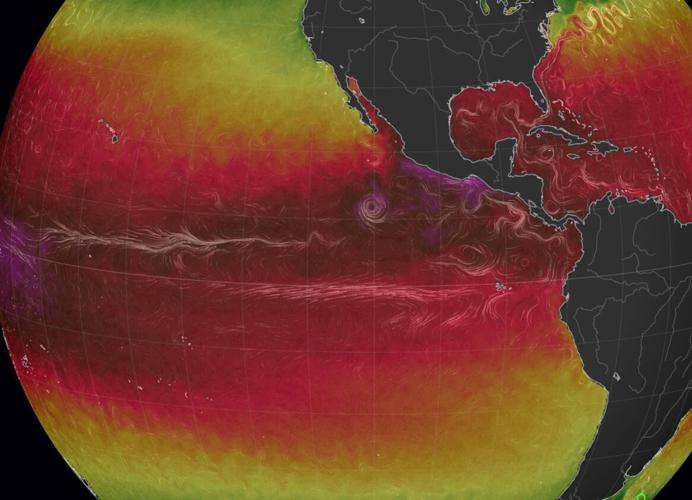
This Earth image from Nullschool Technologies illustrates sea surface temperatures and currents as the El Niño pattern was strengthening in June this year.
Coral crusade
The research was funded by the U.S. National Science Foundation and the United Kingdom Natural Environmental Research Council, with support from Galápagos National Park and the Charles Darwin Research Station on Santa Cruz Island.
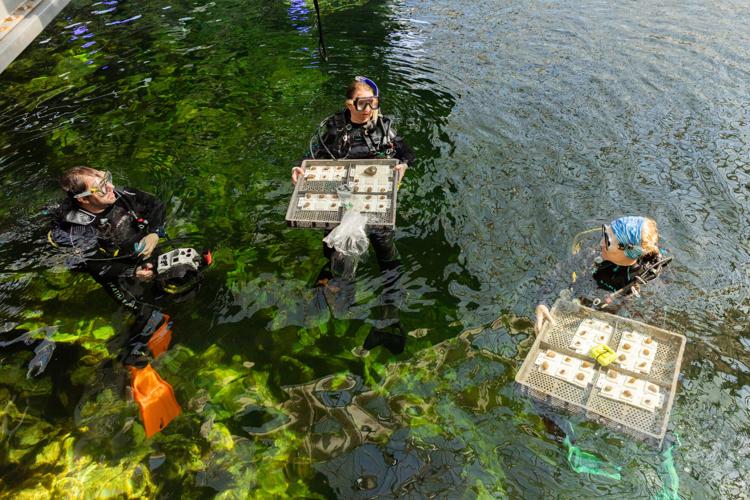
The project began in February, when Thompson and other divers in scuba gear attached more than 100 living specimens onto custom engineered “Coral Arks” suspended just beneath the surface of the Ocean Habitat’s roughly 690,000-gallon, indoor, saltwater sea.

Researchers, from left, Aaron Bugaj, Diane Thompson and Samantha King prepare to place live coral samples in the ocean biome at Biosphere 2 on Feb. 4.
Researchers hope to learn more about how two specific coral groups respond under predicted higher temperature conditions and how resilient types of coral might be deployed in the future to help coastal colonies recover from climate damage.
Thompson heads up the Tropical Climate and Coral Reefs Laboratory at the U of A. She also serves as director of marine research at the university-run Biosphere 2, 30 miles northeast of Tucson, where she’s leading efforts to develop a “super reef” anchored by temperature-resilient coral in the facility’s artificial ocean.
"We know that reefs can bounce back, as long as they have enough time to recover in between such events, but now those events are becoming almost annual in frequency," Thompson said back in February. "That's why the (coral research) community is almost desperate to come up with innovative solutions, moving from understanding the process, which we've been focused on for decades, to applying what I like to think of as the building blocks of resilience to intervene to help reefs."

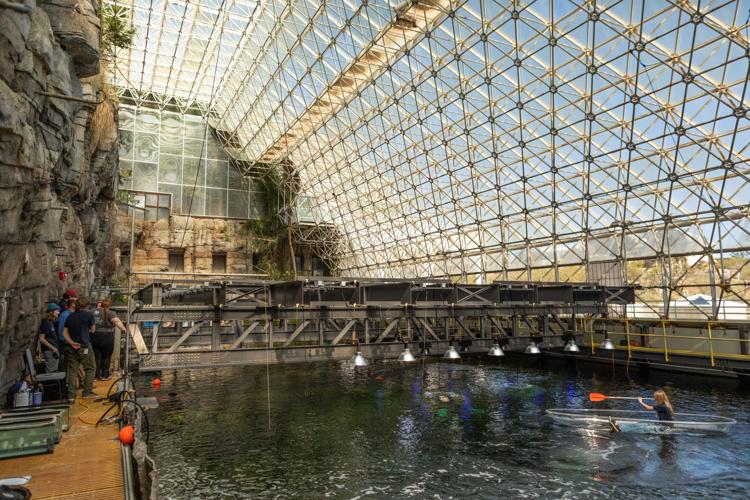
Researchers work in the Ocean Habitat inside Biosphere 2, 30 miles northeast of Tucson, on Feb. 4.
Time is of the essence.
In a monthly update published Thursday, NOAA is predicting continued sea-surface temperature increases in the equatorial Pacific as the current El Niño strengthens through the end of the year.
Forecasters now give it a 75% chance of developing into something historic that would “exceed the strength of previous El Niño events dating back to 1950.”