Elmer Brown was following two friends on his four-wheeler last November, hunting caribou across a frozen channel in northern Alaska when the ice gave way. All three plunged into the frigid water. One friend drowned, and Brown, 45, later died of hypothermia, leaving behind five children.
The friends had ventured onto the ice to hunt caribou, under pressure to make the most of shorter and less reliable hunting seasons, said Elmer's brother, Jimmy Brown.
It wasn't the first time the family had lost someone to the ice. The Brown brothers' father drowned in 1999 while seal hunting.

Elmer Brown, left, poses for a photo with his daughter Elizabeth in 2025 at the high school in Kotzebue, Alaska. Elmer Brown died in November of hypothermia after falling through the ice while hunting caribou.
They're among thousands who have died on ice across the Northern Hemisphere in recent decades as warming winters make conditions thinner and less predictable for those who fish, hunt and recreate on frozen lakes, rivers and coastal waters. March and April are particularly dangerous as winter conditions recede.
People are also reading…
The risks are especially acute in Alaska, where the unpredictable ice season disrupts traditional hunting practices for Indigenous communities and pushes people to take chances. Though some communities are using satellite imagery to assess conditions and social media to share ice observations, technology can't replace the predictability that generations once relied upon.
Transition seasons are deadliest
A 2020 study examined more than 4,000 winter drownings across 10 countries, including Canada, the U.S., Russia and Japan, over a 26-year period ending in 2017. It found drowning rates surged fivefold when winter temperatures rose to just below freezing. Deaths peaked in March and April, when reduced snow cover allows sunlight to penetrate the ice, melting it from within, said Sapna Sharma, a biology professor at York University and the study's author.

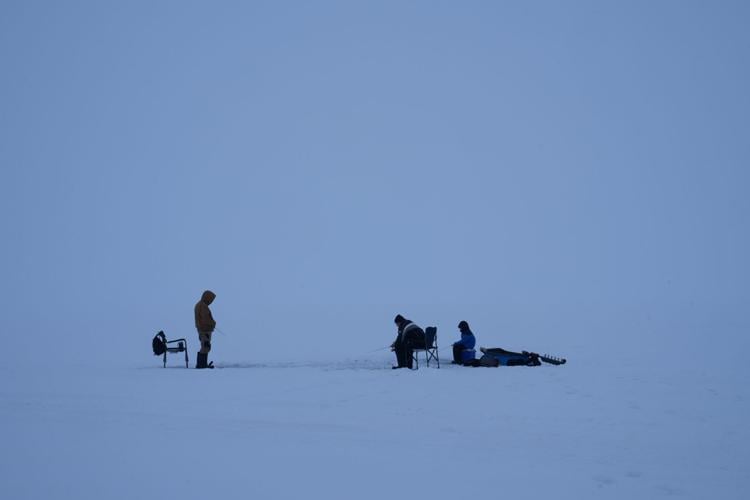
Fishermen cast their lines while ice fishing Jan. 7 on Lake Simcoe in the Innisfil area north of Toronto. Warming winters are making ice thinner and less predictable, studies show.
A 2013 study published in the Journal of Public Health found in Alaska alone, some 450 people fell through the ice between 1990 and 2010, with at least 112 deaths. Most accidents occurred in November and March — transition months when ice is forming or melting — while people were traveling or hunting.
The Brown brothers' hometown of Kotzebue, a predominantly Inupiaq community of 3,000, is perched on a narrow spit of land surrounded almost entirely by water. During winter, frozen waterways are the only way in and out, besides planes. There, average fall temperatures have warmed by 10 degrees Fahrenheit over the last 50 years.
To the south, in the Bering Sea, ice season is more than 40 days shorter on average than it was in the 1970s.

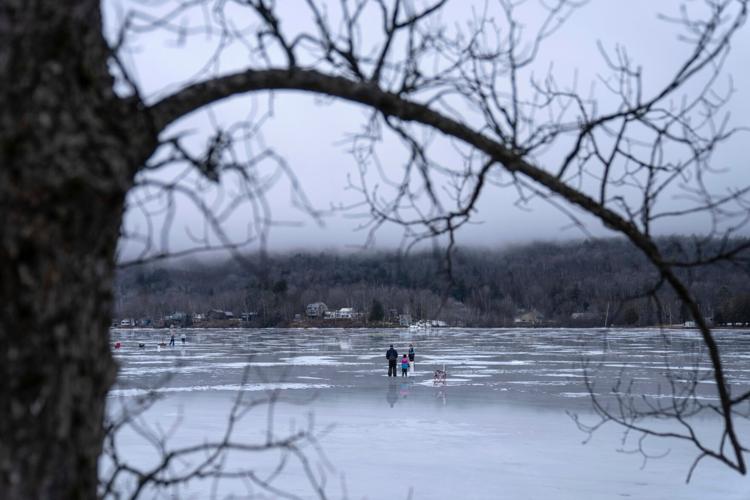
People ice fish March 3, 2024, on a frozen Lake Elmore in Elmore, Vt.
What was once a predictable early fall freeze-up has become later and more erratic: freezing, then breaking up, sometimes crumbling to open water for weeks before freezing again.
This unpredictability is eroding generations of ice safety knowledge. In a state where more than 80% of communities are not connected to the road system, extended transition periods — too slushy for boats, too unstable for snow machines — can leave villages with few options to hunt or travel.
A matter of food security
Earlier sea ice breakup has shortened Kotzebue's spring seal-hunting season by 26 days compared to a decade ago, research shows.
"Each winter, it gets more and more dangerous to be out on the ice," said Roswell Schaeffer, 78, one of Kotzebue's few Inupiaq who still hunts seals at the treacherous ice edge.
Three years ago, Schaeffer's 50-year-old son fell through the ice while traveling by snowmobile in spring. He sustained a serious brain injury and later died by suicide.

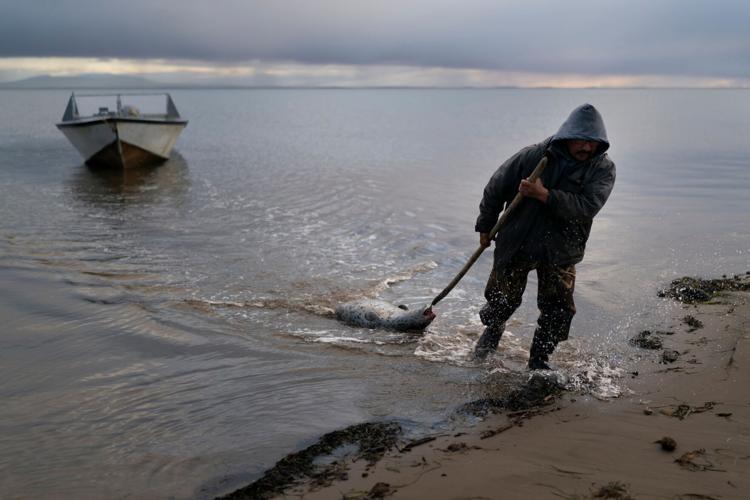
Seal hunter Wilbur Kuzuzuk, 53, drags a spotted seal, his only catch of the day, on Oct. 4, 2022 to the edge of the lagoon in Shishmaref, Alaska.
Schaeffer hopes to teach his great-grandson to hunt seals, but worries the rising danger will cause the tradition to fade.
The changes are creating difficult choices. Families once reliably hunted caribou by boat during their August to September migration, stocking freezers before winter. Now, herds often arrive in October or November, just as the ice begins its stuttering formation.
"Every day that people can't go hunting or fishing is one more day of the year where the community is more food insecure, because a whole day of opportunity is lost," said Alex Whiting, environmental program director for the Native Village of Kotzebue.

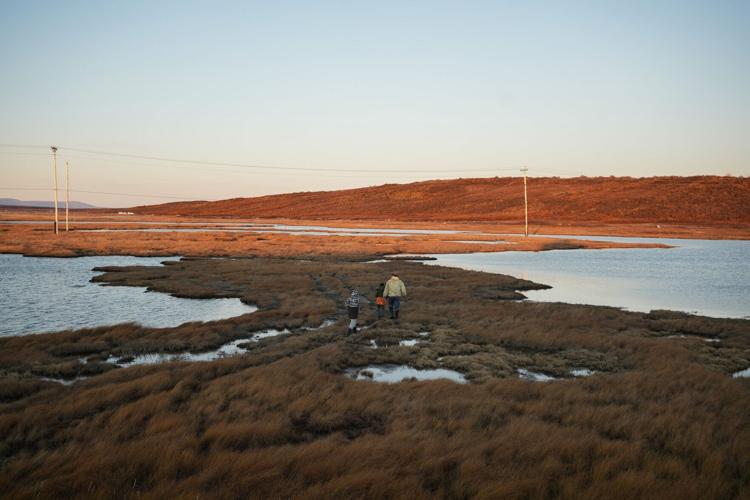
Roswell Schaeffer, an Inupiaq hunter and fisher, takes his great-grandson James Schaeffer, 7, and James' cousin Charles Gallahorn, 10, hunting Sept. 6 in Kotzebue, Alaska.
In the past, he said, when families could reliably hunt a half-dozen caribou in the fall, they could afford to wait until the ice was solid before heading out again. But with freezers empty and winter setting in, people are more willing to risk traveling on thin ice.
The changes also threaten the food chain. Sea ice fuels the spring algal blooms, which sustain the plankton, fish and other critters whales, walruses and narwhals feed on.
Inland, ice season on Alaskan lakes and rivers has also shrunk by several weeks, according to a decades-long analysis.
"The Arctic only works when it's frozen — that's why it's the Arctic," Whiting said. "Everything up here has evolved to be frozen for a majority of the year. And when that isn't the case anymore, it all starts to fall apart."

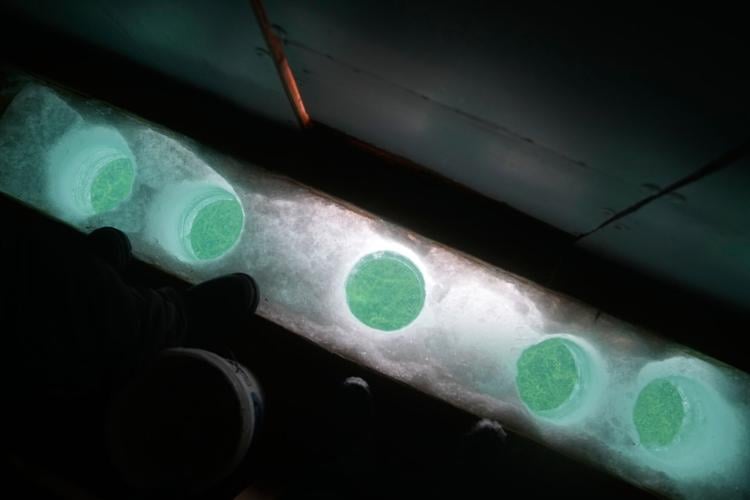
Holes for ice fishing are seen Jan. 7 on Lake Simcoe in the Innisfil area north of Toronto.
Globally, lakes are losing some 17 days of ice cover per century, at a rate that has accelerated sixfold over the past 25 years, research shows.
The risk of drowning will eventually decline — not because conditions improve, but because ice will largely disappear, said York University's Sharma.
"If we continue releasing greenhouse gas emissions at current rates, by the end of the century, thousands of lakes will no longer freeze and people won't fall through the ice," she said.
Feeling the winter blues? Here are some reasons why
Feeling the winter blues? Here are some reasons why

With winter comes cold weather, a reduction in sunlight, and the potential to feel a bit down. The winter blues are common and can cause tiredness and a shift in mood, though they don't normally hinder your ability to find enjoyment in life. Winter blues normally clear up on their own or can be aided by getting more exposure to daylight, vitamin D supplements, or by adding certain foods such as omega-3 fatty acids and protein to your diet.
Seasonal affective disorder (SAD) is much more than winter blues, it is a form of depression related to the change in seasons and the shortening of daylight hours. It occurs in areas of the world where there is less sunlight during specific seasons. This lack of sunlight can throw circadian rhythms—which influence our sleep-wake cycle—out of whack, and cause deficiencies in certain vitamins and hormones in the brain such as serotonin, which helps to regulate mood.
SAD is much more prevalent in northern latitudes of the world than southern areas. It usually occurs during the late fall and winter months. Symptoms include changes in mood, fatigue, depression, feelings of hopelessness, and social withdrawal. The link between seasonal depression and light was first identified by National Institutes of Health researchers in the early 1980s. . Treatment includes behavioral changes such as increasing access to daylight or clinical approaches such as light therapy (phototherapy), talk therapies like cognitive behavioral therapy, and medications such as certain antidepressants.
Citing studies from Mount Sinai’s REVOLV Study, which was sponsored by View Inc.; the Journal of Psychiatry and Neuroscience; the Endocrinology and Metabolism Clinics of North America; and other health organizations, View compiled a list of reasons you might be feeling the winter blues and how you can combat it.

Circadian rhythms are not aligned

The body’s circadian rhythm, or internal clock, controls the sleep-wake cycle. With the changing of seasons and the decrease in sunlight that accompanies winter, circadian rhythms can be thrown out of whack. This can impact sleep, and that can affect your overall mood and mental health. According to Harvard Health, not only do circadian tendencies determine your sleep cycle—whether you are a night owl or a morning person—but they can also impact a person’s “choice of emotional coping skills, such as assertiveness or rationalization, and their predisposition to psychological disorders.” When irregular circadian rhythms interfere with one’s sleep and overall ability to function, it can also lead to mood disorders and seasonal affective disorder.
Unbalanced serotonin levels

The decrease in sunlight during the winter months can cause a reduction in serotonin levels. Serotonin is a chemical in the brain and a key hormone that influences mood and helps with mood stabilization. It also plays a role in sleep and digestion. When serotonin levels drop or are unbalanced, it can impact our mood and bring on the blues, trigger depression, and even cause SAD. Both exercise and exposure to bright light can help balance and increase serotonin levels in the winter months.
Lack of vitamin D

Sunlight stimulates the production of vitamin D, which can mean a deficiency of the essential micronutrient during winter’s shorter days and diminished sunlight.
Vitamin D plays a major role in warding off depression and regulating mood and is thought to promote serotonin activity. A vitamin D deficiency can impair brain health and cognitive functioning and can affect mood and behavior. Adding a vitamin D supplement can help with depression and mood regulation, but it can take up to three or four months to see the benefit. Age can also impact how much vitamin D your body produces.
Too much melatonin during the day, not enough at night

While your body often produces too little of certain vital vitamins and hormones, like serotonin, during the winter months, it can also produce too much of others. In the winter, producing too much melatonin during the day can lead to sluggishness and low energy levels. Melatonin is a hormone made by the pineal gland that is produced in response to darkness, and it can impact sleep. With the shorter days during the winter months, however, the body often produces too much melatonin during the day and not enough melatonin during the evening, causing sadness and depression. Opening your curtains or blinds to let in more daylight, especially early in the morning, can help regulate melatonin levels, resulting in 11% lower anxiety and 9% lower stress levels.
Less physical activity

During the winter months, many people find they get less physical activity and exercise due to the cold, snowy, and icy weather conditions. Exercise can increase endorphins and serotonin levels in the brain, which help to improve one’s overall well-being and mood. Lack of physical activity can decrease the production of these feel-good chemicals in the brain. Exercise is an effective tool in treating both the winter blues and seasonal affective disorder. To improve mood, taking a brisk walk on a sunny winter day or joining a local gym can be a good way to chase away the winter blues.
This story originally appeared on View and was produced and distributed in partnership with Stacker Studio.