A police officer admitted he “didn’t look too much” at the vehicle paperwork a woman handed him through her car window before ultimately beginning a high-speed chase that killed her and her passenger.
A previous Lee Enterprises Public Service Journalism Team and Tulsa World investigation revealed that the Mannford, Oklahoma, officer made claims that the Bristow mother tried to run him over with her car as she fled a traffic stop over a paper tag issue. Those claims aren’t supported by video evidence.
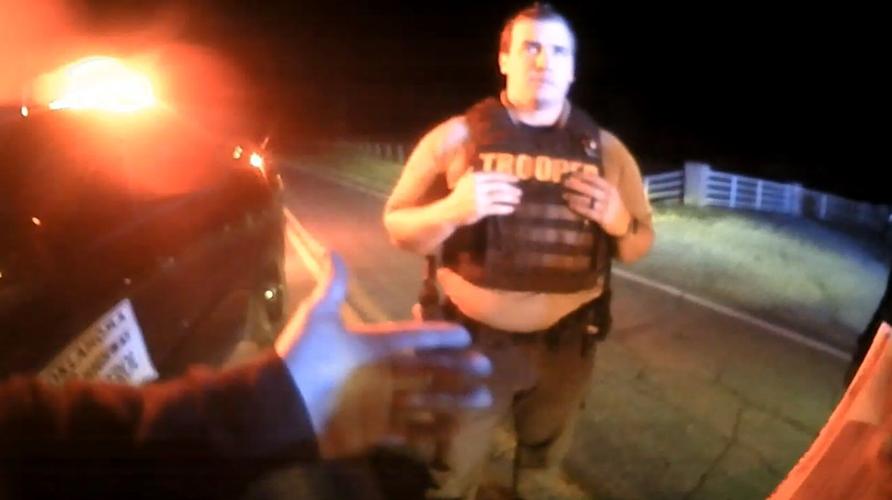
As previously reported, police body cam video shows officers were beside — not in front of — the vehicle as the driver pulled away, with room between the officers and the fleeing vehicle.
Newly acquired police records now indicate that the officer admitted only briefly reviewing paperwork he requested from the woman before deciding to arrest her and ultimately engaging in the pursuit.
People are also reading…
Those records also indicate one of the officers later involved in the chase didn’t believe his vehicle was fully suitable for the pursuit and that there were communication difficulties between dispatchers and officers that night.

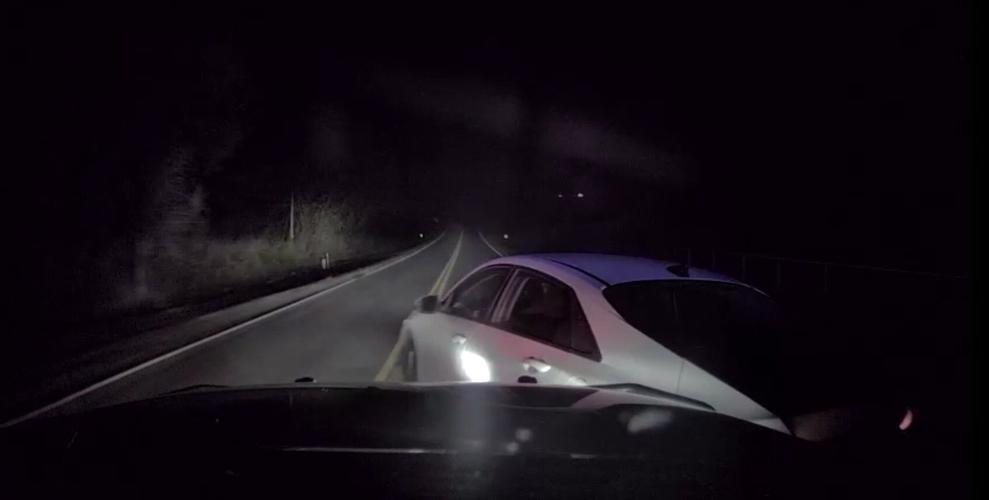
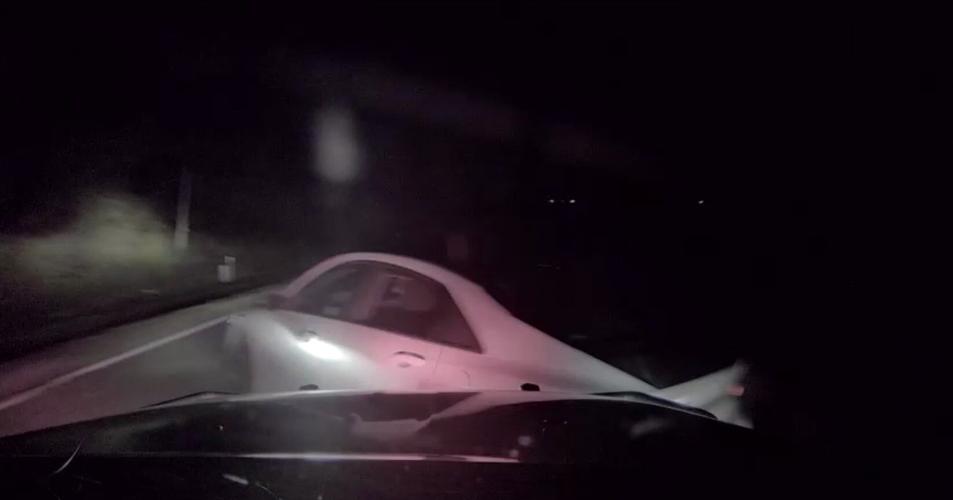
Oklahoma Highway Patrol Trooper Robert Darnell hits and spins out the car driven by Crystal Marie Price the night of Nov. 25, 2024, in Creek County. The car wrapped around a tree in a ditch, killing Price and her passenger, Dario Hendrix.
In its reports, OHP accuses the passenger of the crime of eluding police, without offering evidence to support that conclusion.
An Oklahoma Highway Patrol trooper used a maneuver that forced the woman’s car to slam into a tree the night of Nov. 25, 2024, in rural Creek County, ending a lengthy high-speed chase. Crystal Marie Price from Bristow and her passenger, Dario Hendrix, were both killed. Price was a mother of three boys.

Oklahoma Highway Patrol Trooper Robert Darnell hits and spins out the car driven by Crystal Marie Price the night of Nov. 25, 2024, in Creek County. The car wrapped around a tree in a ditch, killing Price and her passenger, Dario Hendrix.
“She did have some paperwork on the vehicle,” Mannford Officer Tristan Stacks told highway patrol investigators during an interview after the incident. “To be honest, I didn’t look at it too much. I had it in my hand and then set it in the car.”
The Lee Enterprises Public Service Journalism Team and Tulsa World obtained audio of the interview from the highway patrol pursuant to an open records request. The World received the case file after filing a complaint with the Public Access Counselor office of the Attorney General because OHP hadn’t provided any records in nine months after the deadly maneuver.

Oklahoma Highway Patrol Trooper Robert Darnell listens to Mannford Police Officer Tristan Stacks (not pictured) tell his story about what happened during his traffic stop with Crystal Marie Price and her passenger, Dario Hendrix, the night of Nov. 25, 2024, in Creek County. Darnell intentionally hit Price's car, which caused her to wreck and resulted in the deaths of Price and Hendrix.
Highway Patrol spokeswoman Sarah Stewart and Assistant General Counsel Christa Alderman didn’t acknowledge receipt of the newspaper’s open records request. And those two, along with General Counsel Sunne Day, didn’t respond to a reporter’s follow-up email four months later about the status of the records request.

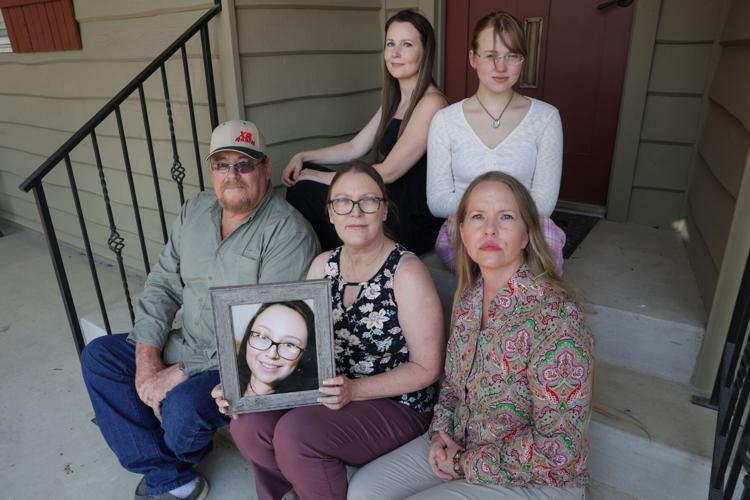
David VanOrsdol, front left, Julie Byrne, Amber VanOrsdol, KayCee Ragland, back row left, and Leigha VanOrsdol with a portrait of Crystal Price.
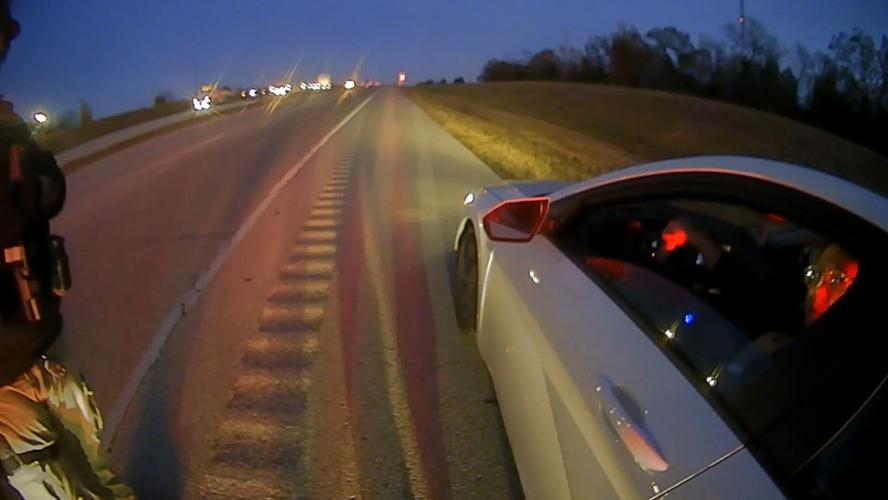
Stacks tried to arrest Price for an unregistered vehicle and a suspended driver’s license after accusing her of having a “fictitious” or “fake” paper license plate. Price denied the allegations during the 10-minute traffic stop.
He had Price’s information via her driver’s license and could have opted to seek an arrest warrant rather than pursue her and Hendrix for 36 minutes.
Stacks in his interview added that he knew Price’s paperwork had the car’s vehicle identification number on it.
Broadly, the pursuit was contrary to Mannford’s policies and national best practices, both of which discourage pursuits for minor reasons or where the danger to life and limb outweighs the benefits of apprehension. They both specify that knowing the suspect’s identity can be cause not to chase.
On the other hand, OHP places no policy limitations on troopers who engage in chases after gutting its pursuit policy from 10 pages to two pages nearly two years ago.
Tulsa World and Lee Enterprises’ Public Service Journalism team previously reported how Stacks and Mannford Officer Connor Harrison each wrote in their reports that Price swerved at them and struck Stacks “with the rear quarter panel” of her car. Body cam video evidence doesn’t appear to support this claim.
The police report doesn’t document any injuries to Stacks. Multiple sections of the report reserved for recording injuries were left blank.
On the night of the chase, neither officer voiced that Stacks supposedly had been hit, according to body cam video. They only had accused her of swerving at or toward them.

Crystal Marie Price looks back at Mannford Police Officer Tristan Stacks (not pictured) as she rolls up her window moments before she drives off the night of Nov. 25, 2024, in Creek County. Price didn’t voluntarily exit her car, so Stacks had threatened to physically pull her out and put her in jail for an unregistered vehicle and a suspended license. Mannford Police Officer Connor Harrison is partially in the frame.
Body cam evidence shows both officers were off to the left side of Price’s car when she drove off — neither officer in her path — and her wheels stayed straight.
Mannford Police Chief Jerry Ridley and Deputy Chief Brett Gipson didn’t respond to questions or provide any comment for this story.
Officer’s vehicle ‘didn’t line up’ with what he needed
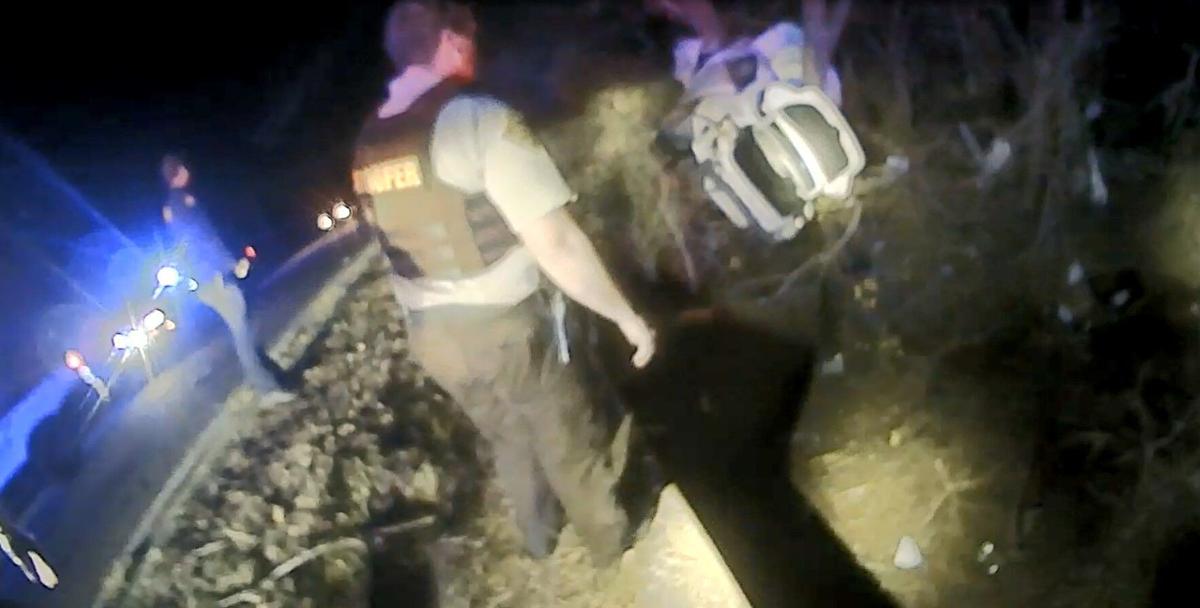
Ultimately, OHP Trooper Robert Darnell ended the chase by using his patrol SUV to intentionally hit and spin out the 2024 Hyundai Elantra, which went into a ditch and wrapped around a tree. Price, 36, and Hendrix, 43, were found dead on scene.

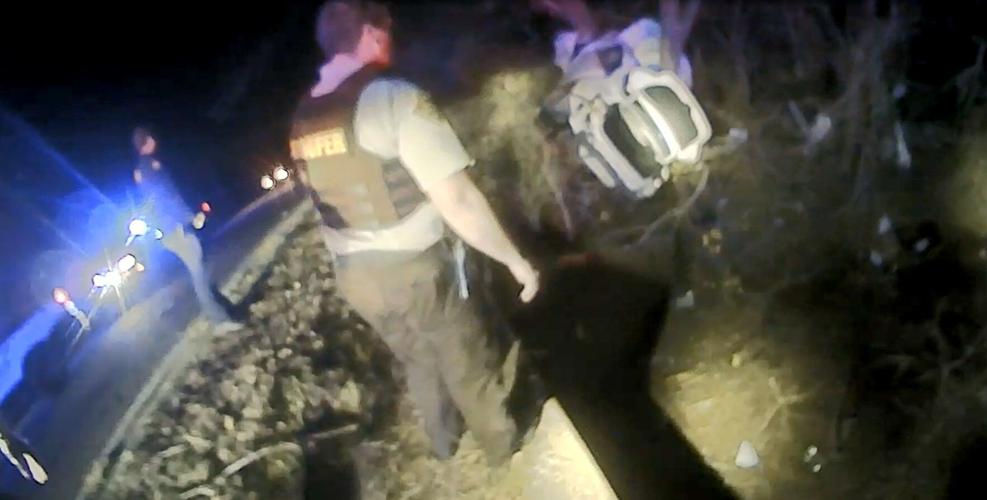
Law enforcement officers approach a wrecked car with guns drawn after Oklahoma Highway Patrol Trooper Robert Darnell hit it and spun it out into a ditch, where it smashed into a tree the night of Nov. 25, 2024, in Creek County, killing two people.
No records provided to the World give or estimate the speed at which Darnell hit the Elantra. Dash-cam video shows some vehicle debris coming off directly after he impacts the car.
The OHP pursuit report states that Darnell’s fastest speed during the pursuit was 100 mph, and Price’s was 105 mph.
It also says that Darnell was involved for one minute and 53 seconds, but his dash cam video shows he pursued for six minutes. He had spent about another nine minutes trying to find and position himself to join the chase.
Darnell later told Highway Patrol investigators that the capability of his patrol SUV, a Dodge Durango, “just didn’t line up with what I needed.” He said he didn’t have the capacity during turns to be able to do a “low-speed TVI” — or Tactical Vehicle Intervention in which he would contact and spin out the car.
“There was a few turns to where we turned to the right, where I tried to accelerate to get a low-speed TVI, but my Durango’s capabilities — I just couldn't catch up to her, and she just kept pulling away,” Darnell said. “So I couldn't perform the low-speed TVI.”
The Highway Patrol declined to release records that apparently pertained to its review of Darnell’s actions. The agency didn’t provide its review board’s report on the matter.
OHP Public Information Officer Sarah Stewart and Assistant General Counsel Christa Alderman didn’t respond to questions for this story.
In a section of the use-of-force records reserved by OHP to document recommendations and whether the force used was within policy, the agency only noted that Darnell was cleared of criminal wrongdoing by Creek County District Attorney Max Cook.
“I knew that with the danger she was posing to the public and to myself and other officers and to herself, that the pursuit needed to be stopped as soon as possible,” Darnell told OHP investigators. “Like the commissioner (Tim Tipton) says, ‘We don't chase cars. We close the distance to perform the TVI or some type of stop — stopping of the pursuit.’”
Communications and oversight breakdown?
The newly acquired Oklahoma Highway Patrol records also revealed issues on the oversight and monitoring aspect of the pursuit.
OHP dispatch for the Tulsa area wasn’t aware that a trooper was chasing in its jurisdiction, and a dispatcher in Oklahoma City who heard Darnell on the radio wasn’t able to monitor the pursuit outside of her jurisdiction.
OHP policy requires that a supervisor or commanding officer monitor car chases.
Trooper Darnell appeared to express surprise in body-cam footage on scene when Officer Stacks told him there were two occupants inside the car.
Darnell later told highway patrol investigators that he didn’t know there had been a passenger and that it was never called out on his radio.
Stacks did radio to his Mannford dispatch that Price had a passenger at about three minutes into what would become a 36-minute chase.
OHP audio reviewed by the Lee Public Service Journalism Team and Tulsa World suggests logistical problems and dispatch communication issues.
An Oklahoma Highway Patrol dispatcher stationed in Oklahoma City heard about the high-speed pursuit because Darnell was assigned to Interstate 44 and on its radio channel.
OHP’s Troop B dispatch — which handles the Tulsa area, including Creek County — didn’t know about the chase.
The OHP dispatcher in Oklahoma City had to call Mannford dispatch for information.
“I don’t know anything about it,” she told a Mannford dispatcher, according to dispatch audio. “(Darnell) just came over the radio and said a bunch of stuff, and that’s why I’m trying to get clear on what’s going on.”
The OHP dispatcher requested the location, vehicle description and reason why Mannford officers were pursuing. She didn’t ask how many occupants were in the car, and the Mannford dispatcher didn’t volunteer that information.
The OHP dispatcher said she didn’t handle car chases in Troop B’s area, making her unfamiliar with the roadways.
She told the Mannford dispatcher that they would have to stay on the line together because she couldn’t monitor the Tulsa area from Oklahoma City.
“You’ll have to tell me all that stuff they’re saying because I can’t hear it very well (on the phone),” the OHP dispatcher said, according to dispatch audio.
Violation of pursuit policy
Oklahoma Highway Patrol Troopers Heath Linn and Whit Cochran interviewed Mannford Officers Tristan Stacks and Connor Harrison separately.
The two investigators didn’t question the apparently false claims made by Stacks and Harrison that Price swerved at them and hit Stacks.
Harrison told them that he never activated his body camera. That failure is a violation of Mannford police policy, which states that the recorder must be turned on for “all enforcement and investigative contacts including stops and field interview situations.”
Mannford police administration didn’t discipline Stacks or Harrison for anything regarding the case.
Mannford’s policy generally discourages “extended pursuits” of violators for misdemeanors that don’t involve violence or weapons “independent of the pursuit.” And in deciding whether to discontinue, officers should consider if the suspect’s identity is known, as well as whether the chase risks outweigh the need for “immediate capture.”
The police’s decision to chase Price is contrary to best practices as outlined by the Department of Justice and Police Executive Research Forum in a 2023 report.
Its recommendations encourage agencies to direct officers not to chase if the suspect’s identity is known, the suspect can be apprehended later and if delayed apprehension doesn’t significantly increase the risk to the community.
More broadly, the report recommends police engage in car pursuits only if an officer knows a violent crime has been committed and an imminent threat exists to the public based solely on that crime — not the suspect’s driving behavior.
Additionally, the report says the “controversial” maneuver to spin out a fleeing vehicle “should be prohibited under all but very narrowly defined circumstances” because of how risky it is, the extensive training necessary to use it and a lack of empirical evidence to show under what conditions it can be performed safely.
However, Oklahoma Highway Patrol extensively uses the maneuver, often called a tactical vehicle intervention (TVI) or pursuit intervention technique (PIT), as Trooper Darnell did to Price and Hendrix.
OHP performs it three times more than all other Oklahoma law enforcement agencies combined — as reported by the World and Lee in a four-part investigative series.
‘This is a normal mom’
During the high-speed chase, Mannford Officer Tristan Stacks claimed to someone on his cellphone that Crystal Price “almost ran me over.” The claim isn’t supported by the body cam footage.
About a minute later he told dispatch over the radio that Price had “tried to run over officers.”
He repeated the claim twice more at the fatality scene.
During the traffic stop, Stacks accused Price of having a “fictitious” or “fake” paper license plate. He told her it had been “colored on” and that the date — Sept. 31 — wasn’t a real date.
Price responded that her tag was real and suggested her ex-husband might be to blame for the date discrepancy. Nonetheless, she acknowledged it was expired.
KayCee Ragland, one of Price’s two younger sisters, said neither the Highway Patrol nor Mannford police were forthcoming with information for the family.
Price’s family described her as their glue and a mother who lived to take care of her boys, ages 9, 11, and 15, in an interview with the World and Lee in June.
Ragland recalled how awful social media comments were from the public.
“They think they know the story, but people who know her know she’s not some criminal,” Ragland said of Price. “We promise you, this is a normal mom, and we don’t understand how it even got to that point.”
Hendrix had been homeless for some time in Oklahoma after he left California for an attempt at a fresh start as he grappled with alcohol addiction and mental health issues.
Hendrix’s cousin, Angela Miller (Zittenfield), who lives in Sand Springs, recalled how much he enjoyed making street tacos, sitting under trees and playing board games.
Meshica Johnson said Hendrix aimed to become a better person for himself and his kids — but law enforcement took away that chance.
“Here in California, you get pulled over for an expired tag, they give you a ‘fix-it ticket,’” Johnson said. “You go and you take care of it. You don’t kill them.”
Corey Jones of Tulsa is a member of Lee Enterprises’ Public Service Journalism Team. corey.jones@lee.net