WASHINGTON — Democrats seek to reclaim Congress, but lingering divisions from a bruising run-up to the Nov. 3 election threaten to imperil the party's attempt to claw back power from President Donald Trump's Republicans.
Democrats sought to move past the bad blood of the primaries, but in several competitive states, influential party figures withheld endorsements or so far declined to campaign with nominees.
In Maine, the governor has yet to endorse the Democratic Senate candidate. In Texas, a congresswoman declined to campaign alongside the state representative who defeated her in the Democratic Senate primary. In Michigan, establishment centrists steered clear of the party's progressive Senate pick. In New York, victorious democratic socialists criticized congressional Democrats for joining Republicans in condemning socialism. In Florida, the party has yet to rally behind its Senate nominee.
People are also reading…
"Whether you are a progressive or an establishment Democrat or a conservative Democrat, we all have a vested interest in getting every single person over the finish line in November," said U.S. Rep. Summer Lee, a progressive Pennsylvania Democrat up for reelection.
If Democrats fail to unify and win at least one chamber, she warned, "all of our work after that is going to be harder."
Democrats' best path to a Senate majority requires defeating Susan Collins in Maine. She is widely considered the most vulnerable Republican senator in the country. But former Maine Senate President Troy Jackson, the Democratic nominee, is running without the endorsement of Gov. Janet Mills, a onetime Senate candidate who hoped to unseat Collins herself. Mills' office did not respond to a request for comment.
"I would say they're mostly unified," Jim Melcher, a political science professor at the University of Maine at Farmington, said of Maine Democrats. "The one piece of it that stands out is that Janet Mills has not endorsed Troy Jackson."
Contacted by Reuters, the Maine Democratic Party did not directly address Mills' role but cited turnout for its nominating process and energy on the ground as evidence of unity. "Maine Democrats are united and focused on winning in November," said Devon Murphy-Anderson, the state party's executive director. "Troy has spent his career fighting for working Mainers and there is real energy behind his campaign to defeat Susan Collins."
Former rivals in Texas

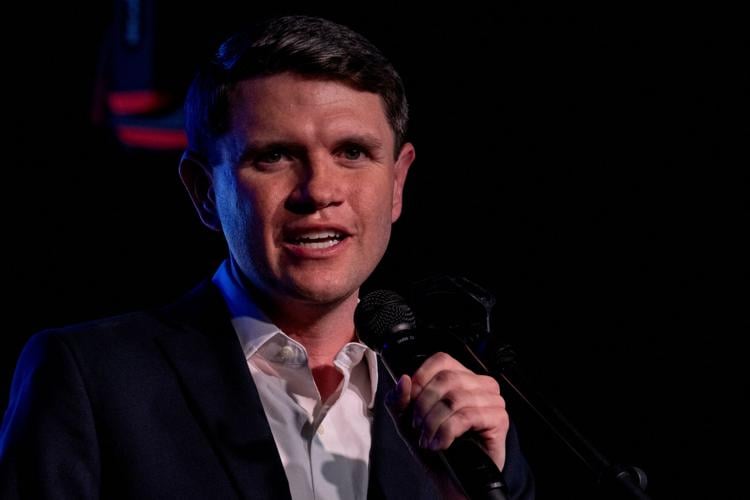
Democratic Senate candidate James Talarico speaks May 29 during a rally in San Antonio, Texas.
In Texas, U.S. Rep. Jasmine Crockett pledged her support to state Rep. James Talarico, who defeated her in the Senate primary and will take on Republican Ken Paxton. But Crockett repeatedly rejected Talarico's overtures for the two to campaign together, even declining to introduce him at Texas Democrats' state convention in June.
Crockett drew criticism this month for appearing on stage in Texas with R&B singer Chris Brown but not with Talarico, who could become the first Democrat in decades to win a statewide race in Texas. In 2009, Brown pleaded guilty to assaulting then-girlfriend Rihanna.
Crockett said she will focus on lower-profile races, arguing that will also benefit Talarico's Senate campaign.
"As the Democratic nominee, I trust that he has a plan," she told CBS News this month. "I know that their plan wasn’t necessarily to include his opponent."

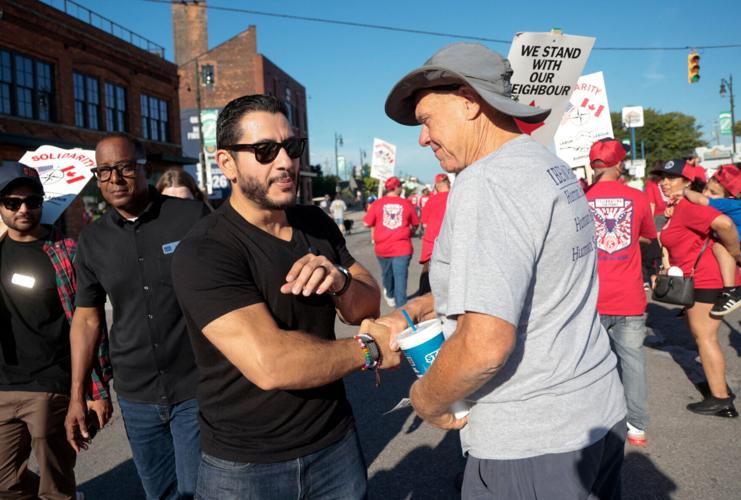
Democratic candidate for U.S. Senate Abdul El-Sayed greets attendees Sept. 7 during the Labor Day Parade in Detroit, Mich.
'Full support' to El-Sayed
In Michigan, lingering divisions centered on Democratic Senate nominee Abdul El-Sayed, a progressive who narrowly leads Republican Mike Rogers in polling in one of the party's must-win states. Some Democrats expressed discomfort with El-Sayed's association with controversial streamer Hasan Piker and with his rhetoric on Israel and Jews.
After their closely contested Senate primary, U.S. Rep. Haley Stevens of Michigan offered her "full support" to El-Sayed. An El-Sayed campaign adviser told Reuters the two camps are in regular communication and the campaign sees Stevens "as a critical member of the coalition that will beat Mike Rogers."
But it’s unclear whether Stevens will campaign with El-Sayed, and others in the party were openly critical.
U.S. Rep. Hillary Scholten and state Sen. Jeremy Moss, the Democratic nominee for a congressional seat, have not endorsed El-Sayed. Neither of their campaigns immediately responded to a request for comment.
Joseph Geevarghese, executive director of Our Revolution, a group that works to elect progressive candidates, said there's a double standard when progressives win against establishment candidates.
"The establishment expects progressives to fall in line when they prevail at the ballot box, but when progressives win, there are some signs of unity, but the entire establishment doesn’t really fall in lockstep behind our candidates," he said. "I think that hurts our ability to do job No. 1, which is to beat the Republicans in November."
Others see the tensions differently.
"When you run a campaign that completely (expletive) on the establishment and then you win that campaign … then you turn around and say, 'I need this machine in order to win,' it is a little bit disingenuous," Democratic consultant Rodell Mollineau said.
Targeting democratic socialists ‘like me’
The divisions surfaced on Capitol Hill this month when eight moderate Democrats joined Republicans in approving a resolution condemning socialism, drawing criticism from New York democratic socialists Darializa Avila Chevalier and Claire Valdez, who are poised to win U.S. House seats in November after defeating establishment-backed rivals in their primaries.
"This resolution was aimed squarely at democratic socialists like me," Chevalier said. "We don't need a tent that shrinks from its own history. We need a unified party that takes on corporate power, gets money out of politics and delivers for working people."

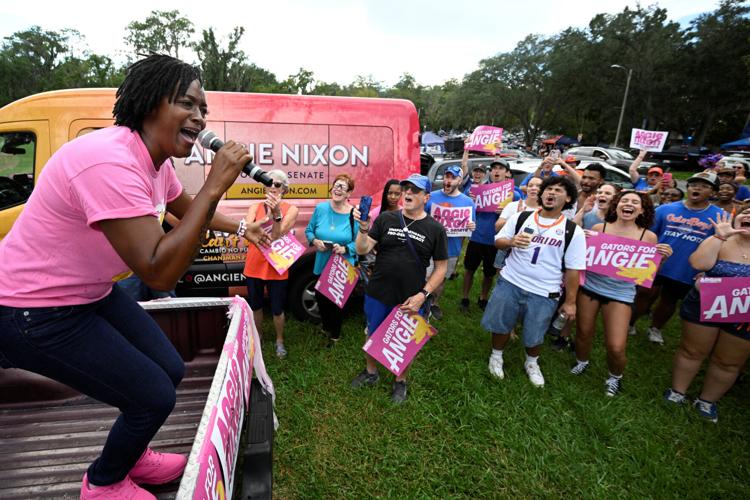
Supporters react Sept. 5 as Democratic U.S. Senate candidate Angie Nixon, left, campaigns on the campus of the University of Florida in Gainesville.
Disunity in Florida
In Florida, Democratic Senate nominee Angie Nixon, a democratic socialist, defeated the better-funded retired Lt. Col. Alex Vindman in August.
Vindman said he would stand beside her "in the fight against" Republican Sen. Ashley Moody, and he donated $825,000 to help Democratic candidates, including $400,000 to the state party to support Nixon and other Florida Democrats.
But it's less clear whether the party is as supportive of Nixon.
"We still have yet to see Nikki Fried, the chair of the Florida Democratic Party, come out and unequivocally and full-throatedly support Angie Nixon," said Derrick Scott, chair of Florida's Escambia County Democratic Party.
A Democratic Party spokesperson noted Fried recently joined Nixon and another statewide candidate for a joint news conference. The spokesperson said the party is working closely with Nixon and is frequently in touch with her team.
Chanae Jackson, the Nixon campaign's former organizing director, said voters are frustrated with party leaders who underestimated Nixon and Democratic organizations too often seek Black voter turnout without building durable support for Black-led campaigns.
"They want our labor, but they don't want our leadership," she said. "They want us to work like a dog while they take credit for it."