

CAPE CANAVERAL, Fla. — The cosmos is offering up a double feature in August: a pair of supermoons culminating in a rare blue moon.
Catch the first show Tuesday evening as the full moon rises in the southeast, appearing slightly brighter and bigger than normal. That's because it will be closer than usual, just 222,159 miles away, thus the supermoon label.
The moon will be even closer the night of Aug. 30 — a scant 222,043 miles distant. Because it's the second full moon in the same month, it will be what's called a blue moon.
"Warm summer nights are the ideal time to watch the full moon rise in the eastern sky within minutes of sunset. And it happens twice in August," said retired NASA astrophysicist Fred Espenak, dubbed Mr. Eclipse for his eclipse-chasing expertise.
The last time two full supermoons graced the sky in the same month was in 2018. It won't happen again until 2037, according to Italian astronomer Gianluca Masi, founder of the Virtual Telescope Project.
People are also reading…
- Ariz., Calif., Nev. announce plan to save Colorado River water
- Court rules Arizona AG Kris Mayes illegally withheld information
- Tucson cuts off water for Project Blue, demands payback
- Tucson's newest Shake Shack gets neighbors
- Chip Hale among Arizona baseball coaching legends to fall on hard times | Greg Hansen
- Former FAU rim protector Devin Williams reportedly visiting Arizona men's basketball
- Weather experts: AZ could see rainy summer
- Pressures on public schools prompt closures
- Despite losses, early projections still rate Arizona basketball highly in 2026-27
- Motorcyclist killed in crash on Tucson's southeast side
- Tucson-area man in domestic incident killed in crash
- Mexican gray wolf crosses Arizona-Mexico border at one of the last gaps in the wall
- Massive Grand Canyon fire could sway wildfire tactics in Arizona
- Could a massive pipeline from the East solve Arizona's water woes?
- Teen faces charges in deadly Tucson crash

A commercial airliner flies July 3 in Chicago in front of the first of this year's four supermoons.
Charles Rex Arbogast, Associated PressMasi will provide a live webcast of Tuesday evening's supermoon as it rises over the Coliseum in Rome.
"My plans are to capture the beauty of this … hopefully bringing the emotion of the show to our viewers," Masi said in an email.
"The supermoon offers us a great opportunity to look up and discover the sky," he added.
This year's first supermoon was in July. The fourth and last will be in September. The two in August will be closer than either of those.
Provided clear skies, binoculars or backyard telescopes can enhance the experience, Espenak said, revealing such features as lunar maria — the dark plains formed by ancient volcanic lava flows — and rays emanating from lunar craters.
According to the Old Farmer's Almanac, the August full moon is traditionally known as the sturgeon moon. That's because of the abundance of that fish in the Great Lakes in August hundreds of years ago.
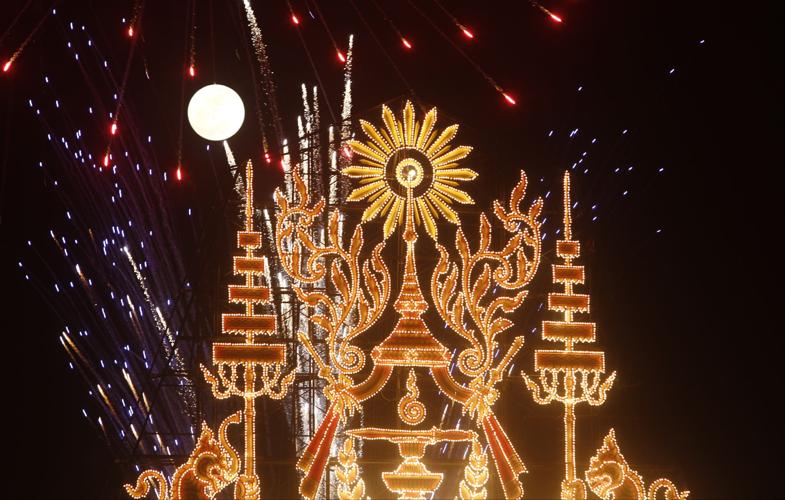
Cambodia Supermoon Water Fastival
- Heng Sinith
The moon rises Nov. 14, 2016, over an illuminated wooden boat on the Tonle Sap River in front of the Royal Palace in Phnom Penh, Cambodia, during the annual water festival. The three-day festival dedicated to the kingdom's ancestral naval warriors coincided with the phenomenon known as the supermoon. (AP Photo/Heng Sinith)
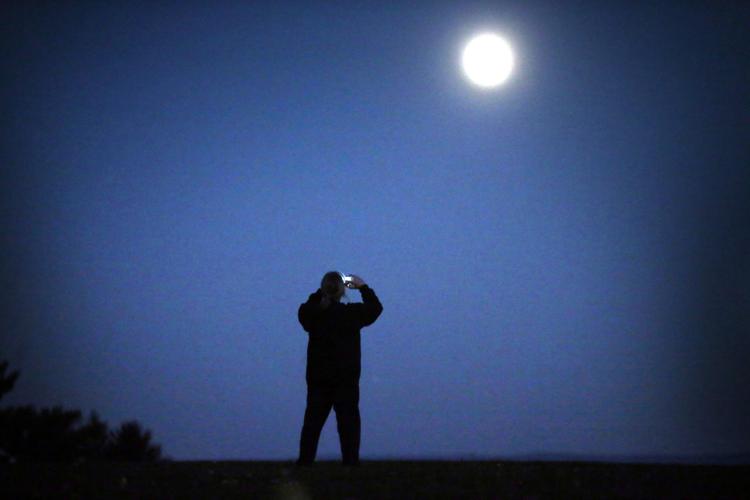
Supermoon Virginia
- Jeff Taylor
Beth Huddleston photographs the moon with her cellphone Nov. 13, 2016, as it rises over Winchester, Va. A supermoon occurs when the moon is full and passing close to the earth in its orbit. (Jeff Taylor/The Winchester Star via AP)
41 photos of a supermoon around the globe
The brightest moon in almost 69 years is lighting up the sky in a treat for star watchers around the globe.
The phenomenon known as the supermoon reached its peak luminescence in North America before dawn on Monday. Its zenith in Asia and the South Pacific was Monday night. Across the international dateline in New Zealand, it was to reach its brightest after midnight Tuesday local time.
The moon orbits the Earth in an oval shape. The moon will be at its brightest this week because it is coming closer to the Earth along its elliptical orbit than at any time since January 1948. The supermoon will also bring stronger than usual high tides, followed by plunging low tides the next morning.
Viewers can expect to see a moon about 14 percent larger in diameter and about 30 percent brighter than when it's at its furthest distance from the earth. It won't be as big and bright again for another 18 years.
NASA says its closest approach came at 6:21 a.m. EST on Monday when the moon came within 221,523 miles (356,508 kilometers). That's from the center of the Earth to the center of the moon. Full moon occured at 8:52 a.m. EST.
According to the astronomy website earthsky.org, the term supermoon entered usage five years ago when the closest full moon fell on March 19, 2011. The scientific term is perigee full moon.
In 2034, the moon will come even closer, within 221,485 miles (356,456 kilometers). That, too, will be a supermoon.
—Associated Press
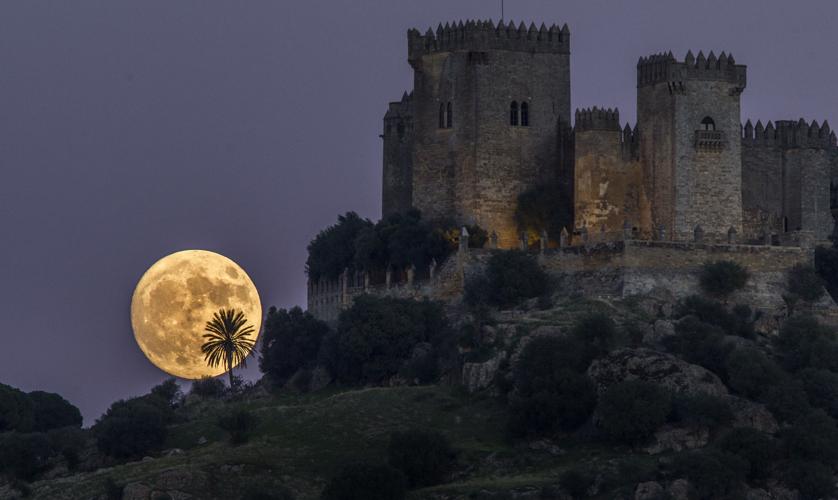
APTOPIX Spain Supermoon
- Miguel Morenatti
The moon rises Nov. 13, 2016, behind the castle of Almodovar in Cordoba, southern Spain. (AP Photo/Miguel Morenatti)
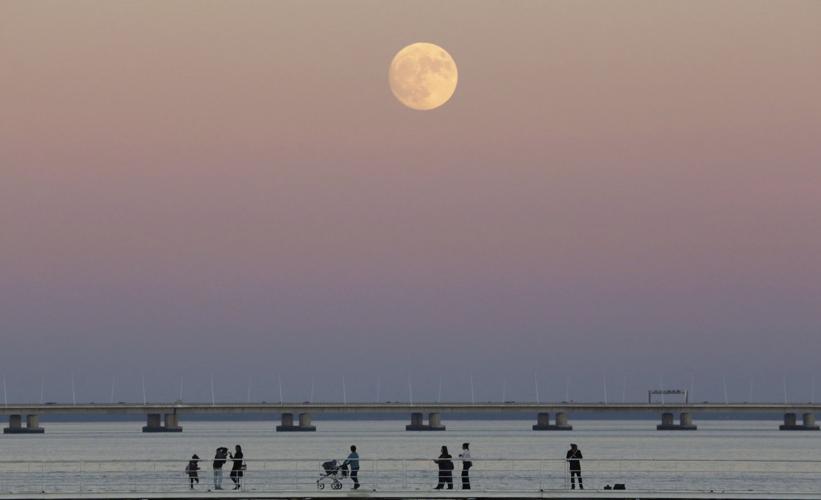
Portugal Moon
- Armando Franca
People stroll along the Tagus riverside Nov. 13, 2016, in Lisbon as the moon rises. (AP Photo/Armando Franca)
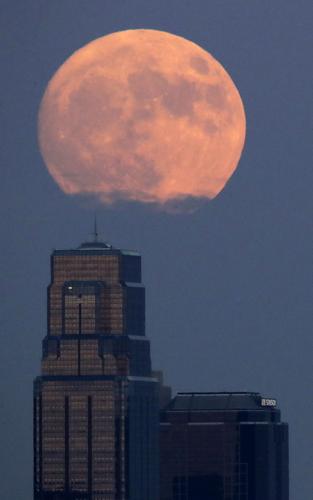
Supermoon Missouri
- Charlie Riedel
The moon rises Nov. 13, 2016, beyond downtown buildings in Kansas City, Mo. (AP Photo/Charlie Riedel)
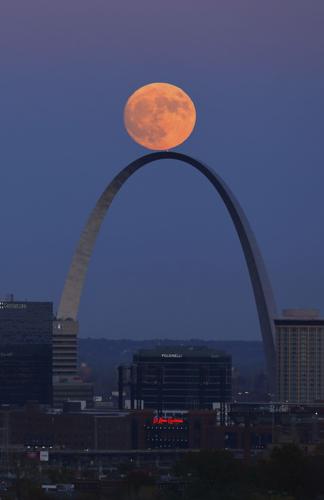
APTOPIX Supermoon St. Louis
- David Carson
The moon rises Nov. 13, 2016, over the Arch in St. Louis, as seen from the Compton Hill Water Tower. (David Carson/St. Louis Post-Dispatch via AP)
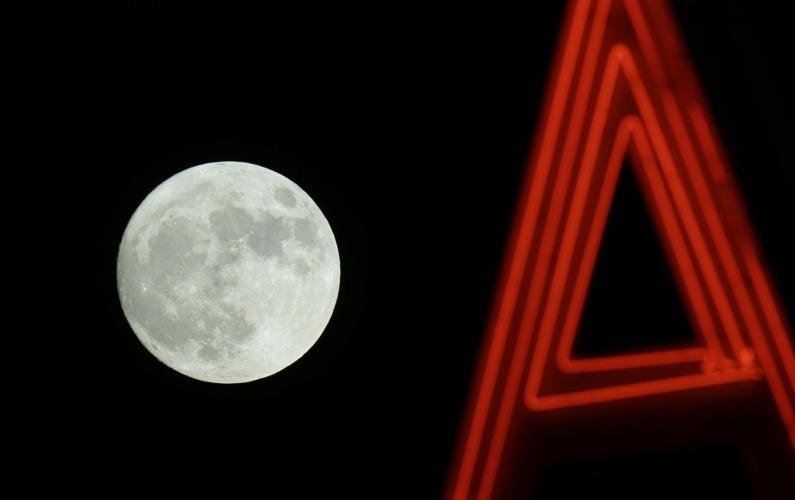
Supermoon California
- Rich Pedroncelli
The moon rises Nov. 13, 2016, behind a neon sign in Sacramento, Calif. (AP Photo/Rich Pedroncelli)
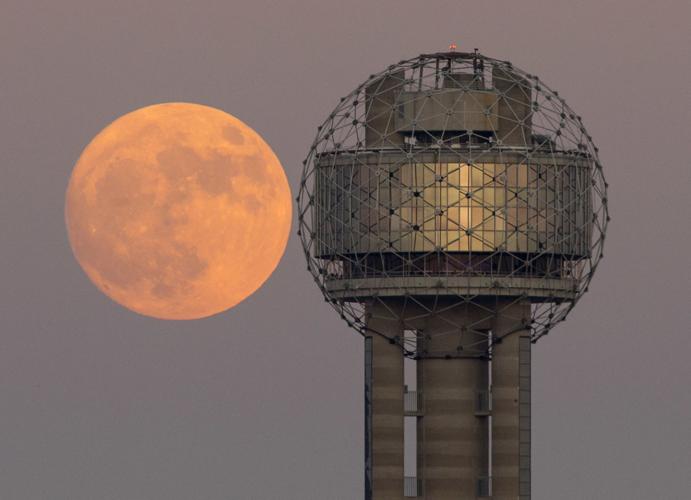
Supermoon Dallas
- Tom Fox
The moon rises Nov. 13, 2016, behind Reunion Tower in downtown Dallas. (Tom Fox/The Dallas Morning News via AP)
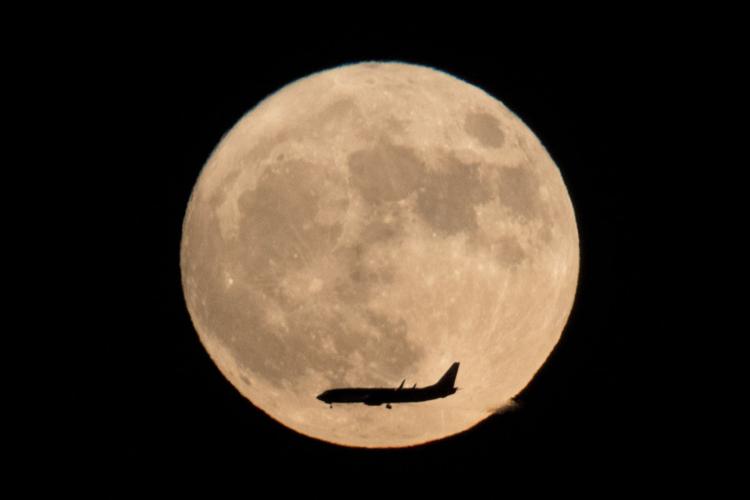
APTOPIX China Supermoon
- Ng Han Guan
A jet plane flies across the moon seen Nov. 14, 2016, from Beijing, China. (AP Photo/Ng Han Guan)
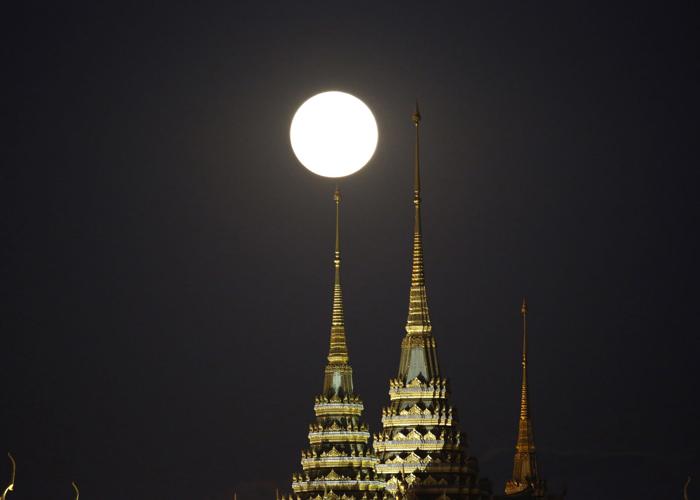
Thailand Supermoon
- Sakchai Lalit
The moon rises Nov. 14, 2016, over the Grand Palace in Bangkok, Thailand. (AP Photo/Sakchai Lalit)
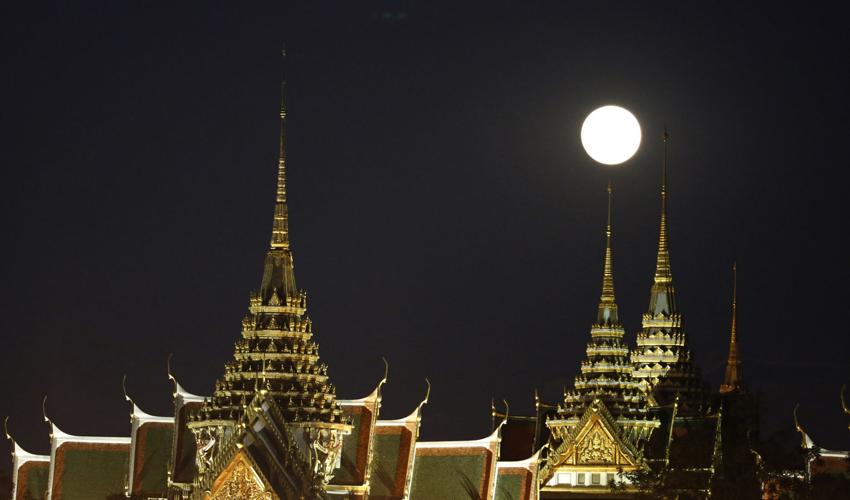
APTOPIX Thailand Supermoon
- Sakchai Lalit
The moon rises Nov. 14, 2016, over the Grand Palace in Bangkok, Thailand. (AP Photo/Sakchai Lalit)
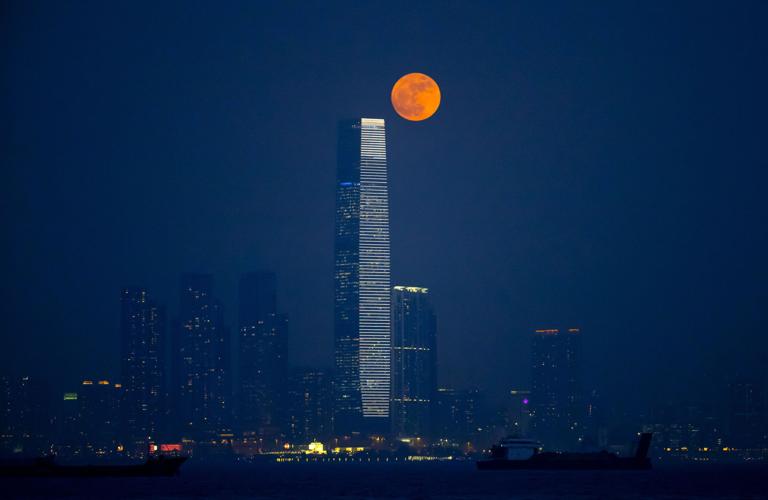
APTOPIX Hong Kong Supermoon
- Kin Cheung
The moon rises Nov. 14, 2016, over Victoria Harbour in Hong Kong. The tall building is the International Commerce Centre. (AP Photo/Kin Cheung)
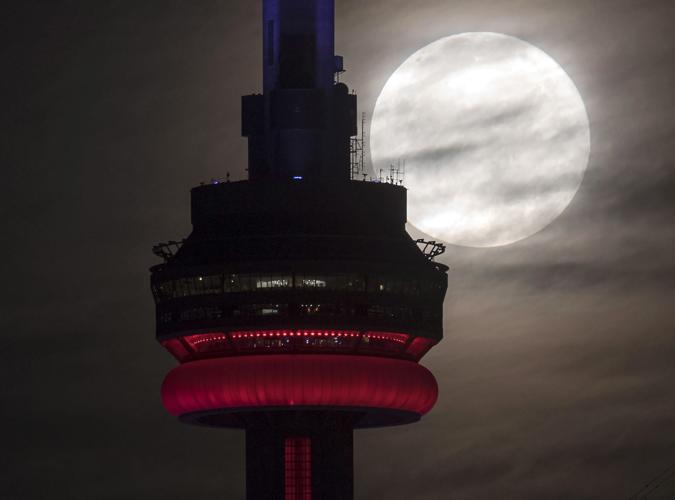
APTOPIX Supermoon Toronto
- Frank Gunn
The supermoon sets Nov. 14, 2016, behind the CN tower in Toronto. (Frank Gunn/The Canadian Press via AP)
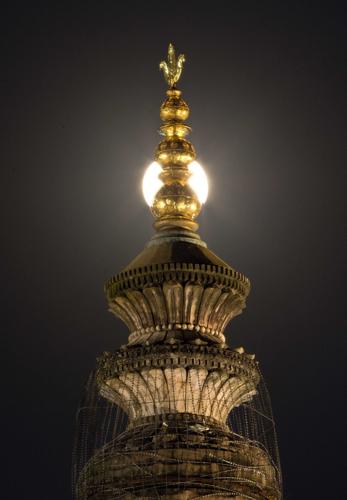
India Supermoon
- Anupam Nath
The supermoon rises Nov. 14, 2016, behind the dome of the Kamakhya Hindu temple in Gauhati, India. (AP Photo/ Anupam Nath)
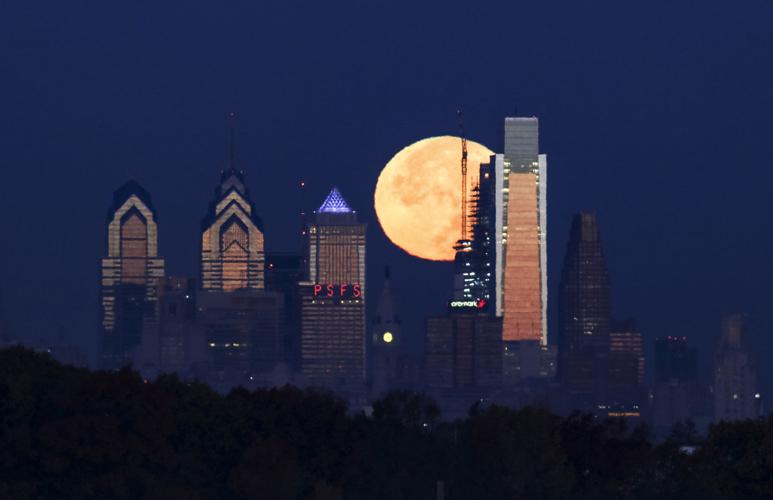
Supermoon Philadelphia
- Joseph Kaczmarek
The supermoon sets Nov. 14, 2016, behind the Philadelphia skyline. (AP Photo/Joseph Kaczmarek)
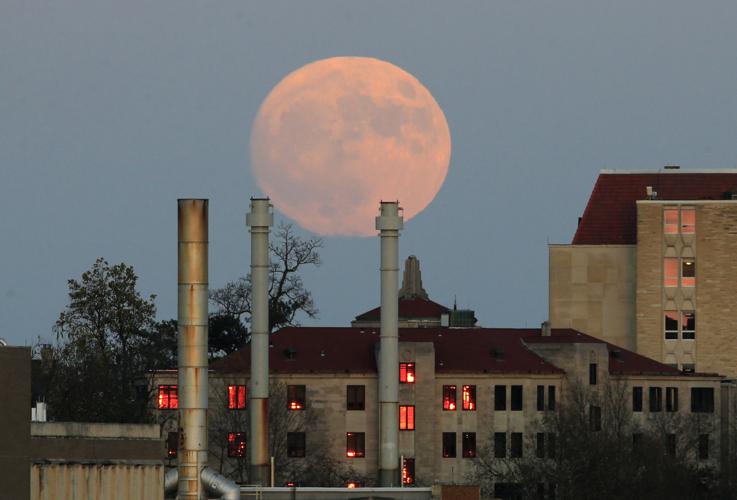
Supermoon Kansas
- Orlin Wagner
The moon rises Nov. 13, 2016, beyond the University of Kansas campus in Lawrence, Kan. (AP Photo/Orlin Wagner)
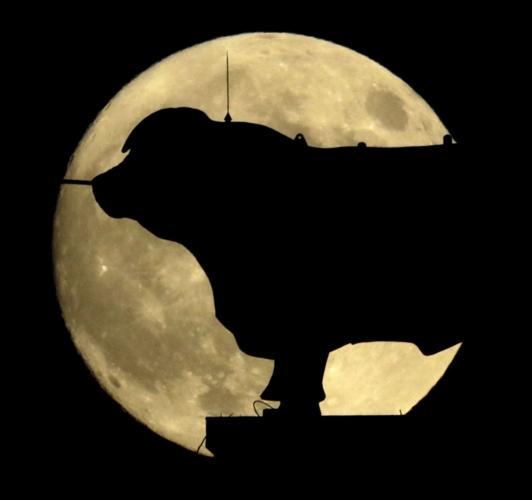
Supermoon Missouri
- Charlie Riedel
The full moon rises beyond a statue of a cow Nov. 13, 2016, in Kansas City, Mo. (AP Photo/Charlie Riedel)
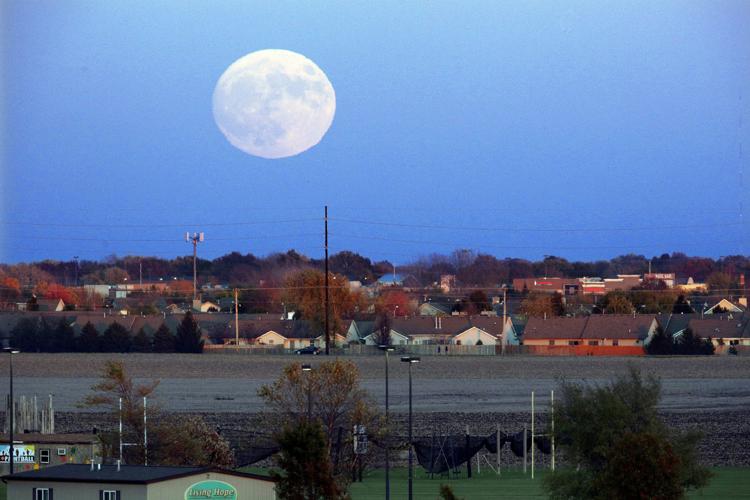
Supermoon Illinois
- Seth Perlman
The moon rises Nov. 13, 2016, beyond Springfield, Ill. (AP Photo/Seth Perlman)
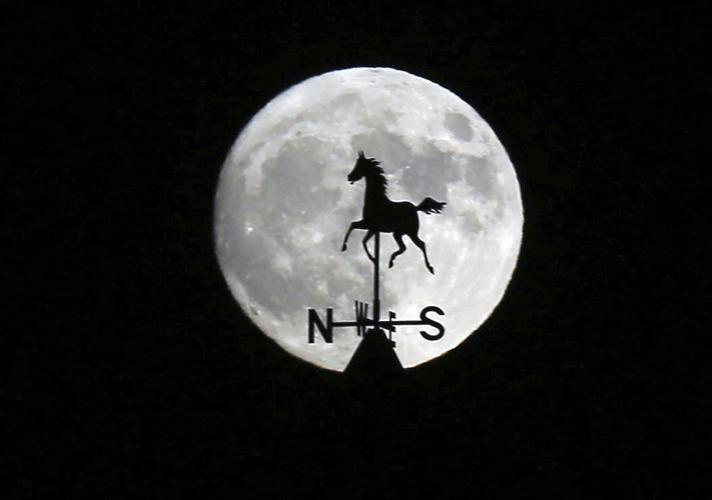
Supermoon
- Frank Becerra Jr.
A horse on a weathervane atop Clocktower Commons on Route 22 in Brewster, N.Y., is silhouetted Nov. 13, 2016, against the moon. (Frank Becerra Jr./The Journal News via AP)
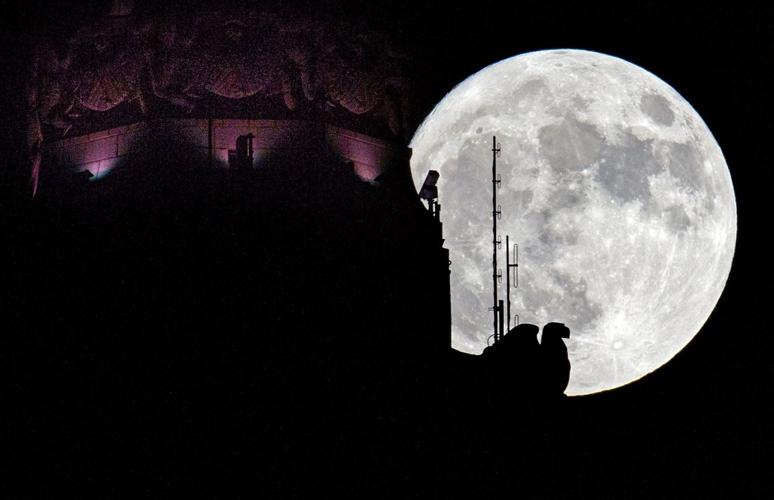
Supermoon Columbus
- Adam Cairns
The moon rises Nov. 13, 2016, behind the eagle sculpture high atop LeVeque Tower in Columbus, Ohio. (Adam Cairns/The Columbus Dispatch via AP)
Supermoon New York
- MBR
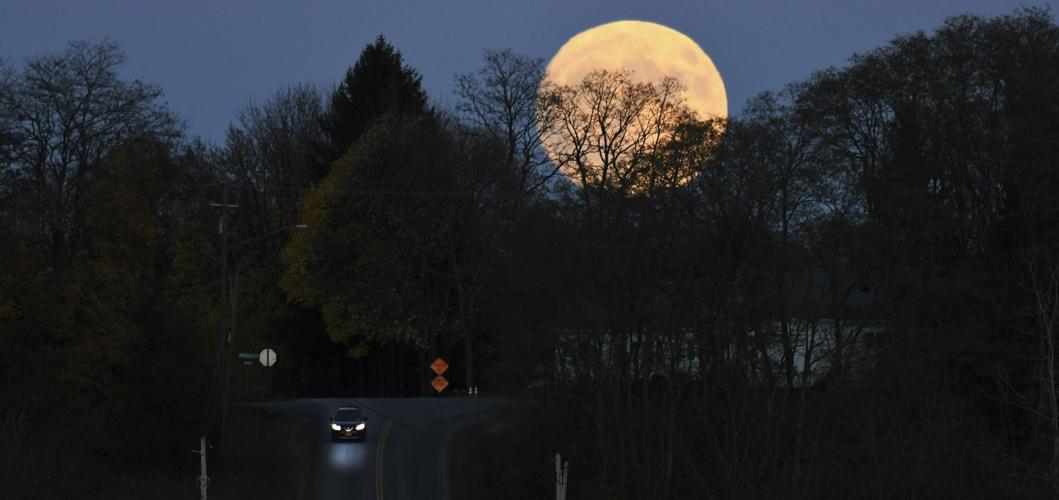
A vehicle travels down a road as the supermoon rises Nov. 13, 2016, in Auburn, N.Y. (Kevin Rivoli/The Citizen via AP)
South Africa Supermoon
- Schalk van Zuydam
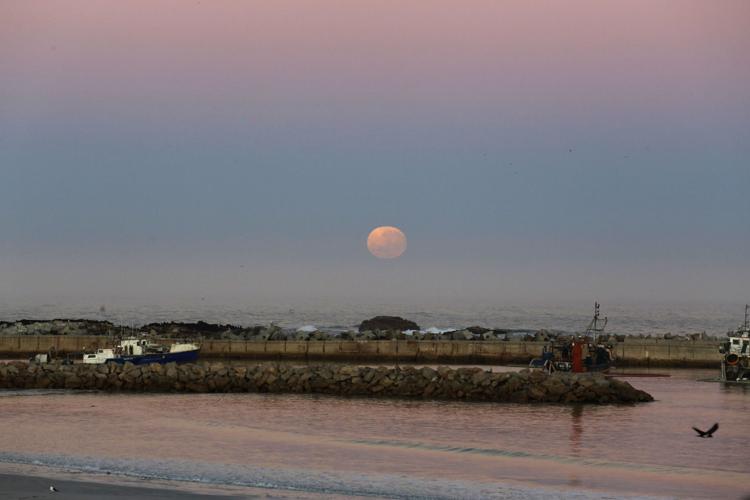
The moon rises Nov. 14, 2016, over the harbor of the costal town of Lambert's Bay, South Africa. (AP Photo/Schalk van Zuydam)
China Supermoon
- Ng Han Guan
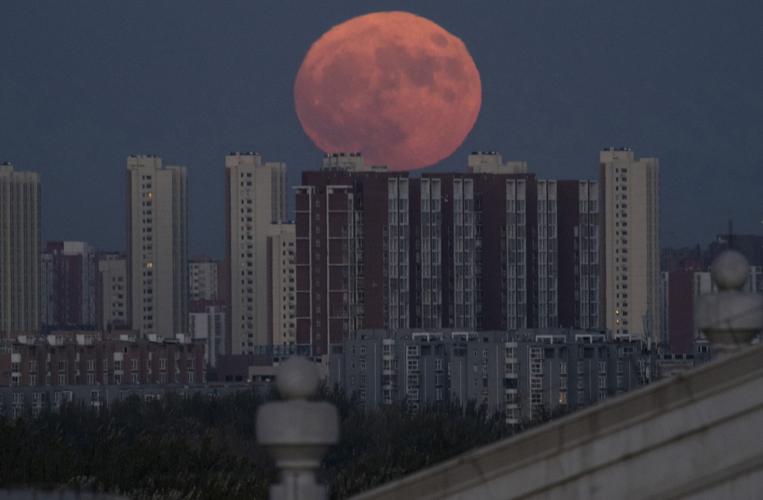
The moon rises Nov. 14, 2016, behind apartment buildings in Beijing, China. (AP Photo/Ng Han Guan)
Hong Kong Supermoon
- Vincent Yu
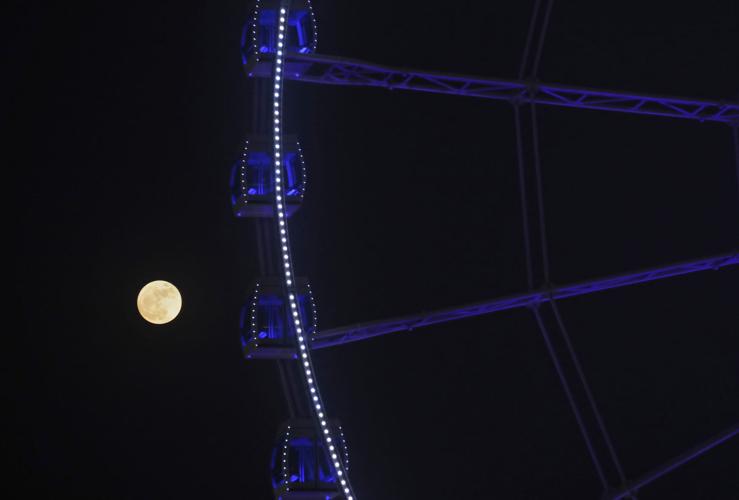
The moon rises Nov. 14, 2016, near a Ferris wheel in Hong Kong. (AP Photo/Vincent Yu)
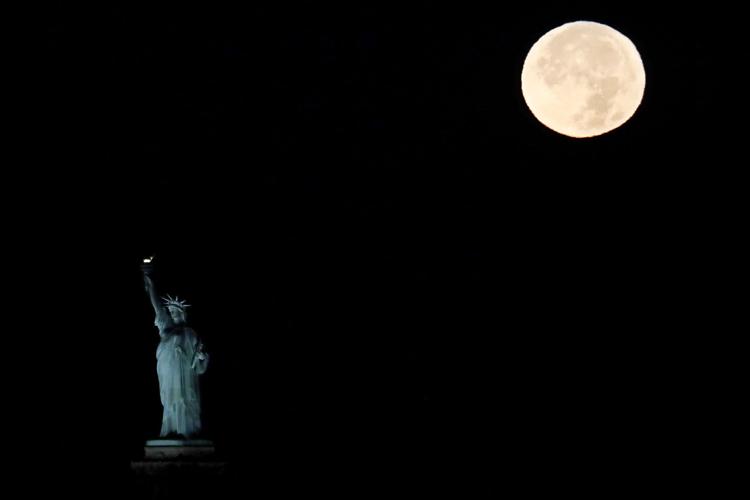
Supermoon
- Julio Cortez
The supermoon sets Nov. 14, 2016, behind the Statue of Liberty in New York. (AP Photo/Julio Cortez)
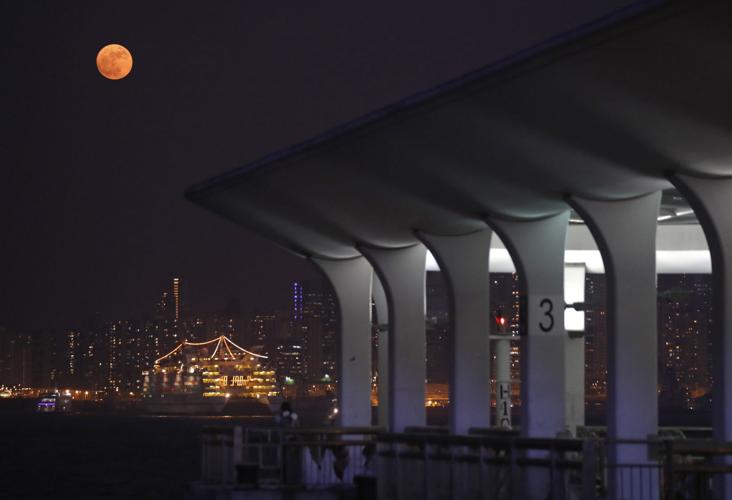
Hong Kong Supermoon
- Vincent Yu
The supermoon rises Nov. 14, 2016, over Victoria Harbour in Hong Kong. (AP Photo/Vincent Yu)
Cambodia Supermoon Water Fastival
- Heng Sinith
The moon rises Nov. 14, 2016, over an illuminated wooden boat on the Tonle Sap River in front of the Royal Palace in Phnom Penh, Cambodia, during the annual water festival. The three-day festival dedicated to the kingdom's ancestral naval warriors coincided with the phenomenon known as the supermoon. (AP Photo/Heng Sinith)
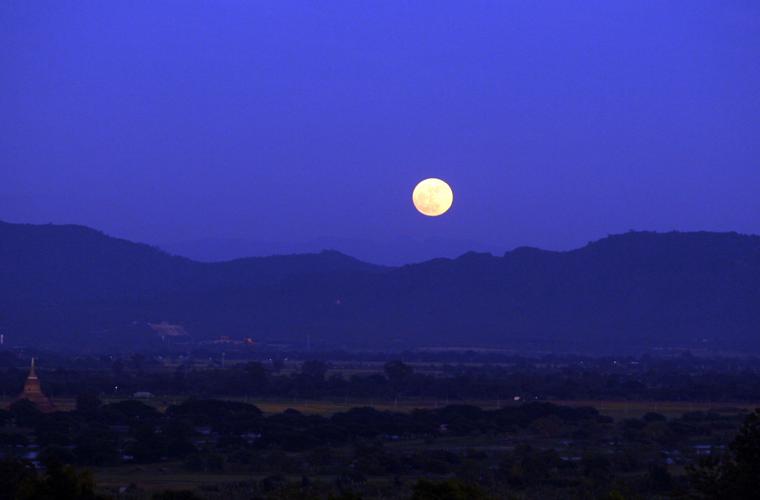
Myanmar Supermoon
- Aung Shine Oo
The supermoon rises Nov. 14, 2016, above the mountain range seen from Naypyitaw, Myanmar. (AP Photo/Aung Shine Oo)
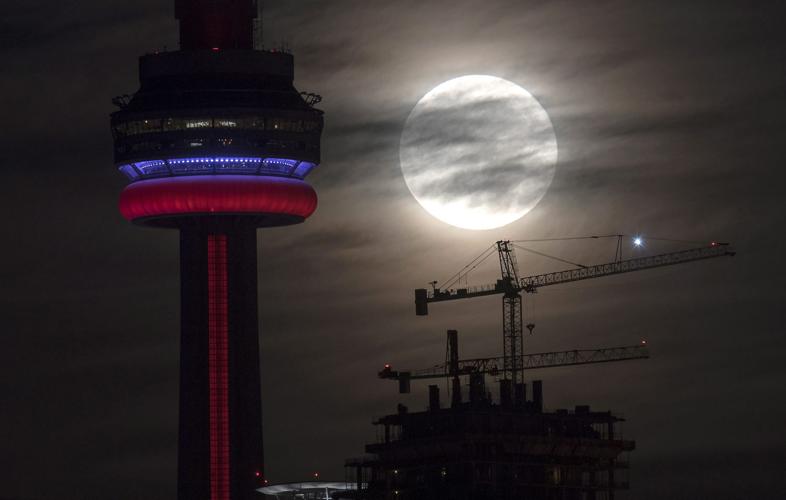
Supermoon Toronto
- Frank Gunn
The supermoon sets Nov. 14, 2016, behind the CN tower in Toronto. (Frank Gunn/The Canadian Press via AP)
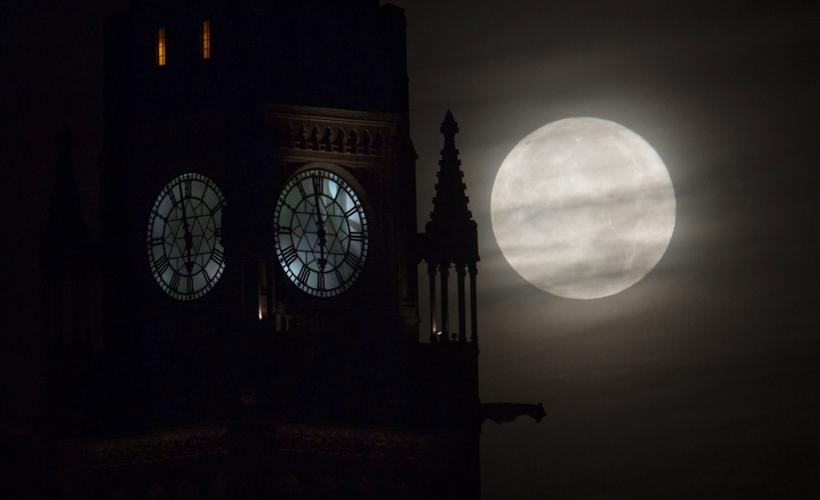
Supermoon Canada
- Adrian Wyld
The supermoon appears behind the Parliament buildings Nov. 14, 2016, in Ottawa, Ontario. (Adrian Wyld/The Canadian Press via AP)
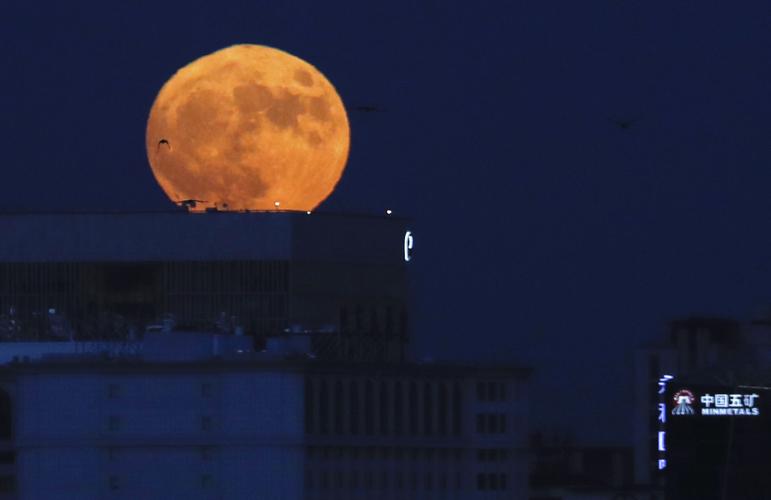
China Supermoon
- Andy Wong
A bird flies past the supermoon rising over buildings Nov. 14, 2016, in Beijing. (AP Photo/Andy Wong)
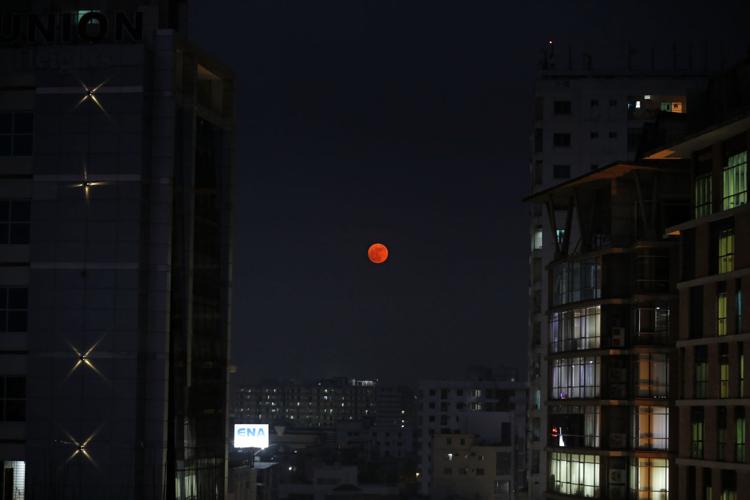
Bangladesh Supermoon
- A.M. Ahad
The supermoon rises Nov. 14, 2016, above Dhaka, Bangladesh. (AP Photo/ A.M. Ahad)
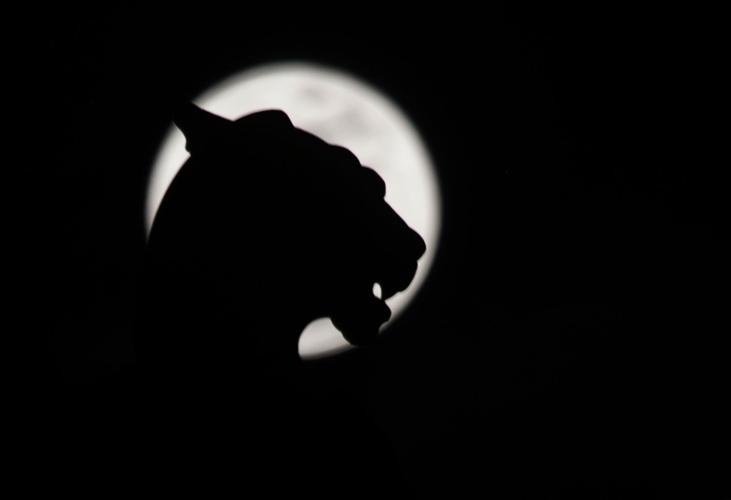
Vietnam Supermoon
- Hau Dinh
The supermoon appears Nov. 14, 2016, behind a statue on the roof of the Opera House in Hanoi, Vietnam. (AP Photo/Hau Dinh)
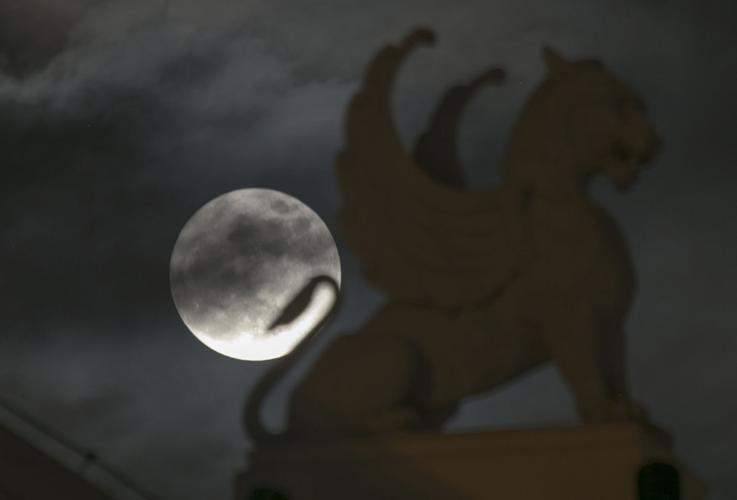
Vietnam Supermoon
- Hau Dinh
The supermoon appears Nov. 14, 2016, behind a statue on the roof of the Opera House in Hanoi, Vietnam. (AP Photo/Hau Dinh)
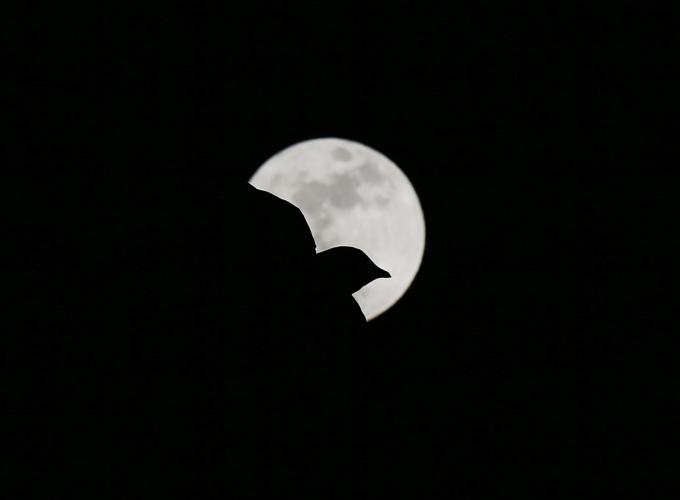
Philippines Supermoon
- Bullit Marquez
A fluttering Philippine flag forms a birdlike silhouette as the supermoon shines Nov. 14, 2016, in Manila, Philippines. (AP Photo/Bullit Marquez)
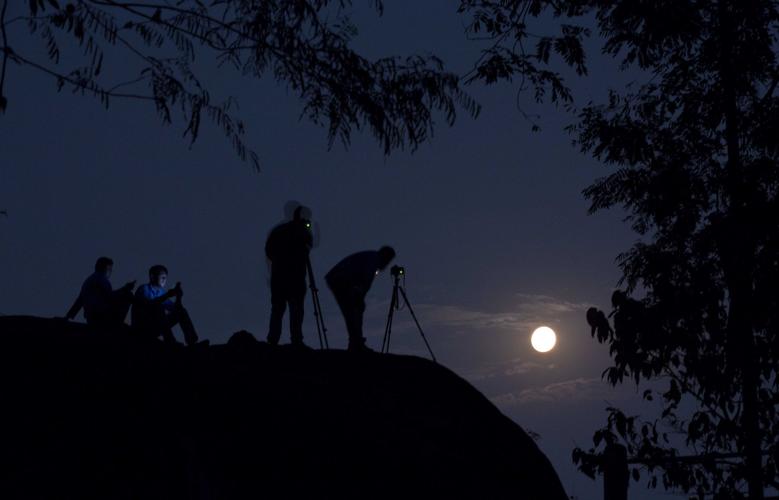
India Supermoon
- Anupam Nath
Tourists take photographs of the rising supermoon Nov. 14, 2016, in Gauhati, India. (AP Photo/ Anupam Nath)
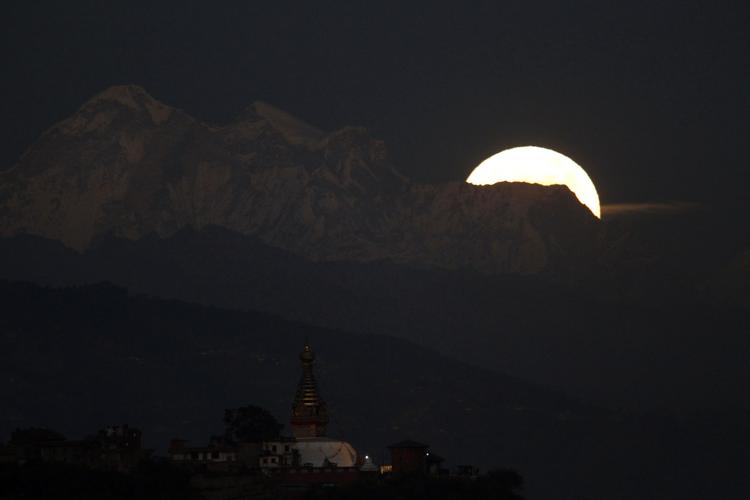
Nepal Supermoon
- Niranjan Shrestha
The supermoon rises Nov. 14, 2016, behind the Dorje Lakpa Mountain as Swayambhunath stupa is seen in the foreground in Kathmandu, Nepal. (AP Photo/Niranjan Shrestha)
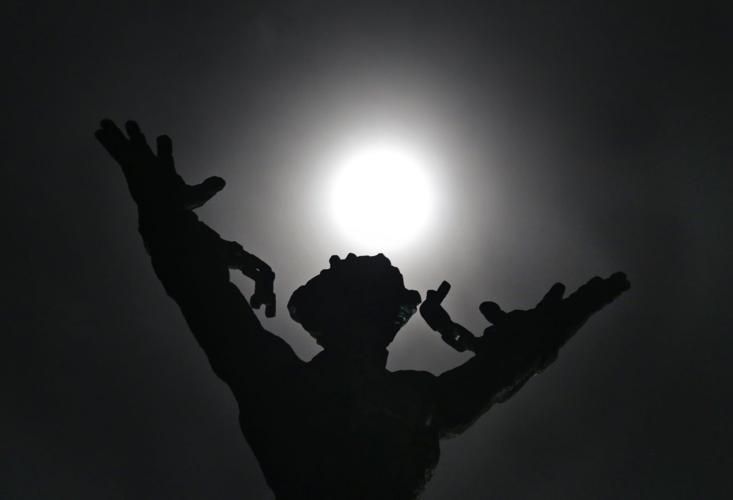
Indonesia Supermoon
- Dita Alangkara
The super moon shines Nov. 14, 2016, over the "West Irian Liberation Monument" in Jakarta, Indonesia. (AP Photo/Dita Alangkara)
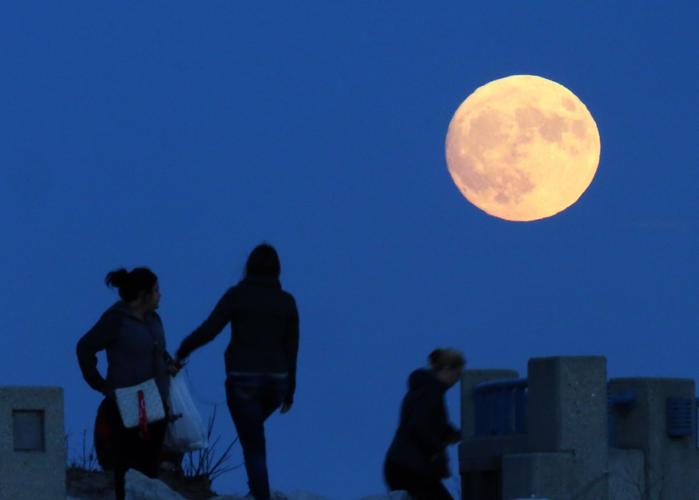
Supermoon Wisconsin
- John Hart
On the eve of the so-called supermoon, visitors enjoy an unobstructed view of the spectacle as it ascends over the Lake Michigan shoreline Nov. 13, 2016, in Milwaukee, Wis. (John Hart/Wisconsin State Journal via AP)
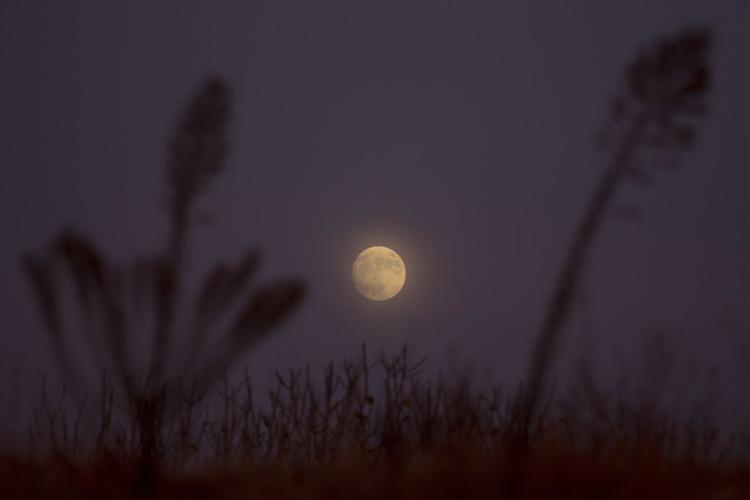
Mideast Israel Supermoon
- Ariel Schalit
The moon rises Nov. 13, 2016, over Hefer Valley in Israel. (AP Photo/Ariel Schalit)
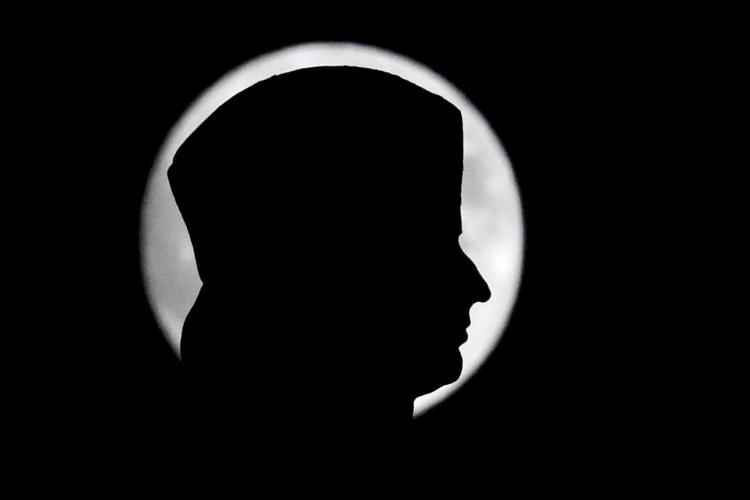
Supermoon
- Julio Cortez
The moon is seen in its waxing gibbous stage Nov. 13, 2016, behind the head of the Christopher Columbus statue at Columbus Circle in New York. (AP Photo/Julio Cortez)
Supermoon Kansas
- Orlin Wagner
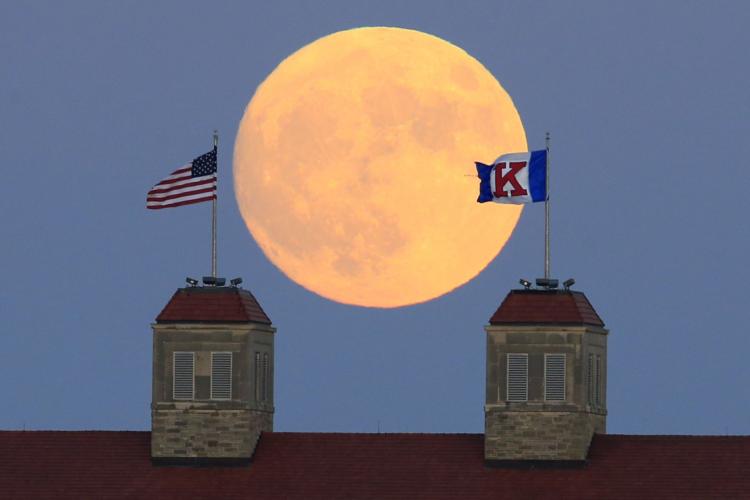
The moon rises Nov. 13, 2016, beyond flags atop Fraser Hall on the University of Kansas campus in Lawrence, Kan. (AP Photo/Orlin Wagner)
Supermoon Virginia
- Jeff Taylor
Beth Huddleston photographs the moon with her cellphone Nov. 13, 2016, as it rises over Winchester, Va. A supermoon occurs when the moon is full and passing close to the earth in its orbit. (Jeff Taylor/The Winchester Star via AP)
Subscribe to stay connected to Tucson. A subscription helps you access more of the local stories that keep you connected to the community.
Be the first to know
Get local news delivered to your inbox!


