

On the night of April 21-22, sky watchers will have the chance to catch sight of several shooting stars as the Lyrid meteor shower is expected to reach its peak.
The Lyrids are one of the oldest-known meteor showers. The first recorded sighting of one goes back to 687 B.C.E. in China. Observers there said the Lyrids were "falling like rain."
The moon will be a waxing crescent at 27% full. When the moon sets early in the morning or just after midnight, the sky will be black and ideal for viewing during the predawn hours. In ideal weather conditions, the Lyrids have an average of about 10–15 meteors per hour, according to EarthSky.
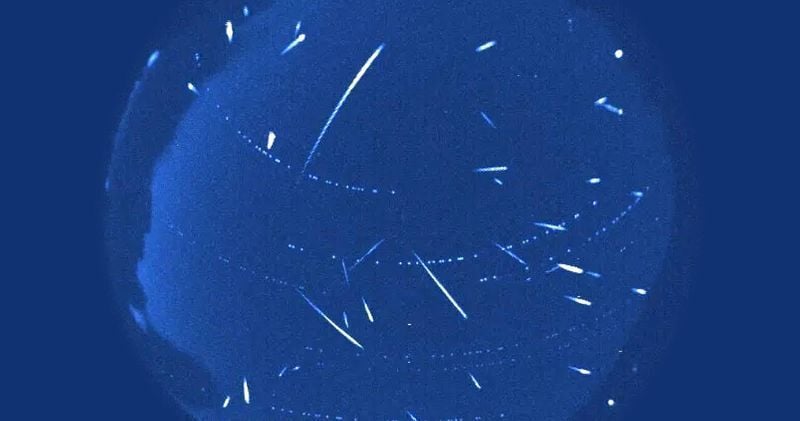
A composite image of the Lyrid and not-Lyrid meteors, seen over New Mexico from April 21-23, 2012.
Where do the Lyrid meteors come from?
The Lyrids are remnants of Comet C/1861 G1 Thatcher debris. Every year in the middle of April, the Earth comes into contact with the comet's debris stream, which results in a meteor shower.
People are also reading…
When and where to get the best view of the Lyrid meteor shower
Around 9 or 10 p.m. local time, the bright star Vega, which is in the constellation Lyra, will rise above your local horizon in the northeast. Just before dawn, the radiant will be high overhead. This is where the radiant point for the Lyrid meteor shower will appear.
You may view 10 to 15 meteors every hour in a dark, moonless sky. The shower takes its name from the constellation Lyra, according to EarthSky.
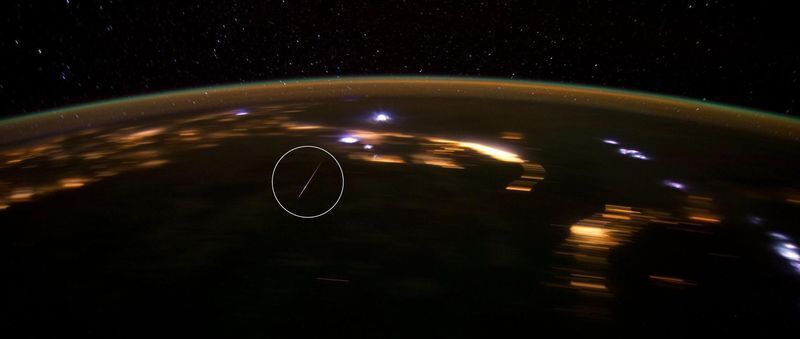
In 2012, Astronaut Don Pettit of the International Space Station trained his video camera on Earth below, capturing the climax of the Lyrid meteor shower.
How to get the best views
Choose a location that is far from street or city lights. Lay flat on your back, if possible, and orient yourself facing east and look up, taking in as much of the sky as you can.
- No lights: Find a spot away from city lights. Your eyes will need to adjust to the darkness, which could take 15 to 20 minutes.
- Dress for the weather: Bring blankets or a camping chair to make the viewing comfortable.
- Locate the radiant: The higher the radiant is in the sky, the more meteors you are likely to see. Watching meteor showers can take time, so be patient – it's worth the wait.
See more upcoming meteor showers in 2026
There are a number of significant meteor shower events that are expected this year, offering great opportunities to see more meteors (shooting stars). According to the American Meteor Society and other sources, the most notable upcoming events include:
| Meteor shower | Active period | Peak |
| Lyrids | April 14 to April 30 | April 21-22 |
| Eta Aquariids | April 19 to May 28 | May 5-6 |
| Alpha Capricornids | July 3 to Aug. 15 | July 30-31 |
| Southern Delta Aquariids | July 12 to Aug. 23 | July 30-31 |
| Perseids | July 17 to Aug. 24 | Aug. 12-13 |
| Orionids | Oct. 2 to Nov. 7 | Oct. 21-22 |
| Leonids | Nov. 6 to Nov. 30 | Nov. 17-18 |
| Geminids | Dec. 4 to Dec. 20 | Dec. 13-14 |
| Ursids | Dec. 17 to Dec. 26 | Dec. 21-22 |


