The brutally frigid weather that has gripped most of America for the past 11 days is not unprecedented. It just feels that way.
The first quarter of the 21st century was unusually warm by historical standards — mostly due to human-induced climate change — and so a prolonged cold spell this winter is unfamiliar to many people, especially younger Americans.
Because bone-shattering cold occurs less frequently, Americans are experiencing it more intensely now than they did in the past, several experts in weather and behavior said. But the longer the current icy blast lasts, the easier it should become to tolerate.
"We adapt, we get used to things. This is why your first bite of dessert is much more satisfying than your 20th bite," Hannah Perfecto, who studies consumer behavior at Washington University in St. Louis, wrote in an email. "The same is true for unpleasant experiences: Day 1 of a cold snap is much more a shock to the system than Day 20 is."
People are also reading…
Charlie Steele, a 78-year-old retired federal worker in Saugerties, New York, considers himself a lover of cold weather. But this January's deep-freeze is "much, much colder than anything I can remember," he said.
Steele's sense of change is backed up by data.
There have been four fewer days of subfreezing temperatures in the U.S. per year, on average, between 2001 and 2025 than there were in the previous 25 years, according to data from Climate Central. The data from more than 240 weather stations also found that spells of subfreezing temperatures have become less widespread geographically and haven't lasted as long — until this year.

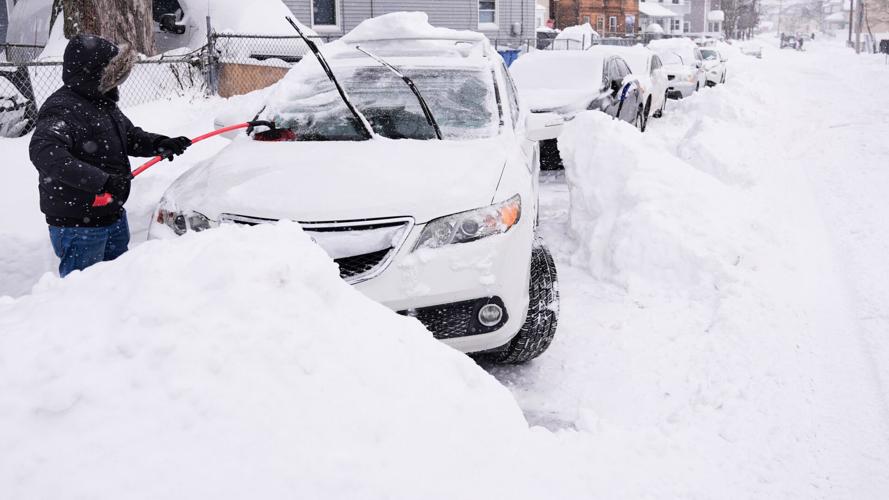
Rafael Tavares digs out his car, which was encased in about 20 inches of snow, during a winter storm on Jan. 26 in Lawrence, Mass.
In Albany, about 40 miles from Steele, the change has been more pronounced than the national average, with 11 fewer subfreezing days in the last 25 years than the previous quarter century.
"You're out of practice," Steele said. "You're kind of lulled into complacency."
Climate change has shifted what people are used to, said several climate scientists, including Daniel Swain of the University of California's Water Resources Institute.
"It's quite possible that for anybody under the age of 30, in some spots this may well be the coldest week of their life," Swain said.
Jennifer Francis, a climate scientist at the Woodwell Climate Research Center in Falmouth, Massachusetts, said, "humans get used to all kinds of things — city noise, stifling heat, lies from politicians, and winter cold. So when a 'normal' cold spell does come along, we feel it more acutely."

Pedestrians walk down Fifth Avenue during a winter storm on Jan. 25 in New York.
People forget how extreme cold feels after just two to eight years of milder winters, according to a 2019 study in the journal Proceedings of the National Academy of Sciences. Americans have gone through a much longer stretch than that.
Over the past 30 years, the average daily low in the continental U.S. has dropped below 10 degrees 40 times, according to meteorologist Ryan Maue, former chief scientist for the National Oceanic and Atmospheric Administration. But in the preceding 30 years, that chilly threshold was reached 124 times.
Late last month, when the country's average daily low dipped below 10 degrees three times in one week.

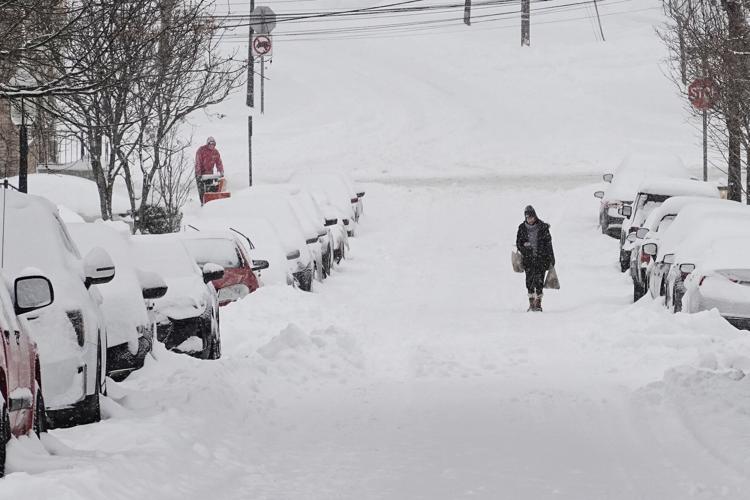
A person carries grocery bags up a residential street during a winter storm on Jan. 25 in Cincinnati.
Regardless of how it feels, extremely cold weather presents dangers. People and vehicles slip on ice, power can go down, leaving people freezing in homes, and storms limit visibility, making commuting to work or even doing basic errands potentially perilous. More than 110 deaths have been connected to the winter storms and freezing temperatures since January.
As this winter's frigid days stretch on, people adapt. University of San Diego psychiatrist Thomas Rutledge said people shake off what he calls their "weather rustiness."

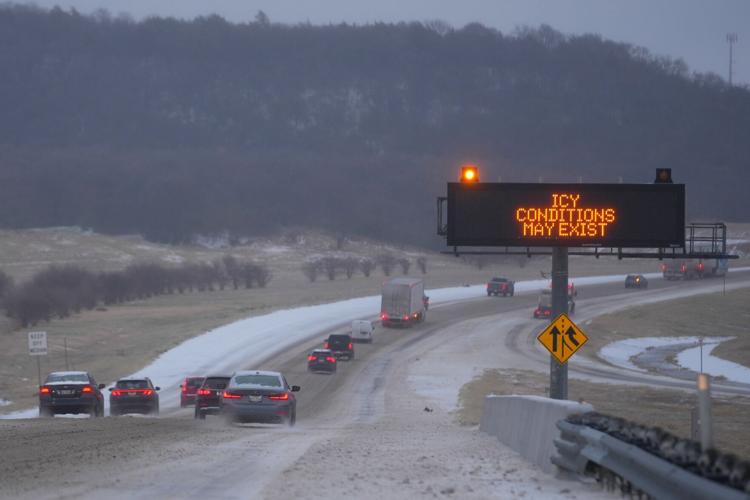
Vehicles travel eastbound on Interstate 20 near a sign advising motorists of icy conditions during a winter storm on Jan. 24 in Dallas.
Rutledge explained what he meant via email, recalling the period decades ago when he lived in Alaska.
"I assumed that everyone was a good driver in winter conditions. How couldn't they be with so much practice?" he wrote. "But what I annually observed was that there was always a large spike in car accidents in Alaska after (the) first big snowfall hit. Rather than persistent skills, it seemed that the 4-6 months of spring and summer was enough for peoples' winter driving skills to rust enough to cause accidents."
But this cold snap also hit southern cities such as Dallas and Miami, where it's not just the people unaccustomed to the cold. Utilities and other basic infrastructure are ill-equipped to handle the extreme weather, said Francis.

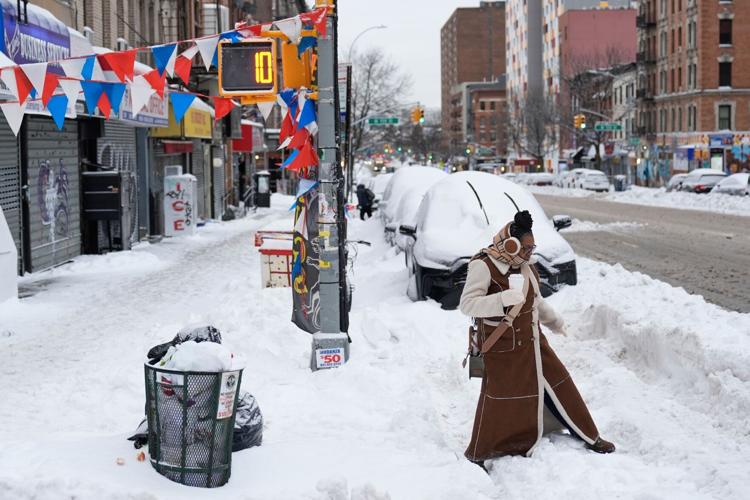
Carrie Hampton tries to navigate a snowy intersection without spilling her coffee in New York on Jan. 26.
While this cold snap may feel unusually long to many Americans, it isn't, according to data from 400 weather stations across the continental U.S. with at least a century of record-keeping, as tracked by the Southeast Regional Climate Center.
Only 33 of these weather stations have recorded enough subzero temperatures since the start of 2026 to be in the top 10% of the coldest first 32 days of any year over the past century.

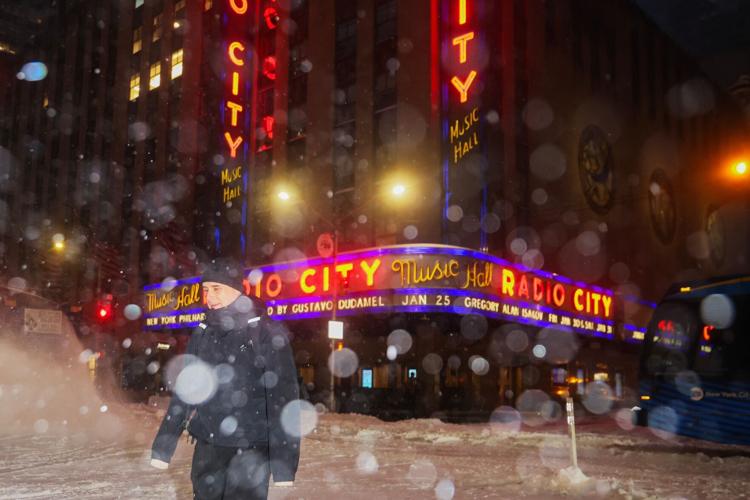
A pedestrian crosses the street near Radio City Music Hall during a winter storm on Jan. 25 in New York.
When Steele moved to the Hudson Valley as a toddler in 1949, the average daily low temperature over the previous 10 winters was 14.6 degrees. In the past 10 years, the average daily low was 20.8 degrees.
As a younger man, Steele used to hunt in winter and sit for hours on cold rocks.
"I could never do that now," he said. "I'm rusty. I'm out of practice."
5 items you should never leave in a freezing cold car
Medication

Most medications have storage temperature recommendations of 68-77 degrees Fahrenheit listed on the packaging. That means unless your car is parked in a temperature-controlled garage at all times, it's best to not store medication in your vehicle any time of the year.
Avoiding freezing is especially important for any liquid medication. Drastic changes in temperature can make some medication ineffective, while others may become harmful.
Smartphones and other devices

Most batteries don't work as well in cold temperatures, but you might notice it most in your smartphone. It's common for phones (or tablets, laptops or other devices) to slow down or shut off entirely if exposed to extremely chilly weather.
Apple recommends using your phone only when temperatures are between 32 and 95 degrees (F) and storing devices at temperatures between -4 and 113 (F). If you do happen to leave your phone in the cold or simply use it outside and experience battery failure, it's likely temporary. Batteries should return to normal when brought back to an acceptable temperature. The same in not true, however, for extremely warm temps. Heat damage to batteries can be permanent.
Canned food

While you don't need to automatically throw away an accidentally frozen canned good, the USDA recommends taking some precautions before eating the item in question. If the can appears swollen, try thawing it in the refrigerator before opening it. This applies only if you're absolutely sure the swelling is because of the cold. If the can swells for other reasons, toss it. If everything — color, texture, smell — appears normal, you're probably in the clear. If anything seems off, get rid of it. And if the seams on the can appear to have rusted or burst, don't risk it.
Eggs

Eggs that are still in their shells shouldn't be frozen. If you accidentally froze some eggs and the shells burst, the USDA suggests you throw them out. If the shells didn't crack, you can thaw them in the refrigerator for later use. Just be warned, the texture will likely be off.
Beer, wine and soda

The best case scenario here is that you have a slightly swollen can of beer or soda. However, you could also end up with a car full of frozen slush — or 38 stitches like one boy in China in 2012.
Another outcome is that you have beer, wine or soda (or any carbonated beverage) that doesn't taste very good. Some online threads offer advice on re-fizzing your flat and frozen soda, but it's often a lost cause or just not worth the effort.
When beer becomes frozen, it's still drinkable once thawed. However, the flavor will be different — "more boozy," according to a Q&A from The Morning Call.
Wine will do pretty much the same thing. While it's safe to drink, the wine will taste like "a dumbed-down version" of itself, according to Vine Pair.