

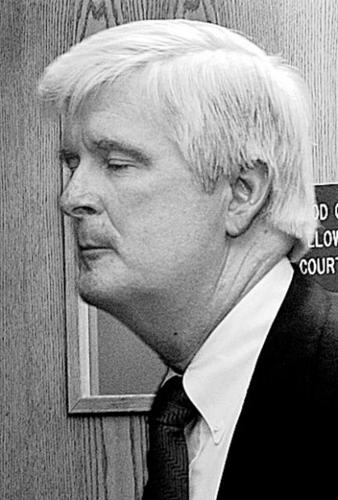

DALLAS — When Louis "Bill" Conradt put a bullet in his brain Nov. 5, he may have lost two lives.
The first public life included more than 20 years as a prosecutor in Texas' Kaufman and Rockwall counties, one who sent hundreds of criminals — including child molesters — to prison.
The second was of unknown duration, that of a hidden personality who, police allege, used the Internet at least once in an attempt to entice someone he thought was a 13-year-old boy into sex.
Experts view Conradt as the latest example of someone who put up a psychological wall to lead a double life — a virtual one within and a virtuous one without.
It's only when that wall is breached — as allegedly happened to Conradt and 21 others caught in a sting by Murphy, Texas, police, Dateline NBC and the group Perverted Justice — that both worlds fall apart.
People are also reading…
Wall of denial
"It's not an unusual phenomenon for someone who is wrestling with something that society would deem to be terribly deviant to wish to split off part of themselves and keep it not only from the public but from themselves," said Dr. Gail Saltz, associate professor of psychiatry at the New York Presbyterian Hospital Weill-Cornell School of Medicine and author of "Anatomy of a Secret Life."
"They use tremendous denial to not even admit to themselves they're doing these things."
The wall of denial has crumbled several times lately on the national stage.
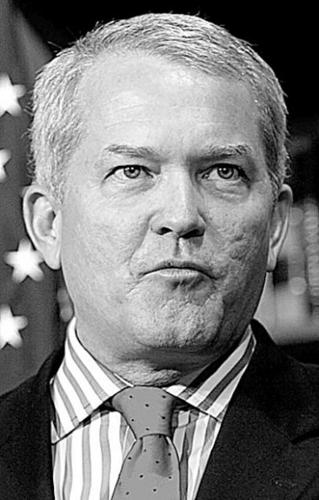
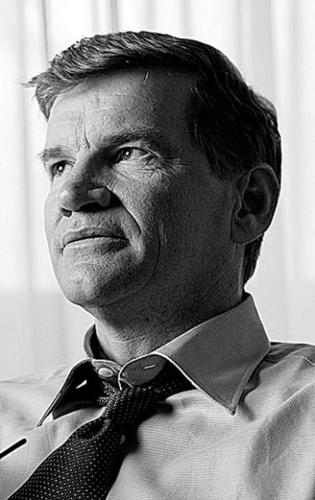
Consider Mark Foley, a congressman brought down by the disclosure of explicit electronic messages to pages; the Rev. Ted Haggard, who opposed gay marriage as head of the National Association of Evangelicals but saw his public image shatter when a male escort exposed their meetings; and the late Jim West, who led anti-gay initiatives as a Washington state representative but last year was ousted as Spokane mayor after getting caught chatting with young men on a gay Web site.
"You can do your job at work and go home and get on the computer, and you feel it's an anonymous thing and that it's a guilty pleasure, a secret pleasure," said "Richard," a Maryland computer programmer in his late 50s who was caught trying to solicit an underage girl in a 1999 sting similar to the one in Murphy.
"Part of that whole addictive process is poor decision-making, self-destruction, social isolation," said Richard, whose therapist at the Johns Hopkins Sexual Disorders Clinic put him in touch with The Dallas Morning News, using a pseudonym.
An Internet illusion
"The Internet sort of allows people to be under the illusion that they're isolated."
"R.J." had a different problem, addiction to adult pornography on the Internet, but the same solution: a double life.
"I had a front that everybody else saw — I was involved in church, was a song leader, was involved in youth group," said the Central Texas construction worker, also contacted through his therapist. "Nobody saw the other side.
"I was in torment all the time because I didn't want to do what I was doing."
Before his death from cancer in July, West described his dual existence similarly. "My private life is my private life and always has been," he told the Spokane Spokesman-Review. "There's been a strong wall between my public life and my private life."
Ezio Leite, a therapist, said those who solicit sex with minors over the Internet wrestle with strong inner conflicts.
"I haven't met anybody with a strong interest in children who thought that was a good thing — they know it's wrong," he said.
Dr. Fred Berlin of Johns Hopkins clinic said the Internet's lure is that it provides something at the push of a button.
"Secondly," he said, "it gives you anonymity that removes the social restraints. … If we think we're alone and this is a game and not something other people will know much about, it can lead to impulses and very serious consequences.
"And thirdly and perhaps most insidious, the Internet blurs the line between reality and fantasy. It begins to be like Dungeons & Dragons," he said, referring to the role-playing game. "People lose sight of the fact there's consequences, and it comes back to slap them in the face."
Public image — private reality
● Here's a look at the contrast between the public image and private life of several high-profile figures
SOURCE: Dallas Morning News


