

NEW ORLEANS — Mardi Gras has long been an occasion for the city to laugh at tragedy and aim barbs at authorities, and given all the pain New Orleans has suffered in the past year the irreverence should reach new heights this season.
Armed with sharp tongues and images such as the blue tarps that still protect broken roofs across the city, the clubs that stage Mardi Gras parades are targeting Hurricane Katrina and the politicians they blame for the chaotic response to the catastrophe.
"It is hard living here now. We need to have our opportunity to release," said Keith Twitchell, one of the organizers of Saturday's Krewe du Vieux parade. "If you don't laugh, you're dead. There's a lot to cry about here."
Krewe du Vieux has used its parade to mock corporations and politicians every year for the last two decades.
People are also reading…
"It's just we have more material this year," Twitchell said before the parade, themed "C'est Levee," a pun on the French phrase "C'est la vie," meaning "that's life."
Floats and props built for the Saturday evening parade in the French Quarter included hand-pulled carts elaborately decorated with blue tarps, fake broken levees, cardboard travel trailers and effigies of Mayor Ray Nagin and Gov. Kathleen Blanco.
One display asked France to buy Louisiana back, suggesting the state might get better treatment than it has from the American government. And in place of a parade map, the Krewe du Vieux had a "projected path" adorned with a swirly hurricane symbol.
Still, in the midst of revelry and satire, even the city known as the Big Easy has a serious side.
The Zulu Social Aid & Pleasure Club, a 90-year-old historically black group that holds one of the city's most beloved Mardi Gras parades, held a service and lit 10 candles in honor of club members who have died since the storm.
They lit an 11th candle to honor the hundreds of people killed by Katrina.
About 100 people, including the mayor, attended the service.
"We've all been through a lot," Nagin said. "This tragedy, Hurricane Katrina, really has changed a lot. It has changed the way we look at our city. It has changed the way we look at ourselves."
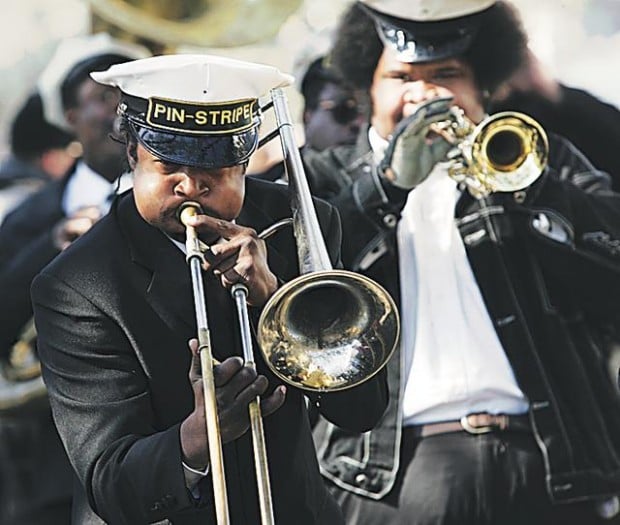
After the service, the club held a jazz funeral procession from the church to its clubhouse.
Jazz funerals, a New Orleans tradition, begin with a slow somber procession accompanied by a brass band and end with joyful, celebratory marching.
Mardi Gras parades typically run on weekends leading up to and on Mardi Gras, which falls on Feb. 28 this year, almost exactly six months after the storm.


