

THEY'RE COMING. THEY WANT TO SUCK YOUR BLOOD!
Well, some of them do, the real kissing bugs of the southwest U.S. — Triatoma rubida, whose south-of-the-border relatives are associated with Chagas', an inconvenient-to-lethal disease — and a couple of the far less commonly seen Triatoma cousins, protracta and recurva.
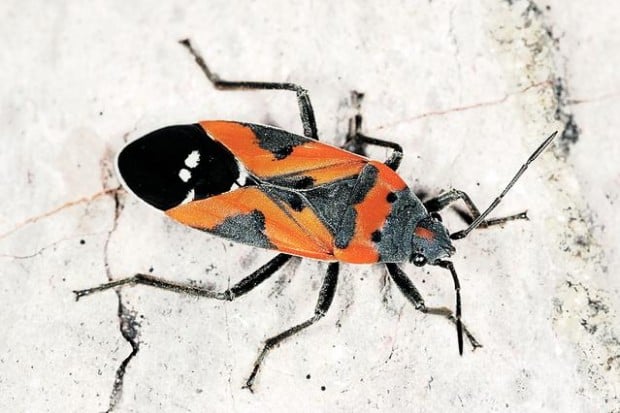
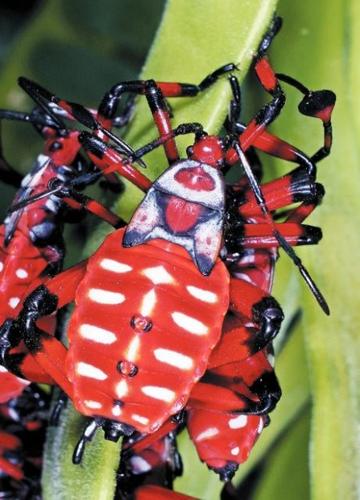
But there are others, bugs we are more likely to see, that are impostors — bugs shaped, and maybe even colored somewhat like Triatoma rubida (rubida refers to the reddish rim on the body). The impostors all lack the "coned nose" of Triatoma rubida, which houses their powerful puncturing and sucking mechanism, says University of Arizona researcher Carolina Reisenman who, with Pablo Guerenstein of the UA's Arizona Research Labs, is trying to understand if the local bugs could be carriers of Chagas' disease. The disease is found in parts of Mexico and Central and South America.
People are also reading…
No Chagas' disease here yet, but allergic reactions
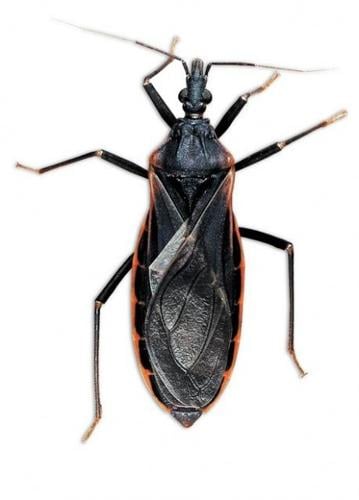
ID: Best way to tell the local kissing bug (the one we are most likely to encounter, Triatoma rubida): Look for the cone-shaped head. The kissing bugs have it, the impostors don't.
Where they live: The blood-feeding kissing bug is often found in desert pack-rat nests, which are often found under prickly pear cacti.
Coming home: Kissing bugs are on the move from mid- to late-April until the beginning of the monsoon season. Confused by house lights, they may be drawn to homes at night. They detect exhaled carbon dioxide, or other chemical signatures of warm-blooded inhabitants. They enter through open doors, windows or crawl through cracks.
Sneak attack: Usually bite while victim is sleeping. Anesthetic in insect's saliva keeps victim from feeling bite.
Reaction: Some victims have allergic reaction to insect's saliva ranging from difficulty breathing to anaphylactic shock, and may even die.
Chagas' disease, South of the border
The disease — Chagas' disease, caused by a protozoan parasite living in the kissing bug gut, infects 13 million people in Mexico, Central and South America, with 200,000 new cases every year, according to the U.S. Centers for Disease Control. May cause heart disease and enlargement of visceral organs
The bug — The kissing bug that carries Chagas' is virtually identical to the kissing bugs seen in parts of the southern U.S., including Southern Arizona. For reasons not yet understood, these bugs do not transmit Chagas'.
The kiss — After the anesthetic in the bug's saliva wears off, the victim scratches the bite, possibly breaking the skin and rubbing in bug feces, containing the parasite, deposited while the bug was feeding on the victim's blood. CDC says the parasite may also be introduced through mucous membranes, blood transfusion, organ transplants and from mother to child.
The Real Deal
The Triatoma rubida, above, is the most common of three local species of true kissing bugs. The key feature that tells you something is a true kissing bug is the cone-shaped nose. In fact, they are called "cone-nosed bugs" in some places. The photos are by J. Cowles.


